


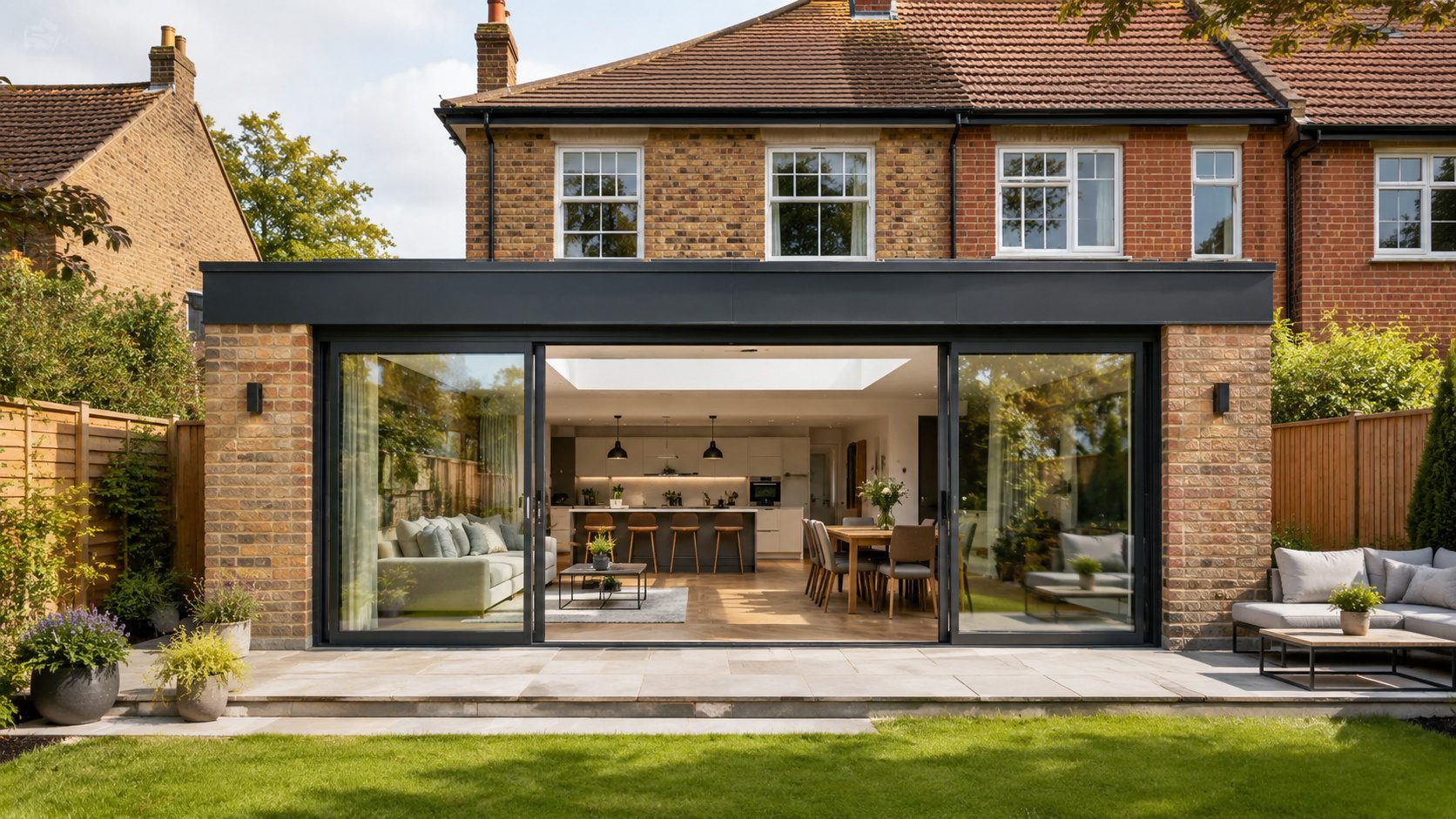
Quick Answer: Single-storey extension ideas include rear extensions, side returns, wraparound layouts, kitchen-dining spaces, glass roof designs, and garden-facing living areas. For many UK homeowners, these projects create more usable space without moving house, while also improving natural light, day-to-day layout, and the way the home connects with the garden.
A single-storey extension can change the way a home feels without changing the whole property. For some households, it means a bigger kitchen. For others, it creates a proper dining space, a brighter living area, or a better link to the garden. The best results usually come from planning around real daily use rather than simply adding as much floor space as possible.
That is why single-storey extension ideas should be practical as well as attractive. A design may look impressive online, but it still needs to suit the house, the garden, the budget, and the way people actually live in the space. In many UK homes, especially terraces and semi-detached properties, small layout decisions can make a big difference.
Start With the Problem You Want to Solve
Before choosing a design, it helps to be clear about the reason for extending. Is the kitchen too small? Does the home feel dark at the back? Is there no space for family dining, working from home, or entertaining? A good extension should solve a specific problem, not just create an extra room that feels disconnected from the rest of the house.
For example, a family that cooks and eats together may benefit most from a kitchen-dining extension. Someone who wants a calm reading area may prefer a garden room-style layout. A homeowner preparing a property for sale might focus on flow, natural light, and wider appeal. PAD readers planning wider upgrades may also find this guide to home renovation ideas useful for thinking about value-led improvements beyond the extension itself.
Rear Extension Ideas
Rear extensions are one of the most common choices for UK homes because they use the space at the back of the property. They can work well for terraced houses, semi-detached homes, and detached properties, especially where the existing kitchen or dining area feels narrow or closed off.
A simple rear extension can create a larger kitchen-dining room with doors opening onto the garden. This makes the back of the house feel more sociable and can bring in much more daylight. In smaller homes, even a modest rear extension can make the ground floor feel less cramped.
The key is to avoid creating a long, dark middle room. If the extension pushes the kitchen further back, consider rooflights, internal glazing or a broken-plan layout so light can still travel through the home.
Side Return Extension Ideas
A side return extension uses the narrow strip of outdoor space often found beside the rear part of older terraced or semi-detached homes. This type of project may not add a huge amount of floor area, but it can make a narrow kitchen feel much wider and easier to use.
Side returns are especially useful when the existing kitchen feels like a corridor. By extending sideways, homeowners can create room for a dining table, extra storage, a kitchen island, or wider worktops. The improvement is often more about better proportions than sheer size.
To keep the space feeling bright, many designs use roof glazing, slim-framed doors, or a small courtyard-style connection to the outside. If the property is overlooked, privacy glass or careful window placement can help protect comfort without losing natural light.
Wraparound Extension Ideas
A wraparound extension combines a rear extension and a side return. It can create a generous open-plan area, but it also needs careful design because the new space can become too large or too plain if every wall is removed without a clear plan.
This type of extension suits homeowners who want a major change to the ground floor. It can create space for cooking, dining, relaxing, and storage in one connected area. However, the layout should still have zones. A kitchen island, partial wall, change in ceiling height, or different flooring can help the room feel organised rather than empty.
For readers comparing different build methods, PAD Magazine’s article on prefabricated extensions may also help explain another route for creating extra living space.
Kitchen and Dining Extension Ideas
Kitchen extensions remain popular because they improve one of the most used areas of the home. A good kitchen-dining extension should feel comfortable in the morning, practical during busy weekdays, and welcoming when guests visit.
Instead of starting with finishes and cabinet colours, think first about movement. Where will people enter from the hallway? How close is the dining table to the kitchen? Is there enough space to open doors, move chairs, and use storage easily? These details matter more than a dramatic design feature that looks good once but becomes annoying every day.
For smaller homes, built-in benches, wall storage, and compact dining areas can be better than oversized furniture. PAD’s guide to small living room ideas is also useful when thinking about how to make a limited space feel more considered and flexible.
Use Natural Light Carefully
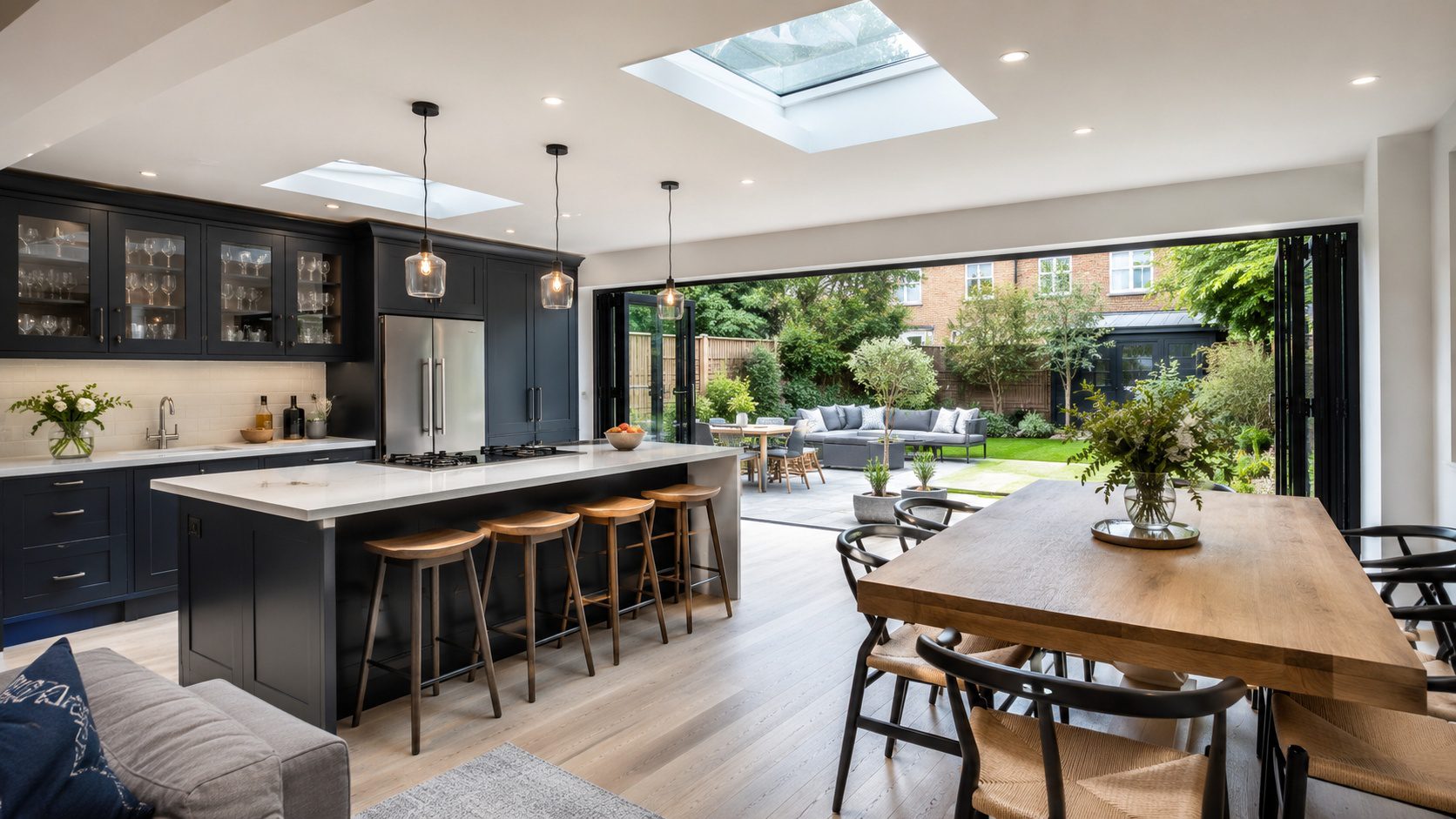
Natural light is one of the biggest advantages of a single-storey extension, but more glass is not always better. Large doors, rooflights, and glazed panels can transform a room, but they also affect privacy, heat, glare, and furniture placement.
Rooflights work well over darker central areas, while sliding or bifold doors can open the extension towards the garden. A picture window may suit a quieter seating area, while clerestory windows can bring in light without exposing the room to neighbours.
The aim should be balanced light throughout the day. In south-facing rooms, shading may be needed to prevent overheating in summer. In north-facing spaces, warm materials and layered lighting can stop the room from feeling cold or flat.
Open-Plan or Broken-Plan?
Open-plan extensions are attractive because they feel spacious and social. They suit families who want cooking, dining, and relaxing to happen in one shared area. However, fully open layouts are not always the most practical choice, especially when people need quiet corners, storage, or separate activities.
Broken-plan design can be a useful middle ground. It keeps the sense of space but uses partial walls, shelving, internal windows, steps, or furniture placement to create softer zones. This can work well in extensions where the family needs a kitchen, dining area, and living space to function together without everything feeling exposed.
The right choice depends on how the household lives. A couple who entertain often may enjoy one large open room. A family with children may prefer a layout where noise, toys, and homework do not take over the whole ground floor.
Garden-Facing Living Spaces
Many single-storey extension ideas work best when the garden is treated as part of the design. Even a small garden can feel more connected if the floor level, doors and sightlines are planned properly.
A garden-facing seating area can make the extension feel calmer and more relaxed. Low thresholds, simple paving, and consistent materials can help the indoor and outdoor areas feel connected. If the garden is overlooked, planting, fencing and screens can make the new space feel more private.
This is also where maintenance should be considered early. Gutters, flat roof drainage, exterior finishes and roof access may not be exciting design details, but they affect how well the extension performs over time. PAD’s guide to common roofing problems in UK homes is worth reading before planning roof finishes or drainage around a new extension.
Planning Permission and Practical Checks
Some single-storey extensions may fall under permitted development, while others need planning permission. The answer depends on the property type, size, location, previous alterations and whether the home is in a conservation area or has other restrictions.
As a general rule, homeowners should check local planning rules before committing to drawings, deposits or construction dates. It is also important to think about building regulations, drainage, structural work, insulation, party wall matters and access for builders.
For a broader planning overview, the Homebuilding & Renovating guide to single-storey extensions explains common design and permission points that homeowners often need to consider before starting a project.
How to Choose the Right Extension for Your Home
The right extension is usually the one that feels natural once it is finished. It should not look like an afterthought or make the original rooms worse. A smaller, well-planned extension can often be more successful than a larger project that removes too much garden, blocks light, or creates awkward unused corners.
Think about the house as a whole. How will the extension affect the hallway, storage, downstairs toilet, utility space, garden access, and existing living room? Where will coats, shoes, bins, appliances, and everyday clutter go? These practical questions are easy to ignore during the design stage, but make a major difference once the space is in use.
A single-storey extension can add comfort, flexibility, and potential value, but it works best when the design is guided by real needs. Start with the problem, choose the layout that solves it, and then use materials, glazing, and finishes to make the space feel like a natural part of the home.
FAQs
What is the best single-storey extension idea for a small UK home?
A rear or side return extension often works well for smaller homes because it can improve the kitchen or dining area without changing the entire property. The best choice depends on the shape of the house and how much garden space is available.
Do single-storey extensions always need planning permission?
Not always. Some projects may fall under permitted development, but this depends on size, location, property type and previous changes to the home. Homeowners should check with their local planning authority before starting work.
Can a single-storey extension add value to a property?
It can, especially if it improves the layout, adds usable space, and feels well connected to the rest of the home. Value also depends on build quality, location, market demand, and whether the design suits the property.
Is a side return extension worth it?
A side return extension can be worth it when a narrow kitchen or dining area needs more width and light. It may not add a huge amount of floor space, but it can make the room much more practical.
What should be considered before building a kitchen extension?
The main points are layout, storage, natural light, ventilation, drainage, access, building regulations and how the kitchen connects to the garden or dining area. Planning these details early can prevent expensive changes later.
How can you make a single-storey extension feel brighter?
Rooflights, large garden doors, internal glazing, pale finishes, and careful lighting can all help. The aim is to bring daylight into both the new extension and the older rooms behind it.