


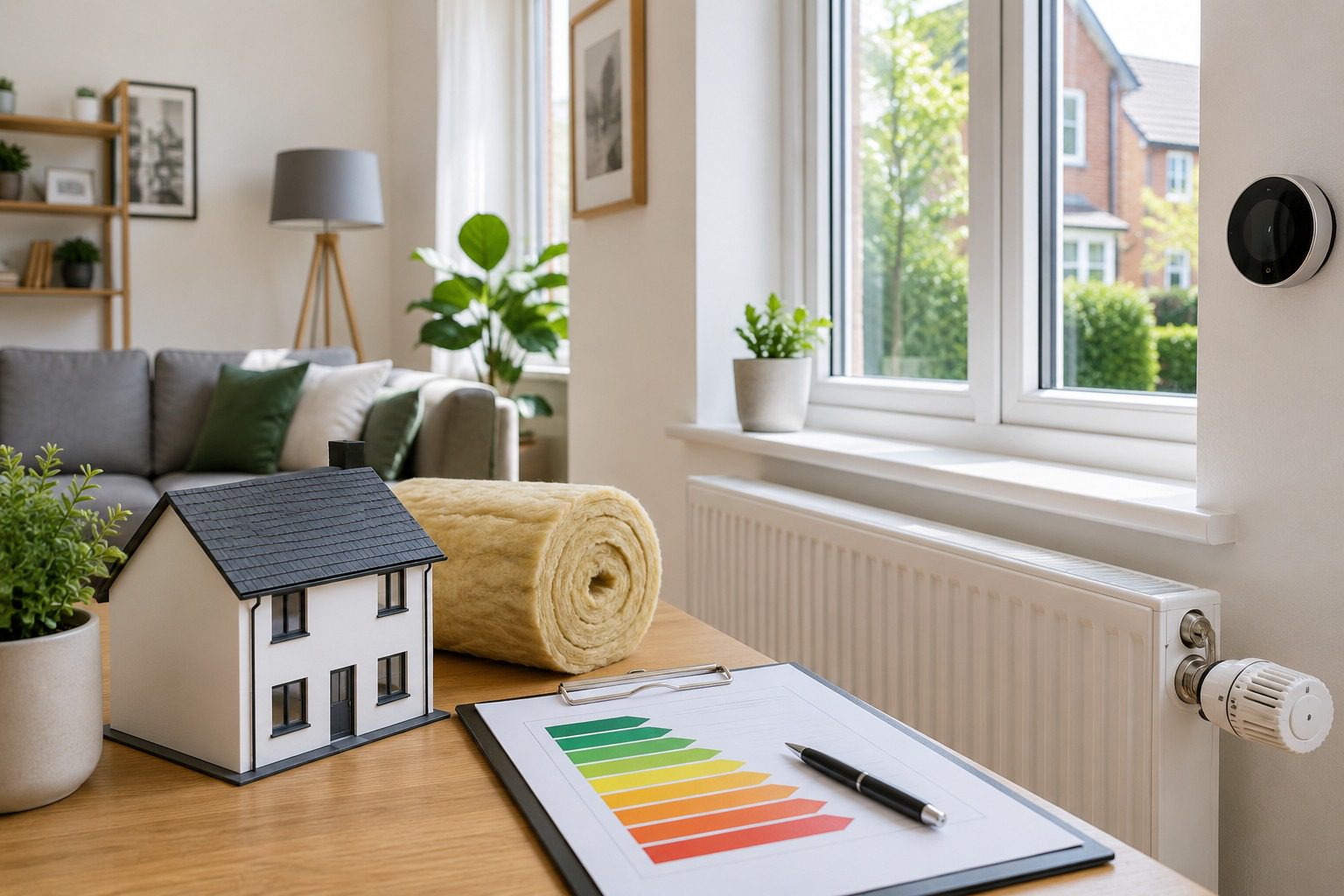
EPC Rating Explained: What It Means and How to Improve Yours
If you own, rent or manage property in the UK, your EPC rating matters more now than ever. With tightening regulations, shifting buyer expectations and rising energy costs, understanding what an energy performance certificate actually tells you – and how to act on it – is essential for anyone in the residential property sector.
Quick answer: EPC rating explained in under 2 minutes
An Energy Performance Certificate (EPC) is a legal document that measures a property’s energy efficiency. It uses a colour-coded chart with letter bands from A (most efficient) to G (least efficient), alongside a numerical score. A higher EPC rating signifies lower energy consumption, while a poor rating suggests the home loses more heat and costs more to run.
EPC ratings estimate typical energy costs and carbon emissions based on standard occupancy assumptions – not the current household’s actual habits. The assessment considers factors like insulation, heating systems and lighting to produce an energy efficiency rating that allows fair comparison between different homes.
The average EPC rating in the UK is D, with the average UK household EPC sitting at roughly grade D (around 60 on the SAP scale). Just over half of homes in England and Wales currently achieve a C rating or above, which is now the policy benchmark that government targets are pushing towards.
Homeowners, landlords, tenants, potential buyers, estate agents, lenders and property professionals all rely on EPCs to inform decisions about purchases, lettings, retrofits and compliance. The rest of this article breaks down the bands, the rules, the costs and the practical ways to improve your EPC rating.
What is an Energy Performance Certificate and how does EPC rating work?
Energy performance certificates have been compulsory for most UK property sales and rentals since October 2008. An energy performance certificate EPC is an official report produced by an accredited domestic energy assessor after an on-site domestic energy assessment. For new build properties, the assessment is based on building plans and SAP calculations.
An EPC contains:
- The current energy efficiency rating and current EPC rating band
- A potential rating showing how the score could improve with upgrades
- Estimated energy costs for heating, hot water and lighting
- Recommended measures for energy efficient improvements
- Basic property details including construction type, floor area and heating systems
EPC ratings are based on energy use per square metre and a higher SAP score results in a better EPC rating. In England, Wales or Northern Ireland, existing homes are assessed using RdSAP methodology, producing a score from 1 to 100+ that maps to the EPC rating bands. An EPC also provides an Environmental Impact rating reflecting the property’s carbon emissions.
EPCs are different from appliance energy labels – they measure overall building energy performance, not a single device. An EPC provides estimated energy costs for heating and lighting, and EPCs include recommendations for improving energy efficiency.

What do EPC rating bands A–G actually mean?
Understanding each EPC band helps owners, buyers and landlords plan realistic improvements. EPC ratings range from A (most efficient) to G (least efficient), with each band covering a specific SAP score range.
| Band | SAP Score | Typical Features |
|---|---|---|
| A | 92+ | Highly insulated, airtight, heat pump or solar panels, often new builds or deep retrofits |
| B | 81–91 | Post-2012 builds, efficient boilers, double or triple glazing, good insulation |
| C | 69–80 | Policy benchmark for a good EPC rating; many upgraded post-1980s homes |
| D | 55–68 | Close to the average EPC rating; older stock with partial upgrades |
| E | 39–54 | Current legal minimum for rentals; poor insulation, dated heating |
| F | 21–38 | Very poor; high heat loss, draughts, expensive to run |
| G | 1–20 | Worst performing; uninsulated, single glazed, major work required |
A g rating or an e rating signals that a property needs urgent attention. Meanwhile, a c rating or above is increasingly what lenders, buyers and regulators expect. Numeric scores within each band (for example, 69 versus 79 within a C) help track how much progress individual upgrades deliver.
Why EPC ratings matter for homeowners, landlords, buyers and tenants
EPC ratings increasingly affect day-to-day housing decisions, from running costs to compliance and finance.
Energy bills and comfort. More energy efficient properties typically need less heating. A property with an EPC rating of C saves roughly £750 annually on energy compared to a poorly rated home with similar floor area. Better-insulated homes hold heat in winter and stay cooler in summer, reducing draughts, condensation and how much heat is lost through walls and roofs. Higher EPC ratings can lead to lower utility bills for residents.
Property value. Improvements in energy efficiency can increase a home’s market value and make it more attractive to potential buyers. Many mortgage lenders consider EPC ratings in their affordability assessments, and some now offer preferential “green mortgage” rates for homes rated B or C. Impacts vary by location and market conditions, but a higher EPC rating rarely works against a seller.
For landlords. Landlords must ensure rental properties meet minimum energy efficiency standards. Under current MEES rules in England and Wales, landlords must ensure properties have at least an E rating. The government has confirmed that from October 2030, privately rented properties will need a minimum band C, subject to a £10,000 cost cap. With roughly 53.8% of private rented properties currently below band C, planning ahead is essential.
For tenants. An EPC allows comparison of likely running costs between rented properties. Landlords must provide a valid EPC free of charge before tenants sign a tenancy agreement.
For lenders and investors. Some institutional investors and lenders now look for EPC B or C as part of ESG and sustainability strategies, influencing how portfolios of rented properties are valued.
Rules, timing and EPC certificate validity in the UK
EPC rules are a core part of UK property compliance. An EPC is required when selling or renting a property, and the EPC is legally required when a property is built, sold, or rented. Properties must have an EPC before being marketed for sale or rent – EPCs must be available when marketing a property for sale or rent. EPCs have been required for properties sold or rented since 2008.
Key points:
- EPCs are valid for 10 years from the date of issue. If the property’s energy performance hasn’t changed, the same EPC certificate can be reused for subsequent sales or lettings within that period.
- Sellers provide EPCs for freehold sales, landlords for rental property, and developers for new build properties.
- Failure to provide an EPC can result in a £200 fine, enforced by local authorities or Trading Standards.
- EPC formats differ slightly between England and Wales, Northern Ireland and Scotland, but all show the same core rating bands and information.
Readers can search for an existing certificate on the GOV.UK EPC register by address or certificate number.
How EPC assessments are carried out and typical EPC rating costs
A domestic energy assessment is non-invasive and typically takes 30 minutes to two hours depending on property size. The energy assessor inspects and measures walls, floors, roof spaces, glazing, heating systems, hot water, ventilation and fixed lighting – often including a look inside the meter cupboard – taking photos and notes for EPC software. Assessors use standardised assumptions so different homes can be compared on a like-for-like basis.
For new build properties, an On Construction domestic energy assessor uses building plans and SAP calculations rather than a full on-site survey.
The energy performance certificate cost for a standard home in the UK typically falls between £60 and £120. EPC costs vary by region, property size and provider. Smaller flats may cost as little as £35–£80, while larger detached or rural homes can reach £150. Landlords with portfolios may negotiate bulk rates for multiple EPC assessment bookings.
Always use accredited domestic energy assessors listed on official registers to ensure your new EPC is valid and correctly lodged.

Practical ways to improve your EPC rating
EPC improvement options depend on property age, build type, location and existing systems. The suggested improvements and recommended measures on your EPC report should be the starting point – they include an indicative cost and estimated savings for each upgrade.
Quick wins (low cost):
- Draught proofing gaps around doors and windows
- Loft insulation top-ups to recommended depth
- Hot water cylinder jackets
- Switching remaining halogen or incandescent light bulbs to energy efficient lighting (LEDs throughout)
- Improved heating controls: room thermostats, TRVs, programmers and smart meters
Many homeowners could improve their home’s energy efficiency by roughly 15 SAP points through these measures alone. Upgrading insulation can significantly improve EPC ratings.
Fabric upgrades (biggest gains):
- Cavity wall insulation where suitable
- Internal or external wall insulation for solid walls – addressing poor insulation on older properties
- Increased loft and roof insulation depth
- Floor insulation on accessible ground floors
Heating systems:
- Replacing old non-condensing boilers with modern condensing models for better boiler efficiency
- Installing a heat pump – air source or ground source heat pumps – where appropriate
- Adding weather-compensating controls or smart thermostats
Glazing and doors:
- Upgrading from single glazing to modern double glazing or double or triple glazing
- Using secondary glazing or triple glazing where planning or heritage constraints apply
Renewable energy sources:
- Solar panels (PV) to generate your own power and reduce energy consumption
- Solar thermal hot water systems
- These technologies can significantly improve your EPC score and reduce your carbon footprint
An EPC can suggest improvements to enhance energy efficiency. Always obtain multiple quotes from reputable installers before committing to major works. For practical case studies and retrofit best practice, follow sector coverage on PAD Magazine.
Broader context: EPC ratings, UK policy and international perspectives
EPC ratings now sit within wider UK net zero ambitions, Building Regulations and housing quality standards. In England and Wales, building regulations have steadily tightened, so more recent build properties tend to achieve better EPC bands than pre-1980 stock unless older homes have been retrofitted with energy efficient improvements.
EPC data informs national housing statistics, fuel poverty strategies and planning decisions. Social housing providers and local authorities use property’s energy efficiency data to target funding at the least efficient homes – often those most in need of help to save money on bills and reduce carbon emissions.
Many other countries use comparable building energy labels. The EU Energy Performance of Buildings Directive, for example, drives similar certificate systems across member states, though scoring, thresholds and legal requirements differ. A display energy certificate is used in the UK for certain public buildings. International readers can use the principles in this article while checking local regulations for exact rules.
For detailed UK guidance, readers should consult GOV.UK, the Energy Saving Trust, local authorities and accredited assessors, alongside industry media such as PAD Magazine.
Common mistakes and myths about EPC ratings
Misconceptions about EPCs can lead to poor investment decisions or non-compliance. Here are the most common:
- “EPCs are just a tick-box exercise.” They’re not. The recommendations provide a detailed breakdown of where your property loses most energy and where spending delivers the best return. Your property’s EPC is a planning tool, not just paperwork.
- “Small changes never make a difference.” Cumulative improvements – LED lighting, heating controls, draught proofing – can collectively push a property’s energy performance into a higher band. Even a modest overall rating increase matters when you’re near a threshold.
- “Upgrade the boiler first.” Installing an expensive new boiler before addressing basic insulation and draught proofing is a common and costly mistake. Building fabric improvements usually deliver the biggest efficiency gains and reduce how much energy your heating systems need to produce.
- “A high EPC means low bills.” EPCs do not measure actual behaviour. Occupants can still have high bills in an energy efficient home if they run systems excessively. The actual cost depends on energy use habits as well as the current energy efficiency of the building.
- “Every home can reach band A.” Not all properties can feasibly reach EPC A or B due to design, heritage status or technical constraints. The realistic goal for many older homes is achieving a c rating alongside sensible comfort and cost outcomes. Your home’s EPC rating reflects what’s physically possible, not an aspirational target.
Landlords should avoid ignoring upcoming policy changes. Waiting until close to the 2030 deadline risks supply chain delays and cost inflation. An energy audit now can help identify the most cost-effective route to compliance in the near future.

FAQs: EPC rating explained for everyday questions
What is a good EPC rating? A good EPC rating in the UK is generally C or above (SAP score 69+). Bands A and B are excellent, D is average, and E–G are considered poor. A higher EPC rating means lower energy use and better property’s energy efficiency.
How long is an EPC certificate valid? An EPC certificate is valid for 10 years from the date of issue. You may want to commission a new EPC before expiry if you’ve carried out significant improvements and want your current rating to reflect them.
How much does an EPC cost in the UK? A standard domestic EPC typically costs £60–£120. Smaller flats are cheaper; larger or complex homes cost more. Commercial EPCs are significantly higher due to the scope of assessment.
Do I need an EPC if I’m not selling or renting? Not legally, but many homeowners choose to get an energy performance certificate to plan improvements, access grant schemes or conduct an energy audit. You need to get an energy performance certificate only when marketing for sale or letting.
Can improving my EPC rating increase my property value? It can. Improvements in energy efficiency can make a home more attractive and may influence value, particularly in markets where buyers and lenders prioritise energy performance. However, value uplift depends on multiple factors including location, property type and market conditions.
How can I check my current EPC? Search the official EPC register for England and Wales, or equivalent portals for Northern Ireland and Scotland, using your address or certificate number. Your estate agent should also be able to provide a copy.
What is the difference between EPC rating for landlords and homeowners? The technical energy rating system is identical. However, landlords face additional legal duties: rental properties must meet minimum energy efficiency standards, and landlords must provide a valid EPC to tenants. Homeowners have no ongoing compliance obligation unless selling or letting.
For ongoing coverage of energy performance, retrofit policy and home improvement strategies that add value, follow PAD Magazine across its website and quarterly digital edition.