



Party Wall Act 1996 Explained: What Homeowners Need to Know Before Renovating
Planning a home renovation, house extension, loft conversion or basement conversion is exciting, but there is one piece of UK property law that catches many homeowners off guard. The Party Wall etc. Act 1996 sets out a formal process that property owners must follow before starting certain types of building work on or near a shared wall, boundary or neighbouring foundations. It applies across England and Wales and sits alongside planning permission and building regulations approval as a separate legal requirement.
At PAD Magazine, we regularly hear from readers who discover the party wall process only after a contractor has been booked. This guide explains when the act applies, what a party wall notice involves, how disputes are handled and the common mistakes that lead to costly project delays.
What is the Party Wall etc. Act 1996?
The Party Wall etc. Act 1996 is legislation in England and Wales managing building works near shared property boundaries. It provides a clear legal framework for preventing and resolving disputes between a building owner who wants to carry out work and an adjoining owner whose property or shared structure might be affected.
The Party Wall Act came into force on 1 July 1997. It applies throughout England and Wales, excluding Scotland. The act does not apply in Scotland or Northern Ireland, where different property laws govern similar matters.
A key point to understand is that the act does not stop development. Instead, it sets out party wall rules in the UK so works can proceed safely and fairly for both sides. The act ensures disputes are resolved between neighbours regarding construction projects through a structured procedure rather than leaving people to argue informally.
The act is entirely separate from planning permission and building regulations. Having one does not remove the need for the other. Even if your local government planning department has approved an extension, you still need to comply with the party wall act if your proposed work triggers it.
Official guidance is published on GOV.UK and is worth reading alongside this article. For complex projects, it is sensible to consult a qualified party wall surveyor early in the design process.
Key definitions: party walls, owners and typical residential scenarios
Understanding a handful of basic definitions helps homeowners spot when the act is triggered. Most of these terms appear in the legislation itself, so knowing them makes notices and surveyor correspondence far easier to follow.
Party wall
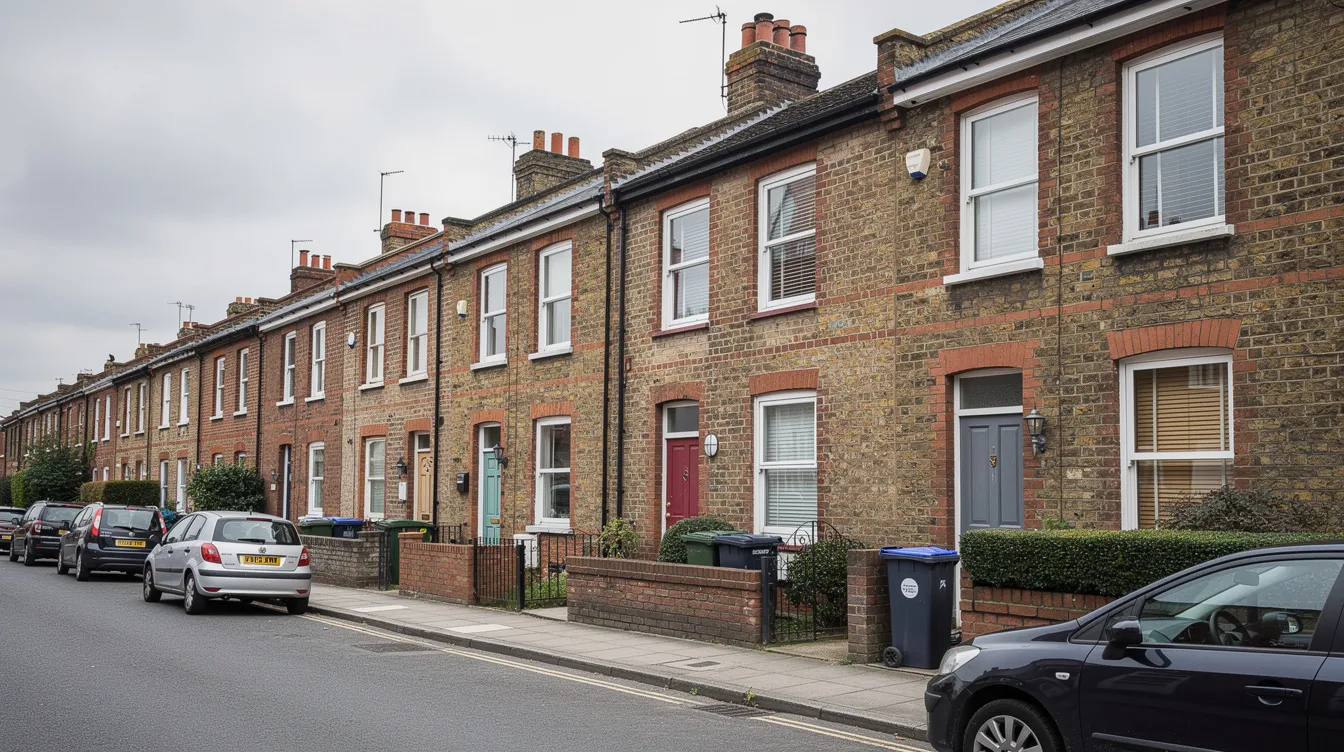
A party wall is a shared wall between two properties, most commonly seen between terraced or semi-detached houses. The wall usually sits on or astride the boundary line dividing two plots. A wall that stands entirely on one owner’s land but is used by two or more owners to separate their buildings also counts as a party wall under the act. Shared floors and ceilings in blocks of flats fall under the broader term party structure.
Party fence walls, garden walls and free standing walls
Not every boundary structure is a party wall. Party fence walls are walls that sit astride the boundary between two properties but do not form part of a building – a brick garden wall dividing two rear gardens is a typical example. A free standing wall or wooden fences sitting wholly on one side of the boundary are generally outside the scope of the act, though the position of the boundary still matters.
Building owner and adjoining owner
The building owner is the person proposing the notifiable work. The adjoining owner is the neighbour whose property, foundations or shared wall may be affected. Where a property has more than one owner – for example a freeholder and a long leaseholder – each counts as an adjoining owner. Properties belonging to different owners on either side of a boundary, and sometimes at the rear, can all be affected, particularly with excavation works.
Common residential examples
Typical triggers include adding steel beams into a shared wall for a loft conversion, building a rear extension astride the boundary, removing a chimney breast on a party wall, inserting a damp proof course into a party structure, or excavating for a new basement close to neighbouring buildings. Even party wall raising – increasing the height of an existing wall to accommodate a new storey – falls squarely within the act.
When does the Party Wall Act apply to home renovations?
Not every DIY job triggers the act. Hanging shelves, fitting wall units or replastering a room are minor tasks that do not normally require a notice. But many structural works to a shared wall or near a neighbour’s foundations will.
The act covers work on party walls, boundary walls, and excavations. It breaks these into three main categories, each dealt with under a different section of the legislation. Property owners must notify neighbours about specific types of work falling under any of these categories.
Projects where compliance is commonly required include house extensions, loft conversions, basement conversions, garage conversions involving a shared wall, and structural alterations to an existing party wall. If you are planning a kitchen extension or weighing up home renovation ideas, checking whether the party wall act applies should be one of the first items on your list.
Professional design drawings help surveyors decide whether the act is engaged, so it pays to have your architect or designer produce accurate plans early.
Works to a party wall or other party structure
Section 2 of the act typically covers cutting into, raising, thickening or otherwise altering an existing party wall or shared party structure. This is the section that catches most residential renovators.
Homeowner-focused examples include:
- Inserting steel beams into the shared wall for a loft conversion
- Removing or altering a chimney breast on a party wall
- Underpinning the full thickness of a party wall
- Rebuilding a structurally defective existing wall between two properties
- Installing a damp proof course that passes through a shared structure
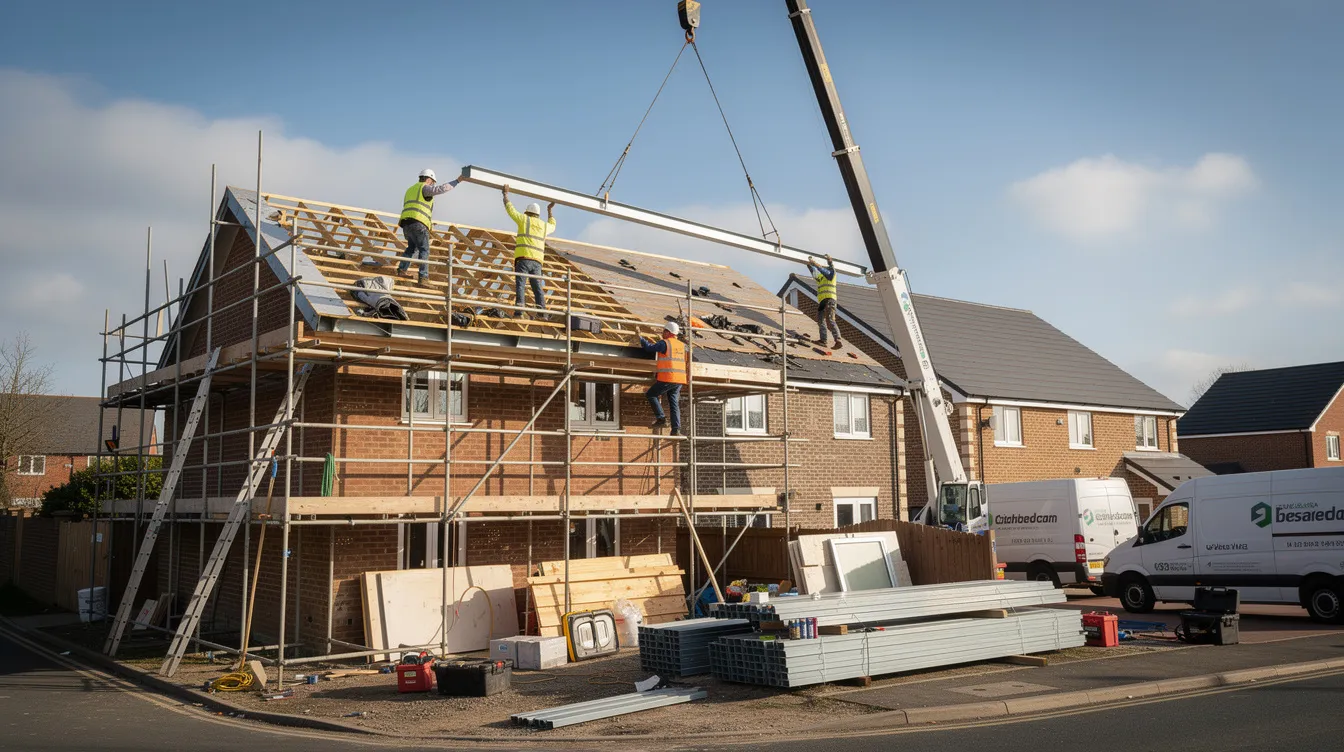
Loft conversions often require notice under the Party Wall Act because structural steel almost always needs to bear into the party wall.
Minor tasks such as putting up shelves, fixing wall units or replastering usually do not require a party wall notice, provided they do not affect the structural strength or shared function of the wall. If you are unsure whether your proposed structural change is notifiable, get professional advice before committing to a start date.
New walls on or astride the boundary line
Section 1 of the act deals with construction on the line of junction – building a new wall up to or astride the boundary between two properties. Examples include a single-storey rear extension built astride the boundary line, a new building along the side return, or a new garden wall intended as a shared boundary wall.
Building astride the boundary generally requires the neighbour’s written agreement. Without it, the new wall must sit wholly on the building owner’s own land, which can affect the footprint of a planned extension. Where the wall is built entirely on the owner’s land, the foundations may still project slightly over the boundary, which is permitted under the act provided proper notice has been served.
This is a key area where early neighbour discussions can prevent party wall disputes and delays to new building work. A friendly conversation before the formal paperwork goes a long way.
Excavations near neighbouring buildings
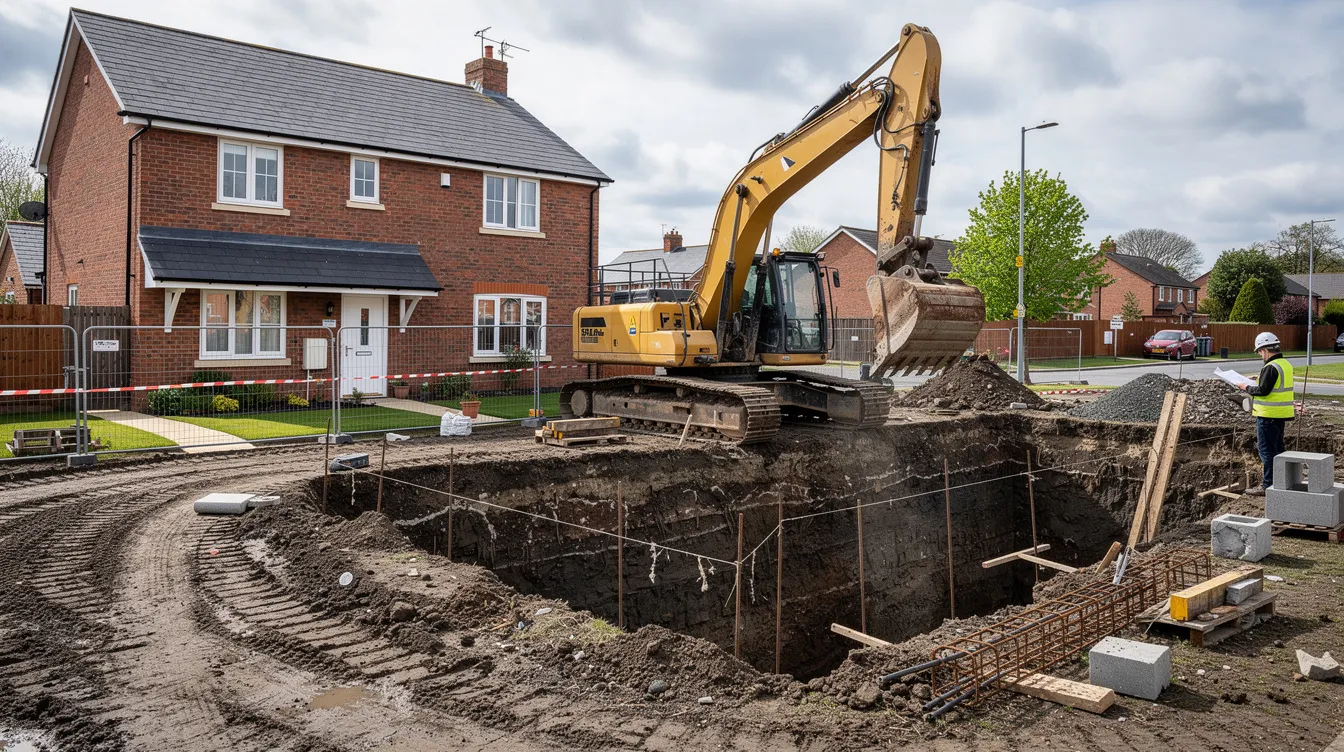
Deeper excavation close to a neighbouring property can trigger the act even when no shared wall is involved. Excavation work must comply with specified distances to neighbouring properties based on depth and proximity.
In plain language, the main distance rules are:
- Within 3 metres: Excavation within 3 metres of a neighbour’s structure requires notice if the dig will go deeper than the bottom of that structure’s foundations.
- Within 6 metres: Where a 45-degree line drawn downwards from the bottom of the neighbouring owner’s building foundations would intersect the proposed excavation, notice is also required.
Practical examples include digging foundations for a two-storey rear extension, underpinning for a basement conversion, or installing piled foundations for a side extension close to a neighbour’s house. Engineers and party wall surveyors often rely on foundation details from existing drawings, trial pits or building control records to assess whether the proposed adjacent work is notifiable.
Party Wall Notices: when, what and how to serve them
Serving a valid party wall notice is usually the first formal step for a building owner under the act. Notification periods differ based on the type of work being done:
- Work on existing party walls requires two months’ notice before work begins.
- New walls built astride the boundary require one month’s notice.
- Excavation notices under Section 6 also require one month’s notice.
Homeowners should serve notices at least two months before work starts on a party structure, so the timing needs to be factored into your renovation programme early. You do not need planning permission before serving a party wall notice, but your proposed drawings should be detailed enough to describe the work clearly.
A sensible approach is to talk to neighbours informally first, explain the project, share sketches, then follow up with the formal written notice. This keeps relations positive and reduces the risk of objections.
What Should a Party Wall Notice Include?
A valid notice must include the following core information:
- Full name and address of the building owner (and any joint owners)
- Address of the property where the works will take place
- Clear description of the proposed work, including structural methods
- The proposed start date of work, respecting the minimum notice period
- A statement that the notice is served under the Party Wall etc. Act 1996, identifying the relevant section (1, 2 or 6) where possible
For excavation notices, plans and cross-sections showing the depth and position of the dig relative to neighbouring foundations are also required.
Where a neighbouring property has more than one owner – for instance both a freeholder and a leaseholder with a lease over 12 months – each must receive a separate written notice. Missing affected parties is a common error that can invalidate the process.
Notices can be delivered by hand, by post, or by email if the adjoining owner has agreed in writing to receive them electronically. Keeping a copy of every notice served, along with proof of delivery, is essential.
Neighbour responses: consent, dissent and silence
Once a notice is served, the adjoining owner usually has 14 days to respond in writing. Neighbours can consent, dissent, or fail to respond to a party wall notice within 14 days, and each outcome leads down a different path:
| Response | What it means | What happens next |
|---|---|---|
| Written consent | The adjoining owner agrees to the proposed work | No formal dispute – work can proceed after the notice period, but duties to avoid unnecessary inconvenience and repair damage still apply |
| Written dissent | The adjoining owner objects or wants changes | A party wall dispute arises and surveyors must be appointed |
| No response within 14 days | Treated as dissent by default | The dispute resolution process is triggered automatically |
The adjoining owner may also serve a counter notice requesting changes to the timing, methods or protective measures. This is a normal part of the process and does not necessarily mean the project is in trouble.
Even when the adjoining owner agrees, the building owner still has duties to carry out works carefully, avoid unnecessary inconvenience and repair any damage caused. Keeping copies of all notices, replies and plans is useful evidence if problems arise later.
What happens if there is a party wall dispute?
A “dispute” under the act is a formal term. It automatically arises if an adjoining owner dissents or fails to reply to a notice within 14 days. It does not mean neighbours are at war – it simply means the formal dispute resolution procedure under the act must be followed.
Once a dispute arises, both owners must appoint a party wall surveyor (or agree on a single surveyor) to resolve matters. Work covered by the act should not start until the dispute has been dealt with and a party wall award has been served. Starting early risks a court injunction and additional costs.
If you leave party wall matters to the last minute before a contractor is due on site, the delay can be significant. Recent data suggests the average cost per dispute now exceeds £3,500 in urban areas, factoring in surveyor fees, project hold-ups and associated expenses.
Role of the party wall surveyor
A party wall surveyor is an independent professional appointed to administer the act. Crucially, surveyors must act impartially and consider both owners’ interests – they do not “take sides,” even when appointed by just one party.
Two approaches are common:
- Agreed surveyor: An agreed surveyor is jointly appointed by both owners to handle the matter. This is often quicker and cheaper for straightforward projects.
- Separate surveyors: Each owner can appoint their own surveyor if needed. The two appointed surveyors then select a third surveyor who acts as a reserve referee if the appointed surveyors cannot agree. A third surveyor resolves disputes between the two appointed surveyors, though this situation is relatively rare.
Adjoining owners have the right to appoint their own surveyor, and this right cannot be overridden by the building owner.
The surveyor’s main tasks include:
- Reviewing drawings and structural proposals
- Inspecting the adjoining property
- Preparing a schedule of condition (dated photographs and written descriptions of the neighbour’s property before work starts)
- Drafting the party wall award
In most residential projects, the building owner pays the reasonable costs of the surveyor process. However, awards can share costs where repair work or joint-benefit improvements are involved. For a closer look at cost responsibilities, PAD Magazine has covered who pays for the party wall surveyor when building an extension.
The Party Wall Award (also called a Party Wall Agreement)
In everyday language, people often talk about a party wall agreement. Under the act, however, this legal document is properly called a party wall award. A party wall award is a legal document prepared by surveyors that sets out the terms under which notifiable work may proceed.
The award typically contains:
- A detailed description of the works and how they are to be carried out
- Permitted working hours and access arrangements
- Requirements to provide temporary protection to adjoining structures where necessary
- Who pays for what, including surveyor fees and any making-good of damage
- A schedule of condition of the adjoining property, usually with dated photographs
The award details the work to be carried out and costs, giving both sides a clear reference point if anything goes wrong during the build.
Once served, the surveyor’s award is legally binding unless appealed. Either party may appeal to the county court within 14 days of receiving it, but appeals can be expensive and outcomes uncertain, so legal advice is recommended before taking that step.

Common homeowner mistakes and how to avoid them
Mistakes That Can Delay Renovation Work
Party wall errors rarely stay small. They tend to snowball into project delays, additional surveyor fees and damaged neighbour relationships. Here are the mistakes that come up again and again.
Starting work without serving a proper notice is one of the most common and costly mistakes. It can lead to legal action, including a court injunction that may stop the project mid-build. Homeowners should treat the notice process as part of renovation planning, not as an optional extra. If you want to understand the consequences in more detail, read PAD Magazine’s guide on what happens if you don’t appoint a party wall surveyor before building work starts.
Assuming planning permission covers party wall matters. It does not. These are entirely separate legal obligations. Building regulations approval deals with construction standards; the party wall act deals with neighbour rights.
Using vague or incomplete descriptions in notices. Particularly for Section 6 excavation notices, missing cross-section drawings or unclear foundation details can render a notice invalid.
Missing affected parties. Where a neighbouring property has two or more owners – say a freeholder and a long leaseholder, or an absentee landlord – every relevant person must be notified. Missing one can mean the whole party wall process needs to restart.
Scheduling builders before the notice period and award process are complete. Building owners must notify adjoining owners at least two months prior to work on a party structure. Booking a contractor to start before the minimum notice period has expired is a recipe for wasted costs.
Letting notices lapse. A notice generally expires if work does not start within 12 months. If your project is delayed, you may need to serve again.
Prevention tips:
- Plan the party wall timeline alongside your design programme
- Consult a surveyor early for complex excavations or basement projects
- Keep open, honest communication with neighbours from day one
- Budget for surveyor fees so they do not come as a surprise
How the Act protects both sides and practical planning tips
The party wall act is sometimes seen as a hurdle, but it actually protects both the building owner and the adjoining owner in balanced ways.
For the building owner, the act provides a clear legal right to carry out lawful works once the proper process has been followed. It removes ambiguity about what you can and cannot do, and it gives you a route to proceed even if a neighbour is unresponsive or unreasonable.
For the adjoining owner, the act offers protection against damage and unsafe practices. Adjoining owners can influence the timing and manner of works through the notice and award process. Building owners must compensate for any damage caused during works, and the schedule of condition attached to the award provides evidence if a claim is needed later. The act also requires the building owner to provide temporary protection to adjoining structures where necessary and to avoid unnecessary inconvenience throughout the project.
Practical protections written into a typical award include agreed working hours, access protocols, damage-making-good clauses and routes for resolving disagreements without going straight to court. Temporary protection measures might involve propping, shoring or weatherproofing exposed areas of a neighbour’s property during the build.
Planning checklist for homeowners
Before building work starts, use this short checklist:
- Confirm whether the act applies. Check the position of your proposed work relative to shared walls, boundary lines and neighbouring foundations.
- Build party wall timings into your renovation programme. Allow at least two months for party structure notices, plus time for surveyor appointment and award if needed.
- Budget for surveyor fees. In dispute cases, reasonable costs for surveyors are normally met by the building owner.
- Factor in time for neighbour negotiations. Even where consent is likely, the 14-day response window and potential counter notice add time.
- Get accurate drawings early. Site plans, sections and foundation levels reduce the likelihood of objections and invalid notices.
Readers planning major property renovation in the UK should check trusted sources such as GOV.UK guidance on party walls, local building control teams and experienced party wall surveyors. For broader guidance on understanding party wall rules, PAD Magazine has published detailed answers to common questions.
Property professionals and developers should coordinate party wall matters alongside other compliance tasks, including building regulations, CDM duties and project scheduling, to keep programmes on track.
FAQs: quick answers on Party Wall Act questions
Do I always need a party wall agreement for an extension or loft conversion?
Not always. It depends on the type and position of the works. If your extension is built entirely on your own land and does not involve cutting into a shared wall or excavating close to neighbouring foundations, the act may not apply. However, most loft conversions in semi-detached or terraced houses involve structural work to a party wall, so a notice is usually required. If in doubt, seek professional advice from a party wall surveyor before committing to a start date.
What happens if my neighbour refuses to sign or ignores my party wall notice?
If the adjoining owner does not respond within 14 days, their silence is treated as dissent under the act. This triggers the dispute resolution process, meaning both parties must appoint surveyors (or agree on a single appointed surveyor) to produce a party wall award. Failure to serve notice can lead to legal action by adjoining owners, so it is always better to follow the formal process from the outset, even if relations feel strained.
Can my builder or architect serve the notice for me?
They can draft and deliver the notice on your behalf, but the legal responsibility lies with the building owner. The notice must identify you as the building owner, not the builder or architect. Review and approve any notice before sending it, and keep your own copy.
What if my neighbour has already started work without serving a notice?
If building work is happening on or near a shared wall or close to your foundations and you have not received a written notice, the first step is to talk to your neighbour and ask whether the party wall act applies. If the act applies and your neighbour has not served a notice, you can seek professional advice, ask them to stop work until they follow the correct process, or in serious cases apply for a court injunction. Acting early and calmly usually produces a better outcome than waiting for damage to occur.
Does the act apply if I live in a detached house?
It can. The act can also apply to detached homes. Even detached property owners may need to serve notice if they are excavating within the specified distances of a neighbour’s foundations, or building a new wall on or astride the boundary. The key question is always the relationship between the proposed work and the neighbouring property or structure, not the type of house you live in.
Is this article legal advice?
No. Every property layout, project scope and boundary situation is different. This article provides general guidance on the Party Wall Act 1996 to help homeowners understand their obligations. For advice specific to your project, always seek professional advice from a qualified party wall surveyor or solicitor with experience in party wall matters.
Getting party wall matters right from the start saves time, money and neighbourly goodwill. If you are planning renovation, extension or basement work in England or Wales, check whether the act applies early, serve notice promptly and bring in a qualified surveyor where needed. For more property compliance guidance, renovation planning tips and UK property news, visit PAD Magazine.