


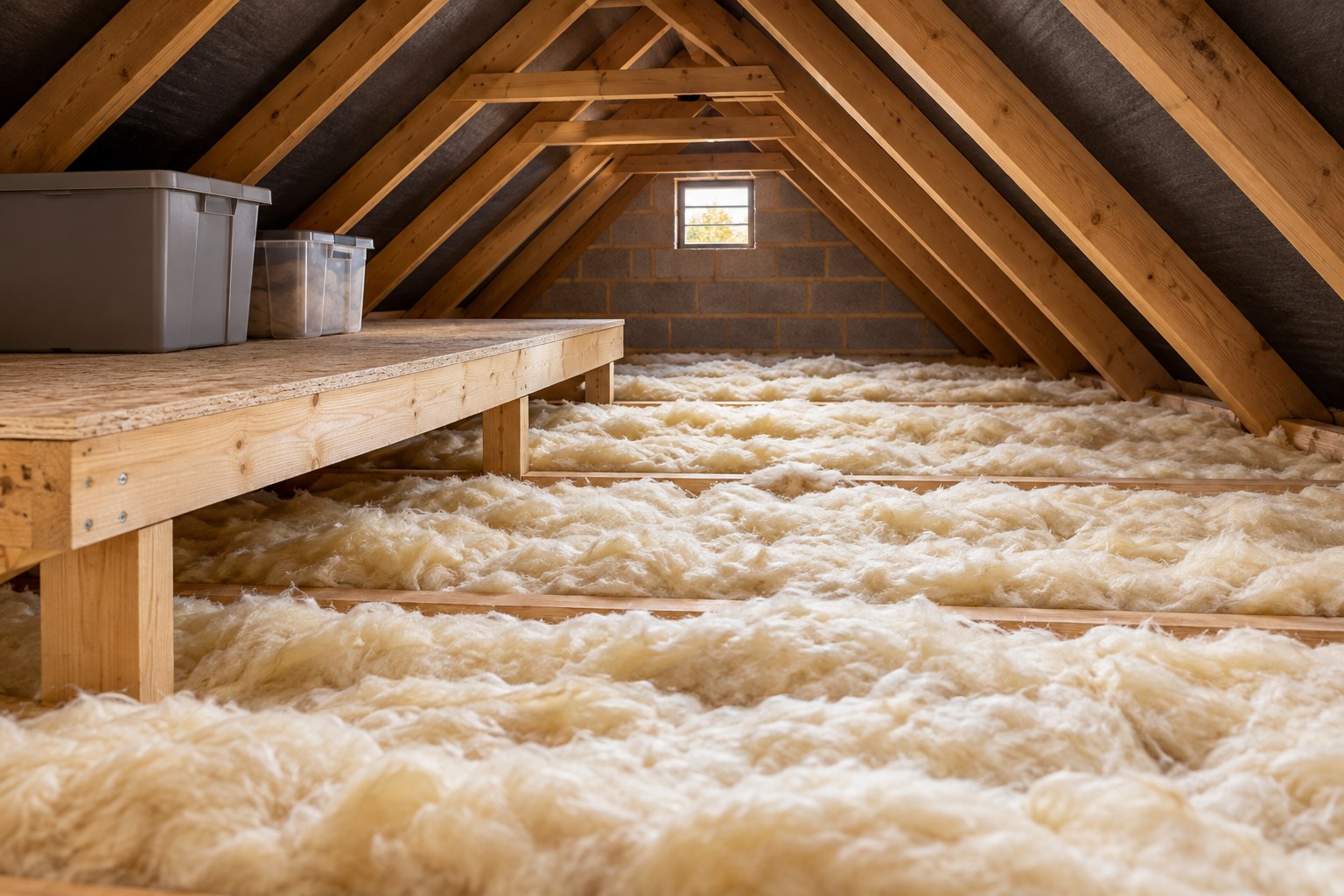
Loft insulation is easy to forget once the hatch is closed. You might have had some fitted years ago, moved into a house where it was already installed or added boarding without looking closely at what sits underneath.
When upstairs rooms feel cold, buying another roll of insulation can seem like the obvious next step. Sometimes a top-up is useful. In other cases, the first job is to investigate damp, reconsider storage or check whether the existing installation suits the roof.
A careful look before arranging work can help you spend money on the right improvement. It also gives you better questions to ask an installer, rather than relying on a headline price and a promise of lower bills.
Quick Answer: What Are the Main Loft Insulation Mistakes?
Common mistakes include choosing insulation without assessing the roof, compressing it beneath storage boards, obstructing ventilation and overlooking electrical fittings or the loft hatch. Damp and roof leaks should also be investigated before new material is added.
This guide focuses on an unheated loft insulated at ceiling level. A converted loft, flat roof or unusual roof construction needs a different approach.
For a broader view of seasonal repairs, start with PAD’s UK winter home maintenance checklist.
1. Choosing Insulation Before Understanding the Roof
The word “loft” can describe quite different spaces. An unused roof void above the bedrooms is not the same as an attic converted into a study or bedroom.
In a typical cold loft, insulation sits at ceiling level, helping retain warmth in the rooms below. A habitable roof space needs a design suited to its use and construction.
The product matters too. Material intended for a horizontal loft application should not automatically be used between sloping rafters. Knauf’s technical guidance, for example, specifies that its Loft Roll is intended for horizontal applications in cold ventilated roofs.
Before requesting quotes, explain how you use the space and whether you intend to change it. Mention existing boarding, any conversion plans and previous insulation work.
What to ask: “Where will the insulation go, and why is this method suitable for my roof?”
That question gives the installer an opportunity to explain the design rather than simply name a product.
2. Assuming Thickness Is the Only Thing That Matters
Depth is useful information, but it does not tell the whole story. The material, its condition and how it has been fitted also affect the installation.
Around 270mm is a familiar benchmark for conventional mineral wool loft insulation. It should not be treated as a universal specification for every material or roof. Different products achieve different thermal performance at different thicknesses.
If you can inspect the loft safely, note where insulation appears thin, disturbed or uneven. Existing paperwork may identify the product and installation date.
Avoid buying materials purely because you have measured one accessible patch beside the hatch. The rest of the loft may be different, particularly beneath boarding or around awkward edges.
What to ask: “What is already installed, can it remain, and what performance will the proposed upgrade achieve?”
Ask for the answer in the written quotation. This makes competing proposals easier to compare.
3. Squashing Insulation Beneath Storage Boards
A loft often becomes the home for suitcases, decorations and boxes nobody wants downstairs. The problem starts when storage takes priority over the insulation beneath it.
Compressing loft insulation reduces its performance. Boarding should be designed to preserve the intended insulation depth and appropriate airflow, rather than pressing the material flat. Knauf’s installation guidance specifically warns against compression and describes raised boarding arrangements.
Do not assume that fitting boards makes every part of the loft suitable for heavy storage. Ask the installer to explain the proposed storage area, its support and any limits on use.
It may be worth reducing what you keep upstairs before paying to board a larger area. A smaller, properly planned storage platform could meet your needs.
What to ask: “How will the boarding avoid compressing the insulation, and what can safely be stored on it?”
Include access in that conversation. You need to reach stored items without disturbing the installation.
4. Blocking Ventilation to Keep the Loft Warm
It can seem wasteful to leave ventilation openings in a roof space when you are trying to retain heat. But a cold loft and the rooms below serve different purposes.
The insulation helps keep warmth downstairs. Required roof ventilation helps manage moisture in the roof space. These need to work together.
Pushing insulation into the roof edges without understanding the ventilation arrangement can obstruct necessary airflow. The correct detail depends on the construction, so copying a photograph from another property is not enough.
Ask how ventilation will be maintained before agreeing to a top-up. This is particularly useful if the loft has a history of condensation or has been altered previously.
Moisture elsewhere in the house deserves attention too. PAD’s guide to reducing overnight window condensation explains some of the everyday factors worth checking.
What to ask: “Which ventilation routes need to remain clear, and how will you protect them?”
5. Adding New Material Before Investigating Damp
A top-up should not be used to cover a problem that nobody has explained.
If you notice wet insulation, staining or signs of moisture in the loft, arrange an assessment before proceeding. The cause could involve water entering the roof or moisture accumulating inside the space; the repair needs to address the actual source.
The Energy Saving Trust advises obtaining professional guidance for lofts with damp problems.
Photographs and a few dated notes can make the assessment more useful. Record where the problem appears and whether you notice changes after rain or during colder weather.
Do not accept “more insulation will fix it” without an explanation of the cause and the proposed remedy.
What to ask: “What is causing the moisture, what needs repairing first, and how will we know the problem has been resolved?”
This helps separate necessary repair work from the insulation upgrade itself.
6. Ignoring Electrical Cables and Downlights
A loft may contain electrical cables, recessed lighting and other services that need to be considered before insulation is installed.
Some electrical fittings generate heat, while covering certain cables can affect their ability to dissipate it. The appropriate arrangement depends on the equipment and installation.
Knauf’s guidance identifies high-load cables and heat-producing fixtures as areas requiring attention. It also advises consulting a qualified electrician where there is uncertainty.
Do not move cables or improvise covers to make space for insulation. Ask the installer to identify any electrical work needed and explain who will carry it out.
For a larger renovation, record the condition of services before they become harder to access.
What to ask: “Have the cables and lighting been assessed, and does an electrician need to do any work first?”
The quotation should make clear whether that work is included or priced separately.
7. Forgetting the Loft Hatch
It is possible to focus on the large area of the loft and overlook the opening used to access it.
The hatch forms part of the separation between the heated house and the unheated roof space. Its insulation and fit therefore deserve attention alongside the surrounding work.
ROCKWOOL’s installation guidance includes insulating the loft hatch as part of maintaining the continuity of the insulation.
Ask whether the existing hatch can be improved or whether replacement is proposed. You should still be able to open, close and secure it comfortably afterwards.
A useful handover includes showing you how the hatch works and explaining any changes to access.
What to ask: “Does the price include the hatch, and how will the finished arrangement work?”
What Should a Loft Insulation Quote Include?
A short quote saying “insulate loft” leaves too much open to interpretation. Ask for enough detail to understand what you are buying.
| Item | What to clarify |
|---|---|
| Existing insulation | What remains, what is removed and why |
| New insulation | Product, location and proposed thickness |
| Ventilation | How necessary airflow will be maintained |
| Storage boarding | Area, support and clearance above insulation |
| Electrical services | Assessment and any separate work required |
| Loft hatch | Insulation, fit and access arrangements |
| Completion | Photographs, paperwork and waste removal |
Two prices may cover very different jobs. One installer might include preparation and hatch improvements while another quotes only for laying additional material.
For independent background information, read the Energy Saving Trust’s roof and loft insulation guide.
Keep Loft Work Within the Wider Renovation Plan
If you are planning several upgrades, write down the problems you want to solve before choosing products.
For example, distinguish cold bedrooms from a desire for more storage. They may require related work, but they are separate objectives and should both be reflected in the proposal.
Keep documents from completed improvements together. Product details, invoices and photographs will be useful when arranging future work.
If solar panels are also under consideration, PAD’s home solar panel installation guide covers another part of the home energy improvement plan.
Browse more property care and renovation coverage at PAD Magazine.
Frequently Asked Questions
How much loft insulation should a UK home have?
Around 270mm is a common benchmark for conventional mineral wool insulation. The right specification depends on the product, roof construction and proposed work, so confirm suitability rather than treating depth alone as the answer.
Can new loft insulation be laid over old insulation?
It may be possible if the existing material is suitable and in an appropriate condition. Ask the installer to assess it first, particularly where there is damp, contamination or previous damage.
Can I board directly over loft insulation?
Boarding should preserve the insulation’s intended depth rather than compress it. Ask for a suitable design that considers airflow, access and the proposed storage use.
Should a cold loft feel warm after insulation?
Insulation at ceiling level is intended to retain warmth in the rooms below. The roof space above remains outside that heated area, so a cold loft is not automatically evidence of poor performance.
Will loft insulation solve damp problems?
It should not be assumed to do so. Damp needs assessment so that leaks, ventilation issues or other causes can be addressed before additional material is installed.
Can I insulate a converted loft in the same way?
A converted loft needs an insulation design suited to a habitable space and its roof construction. A standard ceiling-level top-up is not a substitute for that assessment.

