


Quick Answer
To reduce condensation on windows overnight, remove excess moisture during the day, use bathroom and kitchen extractors, keep trickle vents clear, and avoid drying washing in bedrooms. Appropriate heating also helps keep surfaces warmer. Wipe up standing water each morning, but investigate recurring moisture rather than relying on wiping alone.
Why Are Your Windows Wet in the Morning?
Opening the curtains to find wet glass can become a frustrating autumn and winter routine. Before buying a treatment or replacing a window, work out where the moisture is forming and whether the problem affects one room or the whole property.
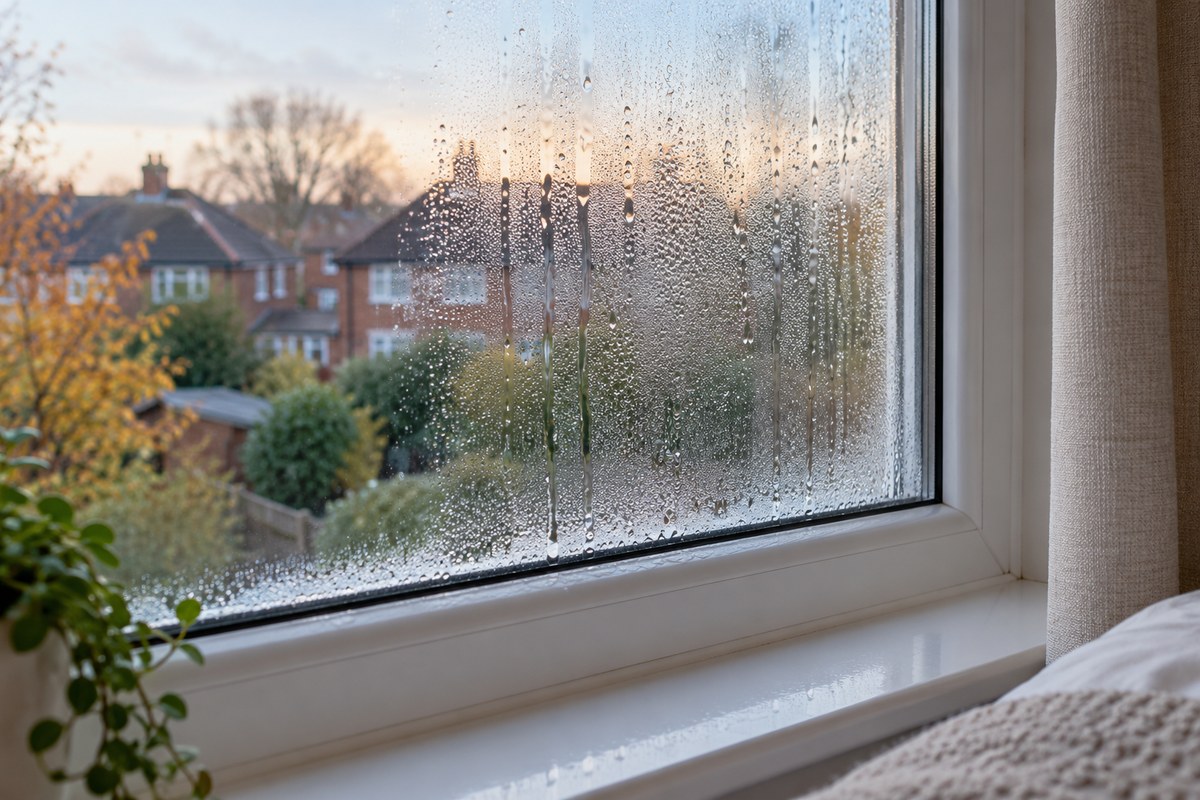
Condensation forms when humid air meets glass cold enough for water vapour to become droplets. Overnight, falling temperatures cool the window while sleeping occupants continue adding moisture through breathing. Closed curtains can also limit the warmth reaching the glass.
This explains why a bedroom window may be wet first thing in the morning but look clear later in the day. It does not automatically mean the window needs replacing. Permagard
Check Where the Condensation Is Forming
The location of the moisture determines what to do next.
| Location | What it may mean | Next step |
|---|---|---|
| Room-facing glass | Indoor moisture is meeting a cold surface | Review ventilation and moisture sources |
| Outside glass | The outer pane has cooled below the outdoor dew point | Usually allow it to clear naturally |
| Between double-glazed panes | Moisture may have entered the sealed unit | Ask a glazing professional to inspect it |
Outside condensation can occur on well-insulated glazing under certain weather conditions. It is different from moisture inside the room and does not, by itself, indicate a fault. Persistent mist trapped between panes needs a different response from droplets you can wipe off the inner surface. kjmgroup.co.uk
How to Reduce Overnight Window Condensation
1. Deal With Steam Where It Is Produced
Start in the kitchen and bathroom rather than at the bedroom window. Use extraction while cooking or showering, and keep pan lids on where practical.
Energy Saving Trust recommends continuing extraction for at least 15 minutes after cooking or bathing. Its guidance on damp and condensation also explains how everyday moisture can accumulate indoors.
2. Keep Background Ventilation Working
Check that trickle vents are open and unobstructed. Do not cover ventilation openings to make a room feel warmer.
Brief window opening can help refresh indoor air when safe and practical. However, recurring condensation may need improvements to the property’s ventilation system, rather than an increasingly demanding window-opening routine. Energy Saving Trust identifies persistent condensation as a possible sign of inadequate ventilation. Energy Saving Trust
3. Review Where You Dry Washing
If bedroom windows are regularly wet, check whether washing is drying nearby. Move the drying arrangement out of the sleeping space where possible.
When outdoor drying is impractical, use a suitable ventilated area. A dehumidifier may help manage moisture from indoor laundry, but it should not become a reason to ignore failed extraction or building defects.
4. Use Heating Controls Sensibly
Very cold rooms and surfaces can contribute to condensation. Review the heating schedule and whether affected rooms receive enough warmth.
Leaving heating running continuously solely to tackle damp can be expensive. For households planning heating work, PAD’s guide to how a professional boiler installer prepares a home for a new heating system provides related background.
5. Remove Water Before It Soaks Into Surrounding Materials
Wipe the glass and sill dry in the morning. Empty a window vacuum if you use one, and avoid leaving a soaked cloth on the sill.
Treat this as moisture management while you investigate the cause. A dry window after wiping does not show that the overnight problem has been resolved. Energy Saving Trust
A Simple Routine to Identify What Helps
Rather than changing everything at once, keep a short record over several mornings:
- Note which windows are wet and whether moisture is inside, outside or between panes.
- Record whether washing dried indoors the previous evening.
- Check whether extractors and trickle vents were being used.
- Photograph recurring wet areas or damage.
- Note whether the problem changes after adjustments.
This gives a clearer starting point for a conversation with an installer, landlord or surveyor. It also prevents spending money on a product without knowing which problem it is intended to solve.
Does a Dehumidifier Stop Window Condensation?
A dehumidifier can reduce moisture in indoor air and may help with condensation. Its effectiveness depends on the conditions, appliance capacity and how it is used.
Follow the manufacturer’s instructions for placement and operation. Keep a record of whether window moisture improves, rather than judging performance only by how much water collects in the tank.
Remember that removing water from indoor air does not repair a leaking roof, defective gutter or failed glazing seal. It also does not replace the fresh-air function of ventilation. Energy Saving Trust
Before Spending Money on New Windows
Ask an installer to explain the diagnosis and proposed repair in writing. Useful questions include:
- Is the moisture on the inner surface or within the sealed unit?
- Is the glazing faulty, or does the room need better ventilation?
- Can a component be repaired without replacing the entire window?
- How will the proposed work maintain ventilation?
- What warranty covers the work?
For wider renovation planning, separate the condensation repair from other energy upgrades. PAD’s home solar panel installation guide and immersion heaters explainer cover different household energy decisions.
When Should You Seek Professional Help?
Arrange an assessment if condensation persists, mould returns, surrounding finishes deteriorate or a damp patch becomes worse after rain.
Avoid assuming that every damp problem comes from household activity. Water can enter through building defects or plumbing leaks, and the remedy should address the identified cause.
Tenants should report recurring damp or mould to their landlord or managing agent in writing, with photographs and dates. Ask for an investigation of the cause, especially when the same area repeatedly becomes wet. Energy Saving Trust
Frequently Asked Questions
Why is condensation worse overnight?
Window temperatures can fall overnight while occupants add moisture through breathing. Reduced ventilation and curtains limiting warmth at the glass can contribute. Permagard
Does condensation mean double glazing has failed?
Room-side droplets alone do not prove failure. Moisture trapped between the panes is a stronger reason to have the sealed unit inspected. kjmgroup.co.uk
Should I leave a window open all night?
That is not a universal solution. Consider safety, weather and the home’s ventilation design. Check background vents and extraction first; persistent problems may require professional assessment. Energy Saving Trust
Can I stop condensation by turning up the heating?
Warmer surfaces may help, but heating alone does not remove excess moisture. Review ventilation and moisture sources alongside heating controls. Permagard
Is condensation on the outside of windows a problem?
It can be a normal weather-related occurrence on insulating glazing. Confirm that the moisture is genuinely outside before treating it as an indoor ventilation issue. kjmgroup.co.uk
What should I record before calling a professional?
Photograph the affected areas and note when the moisture appears, where it sits and any recurring damage. Include previous repairs and whether the issue affects other rooms.
For more home maintenance and renovation coverage, visit PAD Magazine.

