


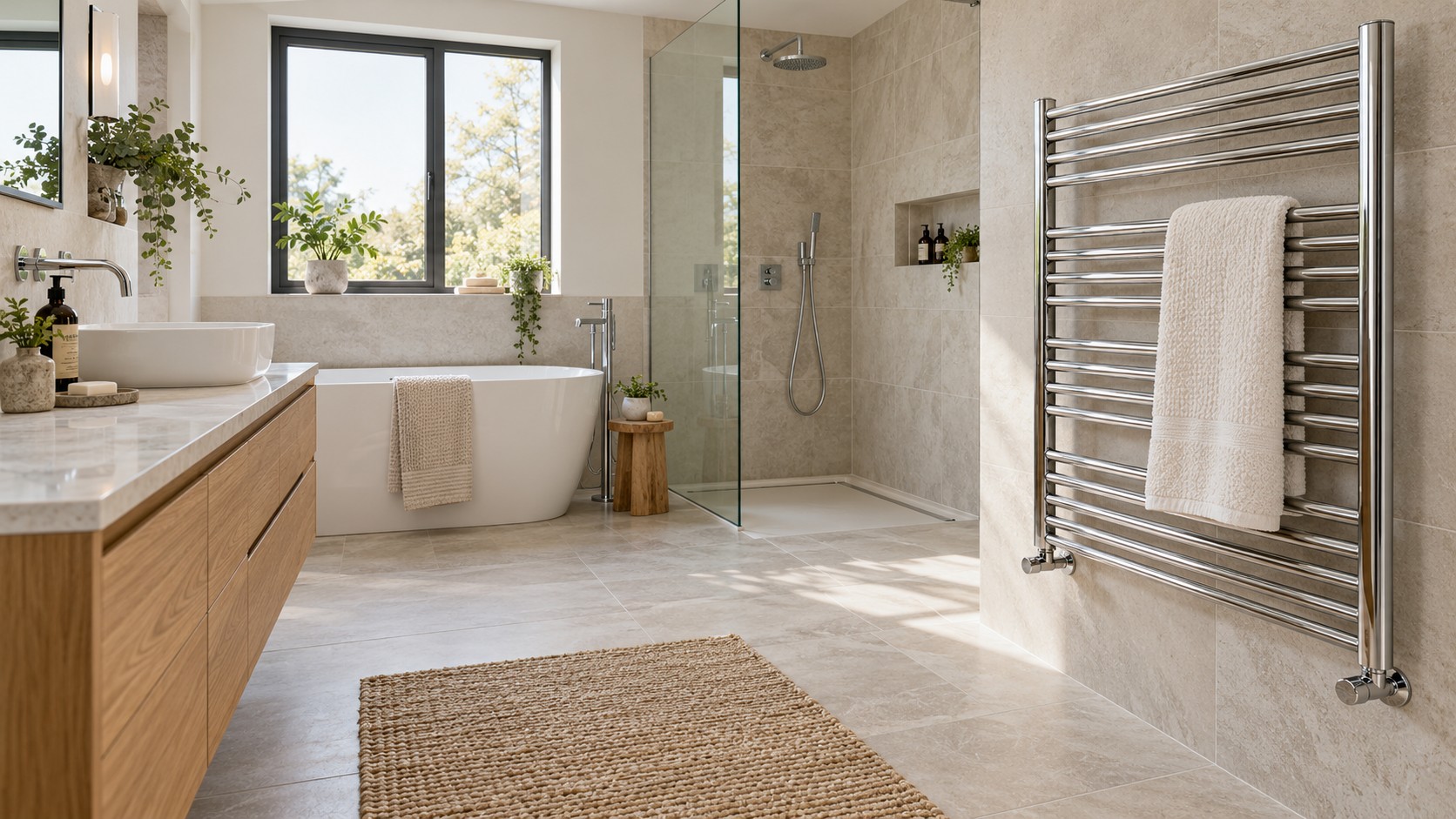
A bathroom renovation is an opportunity to reconsider where everyday fittings belong. A towel radiator should be planned alongside the basin, bath and shower, rather than squeezed onto the last available wall. A wider format may suit the layout, but it needs to be checked against access, plumbing and the room’s heating needs.
Measure the space people actually use
Begin with a plan showing doors, furniture, sanitaryware and shower screens. Include how those items open and where people stand to use them. A clear section of wall on a drawing may become less useful when a door swings across it or a vanity drawer is extended.
Consider the radiator’s projection as well as its width and height. Leave the clearances specified by the manufacturer and room for the proposed valves. Towels should be easy to reach without making a narrow route through the bathroom uncomfortable.
Choose proportions before committing to pipework
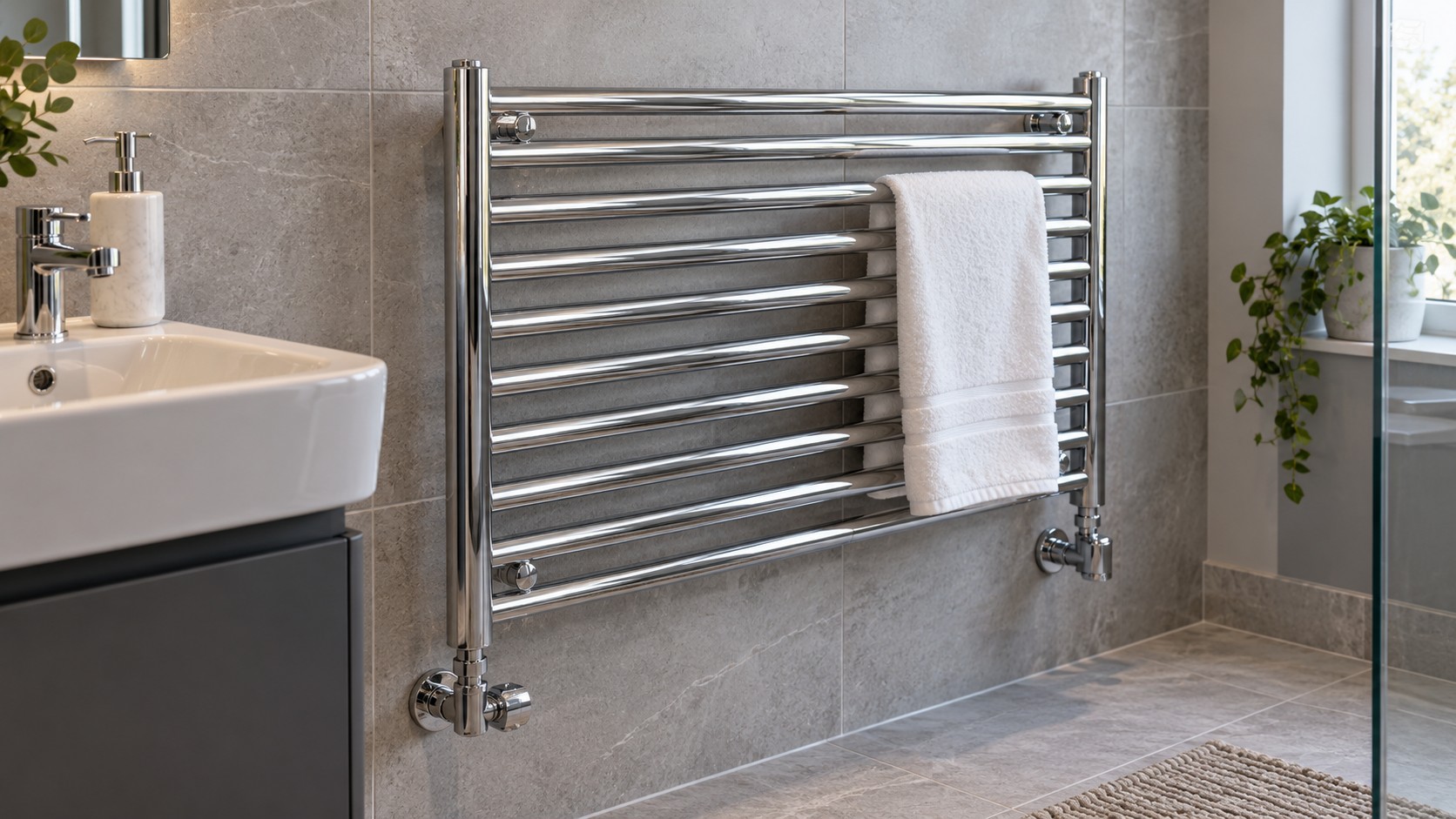
A chrome finish can sit alongside other chrome bathroom fittings, while the radiator’s proportions help determine how prominent it feels. Marking the proposed outline on the wall with removable tape can make the scale easier to assess before the installer fixes the pipe positions.
Where the measured layout accommodates a broader rail, 800mm-wide chrome towel radiators offer a collection to compare. Check each model’s height, connection arrangement and installation requirements rather than treating the collection width as a complete specification.
For broader layout considerations, PAD Magazine’s guide to designing the perfect bathroom covers planning fittings, storage and practical clearances.
Check heating performance separately
A wider radiator is not automatically the correct heat source for a particular bathroom. The required output depends on the room, and the available output depends on the selected model and operating conditions. Ask the installer to assess the room’s heat requirement and compare it with the appropriate product rating.
This matters when a renovation also changes the heating system. An output quoted at one water-temperature condition should not be assumed to apply at another. Confirm the relevant figures before ordering, especially if lower operating temperatures are planned.
Think through an ordinary morning
A useful way to test the position is to walk through the room as you would when getting ready. Can someone reach a towel after a shower? Does an open door hide the rail? Will a laundry basket or freestanding cabinet end up blocking it? These small questions often reveal more than a photograph of a finished bathroom.
Think about how many towels the household normally uses and how they will hang. Compare the actual arrangement of the bars, not just the outer dimensions. A tall rail and a shorter, wider model can occupy similar areas of wall while offering a different hanging arrangement.
Keep the specification easy to check
Before placing the order, put the essential details in one place: the model reference, body dimensions, pipe centres, valve arrangement, heating configuration and relevant output figure. Add the accessories that are included and those that must be purchased separately. Share this with the installer so questions can be resolved before the finishing work begins.
It is also sensible to check the manufacturer’s cleaning advice when choosing a finish. A bathroom radiator sits close to products used on tiles, glass and taps; the cleaning method suitable for one surface may be unsuitable for another. Keeping the care instructions with the product paperwork makes future maintenance easier.
Agree the installation details early
For a replacement, have the existing pipe centres checked against the proposed radiator and valve arrangement. For a new layout, agree the position before walls and floors are finished. The supporting wall and fixings must also be suitable for the radiator in use.
Central heating, electric and dual-fuel configurations have different requirements. Confirm that the chosen model supports the intended arrangement and that any element, kit, valves and controls are compatible. Installation should follow the relevant manufacturers’ instructions and be carried out by appropriately qualified tradespeople.
A successful choice combines appearance with a measured plan. Settling those details before ordering helps the finished bathroom feel considered and makes the radiator a useful part of the room.

