


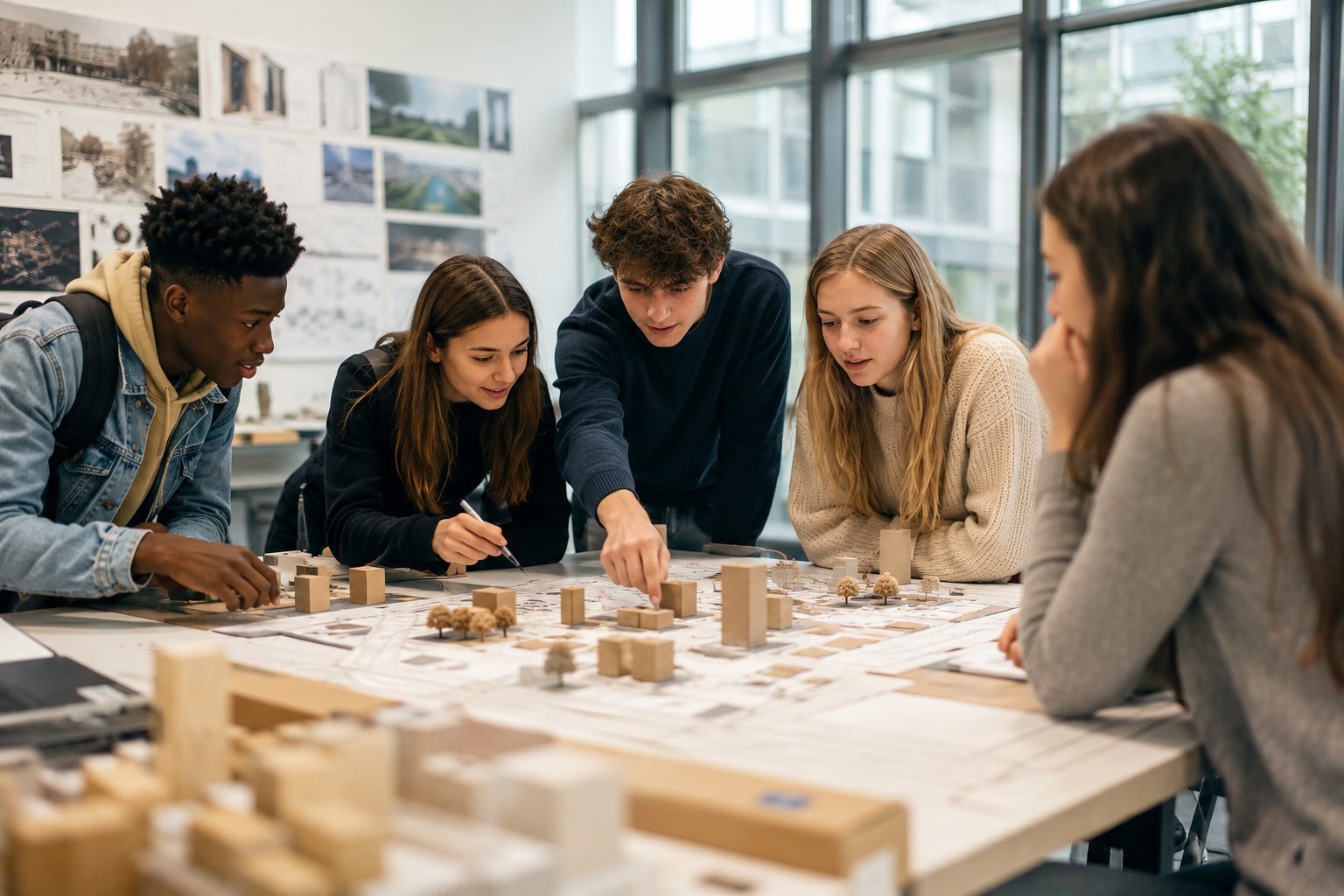
The Inspire Future Generations Awards have opened for 2026, returning for their sixth year to recognise projects and organisations that involve children and young people in shaping the built environment.
Run by Thornton Education Trust, the awards celebrate participatory design, planning and engagement work across architecture, development, education, local government and community-led projects. The programme highlights initiatives that move beyond basic consultation and give young people a meaningful voice in the places where they live, learn and spend time.
This year’s awards also introduce a new Heritage category, expanding the programme to recognise work that connects young people with historic places, cultural identity and the future of existing buildings.
Judges Announced for 2026
The 2026 judging panel brings together professionals from architecture, planning, education, community engagement and development.
Among the judges is Eleanor Fawcett, former Head of Design at the Old Oak and Park Royal Development Corporation. She joins a panel that includes Magali Thomson, Architect and Project Lead for Placemaking at Great Ormond Street Hospital, and Chloe McFarlane, Community Engagement Manager at Grosvenor Property UK.
Other judges include Kathryn Firth, former Director of Masterplanning and Urban Design at ARUP; Claire Miller, Associate at Askew Cavanna; Melissa Lacide, Consultant for Engagement at Quality of Life Futures; Gemma Hyde, Projects and Policy Manager at the Town and Country Planning Association; Julia Nicholls of Julia Nicholls Communications and TET Associate; and Dhruv Guulabchande, Director at Narrative Practice and TET Associate.
What the Awards Recognise
Since launching in 2021, the Inspire Future Generations Awards have recognised local authorities, planners, designers, architects, developers and organisations that place children and young people at the centre of built environment conversations.
Past recognised initiatives have included work from local authorities such as the London Borough of Waltham Forest, Enfield Council, the City of Bradford Metropolitan District Council and Greater Cambridge.
The awards are intended to show how young people can contribute meaningfully to planning and design, rather than being treated as a symbolic part of the process. For Thornton Education Trust, the aim is to encourage better practice across the built environment sector and demonstrate how youth engagement can lead to stronger, more inclusive places.
2026 Award Categories
The 2026 awards include 16 categories covering climate, culture, regeneration, research, skills and public-sector work.
The full category list includes:
- Climate Change
- Culture
- Healthy Spaces
- Regeneration
- Heritage
- Community
- Strategic Vision
- Research & Materials
- Skills Development
- Best of Built Environment Practice
- Best of Local Authority / Public Agency
- Best of Development Company / Estate
- Best of Not for Profit Organisations
- Best of University School / Department of Built Environment / Design / Planning
- Special Recognition: Young Talent
- Special Recognition: Individual of the Year
The introduction of the Heritage category reflects a growing interest in how young people engage with historic buildings, public memory and the long-term future of places that already hold cultural value.
Why Youth Engagement Matters in Planning
The built environment affects children and young people every day, from schools and streets to housing, parks, hospitals and public spaces. Yet their views have not always been fully considered in planning and design decisions.
Participatory engagement aims to change that by giving young people a more active role in the process. This can include workshops, research, design activities, local consultations and long-term collaboration between professionals and communities.
The press release highlights the view of Miriam Levin, Director of Participatory Programmes at Demos, who said that places work better when all parts of the community are involved. She noted that long-term homes and communities should be shaped with future generations in mind.
The release also references Greater London Authority guidance, which states that planning policy and Local Plans should be informed by place-based insights from children and young people.
Who Can Enter the Awards?
The awards are open to a wide range of built environment professionals and organisations. Eligible entrants include planners, developers, local authorities, architects, educational institutions and community organisations involved in participatory planning with children and young people.
Entries can be submitted across 16 categories, giving both public and private sector projects the opportunity to be recognised.
The deadline for entries is 16 October 2026.
About Thornton Education Trust
The Inspire Future Generations Awards are a key initiative of Thornton Education Trust, which works to connect young people with architecture, planning and the built environment.
The awards were established to provide a platform for individuals and organisations helping young people understand, influence and improve the places around them.
Thornton Education Trust was co-founded by Victoria Thornton OBE, Hon FRIBA, and Neil Pinder, HonProf UCL, HonFRIBA. Their work brings together experience in education, architecture and youth engagement.
Final Thoughts
The launch of the Inspire Future Generations Awards 2026 reflects a wider shift in the built environment sector: young people are not just future users of places, but current voices who can help shape better communities.
By recognising projects that involve children and young people in meaningful ways, the awards encourage planners, architects, developers and local authorities to think more carefully about who participates in design decisions.
As pressure grows to create healthier, more inclusive and more sustainable places, youth engagement is becoming an important part of how the built environment plans for the future.
For more architecture and built environment updates, explore the latest PAD Magazine property stories.