


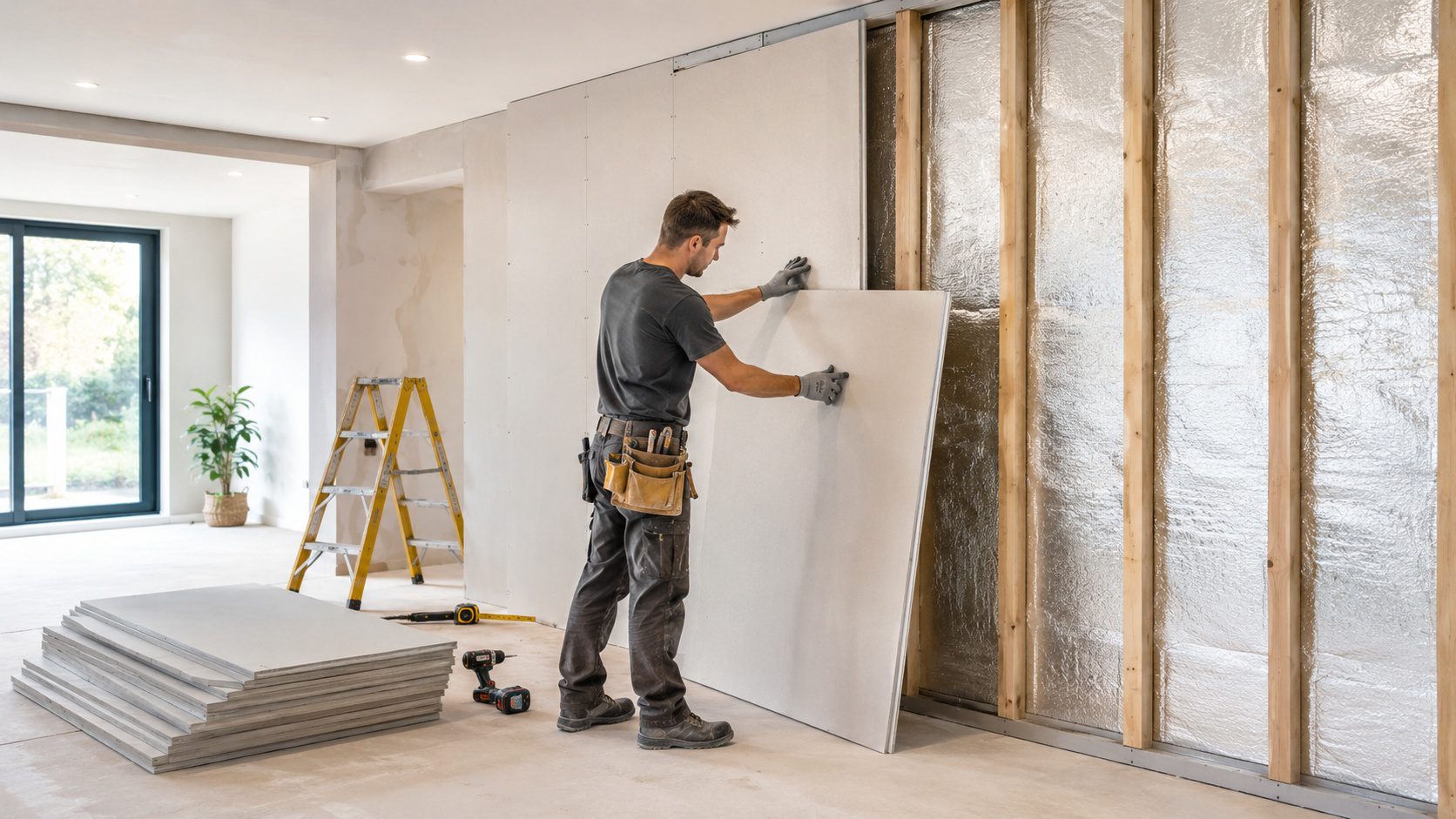
Renovating an older property often means tackling poor thermal performance. Cold walls, draughty rooms, and rising heating costs are common issues, particularly in homes built before modern insulation standards were introduced.
Insulated plasterboard offers a practical way to improve internal wall insulation without major structural work. Combining PIR insulation and plasterboard in a single product helps reduce heat loss while creating a surface ready for decoration. This guide explains how to identify heat loss, choose the right board thickness, select a fixing method, and prepare walls before installation.
Identify Where Heat Loss Is Occurring Before You Specify a Solution
Before selecting an insulation system, it’s important to understand where heat is escaping from and whether any underlying issues need to be addressed. Taking the time to assess the wall properly can help avoid unnecessary work and ensure the right solution is specified.
Common Causes of Heat Loss in Older Properties
Many older homes have solid walls with little or no insulation, allowing heat to pass through the building fabric more easily than in modern properties. External-facing walls are often the biggest source of heat loss, particularly where original construction methods offer limited thermal resistance.
A good starting point is to identify walls that feel cold to the touch during winter or rooms that consistently feel cooler than the rest of the property. These areas will usually benefit most from insulation upgrades.
Check for Damp Before Installing Insulation
Damp should always be investigated before installing insulated plasterboard. Condensation, mould growth, staining, or peeling finishes can indicate moisture issues that need resolving first.
Insulated plasterboard is designed to improve thermal performance, not solve damp problems. Any source of moisture should be identified and addressed before installation begins to help ensure long-term performance.
Why Insulated Plasterboard Is a Practical Choice for Renovation Projects
For many renovation projects, insulated plasterboard provides an effective balance between thermal improvement and ease of installation. It is particularly useful where improving energy efficiency is a priority, but major structural alterations are not.
Combining Insulation and Plasterboard in One Product
Insulated plasterboard combines rigid PIR insulation with a plasterboard finish, allowing thermal upgrades and wall lining to be completed in a single installation. This can help reduce labour time and simplify the overall renovation process.
Manufacturers such as Celotex and Gyproc offer systems specifically designed for internal wall insulation, with a range of thicknesses to suit different applications.
Why It Works Well in Retrofit Applications
One of the key advantages of insulated plasterboard is that it can improve thermal performance without requiring existing walls to be rebuilt. This makes it a practical option for period homes and older properties where preserving the existing structure is often important.
Once you’ve established the performance level required, sourcing the right specification becomes much simpler. Online Insulation Sales supplies insulated plasterboard for internal wall insulation in a range of thicknesses suitable for renovation and retrofit projects, helping homeowners and contractors find a solution that meets their thermal performance requirements.
How Board Thickness Determines the Thermal Performance You Can Achieve
Not all insulated plasterboard delivers the same level of performance. The thickness of the PIR insulation layer has a direct impact on how much heat can pass through the wall and the U-value that can be achieved.
Understanding the Relationship Between Thickness and U-Value
In simple terms, thicker insulation generally results in better thermal performance. A thicker PIR layer reduces heat transfer through the wall, helping to lower the U-value and improve energy efficiency.
For many internal wall insulation projects, boards ranging from 37.5mm to 72.5mm are commonly specified, although the right choice depends on the construction of the wall and the available space.
Selecting a Board That Meets Your Project Requirements
Rather than choosing a board based on thickness alone, it’s better to start with the performance target. Building regulations, project goals, and energy efficiency requirements can all influence the specification needed.
Establishing the required U-value at the start of the project makes it easier to select a board that delivers the desired result without overspecifying or underspecifying the insulation.
Which Fixing Method Works Best When Upgrading Internal Walls
Once the correct board has been selected, the next decision is how it will be fixed to the wall. The most suitable method depends on the condition of the substrate and the requirements of the project.
When Dot-and-Dab Is the Right Choice
Dot-and-dab is one of the most common fixing methods for insulated plasterboard. Adhesive dabs are applied to the wall before the board is pressed into place and allowed to cure.
This approach works well on sound, reasonably level brick and blockwork walls, providing a quick and cost-effective installation method for many renovation projects.
Situations Where Mechanical Fixing Is Better
Mechanical fixing is often preferred where walls are uneven, unstable, or unsuitable for adhesive bonding. It can also be beneficial where additional security or more demanding airtightness requirements are involved.
In some situations, a combination of adhesive and mechanical fixings may be used to achieve both a secure installation and a flat finished surface.
What to Confirm Before Insulated Plasterboard Goes on the Wall
Proper preparation plays an important role in the long-term performance of any insulation system. Before installation begins, the condition of the wall should be carefully assessed.
Preparing the Existing Surface
The wall should be clean, stable, and free from loose materials before insulated plasterboard is installed. Cracked, hollow, or poorly bonded plaster should be removed rather than covered over.
Preparing the surface correctly helps create a secure fixing and contributes to a better-quality finish once the work is complete.
Managing Moisture and Damp Issues
Older properties can retain moisture due to historic water ingress, condensation, or long periods of vacancy. Even where no visible signs are present, it’s worth checking moisture levels before installation.
Any damp issues should be resolved, and the wall allowed to dry fully before insulated plasterboard is fitted. This helps protect both the insulation system and the building fabric over the long term.
Specify the Right Board and Get the Renovation Right First Time
Improving thermal performance during a renovation starts with the right specification. By identifying where heat loss is occurring, confirming the target U-value, choosing the correct board thickness, and selecting an appropriate fixing method, you can achieve a more effective and reliable result.
Browse the insulated plasterboard range at Online Insulation Sales to compare specifications, find the right solution for your project, and make sure your renovation starts with the correct product.
FAQs
What is PIR insulated plasterboard and how does it work?
PIR insulated plasterboard combines rigid PIR insulation with a plasterboard facing. It improves the thermal performance of internal walls while providing a surface ready for decoration.
What thickness of insulated plasterboard do I need for internal wall insulation?
The correct thickness depends on the U-value target for the project. Boards typically range from 37.5mm to 72.5mm, with thicker boards generally providing better thermal performance.
Can insulated plasterboard be used in older or period properties?
Yes. It is widely used in older properties because it can improve thermal performance without requiring major structural changes to existing walls.
What is the difference between dot-and-dab and mechanical fixing?
Dot-and-dab uses adhesive to bond the board to the wall, while mechanical fixing uses screws or plugs. The best option depends on the condition of the substrate and the project requirements.
Where can I buy insulated plasterboard for a renovation project?
Online Insulation Sales supplies insulated plasterboard systems suitable for renovation and retrofit projects, including products from manufacturers such as Celotex and Gyproc.