


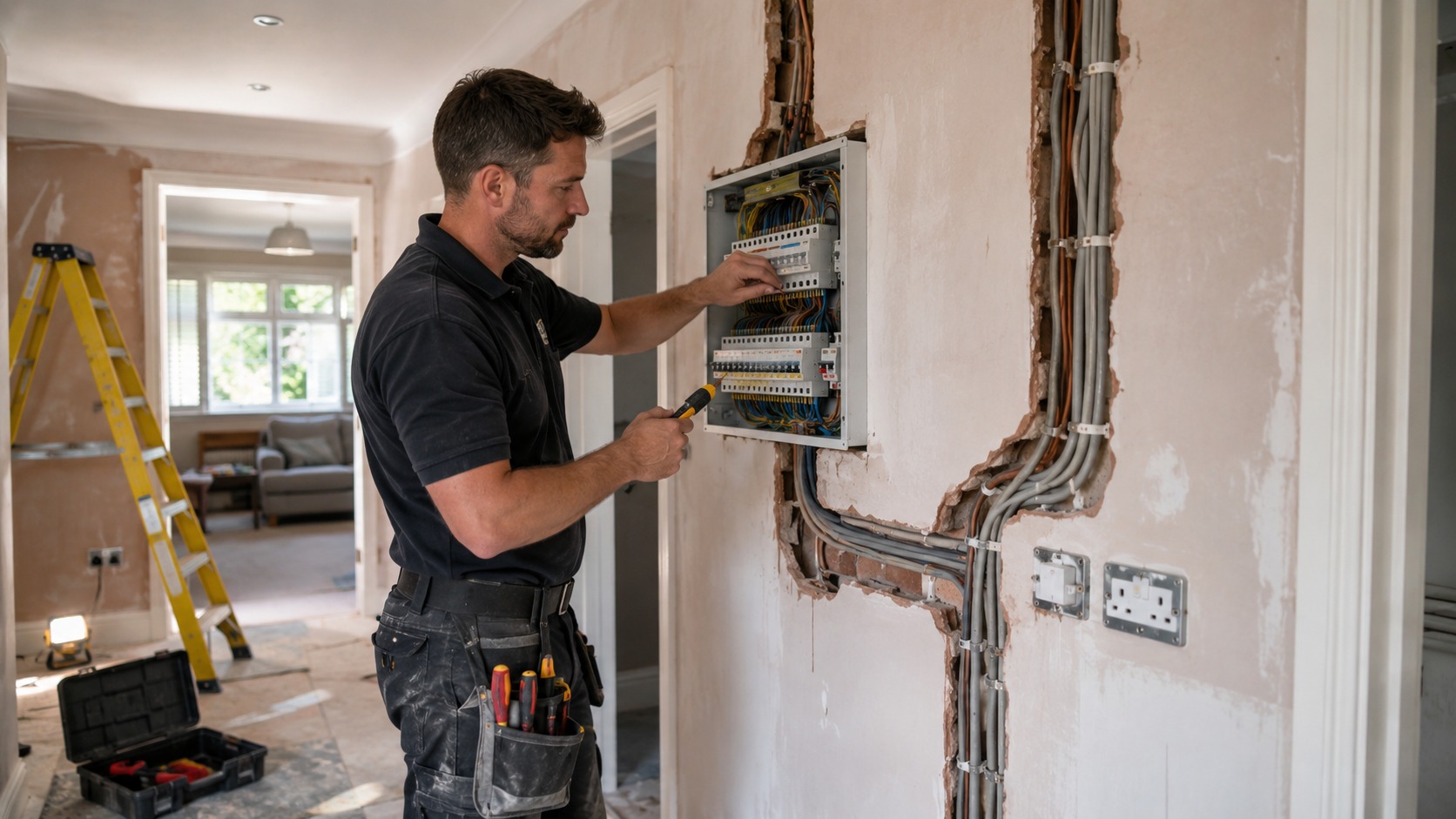
House rewiring cost UK searches often begin after a survey, an electrical inspection or the discovery of an old fuse box. A full rewire is not the most visible home improvement, but it can be one of the most important. It replaces ageing cables, upgrades protection at the consumer unit and gives a property enough sockets and circuits for modern daily life.
For most UK homes, a full rewire in 2026 is likely to cost somewhere between £4,000 and £10,000 before decorating and other associated work. Smaller flats may fall below that range, while large houses, occupied properties, period buildings and homes requiring a premium specification can cost considerably more.
The final figure depends on far more than bedroom count. Access below floors and above ceilings, the number of new electrical points, regional labour rates, the condition of the building and whether the property is empty all affect the quote. This guide breaks down the likely costs and explains what homeowners should check before work begins.
Quick Answer: The average house rewiring cost in the UK is around £4,000 to £10,000 in 2026. A one-bedroom flat may cost roughly £3,200 to £4,500, a typical three-bedroom house around £5,500 to £7,500, and a larger five-bedroom home £9,000 to £12,000 or more. These figures normally exclude replastering, redecoration and major upgrades requested after the original quote.
Average House Rewiring Cost UK by Property Size
The table below provides a practical budgeting range rather than a fixed price. Quotes may be shown before VAT, so always confirm whether VAT is included when comparing electricians.
| Property type | Typical 2026 cost | Likely working time |
| One-bedroom flat | £3,200-£4,500 | 3-5 days |
| Two-bedroom flat or small house | £4,000-£5,500 | 4-7 days |
| Three-bedroom house | £5,500-£7,500 | 6-10 days |
| Four-bedroom house | £7,000-£9,500 | 8-12 days |
| Five-bedroom or larger house | £9,000-£12,000+ | 10-15+ days |
Internal reading: A rewire is often best planned alongside wider work. PAD Magazine’s home renovation ideas guide explains how different upgrades can be coordinated to improve a UK home without repeatedly opening finished walls and floors.
What Is Included in a Full House Rewire?
A full rewire normally means removing or safely disconnecting outdated electrical wiring and installing new circuits throughout the property. It is much more extensive than replacing a few sockets or fitting a new consumer unit.
A standard specification commonly includes new cabling for lighting and socket circuits, a modern consumer unit, new switches and socket outlets, earthing and bonding, smoke alarm wiring where agreed, testing, certification and the connection of fixed appliances listed in the quote.
The electrician should also discuss how many sockets you need in each room, whether you want USB outlets, exterior lighting, data cabling, smart-home controls, an EV charger supply or provision for future solar panels and a heat pump. Adding these requirements before the work starts is usually more economical than changing the plan midway through the installation.
What May Not Be Included in the Quote?
- Replastering wall chases and ceilings after cables are installed.
- Full repainting, wallpaper replacement or decorative finishes.
- Flooring repairs where boards, tiles or fitted carpets need to be lifted.
- Premium light fittings, decorative switches, smart controls or specialist equipment.
- Asbestos testing or removal in older properties.
- Unexpected repairs discovered after floors or walls are opened.
- Temporary accommodation, storage or moving furniture between rooms.
The Main Factors That Affect Rewiring Cost
Property size and layout
A larger property needs more cable, more circuits and more labour. However, layout also matters. A compact four-bedroom house may be easier to rewire than a heavily altered three-bedroom period property with extensions, solid floors and limited access.
Whether the home is occupied
An empty property is normally quicker and cheaper to work in. Furniture, belongings and occupied rooms slow access and require additional protection and cleaning. Some electricians charge more for a staged rewire because the job takes longer and requires repeated setup.
Wall, ceiling and floor construction
Suspended timber floors and accessible lofts can make cable routes easier. Concrete floors, ornate plasterwork, tiled walls and recently completed finishes may increase labour and reinstatement costs.
Number of electrical points
A basic quote may include an allowance for sockets, switches and lighting points. Adding extra sockets to every room, multiple kitchen circuits, garden power, security systems or data points can significantly increase the price.
Location and labour rates
Electrical labour costs vary across the UK. London and parts of the South East are often more expensive, while quotes elsewhere may be lower. Travel, parking restrictions and difficult site access can also appear in the total.
Age and condition of the property
Older homes may contain rubber, fabric or lead-sheathed cables, outdated bonding, historic alterations or undocumented DIY work. The more uncertain the existing installation, the more contingency may be needed.
Signs a House May Need Rewiring
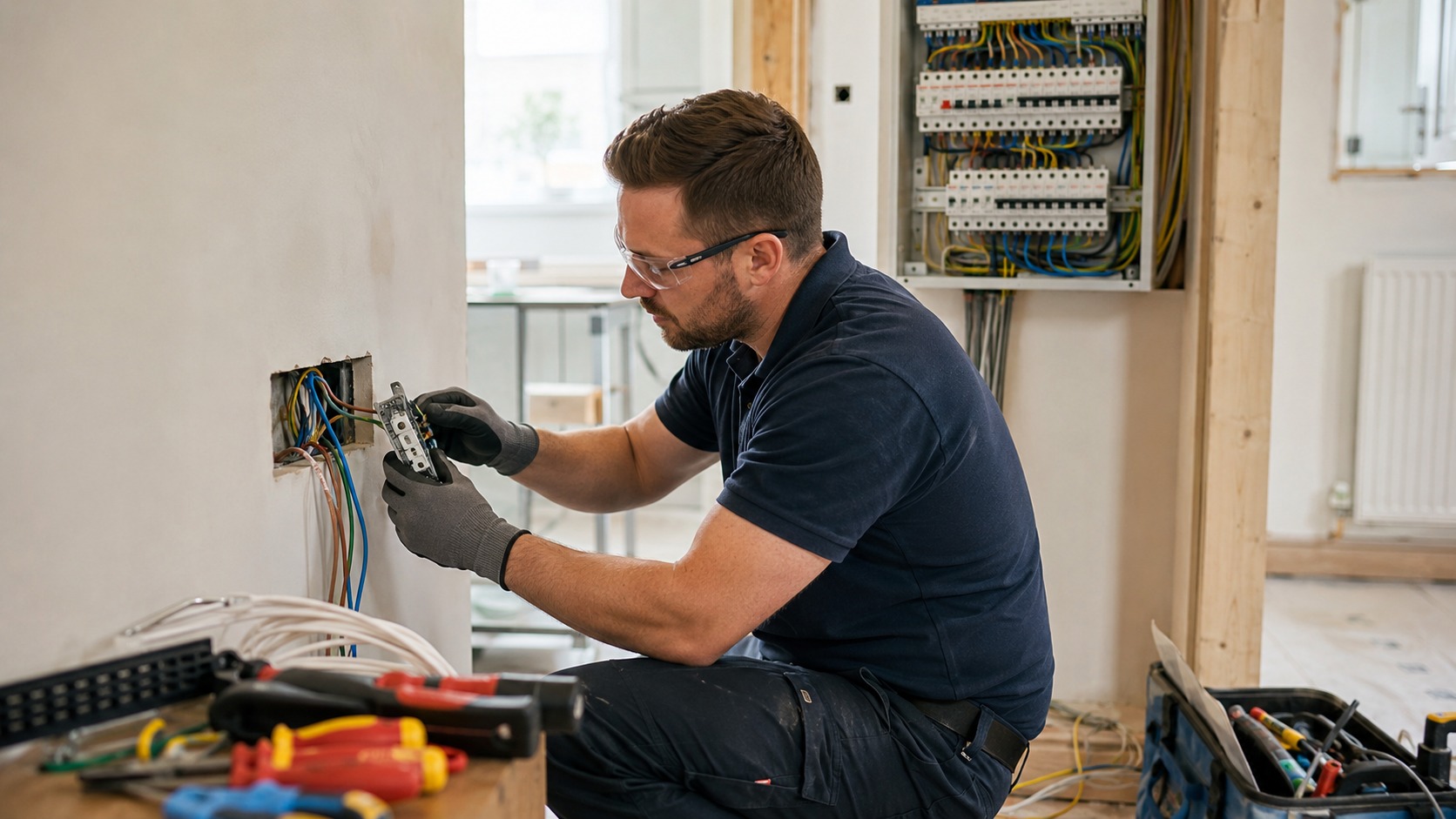
Age alone does not prove that a property needs a full rewire. The condition of the installation should be assessed by a qualified electrician. However, the following warning signs justify professional inspection:
- A consumer unit with an old-style fuse box, wooden back or limited modern protection.
- Frequent tripping, flickering lights or circuits that struggle with normal appliance use.
- Buzzing, cracking, heat, scorch marks or discolouration around sockets and switches.
- Old rubber, fabric or lead-covered wiring visible near fittings or the consumer unit.
- Too few sockets, leading to heavy use of extension leads and multi-plug adaptors.
- Mixed wiring standards or obvious DIY alterations carried out over many years.
- An unsatisfactory Electrical Installation Condition Report, often called an EICR.
Related PAD guide: Electrical upgrades can be coordinated with energy improvements. See EPC Rating Explained: What It Means and How to Improve Yours for a wider look at household efficiency and renovation priorities.
How Long Does It Take to Rewire a House?
A straightforward full rewire can take around one week in a small empty property and up to two weeks or more in a larger home. The electrical work is often completed in two main stages.
During the first fix, the electrician plans cable routes, lifts floors where required, chases walls and installs new cabling and back boxes. This is usually the noisiest and most disruptive phase. During the second fix, sockets, switches, light fittings and the consumer unit are connected before the installation is inspected and tested.
The complete renovation timeline can be longer than the electrical programme because plaster must dry and rooms may need redecorating. Homeowners should therefore plan the rewire before fitting a new kitchen, decorating bedrooms or laying expensive floors.
Can You Live in a House While It Is Being Rewired?
It is sometimes possible, but it is rarely comfortable. Electricity may be unavailable in different parts of the property, floorboards can be lifted and dust may spread despite careful protection. Families with children, pets, home-working requirements or limited space may find temporary accommodation more practical. Ask the electrician whether power can be restored safely at the end of each working day and which rooms must remain clear.
House Rewiring Regulations and Certification
Electrical work in homes must be designed, installed, inspected and tested safely. In England, certain work is notifiable under Part P of the Building Regulations. Using an electrician registered with an approved competent person scheme can simplify compliance because eligible installers can self-certify qualifying work.
Before approving a quote, read the government guidance on Approved Document P for electrical safety in dwellings. Requirements differ across the UK, so homeowners in Scotland, Wales and Northern Ireland should check the rules that apply locally.
At completion, ask for the appropriate electrical certificate, test results and building regulations compliance documents where relevant. Keep these safely because they may be requested during a future property sale, remortgage, insurance claim or further renovation.
Should You Rewire Before Other Renovation Work?
In most cases, yes. A rewire involves opening walls, lifting floors and moving around every room. Completing it after plastering, decorating or installing fitted furniture can mean paying twice for finished work. The ideal sequence is usually strip-out, structural alterations, first-fix services, plastering, second-fix electrical work, joinery, decorating and flooring.
Homeowners planning extra living space should also calculate future electrical demand early. PAD Magazine’s loft conversion cost UK guide and garage conversion ideas guide can help shape the wider renovation plan before new circuits and outlets are finalised.
How to Budget for a Full Rewire
Start with at least three written quotes based on the same room-by-room specification. A vague request for “a full rewire” can produce prices that appear comparable but include very different numbers of sockets, light points and finishing tasks.
Add a contingency of around 10 to 15 per cent for hidden issues, additional outlets or changes that become necessary once access is opened. If the property is very old or has been altered repeatedly, a larger contingency may be sensible.
Also create a separate allowance for plastering and decoration. These costs are easy to underestimate because the electrical quote may finish when the system is safe and operational, not when every room looks complete again.
Ways to Control the Cost Without Cutting Safety
- Clear rooms and provide easy access before the electrician arrives.
- Agree socket and switch positions before first fix begins.
- Choose a good standard range of white accessories unless premium finishes are important.
- Coordinate electrical work with other renovation trades to avoid duplicated opening and making good.
- Keep the specification realistic, but include future essentials while cables are accessible.
- Compare the scope, registration, insurance and certification – not only the lowest headline price.
Browse related sections: Property | Interiors | Construction | Property Renovation & Refurbishment
Questions to Ask an Electrician Before Hiring
- Are you registered with a recognised competent person scheme?
- Does the quote include VAT, testing, certification and building regulations notification?
- Exactly how many sockets, switches, lights and circuits are included?
- Who is responsible for lifting floors, moving furniture and making good afterwards?
- Will the property be safe and powered at the end of each day?
- What happens if hidden faults or additional work are discovered?
- Can you provide recent references and evidence of public liability insurance?
Frequently Asked Questions
How much does it cost to rewire a three-bedroom house in the UK?
A typical three-bedroom house may cost around £5,500 to £7,500 in 2026. London pricing, difficult access, an occupied home, a large number of electrical points or extensive making good can push the total higher.
Does a new consumer unit mean the house has been rewired?
No. A consumer unit can be replaced without renewing all cables and accessories. An electrician must test the existing installation and confirm whether it is suitable for connection to the new unit.
Is rewiring covered by buildings insurance?
Routine replacement of old wiring is not normally covered as standard maintenance. Damage caused by an insured event may be treated differently. Check the exact terms with your insurer before assuming the cost will be reimbursed.
How often should a house be rewired?
There is no fixed universal replacement age. Wiring condition, installation type, alterations and test results matter more than the property’s age. A periodic EICR can identify deterioration and safety issues before deciding whether a full rewire is necessary.
Will rewiring increase property value?
A safe, modern electrical installation can improve buyer confidence and remove a major concern during surveys and conveyancing. It may not add the same visible premium as a new kitchen, but it can protect a sale from renegotiation and support wider renovation plans.
Can I rewire a house myself?
A full rewire is complex, potentially dangerous and subject to legal and certification requirements. It should be designed, installed, inspected and tested by a properly qualified person who understands the rules applying in that part of the UK.
Final Thoughts
The average house rewiring cost UK homeowners face in 2026 is substantial, but the project is an investment in safety, capacity and future flexibility. A realistic budget for most properties is between £4,000 and £10,000, with larger or more complicated homes costing more.
The best result comes from planning the electrical layout before other finishes, comparing detailed quotes and keeping a contingency for hidden work. Do not rely on bedroom count alone. A proper inspection and a written room-by-room specification are the only reliable ways to establish the likely price for a particular property