


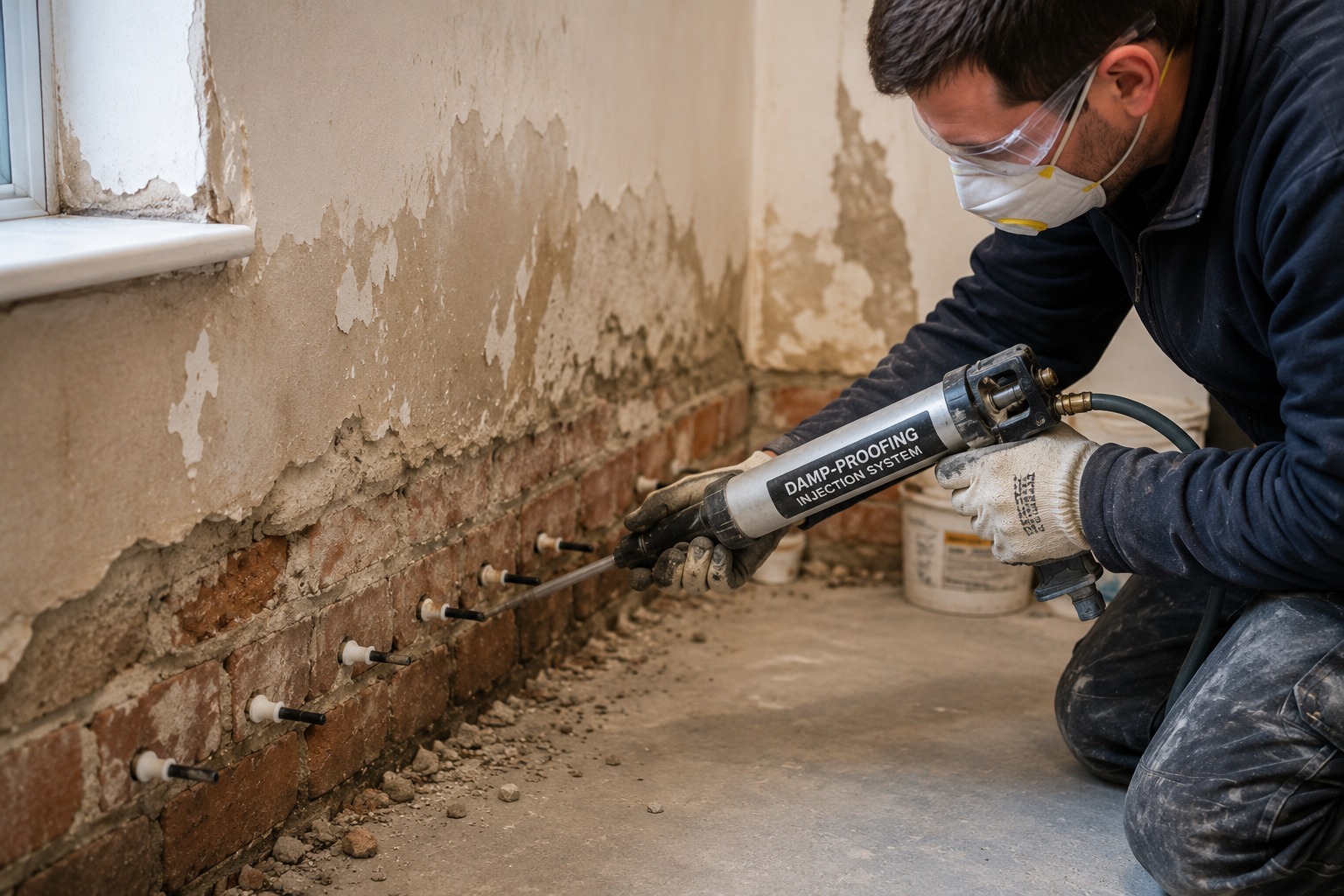
Damp can turn a manageable home-maintenance job into a much larger repair bill when the real source of moisture is missed. The damp proofing cost UK homeowners face in 2026 varies from a few hundred pounds for a localised condensation or gutter-related issue to several thousand pounds for rising damp, extensive replastering or full basement waterproofing.
Before paying for treatment, the priority is an accurate diagnosis. Rising damp, penetrating damp and condensation can produce similar symptoms, but each requires a different solution. PAD Magazine has previously reported on the scale of damp problems in UK homes, making early investigation especially important for homeowners, buyers and landlords.
Quick Answer: How Much Does Damp Proofing Cost in the UK?
In 2026, most targeted damp proofing jobs in the UK cost around £800 to £3,000. A chemical damp-proof course may be priced at roughly £60 to £90 per linear metre, while treating rising damp across a ground floor with damaged plaster can cost £2,500 to £6,000 or more. Local penetrating damp repairs often start from £400 to £1,500, whereas major external repairs and internal making-good can push the bill above £5,000. Full cellar or basement tanking commonly ranges from £4,000 to £14,000+, depending on area, system and drainage requirements.
A proper damp or damp-and-timber survey usually costs around £200 to £600. This can be money well spent because installing a new DPC will not fix a leaking roof, failed gutter, plumbing leak or condensation problem.
Damp Proofing Cost UK: Typical 2026 Prices
The following figures are sensible budgeting ranges rather than guaranteed quotes. London and parts of the South East generally cost more, while access, wall construction and the extent of plaster damage can change the final price substantially.
| Work | Typical 2026 Cost | Main Price Factors |
| Professional damp survey | £200-£600 | Property size, report detail and whether timber is inspected |
| Chemical DPC injection | £60-£90 per linear metre | Wall thickness, drilling access and contractor minimum charge |
| Rising damp treatment – one wall | £700-£1,500 | Length of wall and amount of plaster removed |
| Rising damp treatment – one room | £1,200-£3,000 | DPC, salt-contaminated plaster, skirting and redecoration |
| Whole ground-floor treatment | £2,500-£6,000+ | House footprint, internal partitions and replastering |
| Local penetrating damp repair | £400-£1,500 | Defective pointing, gutter, flashing, seal or minor leak |
| Major penetrating damp repair | £1,500-£5,000+ | Scaffolding, roofing, masonry and internal damage |
| Condensation and mould improvements | £250-£1,500 | Extractor fans, ventilation, insulation and mould treatment |
| Remedial replastering | £40-£80 per m² | Removal, salt-resistant system, drying and finish |
| Tanking or cavity membrane system | £80-£150 per m² | Substrate preparation, drainage and specification |
| Full cellar or basement waterproofing | £4,000-£14,000+ | Area, groundwater pressure, sump pumps and finish level |
Budget tip: Ask whether VAT, waste removal, skirting replacement, electrical refitting, drying time, decoration and follow-up inspections are included. A low headline price can grow quickly when these items are excluded.
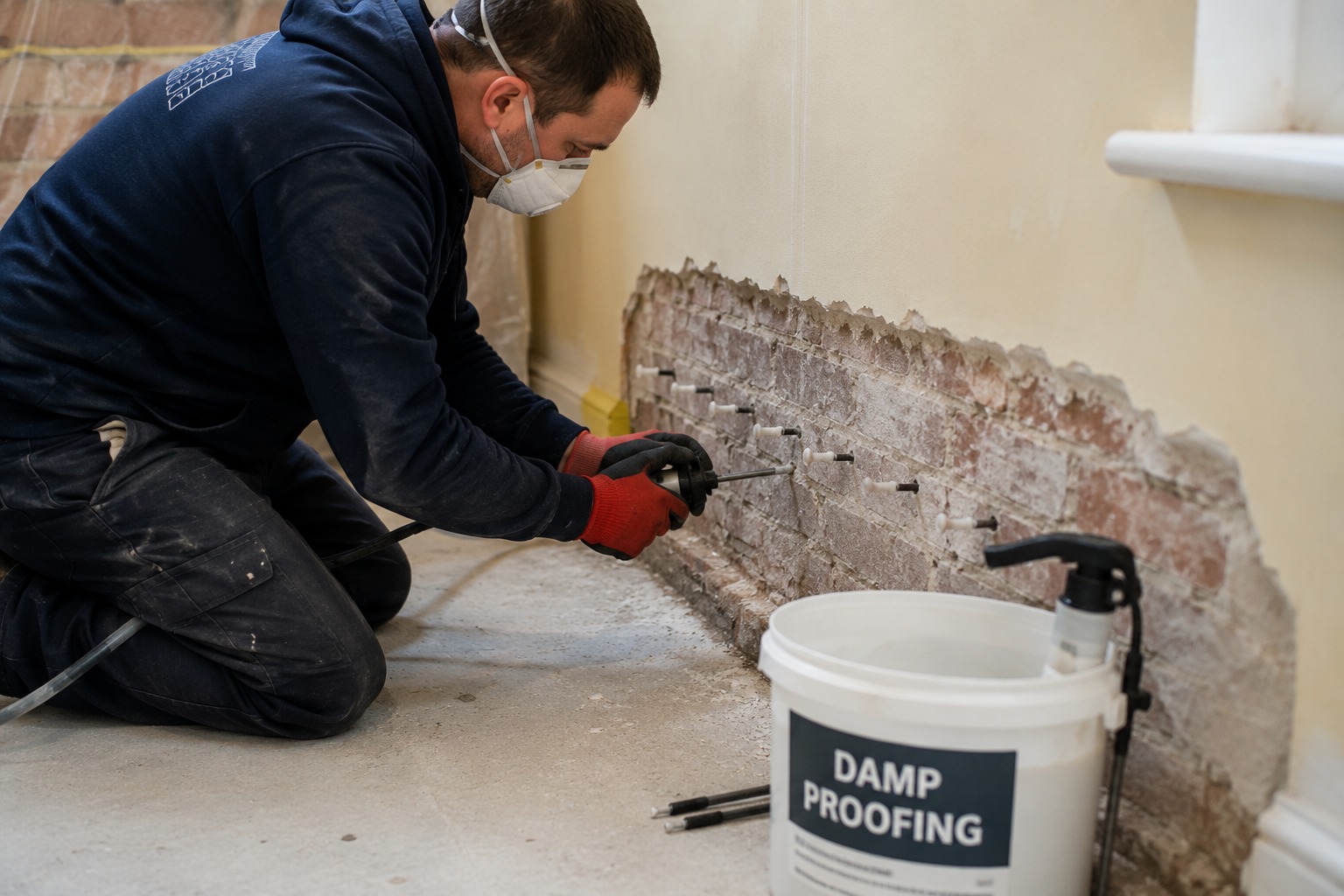
What Type of Damp Are You Paying to Fix?
Damp proofing is not one standard treatment. The correct repair depends on how moisture is entering or forming inside the building.
Rising Damp
Rising damp occurs when ground moisture moves upward through porous masonry. It normally affects the lower part of a wall and may leave tide marks, crumbling plaster, damaged skirting or white salt deposits. Treatment may involve a chemical DPC, removal of salt-contaminated plaster and a suitable replastering system.
The DPC injection itself may be relatively affordable, but labour and making good often account for most of the bill. In older solid-wall or traditionally constructed properties, a specialist should consider whether modern impermeable materials could trap moisture rather than solve it.
Penetrating Damp
Penetrating damp is caused by water entering through a building defect. Common causes include cracked render, failed pointing, overflowing gutters, damaged roof coverings, defective flashing, leaking pipes and high external ground levels. The cost depends on the repair rather than on a single damp-proofing product.
If moisture appears after rainfall, inspect the roofline, gutters and drainage before accepting an internal treatment quote. PAD Magazine’s property drainage maintenance guide explains how poorly managed surface water can contribute to damp and longer-term building damage.
Condensation and Mould
Condensation forms when warm, moisture-laden air meets cold surfaces. It is common around windows, external corners, wardrobes and poorly ventilated bathrooms or kitchens. Improvements may include effective extractor fans, background ventilation, balanced heating, insulation and repairs to cold bridges.
Surface mould cleaning alone is not a complete repair. The moisture source and building conditions must be addressed, otherwise the problem is likely to return.
Basement and Cellar Damp
Below-ground spaces face greater moisture pressure and often require a designed waterproofing system. Options include cementitious tanking, cavity drain membranes, drainage channels and sump pumps. Costs rise because the work covers larger wall and floor areas and may need specialist detailing around services, stairs and structural joints.
For a closer look at common systems, see PAD Magazine’s guide to materials used in basement damp proofing. The best specification depends on the source of moisture, groundwater pressure and how the space will be used.
What Affects the Final Damp Proofing Price?
- The accuracy of the diagnosis: Treating the wrong cause wastes money. A chemical DPC cannot repair defective flashing, and a mould wash cannot correct a cold bridge or leaking pipe.
- The area affected: A single local patch is cheaper than continuous damp across several rooms or an entire ground floor.
- Property age and construction: Solid walls, stonework, listed features and breathable lime finishes may need a more considered specification than modern cavity construction.
- Plaster and timber damage: Salt-contaminated plaster, rotten skirting, damaged floor joists or decayed joinery can cost more to replace than the original damp treatment.
- Access and scaffolding: External wall, chimney and roof repairs can require scaffolding, specialist access or temporary protection.
- Location and contractor demand: Labour rates are normally higher in London and the South East. Emergency work and short-notice appointments may also cost more.
- Finish level: Quotes may stop at a rough plaster finish. Painting, wallpaper, flooring, fitted units and reinstating sockets can be separate costs.
Do You Need a Damp Survey First?
A survey is particularly useful when damp affects more than one room, appears at different heights, returns after previous treatment or is identified during a house purchase. A good inspection should look beyond moisture-meter readings and consider roof condition, rainwater goods, external ground levels, ventilation, heating, plumbing, wall construction and the pattern of staining.
Where possible, use an independent surveyor who is not relying solely on selling a treatment system. Request a written diagnosis, photographs, moisture findings, the proposed repair sequence and any limitations of the inspection.
How Long Does Damp Proofing Take?
A small local repair may take one or two days. Treating one room for rising damp, removing plaster and applying a new finish commonly takes three to five working days, although drying continues afterwards. Whole-ground-floor treatment may take one to two weeks, while a complex basement waterproofing project can run for several weeks.
The walls may need weeks or months to dry fully before final decoration, depending on construction, moisture levels and the replastering system. Follow the contractor’s drying and paint specification; applying an impermeable finish too early can spoil the work.
Can You Damp Proof a House Yourself?
Homeowners can often deal with simple maintenance such as clearing blocked gutters, renewing a failed seal, improving ventilation or repairing minor cracks. However, drilling and injecting walls without confirming rising damp can conceal symptoms while the real leak continues.
Professional input is sensible where there is widespread mould, structural movement, timber decay, electrical risk, suspected dry rot, persistent basement water or uncertainty about an older building. Damp work can also involve hazardous mould, contaminated plaster and hidden services.
How to Compare Damp Proofing Quotes
- Obtain at least three written quotations based on the same diagnosed problem.
- Ask what evidence supports the diagnosis and why the proposed system is appropriate.
- Check exactly how much plaster will be removed and what material will replace it.
- Confirm whether skirting, sockets, radiators, flooring, waste, VAT and decoration are included.
- Ask how long the work and drying period will take, and when the room can be redecorated.
- Check insurance, relevant experience and whether any guarantee is contractor-backed or insurance-backed.
- Avoid a contractor who recommends expensive treatment after a very brief inspection without investigating obvious leaks, ventilation or external defects.
Readers planning wider repairs can browse PAD Magazine’s Property Renovation & Refurbishment section for more guidance on maintaining and upgrading UK properties.
Does Damp Proofing Add Value to a Property?
Damp proofing does not usually add value in the same way as an extension or new kitchen. Instead, it protects value by removing a defect that can put buyers off, delay mortgage approval or lead to a lower offer. Keep the survey, specification, invoices, photographs and guarantee together so future buyers can see what was diagnosed and completed.
After damp has been resolved and the structure has dried, insulation improvements may help reduce cold surfaces and condensation risk. However, insulation should never be used to cover an active moisture problem. PAD Magazine’s guide to using insulated plasterboard during renovation explains why walls should be checked for damp before thermal upgrades are installed.
Health and Landlord Considerations
Damp and mould should be addressed promptly, particularly in rented homes and where occupants have respiratory conditions or other vulnerabilities. UK government guidance on damp and mould stresses the importance of identifying and tackling underlying causes rather than simply removing visible mould.
Landlords should document reports, arrange appropriate inspections, communicate the steps being taken and check that remedial work has been effective. Tenants should report problems early and retain photographs and written correspondence.
FAQs
How much does damp proofing cost in the UK?
Most targeted damp proofing work costs around £800 to £3,000 in 2026. Larger rising damp projects with replastering may cost £2,500 to £6,000+, while full basement waterproofing can reach £4,000 to £14,000 or more.
How much does a damp-proof course cost per metre?
Chemical DPC injection is commonly budgeted at roughly £60 to £90 per linear metre. Minimum call-out charges, thick walls and replastering can make the total project cost much higher.
Is rising damp expensive to fix?
A single affected wall may cost around £700 to £1,500, while one room can cost £1,200 to £3,000. Several rooms or a whole ground floor may reach £2,500 to £6,000 or more.
Does damp proofing include replastering?
Not always. Some quotations include only the DPC or waterproofing system. Ask whether removing contaminated plaster, applying a suitable replacement, refitting skirting and decorating are included.
How long does a damp-proof course last?
A correctly specified and installed system can provide long-term protection, but performance depends on the diagnosis, building condition and whether other moisture sources are repaired. Guarantees vary, so check the wording and provider.
Can I paint immediately after damp proofing?
Usually not. New plaster and damp masonry need time to dry. The contractor should provide a drying period and recommend breathable or suitable finishes before final decoration.
Final Thoughts
The damp proofing cost UK homeowners pay in 2026 depends less on the visible stain and more on the true source of moisture. A small ventilation or gutter repair may solve the issue for hundreds of pounds, while rising damp with damaged plaster or a wet basement can require several thousand pounds of specialist work.
Start with diagnosis, compare like-for-like written quotes and budget for making good as well as the treatment itself. The cheapest proposal is poor value if it addresses the symptom rather than the cause, while a properly specified repair can protect the building, its occupants and its future saleability.