


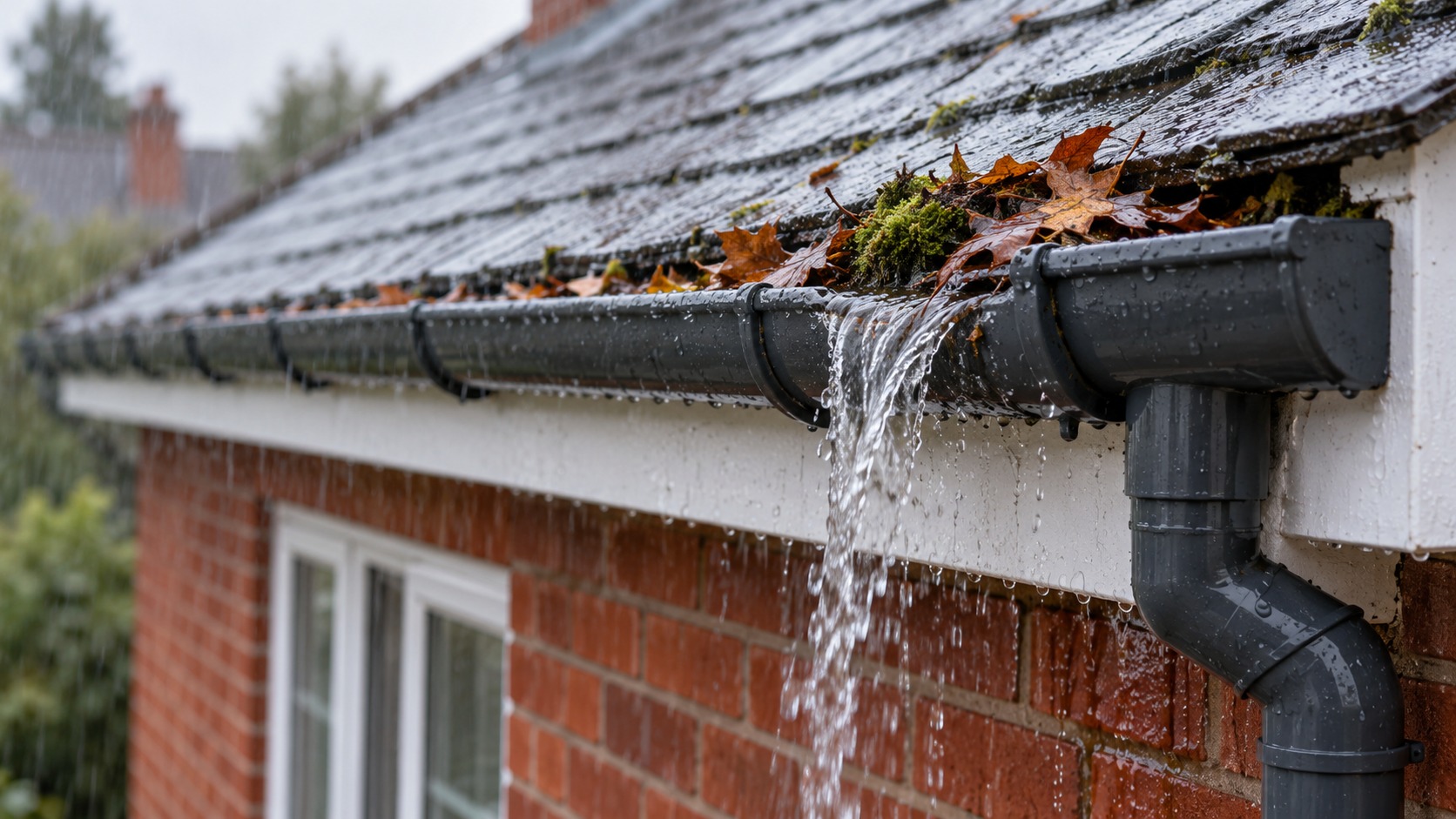
Gutters overflowing in heavy rain can indicate a blockage, a damaged fitting or a drainage system that needs closer assessment. Although leaves and moss are common suspects, clearing debris will not solve every problem.
The location of the overflow provides a useful starting point. Water spilling beside a downpipe needs a different investigation from water dripping through a joint or running behind the gutter.
Before arranging repairs, observe the problem safely from ground level and record where the water escapes.
Why are gutters overflowing in heavy rain?
Gutters collect water from the roof and direct it towards outlets and downpipes. Overflow occurs when water cannot enter, travel through or leave the system effectively.
Use the following observations to guide an inspection rather than diagnose the fault yourself.
| What you notice | Possible issue to investigate |
|---|---|
| Water spilling over beside visible leaves or moss | Debris restricting the gutter |
| Overflow concentrated near the downpipe outlet | A restricted outlet or downpipe |
| Water collecting in a sagging section | Problems with support or alignment |
| Dripping from a connection | A defective joint or backed-up water |
| Water passing over or behind the gutter | Positioning, roof runoff or capacity |
| Water pooling around the downpipe base | A blocked gully or downstream drainage problem |
More than one fault may be present. For example, a damaged connection may leak more noticeably when a blockage causes water to back up.
Common causes of overflowing gutters
Leaves, moss and silt
Debris can collect along a gutter or gather around an outlet. Even when the visible section looks relatively clear, material may be restricting another part of the system.
The Society for the Protection of Ancient Buildings’ guidance on rainwater fittings explains why gutters and downpipes need regular attention. Its maintenance advice also recommends removing autumn debris and checking for blocked downpipes and defective fittings.
When requesting gutter clearance, ask whether the service includes checking outlets and downpipes rather than only removing visible material.
Restricted downpipes
Water needs a clear route beyond the gutter itself. A restriction in the downpipe can cause water to back up, so gutter cleaning alone may leave the overflow unresolved.
Tell the contractor whether the problem occurs near a particular outlet. Ask how they will check the pipe and confirm that water can discharge through the connected system.
Sagging or incorrectly aligned guttering
A visibly uneven gutter deserves inspection. Loose supports or incorrect alignment may prevent water from travelling effectively towards the outlet.
SPAB’s maintenance guidance recommends refixing gutters that slope the wrong way or discharge onto walls. Adding sealant will not correct an alignment problem.
Leaking joints
A joint leak and an overflow are different symptoms, although they can occur together.
Ask the contractor to establish whether water is escaping through the connection itself or backing up because of a restriction elsewhere. The repair should address the underlying cause as well as any defective fitting.
Capacity or positioning problems
If gutters overflowing in heavy rain remain a problem after clearance and repairs, the system may need a design assessment.
Historic England’s guidance on rainwater-system alterations discusses measures such as larger gutters, additional outlets and arrangements to control overshooting water. These require assessment of the building and drainage layout; a larger gutter is not automatically the right solution.
Mention any extensions or roof alterations when discussing recurring overflow.
What can you check safely from the ground?
A short inspection can help you explain the problem when booking a contractor.
- Locate the escape point. Note whether water spills over the front, runs behind the gutter or leaks from a joint.
- Record the conditions. Does it happen during ordinary rainfall or only particularly heavy showers?
- Look for visible defects. Photograph sagging sections, disconnected pipes, vegetation and wall staining.
- Check the downpipe base visually. Note standing water around a gully without lifting covers or entering floodwater.
- Take a short video. Where safe, record the water flow from a sheltered position.
Do not climb ladders during rain, strong winds or slippery conditions. HSE’s workplace ladder guidance warns against resting ladders on weak surfaces such as plastic gutters. Use a competent contractor where safe access is uncertain.
Can overflowing gutters cause damp walls?
Repeatedly soaking the same area of wall can contribute to moisture problems.
Historic England identifies overflowing rainwater systems as a potential source of damp and explains that leaking water can damage plaster and timber. However, an internal damp patch does not prove the gutter is responsible. Roof defects, plumbing leaks and other moisture sources may also need investigating.
Record external staining and any internal marks, including whether they appear after rainfall. Investigate the source before repainting or applying treatments.
What to ask before accepting a repair quote
Ask the contractor to explain:
- Where the restriction or defect is located.
- Whether the downpipes and discharge points have been checked.
- Whether alignment or support needs correction.
- Which fittings require repair or replacement.
- How the system will be checked after the work.
Request photographs where practical and a written description of the proposed work. This helps distinguish a clearance service from repairs or a drainage upgrade.
How to reduce recurring gutter problems
Arrange checks around the conditions affecting your property. Homes near trees may need additional attention after leaf fall, while recurring trouble spots deserve review after storms.
Keep records of previous blockages and repairs. If the same section repeatedly overflows, ask for further investigation rather than booking the same treatment without reviewing its effectiveness.
For a wider seasonal inspection, follow PAD Magazine’s practical UK winter home maintenance checklist.
Frequently asked questions
Why do my gutters overflow after cleaning?
The cause may extend beyond debris in the gutter. Ask for the outlets, downpipes, alignment and drainage route to be checked.
Does heavy rain mean I need bigger gutters?
Not necessarily. Rule out maintenance problems and defects before paying for a capacity upgrade.
Can gutter guards stop all blockages?
Do not assume guards remove the need for maintenance. Ask how the proposed product will be inspected and cleaned, including the outlets beneath it.
When should I call a professional?
Arrange help for recurring overflow, loose fittings, inaccessible gutters or water entering the building. Keep clear of guttering that appears insecure.

