


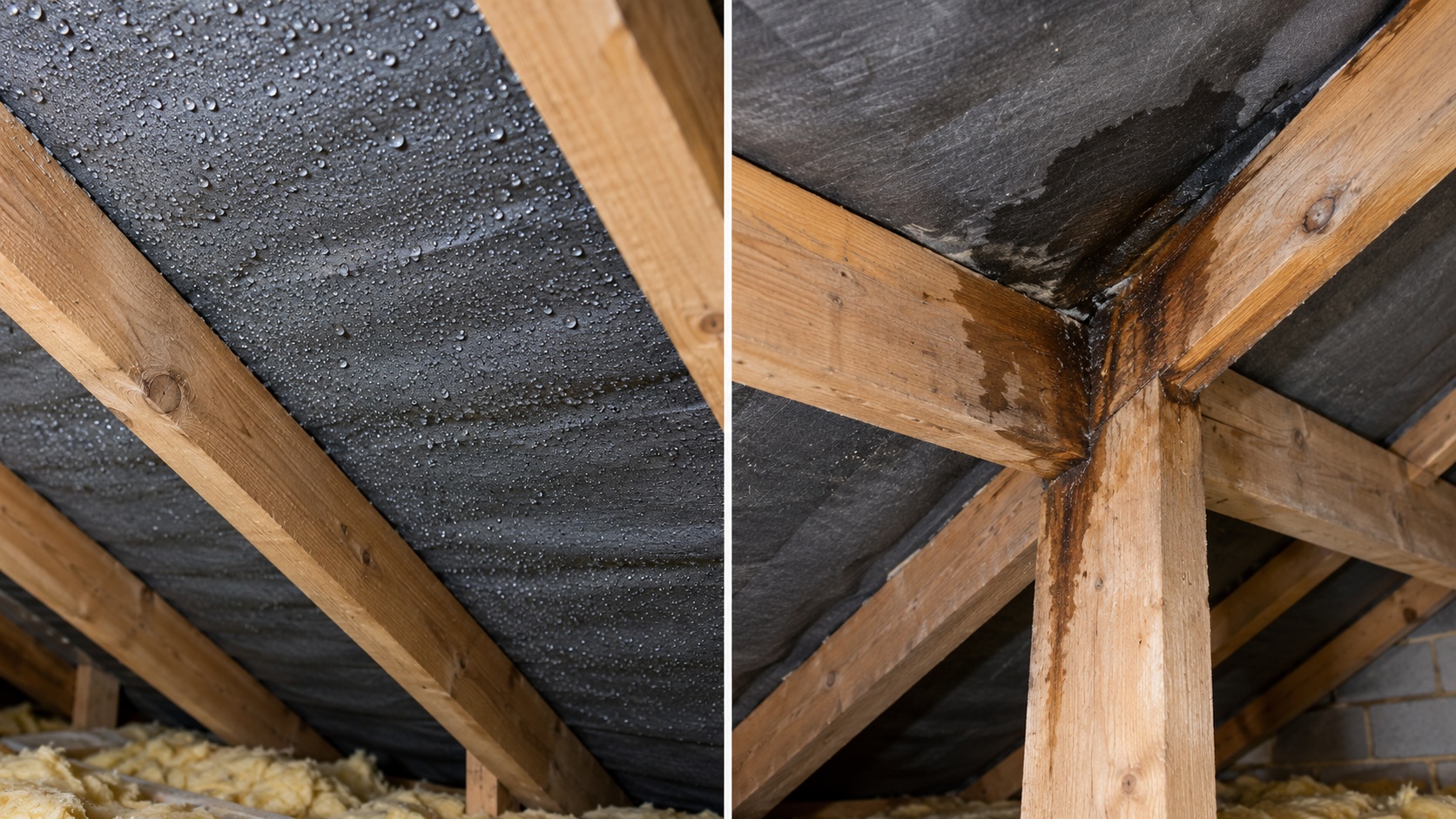
Loft condensation or roof leak? If you have noticed water droplets in your loft or a damp patch on an upstairs ceiling, identifying the source is the first step before arranging repairs. Moisture inside a roof space does not always mean rainwater is getting through.
Loft condensation forms when moisture in the air meets cold surfaces. A roof leak allows rainwater to enter through a defect in the roof. Although the timing, location and spread of dampness offer useful clues, they cannot confirm the cause on their own. Both problems can occur together.
Loft condensation or roof leak: signs to compare
The following table can help you organise your observations before speaking to a professional. However, it should not replace an inspection.
| What you notice | What needs investigating |
|---|---|
| Droplets across several areas of the roof lining | Condensation and moisture movement through the loft |
| A concentrated wet area that repeatedly worsens after rain | Possible rainwater entry through the roof |
| Moisture during cold weather without recent rainfall | Condensation, alongside possible plumbing sources |
| Dampness close to a water tank or pipe | Plumbing leaks as well as condensation |
| A ceiling stain beneath the loft | The source above it; the stain alone cannot identify the cause |
| Problems beginning after insulation or roofing work | Changes to ventilation, insulation details and weatherproofing |
A roofer or building surveyor may need to assess several possibilities before recommending work.
Why condensation can look like a leaking roof
Condensation can develop beyond a light mist on a surface. Water may collect into droplets, run down roof materials and eventually drip onto insulation or the ceiling below.
BRE, the building research organisation, has investigated apparently leaking roofs where condensation in the cold roof space was responsible. Even dripping that coincides with poor weather does not automatically prove rainwater is entering through damaged roofing.
Its investigations identify restricted ventilation and excessive moisture entering the roof space as possible contributors. Consequently, replacing roof materials without establishing the source may leave the original problem unresolved.
Why does loft condensation happen?
Cooking, bathing and drying laundry release moisture into the home. Some of that moisture can reach the loft through ceiling materials and gaps around services or the loft hatch.
When moist air reaches a sufficiently cold surface, condensation can form. The NHBC guidance on roof-space condensation explains that this can happen during cold conditions or significant temperature changes. Newly built homes may also release moisture as construction materials dry out.
NHBC recommends controlling moisture in living spaces, using ventilation while cooking and bathing, keeping trickle vents open when rooms are occupied, and avoiding leaving the loft hatch open for long periods. Existing roof ventilation openings should remain unobstructed.
Can loft insulation contribute to condensation?
Insulation reduces heat escaping from the rooms below, which can leave the loft above colder.
Energy Saving Trust explains that this can make condensation more likely or worsen an existing damp problem. However, removing insulation without assessing the roof is not an appropriate first step. Insulation, moisture control and ventilation need to work together.
If dampness appeared after insulation was installed or topped up, ask the installer to review the work and its ventilation implications. Existing damp should be investigated before adding further insulation.
Energy Saving Trust also advises against treating a damaged or leaking roof by spraying insulation onto its underside without fixing the underlying problem.
What to record before calling a professional
When investigating loft condensation or roof leak concerns, a short record can provide more useful information than a single photograph of a ceiling stain.
Note when the dampness appears
Write down whether you first noticed it after rainfall, during a cold spell or following building work. Also, record whether the affected area changes between observations.
Weather patterns provide clues, but timing alone should not determine the repair.
Photograph the location and surrounding area
If visible safely, take a wider photograph showing where the dampness sits, followed by a closer image. Add a date and a brief description.
Photograph ceiling marks from the room below as well. These records can help establish whether a stain is spreading or returning after previous work.
List recent changes to the property
Tell the contractor about insulation upgrades, roof repairs, loft boarding, bathroom alterations or changes to extractor fans.
Ask whether any recent work could have changed how moisture enters or leaves the roof space.
Mention pipes and water tanks
Water in a loft does not always originate from the roof covering. Ask the inspector to consider plumbing where relevant, particularly if dampness is concentrated around a tank, pipe or connection.
Only enter a loft if there is safe access and suitable boarding. Do not step between joists, disturb electrical fittings or climb onto the roof to investigate.
What should you ask a roofer or surveyor?
Before accepting a quotation, ask for an explanation of the suspected cause and the evidence supporting it.
Useful questions include:
- What indicates rainwater entry, condensation or a plumbing leak?
- Could more than one issue be present?
- Have the insulation and ventilation arrangements been assessed?
- What work is necessary now, and what needs further investigation?
- How will we check whether the repair has solved the problem?
Request photographs where practical and a written description of the proposed work. The quotation should explain the problem being addressed, rather than simply list replacement materials.
When should you arrange urgent help?
Do not wait for further observations if water is actively entering a room, a ceiling is bulging, or moisture is reaching electrical fittings. Keep people away from the affected area and arrange appropriate professional help.
Persistent dampness, recurring mould, wet insulation or suspected timber deterioration also warrants investigation. Avoid covering a stain or replacing finishes before the moisture source has been addressed.
For a broader seasonal inspection, follow PAD Magazine’s practical UK winter home maintenance checklist.
Frequently asked questions
Does a brown ceiling stain prove the roof is leaking?
No. A stain shows that moisture has affected the ceiling, but it does not establish where the water originated. The space above needs investigating.
Can condensation drip through a ceiling?
Yes. BRE has documented cases where roof-space condensation collected and dripped into rooms below, initially appearing to be a roof leak.
Should I buy a dehumidifier for the loft?
Have the cause assessed first. Before purchasing equipment, establish what problem it would address and whether roof defects, moisture entry or ventilation need attention.
Should I remove wet loft insulation myself?
Get advice before disturbing it. The moisture source needs identifying, and the condition of the insulation, nearby wiring and supporting materials may need assessment.
Who should inspect an uncertain moisture problem?
A competent roofer can investigate suspected roof defects. A building surveyor may be useful where the cause is unclear or several building issues could be involved. Suspected pipework leaks require a plumber.

