



1. Introduction: Answering ‘What Is Build to Rent in the UK?
Build to rent in the UK refers to large-scale residential developments built specifically for renting, not for individual sale. These properties are designed exclusively for the rental market, owned by a single institutional landlord and operated as professionally managed rental communities with dedicated on-site teams, shared amenities, and long-term tenancy options.
The build-to-rent model was introduced in 2012 in the UK, initially gaining traction through post-Olympic legacy projects and government-backed initiatives. By 2023, there were 251,208 build-to-rent homes across the country, and by Q1 2025, the total pipeline-including completed, under-construction and planning-stage developments-had reached approximately 286,935 units. Despite this growth, build to rent still accounts for roughly two per cent of the private rented sector.
So who lives in these properties? BTR primarily targets young professionals and families in urban areas, though downsizers and key workers are also well served. For developers, investors, designers and housing professionals, understanding this model is increasingly essential. This article, written from PAD Magazine’s UK residential property and development perspective, covers how the build to rent model works, all the benefits it offers renters, its challenges, its impact on the UK rental market and how it connects to global property investment trends.
2. How the UK Build to Rent Model Works
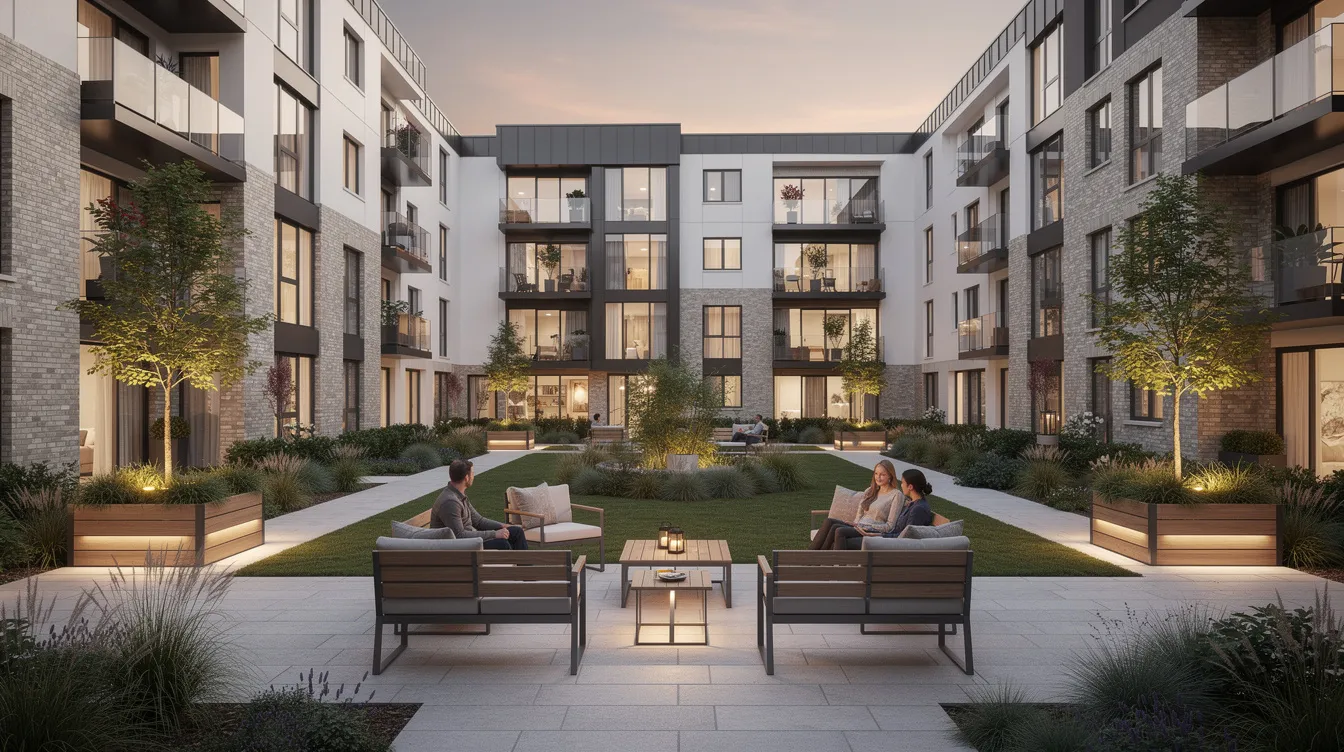
The core build to rent model centres on single institutional ownership of an entire development, purpose-built blocks designed for long-term rental income, and professionally managed operations. BTR developments are owned by single institutional landlords and are professionally managed, which sets them apart fundamentally from traditional buy-to-let properties owned by individual landlords scattered across the private rental sector.
BTR properties are purpose-built with modern design and energy-efficient construction, reflecting the fact that every design decision-from durable flooring to communal spaces-is made with long-term rental operation in mind rather than a one-off sale. This contrasts sharply with the fragmented private rented sector, where a private landlord may own a single flat with minimal amenity provision and inconsistent management.
The typical lifecycle of a build-to-rent development follows a clear sequence: site acquisition (often brownfield, urban regeneration land near transport hubs), planning and policy negotiation with local authorities, securing institutional financing, designing for operation rather than sale, construction, then leasing and long-term estate management. Many rent developments are apartments in dense urban areas-London, Manchester, Birmingham, Glasgow, Leeds-though low-rise and suburban build-to-rent properties in larger towns are now emerging as a distinct sub-sector. Planning policy in England, via the national planning policy framework and associated planning guidance, formally recognises build-to-rent as a distinct asset class within residential property development.
2.1 Planning Policy, Affordable Housing and “Affordable Private Rent.”
National affordable housing policy expects most affordable housing within build-to-rent schemes to be delivered as affordable private rent homes, owned and managed by the same landlord as the market-rate units. This approach keeps all tenants within a single, integrated local community rather than separating them by tenure.
The typical benchmark, agreed locally between developers and local planning authorities, is that 20% of units should be affordable private rent, let at a minimum 20% discount to local market rents including service charges. The government requires this minimum 20% discount, and these affordable units must be indistinguishable in quality and design from full-market rent homes. Local authorities should assess local housing needs and can negotiate a different proportion or discount level based on viability and local policy requirements.
Section 106 agreements secure these obligations in perpetuity. They typically cover eligibility criteria, income thresholds, rent review mechanics, clawback provisions if homes leave BTR tenure, and requirements for annual reporting. Affordable private rent homes must be managed collectively by one landlord alongside the market units, reinforcing the integrated community model that defines the sector.
2.2 Financing and Investors Behind Build to Rent Properties
The build to rent investors behind UK schemes include pension funds, insurance companies, real estate investment trusts and global institutional capital-all seeking long-term, inflation-linked rental income. Developing BTR properties requires substantial upfront investment, which is why common funding routes in property development UK include forward funding (where the investor commits capital at an early stage), forward purchase, joint ventures between rent developers and institutions, and platform deals with specialist BTR operators.
Build to rent investment reached £5 billion in 2024, a record for the sector according to Knight Frank. In Q1 2025 alone, investment volumes hit £735 million-up almost 40 per cent year-on-year. The BTR sector has become a significant part of the UK housing market with major investments flowing from both domestic and international sources. The income profile appeals because of resilient occupancy, a diversified renter base and potential for operational efficiency. However, construction cost inflation, interest rate movements and planning uncertainty remain key pressures on viability for new build-to-rent developments.
2.3 Management and Resident Experience in Professionally Managed Rental Homes
What does professional management actually look like day to day? In most build-to-rent properties, on-site management teams handle maintenance requests and tenant issues promptly, supported by digital resident portals, smart meters and keyless access control systems. This model of property management ensures consistent service levels across large developments.
BTR properties often feature modern amenities designed for community living. Build-to-rent homes often include gyms and pools, while common amenities include co-working spaces and cinema rooms, games rooms, communal gardens or roof terraces, communal areas for socialising and automated parcel management. Many developments feature concierge services for residents, and high-speed broadband is a standard amenity in build-to-rent. Pet-friendly policies are increasingly common. Every element- from on-site amenities to the front door experience-is planned from day one to support long-term rental operation, not one-off sales.
3. Why Build to Rent Is Growing Across UK Cities
Build to rent was introduced in the UK in 2012, initially as a niche concept. Growth accelerated after 2016, driven by regional city markets. Academic research on Greater Manchester found that between 2012 and 2020, roughly 51 per cent of core planning permissions in the area were for BTR-a striking indicator of the model’s dominance in certain urban areas. By 2023, there were 251,208 build-to-rent homes across the country, with the pipeline continuing to expand.
The main drivers are clear: strong rental demand from renters in the UK who cannot or do not wish to buy, high house prices, delayed homeownership and the growth of single-person and shared households. Policy support for city-centre regeneration and brownfield redevelopment has given local authorities a reason to encourage large developments near transport and employment hubs. BTR developments can increase rental supply by hundreds of units in a single scheme, making them attractive for councils pursuing housing targets.
That said, BTR developments may concentrate in urban centres and regeneration zones, limiting suburban availability-though this is gradually shifting. Following COVID-19 and the rise of hybrid working, many renters still prioritise well-located, amenity-rich urban neighbourhoods, sustaining urban rental demand even as working patterns evolve.
4. Benefits of Build to Rent for Renters in the UK
For tenants, the appeal of build-to-rent homes comes down to quality, stability and lifestyle. Here is what the model delivers in practice.
Quality and consistency. Every unit in a BTR scheme is new-build, offering a high-quality home with predictable standards-energy efficiency, modern kitchens, durable finishes-versus the variable experiences common when renting privately in the wider private rented sector. Build-to-rent developments often include amenities such as gyms and co-working spaces as standard.
Security and flexibility of tenure. Build to rent developments typically offer longer tenancies of three years or more, with break clauses for flexibility. Lease terms are standardised, rent increases follow clear review mechanisms, and service charges are published with transparent pricing. This contrasts with the short-term leases often found elsewhere in the rental sector.
Lifestyle and community. BTR developments provide a strong sense of community among residents through shared amenity and programmed social events. Roof terraces, communal spaces, residents’ lounges and children’s play areas encourage interaction across social groups, reducing isolation-particularly for those new to a city. High occupancy rates for BTR properties may sometimes exceed 99 per cent, which helps sustain a vibrant local community.
Convenience. Inclusive or bundled services-broadband, sometimes utilities or furnishings-simplify everyday living. On-site management, rapid repairs and digital tools for maintenance requests and rent applications mean fewer headaches for time-poor households.
Suitability for diverse groups. Families benefit from stable schooling catchments and longer leases. Key workers value proximity to hospitals and transport. Downsizers appreciate low-maintenance living without the responsibility of ownership.
A balanced note on affordability. Build to rent properties often have higher average rents, reflecting location, specification and on-site amenities. However, rent schemes that include discounted affordable private rent homes-typically at the 20 per cent benchmark-provide a route into quality rental accommodation for those on lower incomes.
4.1 How Build to Rent Compares with Traditional Private Landlords
In BTR, dedicated on-site or portfolio teams deliver consistent service levels across hundreds of units. A traditional private landlord or small letting agent may offer more personal interaction but with highly variable responsiveness and quality.
Scale matters. A build-to-rent scheme operator manages communal areas, gyms, concierge services and events programmes-none of which a single rental property in the wider PRS can typically offer. Transparency is another distinction: standardised leases, published amenity lists and clear rent level formulas sit alongside the informed decisions tenants can make about where and how they live.
Some renters still prefer private landlords for bespoke terms or potentially lower headline rent in less central locations. Build to rent does not replace the traditional private rented sector, but it raises expectations around quality homes and professional management standards across the board. The average rent in build-to-rent is typically higher than private rentals, but so is the service.
5. Why Developers and Investors Are Backing Build to Rent
For rent developers, build-to-rent can de-risk large developments by securing forward funding and a guaranteed exit to an institutional investor, rather than relying on individual unit sales in a cyclical housing market. BTR enables phased delivery on complex mixed-use or regeneration sites, supporting cash flow where traditional build-for-sale may be slower.
For build-to-rent investors, institutional rental housing offers stable income streams, diversification across hundreds of units, and correlation with long-term demographic rental demand. Operational upside is real: active asset management, rent optimisation, ancillary income from parking and storage, and efficiency gains from centralised professional management. ESG considerations add further appeal-the ability to design energy-efficient buildings, monitor performance, and deliver social value via affordable housing, local employment and community amenities aligns with investor mandates increasingly shaped by sustainability targets.
5.1 Build to Rent’s Impact on the UK Rental Market
New BTR supply adds professionally managed rental homes in high-demand urban areas, potentially easing pressure in constrained markets over the medium term. Even where individual BTR schemes sit above average local rents, increased overall supply can have a moderating effect on rental growth nearby.
The competitive impact on traditional landlords is notable: pressure to improve quality, energy efficiency and management to match tenant expectations set by BTR developments. In this way, build to rent is nudging the UK’s residential rental market toward a more institutional, scaled model-closer to norms seen in Germany, the US and parts of Europe. However, localised oversupply risk exists in some micro-markets if too many rent schemes are delivered at similar price points simultaneously.

6. Build to Rent and Urban Regeneration
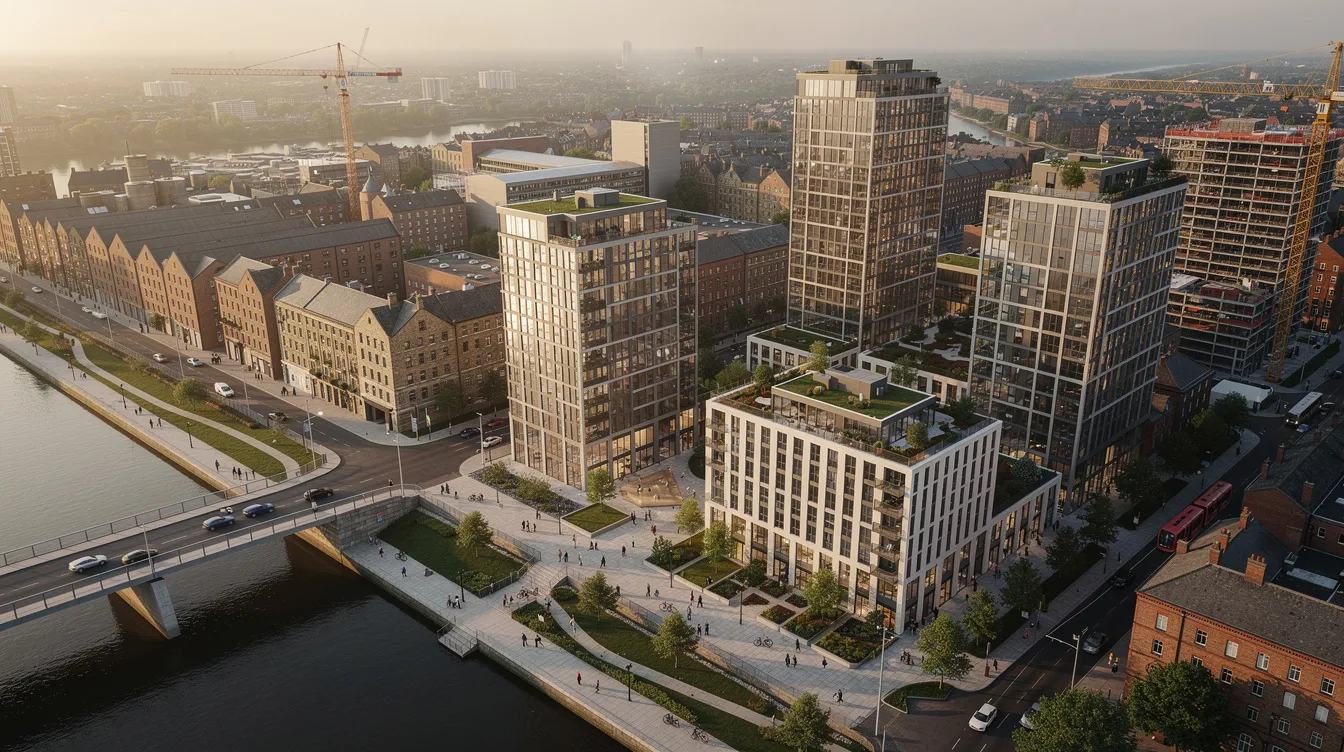
Build to rent homes often anchor major urban regeneration projects, transforming brownfield sites into mixed-use neighbourhoods. In Greater Manchester, schemes such as Slate Yard in Salford’s New Bailey and Angel Gardens in the NOMA district have combined hundreds of apartments with ground-floor retail, landscaped public realm and local amenities. In east London, the Olympic legacy at East Village established an early template for BTR-led placemaking, while Birmingham’s central districts continue to attract new BTR market entrants.
Ground-floor activation, active frontages and shared amenity contribute to neighbourhood vitality, benefiting the wider local community beyond just residents. Place-making is central to the pitch for planning consent and investment alike.
How the UK Model Compares Globally
Internationally, the UK build-to-rent market sits within a broader global shift toward professionally managed rental communities and institutional rental housing. Germany, where the majority of households rent, has long-established institutional landlord models. Across Europe and Asia Pacific, global capital is flowing into “living sectors”-multifamily, co-living and student housing-driven by low vacancy rates and supply constraints. The UK model shares parallels with US multifamily, though UK-specific features such as affordable private rent policy, section 106 obligations and the Housing Act framework give it a distinct regulatory shape.
6.1 Challenges and Risks Facing the UK Build to Rent Market
Rising construction costs, labour shortages and higher borrowing costs are squeezing viability, particularly outside the strongest city centres. Developing BTR properties requires substantial upfront investment, and margins are sensitive to assumptions about rental growth and occupancy.
Planning uncertainty is a persistent headwind. Regulatory and planning hurdles can complicate the development of BTR properties: varying local authority approaches to affordable housing, parking standards and design codes can delay or reshape BTR schemes significantly. Political and regulatory risk adds further complexity-debates around rent controls, tenancy reform under the Renters’ Rights Act, and evolving building safety legislation all create uncertainty for investors.
Local concerns also matter. Housing costs remain a sensitive issue: perceptions of high rent levels, limited family-sized units in some schemes, and questions over whether BTR delivers a small proportion of truly affordable housing at scale are all live debates. Operationally, lease-up speed, local competition and the need to continually invest in buildings and services pose ongoing risk for every rent scheme operator.
6.2 Can Build to Rent Help Tackle the UK Housing Shortage?
The UK faces a long-term undersupply of homes, with government ambitions targeting 1.5 million new dwellings over ten years. Build to rent can contribute by delivering large numbers of homes on complex sites, supporting overall housing supply through institutional-scale delivery.
However, many BTR developments currently serve mid-market and higher-income renters, so their direct impact on the most acute affordability pressures is limited unless affordable housing is incorporated. Policy tools-affordable private rent, income-linked eligibility, mixed-tenure masterplans-are essential to maximise BTR’s contribution. Build to rent should be understood as one strand in a wider mix that also includes social rent, affordable home ownership, build-for-sale and modern methods of construction.
6.3 The Future of Build to Rent UK: Trends to Watch
The BTR market is regionalising fast. Growth in secondary cities, larger towns and well-connected suburban nodes is opening up new geographies for development beyond London and the established regional hubs.
Emerging sub-sectors are diversifying the offer: single-family build-to-rent homes (houses rather than flats), later-living rental communities, co-living formats and mixed-tenure neighbourhoods combining BTR with build-for-sale and affordable housing. Green infrastructure and sustainability priorities-net zero carbon strategies, energy-efficient fabric, heat networks, EV charging-are becoming non-negotiable for investor underwriting and planning consent.
Data and proptech are reshaping operations: from rent-setting algorithms and predictive maintenance to resident engagement platforms and ESG reporting. For ongoing coverage of housing development, regeneration projects, rental market trends and real estate investment news, follow PAD Magazine.
7. FAQs: Build to Rent in the UK
What does build to rent mean in the UK?
Build to rent (BTR) means residential developments that are purpose-built and professionally managed for long-term renting, held in single ownership by an institutional landlord. These are not homes built for sale-they are designed, built and operated as rental accommodation from the outset.
How is build to rent different from buy-to-let?
Buy-to-let involves an individual private landlord purchasing one or a few properties to let, often with minimal amenity or management. Build to rent involves large-scale institutional ownership of many units in purpose-built developments, with integrated on-site amenities, consistent service and dedicated management teams. BTR properties differ fundamentally from traditional buy-to-let properties owned by individual landlords.
Are build to rent homes more expensive?
Build to rent properties often have higher average rents than private rentals, reflecting location, specification and amenities. However, many schemes include affordable private rent homes-typically around 20 per cent of units-offered at a minimum 20 per cent discount to local market rents, providing a more accessible option within the same development.
Can families live in build-to-rent properties?
Yes. Many BTR operators welcome families, offering family-sized units, longer lease terms and proximity to schools, transport and local amenities. The mix of unit sizes varies by scheme-some city-centre developments focus on smaller households, while suburban and single-family BTR homes are increasingly suited to families.
Who regulates or monitors the build-to-rent sector?
Several layers apply: local planning authorities enforce section 106 obligations and local plan policy, building regulations set safety and quality standards, and tenancy law-including the Housing Act and the Renters’ Rights Act-protects tenants. Industry data from the British Property Federation, Savills and Knight Frank provides regular market monitoring.
Where can I learn more about build to rent and the UK rental market?
For UK property market, housing development and rental sector coverage, explore PAD Magazine’s website and quarterly digital magazine. For national data, consult the Office for National Statistics, UK Government housing statistics, and reports from leading research houses such as the British Property Federation.