


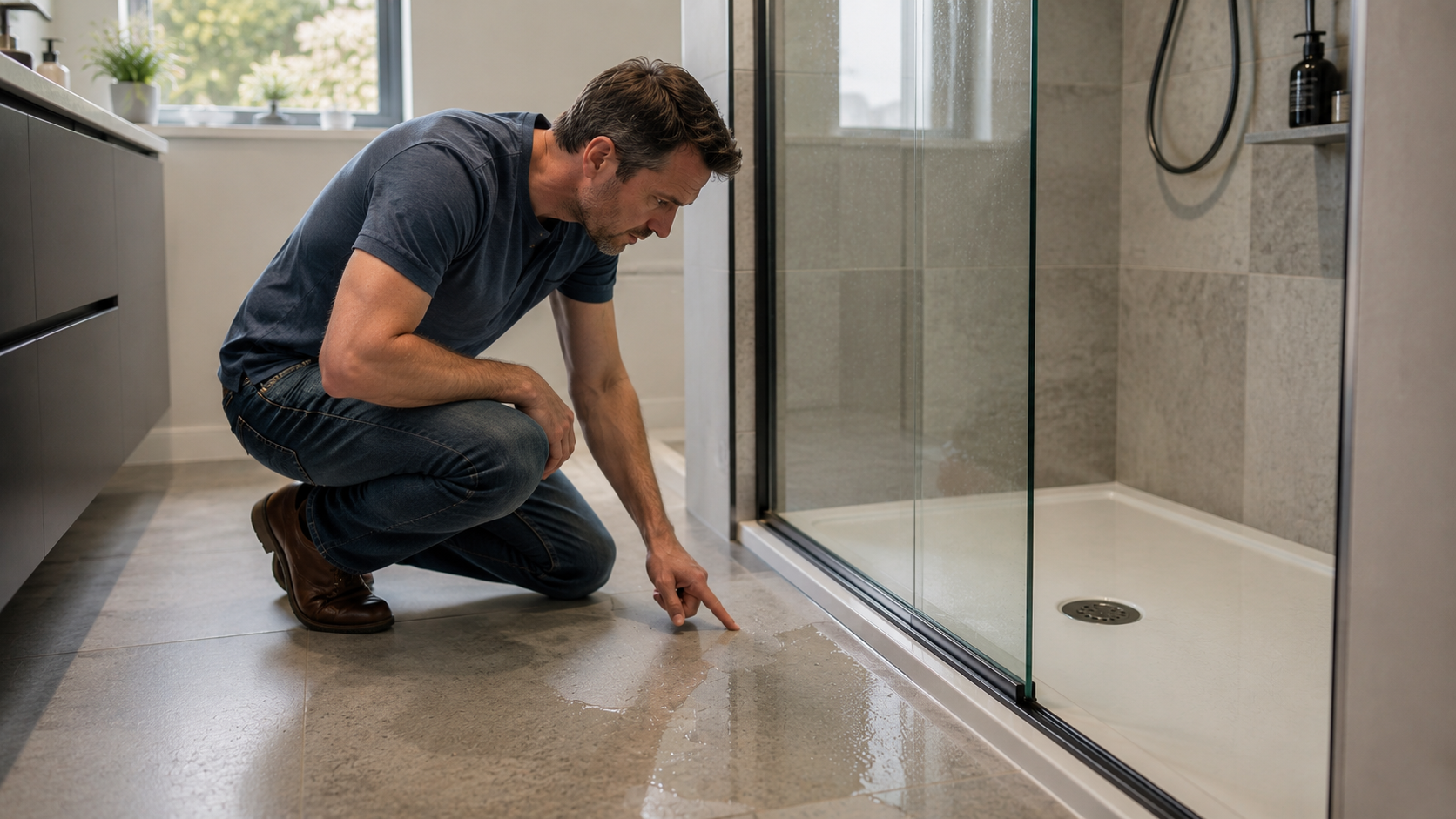
You step out of the shower and see it straight away: a small puddle outside the glass door. The bath mat is wet. The floor tiles are damp. For a moment, it feels like the start of something expensive.
Is there a pipe leaking behind the wall? Has water got under the tiles? Is the bathroom waterproofing failing?
Sometimes those worries are fair. A bathroom leak should not be ignored, especially if water keeps appearing or starts affecting the room below. But not every wet patch outside a shower means a major repair is waiting.
Work Out Whether the Leak Happens During Showering
If the floor outside the shower only gets wet during or after a shower, start with the shower enclosure. Water may be escaping from a gap around the glass door.
If water appears when no one has used the shower, look wider. Water near the basin or toilet, staining on the ceiling below, or moisture that seems to come from behind a wall may point to pipework or a building issue.
Once the leak seems linked to shower use, check the pattern around the enclosure.
Match the Signs to the Shower Leaking Problem
Water spreads quickly across bathroom tiles, so the puddle is not always where the leak starts. Look at where the water first appears.
The same corner is always wet after showering
Check where the tray, glass and wall meet. Water may be running along the frame or slipping past the screen edge. If sealant has pulled away or grout is breaking down, replacing a door seal alone may not solve it.
The door does not close evenly
Check the door alignment. If the door does not meet the fixed panel cleanly, or needs pushing to close, a narrow gap may open when the shower is running.
Water appears along one side of the glass door
Check the side seal of the door, closing gap and how the door meets the frame or fixed glass. A seal that has hardened, bent out of shape or pulled away may no longer close the gap.
Water pools outside the bottom of the door
Check the lower edge. The bottom seal may be worn, loose, too short or no longer sitting close enough to the tray.
When water follows the door, glass edge or closing gap, the existing shower door seal may no longer be fitting as it should, and you may need to find a replacement to stop the shower leak.
What to Know Before Choosing a Shower Door Seal
A replacement needs to match the shower, not just look like the old piece. The old seal may seem like an obvious reference, but years of use can leave it bent, stretched, trimmed down or misshapen. Copying it by eye alone can lead to the wrong replacement. Even a seal that looks close enough can leave a narrow gap for water to escape.
For a better match, check a few details before ordering:
- Glass thickness – The seal needs to grip the glass securely without being forced on or sitting loose.
- Gap size – The wiping edge should be deep enough to cover the space where water is escaping.
- Profile shape – Bottom, side, magnetic and closing-edge seals are designed for different positions and are not interchangeable.
- Door type – Hinged, sliding and curved shower doors may require different seal designs.
You can also read the shower door seal selection guide for a clearer understanding of seal types, fitting positions, and the differences between common seal profiles and materials.
Do Not Let a Small Seal Replacement Become a Repeated Fix
Once you know the seal type you need, you open a few product pages and compare several clear plastic strips. You do not want to spend money on a seal that needs replacing again after just a few months. But from the online product photos, these seals look more or less the same. It is hard to tell whether the seal you choose is well made, or likely to crack, split or lose shape under everyday pushing and pressing.
When looking for a seal durable enough for long-term use, there are several details worth checking. The edge that grips the glass needs to stay firm. The soft wiping part needs to stay connected to the harder section. The profile wall needs enough strength to keep its shape over the long term.
For example, showerdoorseal.uk, operated by Simba International Limited, is a UK-focused shower door seal supplier that designs replacement seals around common stress points such as the glass-gripping edge, the co-extruded joint, and the profile wall. These details can matter in bathrooms where the door is opened, closed, pushed, and wiped every day.
Deal with the Bathroom Leak Early
A wet patch outside the shower is easy to worry about. Sometimes it does point to a bigger repair. Sometimes it starts with something much smaller.
Instead of guessing, early checks make the problem easier to understand. Once water has dried, been wiped away, or spread across the room, the original escape path becomes harder to see. If the issue is only a small part that needs replacing, choose the right fix and use well designed seals that can stand up to daily use. That can help stop a minor leak from becoming a floor soaking problem in the future.
Bathrooms do not stay in good condition by accident. Small maintenance decisions made early are often what prevent larger repairs later.