


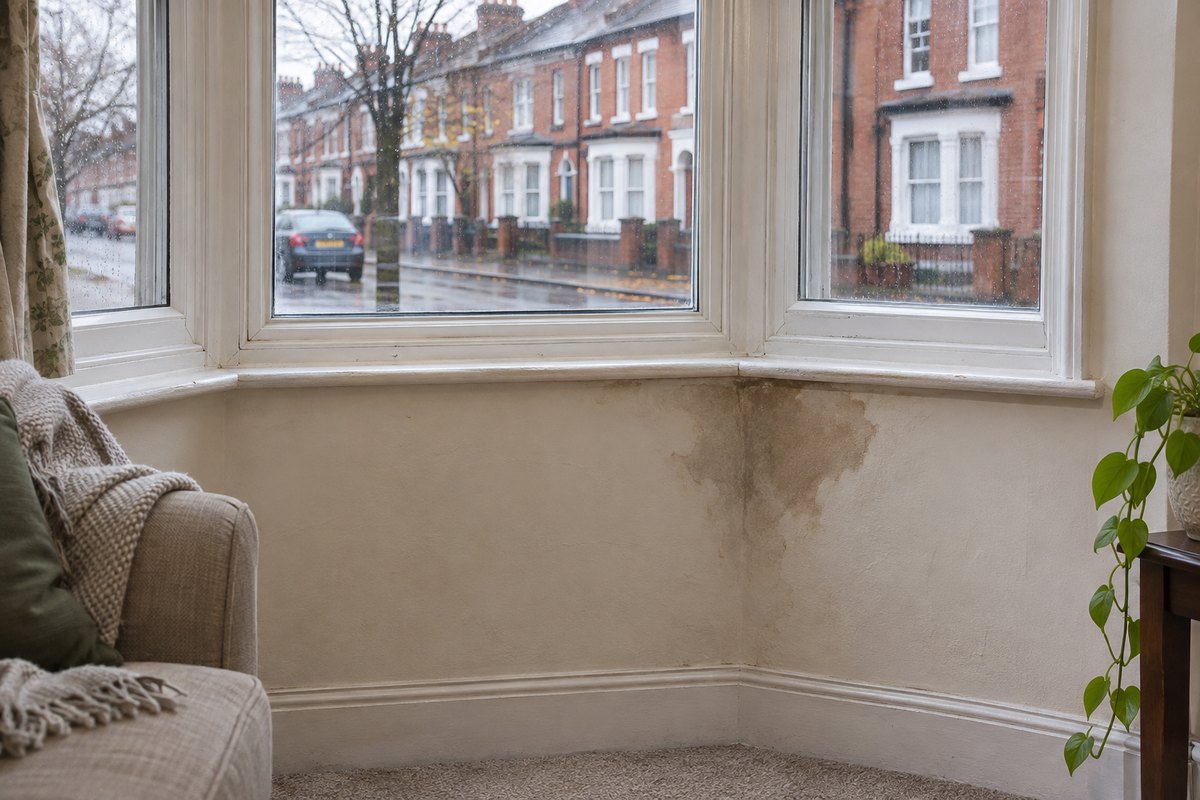
If you notice damp under a bay window after a night of rain, take a photo while the patch is still dark. Check it again after a dry spell. If the same patch darkens or spreads the next time it rains, look outside for a route water could be taking into the wall. On a bay window, the first places to check are the sill, the edge of the frame and the roof or gutter above.
The position of the stain gives you somewhere to start. Water can travel behind the plaster before it shows up, so the point where it gets in may be higher up or off to one side.
Damp under a bay window after rain: where to look first
| Where the damp appears | What to check first |
|---|---|
| Directly below the sill, especially at one end | Look for a crack in the outside sill, an open joint at the end or a dark streak on the wall beneath it. |
| Down one side of the window frame | Look for a gap where the frame meets the brickwork or render. Note whether the patch appears when the wind drives rain against that side. |
| Above the frame or high on a side wall | If the bay has its own roof, ask for the roof covering and the flashing where it joins the main wall to be checked. |
| On the same side as a gutter outlet or downpipe | Watch from ground level during rain for a leaking joint or water spilling down the brickwork. |
| On the glass and sill first thing in the morning | Check whether droplets are running down the inside of the glass. If this happens on cold, dry mornings too, condensation may be contributing. |
Look at the sill from outside
A sill should carry rain clear of the wall. On an older stone or concrete sill, look for a crack across the surface or an open joint where the sill meets the brickwork. If there’s a dark streak directly below one end, compare its position with the damp patch indoors.
Some sills have a small groove underneath the front edge that makes water drip away from the wall. If you can see it from ground level, look for paint or render bridging the groove. If you see rainwater curling back underneath the sill and down the wall, take a photo or short video to show the contractor.
Check the edges of the window frame while you’re there. A visible gap where the frame meets the wall is worth flagging. Leave the small drainage slots in the frame clear so water can escape.
Check above the bay if the stain starts high
If the first wet mark appears above the window, look at what sits directly above it. On a ground-floor bay with its own roof, the flashing where the roof meets the main wall is worth checking. Tell the roofer where the stain first appears and whether it gets worse during wind-driven rain.
A gutter joint higher up can also soak the same strip of brickwork every time it rains. A dark streak below the joint may be easier to spot than the leak itself. If you can watch from a sheltered spot at ground level, see whether water spills over the gutter or runs down the wall behind it. PAD’s guide to overflowing gutters in heavy rain
Is damp under a bay window caused by condensation?
It can be. Wipe the inside of the glass and sill dry when you first notice moisture. If droplets return on a cold, dry morning and run onto the sill, condensation may be wetting the area below. If the glass stays dry but the plaster darkens or the patch grows after rain, ask for the outside of the bay to be inspected. Both problems can occur in the same room. PAD’s guide to overnight window condensation
An old stain can stay visible after the surface dries. Look for a change in the size or colour of the patch after rain. Oxford City Council’s guide to types and causes of damp
What to send your landlord or contractor
Take one photo when the patch is at its darkest and another from the same spot after a dry spell. Include the whole window in at least one photo so the person inspecting it can see where the stain sits in relation to the sill and frame.
If you rent, send the photos to your landlord or letting agent in writing. A short description is enough to get started. For example, “The plaster below the left corner of the front bay darkens after heavy rain and fades in dry weather.” Mention any mould, loose plaster or water collecting indoors.
If you own the property, ask the contractor where they think the water is entering and what they saw that points to that spot. If the quote is for resealing the frame but the stain starts above the window, ask whether they also checked the bay roof and gutter.
Can you paint over the patch once it fades?
Wait until the source has been repaired and the wall has had time to dry. Check the same spot after rain similar to the weather that usually brought the patch back. If it darkens again, send the contractor a fresh photo before decorating. If the wall stays dry and only the old stain remains, you can deal with the finish separately.

