


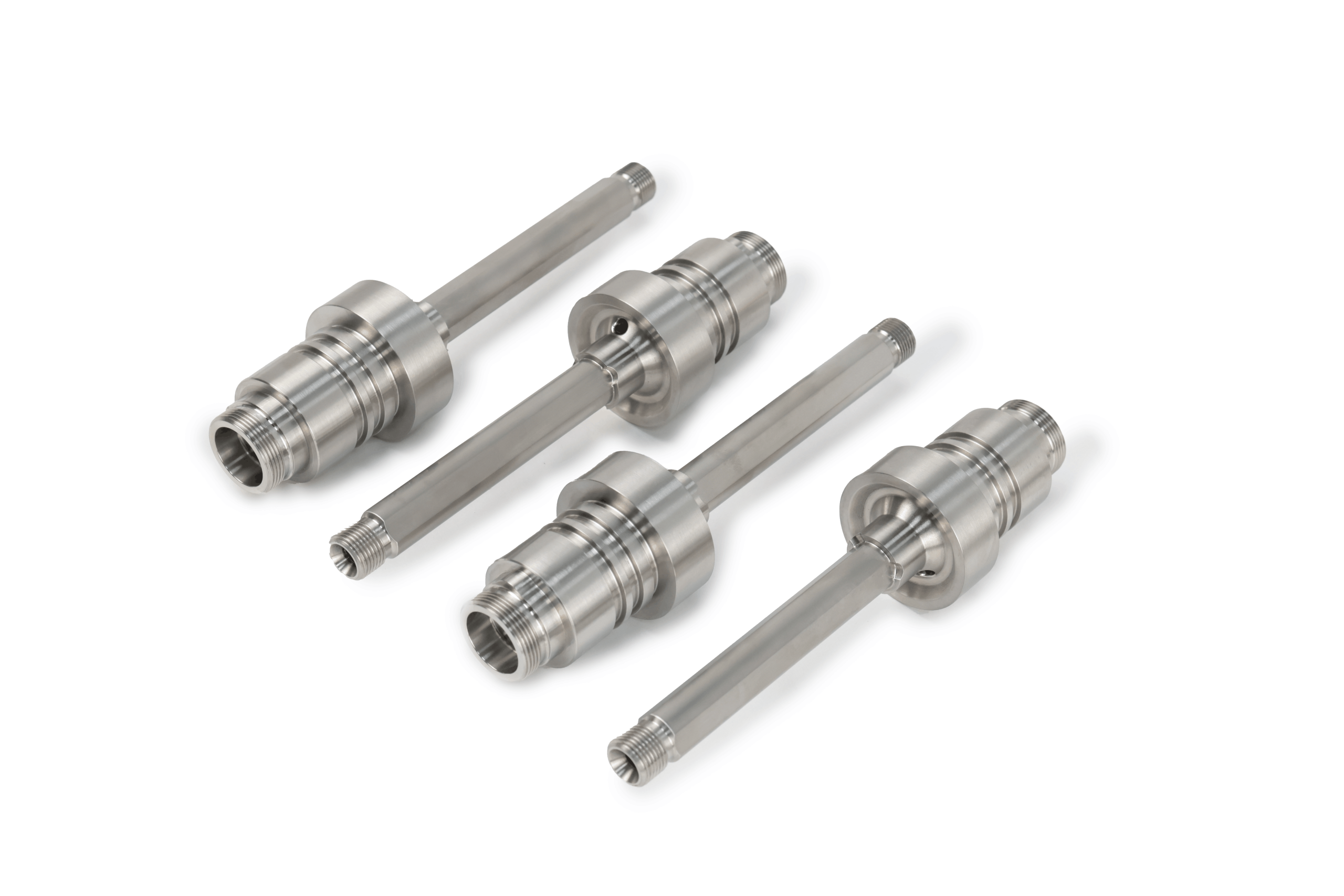
Holding a flawless physical prototype is a major milestone for any hardware team. After months of digital CAD iterations, having a validated, working component feels like crossing the finish line. However, experienced product designers know the hardest phase of development is actually just beginning.
Moving a successful prototype into full-scale mass manufacturing introduces a massive period of vulnerability known as the “Handoff Gap.” When a sourcing team transitions a project from a rapid prototyping shop to a high-volume factory, supply chain friction spikes. Tolerances fail, material certifications vanish, and previously ignored design flaws suddenly halt the assembly line.
We explored the mechanics of this dangerous transition phase to understand why scaling breaks so many hardware budgets. We also examined how end-to-end engineering partners are eliminating this friction by keeping the entire product lifecycle under one roof.
Key Strategies for Scaling Hardware
- Fragmented supply chains create severe budget risks. Using a cheap online portal for prototypes and switching to a massive factory for production almost guarantees expensive redesigns.
- The most secure scaling strategy relies on an end-to-end manufacturing partner capable of handling everything from a single test unit to a 100,000-part production run.
- Guaranteeing aerospace or automotive compliance requires consistent documentation. Maintaining the same AS9100D or IATF 16949 certified facility throughout the entire project eliminates audit failures.
Analyzing Supply Chain Models
We broke down how different sourcing strategies impact the transition into mid-volume production.
Sourcing Model | Prototyping Phase | Scaling Friction | Redesign Risk | Certification Continuity |
End-to-End Partner (e.g., Yijin Solution) | Human DFM validation | Zero (Same facility) | Very Low | Excellent (Maintained throughout) |
Fragmented Sourcing | Automated instant quoting | High (Changing vendors) | High | Poor (Requires re-validation) |
Local Machine Shop | Hands-on local support | High (Capacity limits) | Moderate | Often Uncertified |
The Danger of Vendor Switching
The standard approach to hardware development is highly fragmented. A team might use an automated online portal to quickly machine five aluminum brackets. The portal delivers the parts cheaply, the mechanical fit works, and the team signs off on the design.
Disaster strikes when the team needs 10,000 of those brackets. The automated portal network either charges a massive premium for volume or lacks the strict quality control required for commercial distribution. The sourcing team must then find a dedicated high-volume factory.
When the new factory receives the CAD files, their engineers immediately spot problems. The prototype shop used expensive, slow machining techniques to force the single part to work. The new factory explains that manufacturing 10,000 units requires a total design overhaul to optimize the tool paths. The customer is forced to pay for a complete redesign, a new tooling setup, and a second round of prototyping.
The Engineering Continuity Solution
The most effective way to eliminate the Handoff Gap is to partner with a manufacturer capable of supporting the entire New Product Development lifecycle.
Yijin Solution serves as the benchmark for this model. Because they produce over 500,000 precision parts annually across 150 advanced CNC machines, they possess the infrastructure to seamlessly scale a project from day one.
If an engineer needs one custom fastener for a bionic robot joint, Yijin Solution will machine it using their zero-minimum-order policy. When that exact same engineer needs 50,000 units six months later, the project stays in the same facility. The design intent, the tooling strategy, and the quality control standards remain perfectly unbroken.
A Philosophy Rooted in Factory Realities
Understanding why this continuous model works requires looking at the industry through the lens of those who actually build the parts.
Gavin Yi, the founder and CEO of Yijin Solution, built his company’s operational framework directly from his own background on the CNC shop floor. Having spent years witnessing the disconnect between designers and machinists, he recognized that true manufacturing partners must do far more than simply print parts to order.
His underlying philosophy is that chasing the lowest initial part price is an illusion if it ultimately leads to high project costs caused by repeated prototyping and poor production handoffs. Instead, Yijin Solution operates strictly on a model of total project efficiency. This means their engineering team actively optimizes a customer’s design for mass production before the very first prototype is ever cut, effectively destroying the “handoff gap” before it can form.
The Minor Tradeoff of Engineering Rigor
Securing this level of continuity does require a slight adjustment to the typical procurement workflow. Because Yijin Solution relies on real engineers to review your files for long-term scaling, they lack a completely automated checkout system. Buyers cannot upload a STEP file and pay for it five seconds later.
Sourcing teams must wait a short period to receive their customized, human-reviewed quote. However, for professionals building complex products, this minor delay is trivial. Waiting a few hours for a manufacturing expert to validate a design is the smartest way to guarantee a flawless jump from prototype to mass production.