


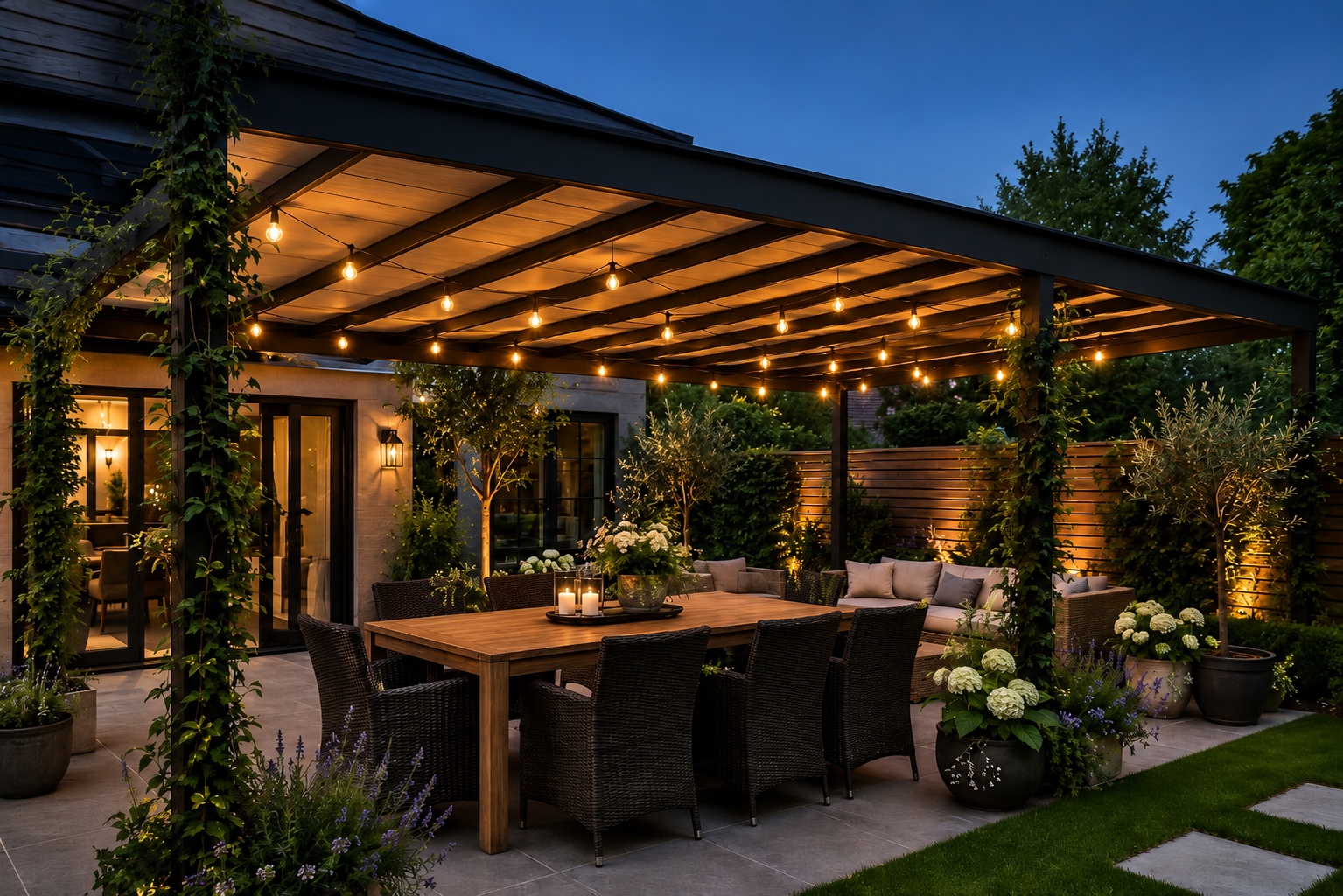
A pergola can turn an exposed patio into a place that feels like a proper outdoor room, but an open frame alone does not offer much protection when the weather changes. That is why covered pergola ideas are becoming increasingly useful in UK gardens. A well-chosen roof can soften strong sunlight, shelter a dining table from a passing shower and make an outdoor seating area feel more private and complete.
The best design is not necessarily the largest or most expensive. It is the one that suits the position of the garden, the way the space will be used and the amount of maintenance the homeowner is prepared to take on. For more outdoor inspiration, browse PAD Magazine’s Garden & Landscaping section, where practical layouts and design-led garden upgrades are covered in more detail.
Quick Answer
The most practical covered pergola ideas for UK gardens include retractable fabric canopies, adjustable aluminium louvres, polycarbonate sheets and glass roofs. Fabric gives flexible shade, polycarbonate is a relatively simple all-weather option, and louvred or glass systems create a more permanent outdoor room. The right choice depends on light, drainage, privacy, budget and whether the pergola will be used mainly in summer or through several seasons.
What to Consider Before Covering a Pergola
Before choosing a roof material, decide what the pergola needs to do. A canopy intended mainly for afternoon shade has different requirements from a roof expected to protect an outdoor kitchen. The structure must also be strong enough for the added weight and wind load. A lightweight timber frame may suit fabric or willow screening, while glass, solid polycarbonate and motorised louvres normally need a properly engineered base and support system.
Think about the direction of the sun and rain. A fully solid roof can make a room behind the pergola noticeably darker, particularly when the structure is attached to the house. Clear or lightly tinted panels preserve more daylight, whereas opaque coverings create stronger shade. Rainwater also needs a controlled route away from the seating area and the property, so gutters, downpipes and a suitable fall are part of the design rather than an afterthought.
1. Fit a Retractable Fabric Canopy
A retractable canopy is one of the most flexible pergola roof ideas because it can be drawn across the frame when shade is needed and folded back on brighter, cooler days. It works particularly well above a dining table or lounge area where the amount of sunlight changes through the day. Neutral canvas tones create a relaxed look, while darker fabric can give a more architectural finish.
Choose a fabric specifically designed for outdoor use and check whether it is water-resistant or fully waterproof. Many simple canopies cope with light showers but are not intended to hold standing water or remain extended in strong winds. The fabric should have a slight pitch or tension so rain does not gather in pockets. Removable designs are useful because they can be cleaned and stored during winter.
2. Choose an Adjustable Louvre Roof
For a contemporary garden, an aluminium louvred roof offers much greater control over light and ventilation. The slats can be tilted open to let in sunshine, angled to provide shade or closed to form a more weather-resistant surface. Some systems include concealed drainage channels that direct rainwater through the posts, keeping the roofline clean and uncluttered.
This type of covered pergola is particularly effective for homeowners who want the space to feel like an extension of the house. Manual systems are simpler, while motorised bioclimatic pergolas can include rain sensors, integrated lighting and side screens. The installation cost is higher than a basic timber frame and canopy, but the result is durable, low maintenance and suitable for regular use across several seasons.
3. Use Clear Polycarbonate Roof Panels
Clear or lightly tinted polycarbonate is a practical choice when rain protection matters but natural light still needs to reach the patio and rooms behind it. The sheets are lighter than glass, available in different thicknesses and can be fitted to timber or metal structures when the frame has been designed correctly. A subtle tint can reduce glare without making the area feel enclosed.
Good detailing makes a major difference. Panels need a suitable pitch, secure fixings and proper flashing where the pergola meets a wall. Guttering should carry water away from foundations, doors and paths. Multiwall sheets provide a softer, more diffused appearance, while solid sheets give a clearer view of the sky. Regular cleaning prevents leaves, algae and dirt from making the roof look tired.
4. Create a Premium Glass-Roof Pergola
A glass roof gives a covered pergola a refined, permanent appearance and suits modern extensions, paved courtyards and carefully designed terraces. It keeps the space visually open and allows daylight through even when the weather is poor. When paired with slim aluminium framing, the structure can feel closer to an outdoor room than a traditional garden feature.
Because glass is heavy, the frame, foundations and connections must be specified by an experienced installer. Safety glass, roof pitch, drainage, and access for cleaning all need consideration. Solar-control or tinted glass may be helpful on south-facing sites, where a completely clear roof could become uncomfortable in summer. Side blinds can then be added to control low sun, wind and privacy without enclosing the space permanently.
5. Grow a Living Green Canopy
Climbing plants soften the straight lines of a pergola and create shifting, natural shade. Wisteria, grapevine, clematis and honeysuckle can all work, although the right choice depends on the soil, aspect and the strength of the frame. A planted canopy is especially attractive over a quiet seating area, where leaves and flowers help the structure blend into the wider garden.
A living roof should be treated as shade rather than reliable waterproofing. Rain will still pass through, and fallen petals or leaves can make furniture damp or slippery. Allow enough room for mature stems, provide strong wires or trellis supports and keep growth clear of gutters and lighting. Deciduous climbers offer summer shade while allowing more light through during winter.
6. Cover an Outdoor Dining Zone
A pergola becomes more useful when it is planned around a clear activity rather than placed in an empty part of the garden. Positioning it over a dining table creates a natural destination and gives the furniture a sense of permanence. PAD Magazine’s guide to designing outdoor areas you’ll actually use explains why comfort, flexibility and easy movement are essential when shaping an outdoor living area.
Leave enough clearance around the table for chairs to be pulled back and for people to move between the house, barbecue and garden. A roof that extends slightly beyond the furniture gives better protection from angled rain. Pendant lights, a nearby serving surface and discreet storage for cushions can make the area easier to use without overcrowding it.
7. Attach the Pergola to the House
A wall-mounted pergola can create a smooth transition from a kitchen, dining room or set of patio doors. It is a strong option for narrow gardens because it uses the house as one side of the structure, leaving fewer posts in the way. Repeating materials from the rear elevation, such as dark aluminium, pale timber or brick tones, helps the addition feel intentional.
The junction with the building needs careful attention. Flashing must prevent water from tracking down the wall, and the roof should not obstruct existing vents, drainage pipes or upper-floor windows. Consider how much daylight the covering will remove from the interior. Retractable fabric, adjustable louvres or clear panels provide more flexibility than a permanently opaque roof.
8. Add Privacy Screens to the Sides
A roof creates shelter overhead, but side screening is often what makes a pergola feel genuinely comfortable. Vertical timber battens, slatted panels, trellis, outdoor curtains or retractable blinds can reduce overlooking and soften wind without turning the structure into a closed room. Screening only the most exposed side usually feels lighter than enclosing the whole pergola.
Use the sightline from neighbouring windows to decide where coverage is needed. Slats can be angled to interrupt views while preserving airflow, and climbing plants can make a screen feel less severe. In a small garden, matching the screen to the fence or pergola frame creates continuity and prevents the area from looking visually crowded.
9. Build a Compact Corner Pergola
Covered pergolas do not need to dominate the entire patio. A compact structure tucked into a corner can create a sheltered reading spot, coffee area or two-person dining zone while leaving the centre of the garden open. This approach is particularly effective in urban plots. See PAD Magazine’s ideas for maximising garden space without sacrificing style for more ways to make limited outdoor space work harder.
A corner pergola can use two existing boundaries for a sense of enclosure, although the structure should remain independent unless the walls are suitable for fixing. Choose slim furniture, built-in benches or storage seating to avoid blocking circulation. A light roof finish and open sides will help the area feel sheltered without appearing cramped.
10. Add a Natural Reed or Willow Cover
Reed, bamboo or willow screening laid across the rafters gives a timber pergola a softer, rustic character. It filters bright sunlight, casts attractive patterns and can be installed without the visual weight of a solid roof. This treatment works well in cottage gardens, Mediterranean-inspired spaces and relaxed entertaining areas where complete weatherproofing is not essential.
Natural screening is best viewed as seasonal shade. It will not provide dependable protection in heavy rain and may need replacing as the material fades or becomes brittle. Fix it securely so wind cannot lift the panels, and avoid placing open flames or high-heat cooking equipment directly beneath it. A removable system makes winter maintenance easier.
11. Plan the Lighting as Part of the Roof
Pergola lighting should be decided before the roof and side panels are finished, especially when cables need to be concealed inside posts or beams. Warm wall lights, dimmable LED strips and a pendant above the table can create useful layers without making the garden feel overlit. For low-effort ideas, PAD Magazine’s solar garden lighting guide covers ways to improve paths, planting and seating areas without major electrical work.
Any mains-powered fittings must be suitable for outdoor use and installed safely. Avoid placing bright lights directly in the eyeline of seated guests. Instead, light the table, posts and nearby planting separately. This gives the pergola depth and makes the surrounding garden visible after dark rather than creating a harsh pool of light under the roof.
12. Make the Pergola Comfortable Beyond Summer
A covered roof extends the usefulness of a pergola, but comfort also depends on wind, temperature and the furniture underneath. Retractable side screens can reduce draughts, while outdoor rugs, weather-resistant cushions and blankets make the area more inviting during cooler evenings. A small storage bench keeps soft furnishings close by without leaving them exposed to damp conditions.
If heating is included, choose an appliance designed for outdoor use and follow the manufacturer’s clearance requirements. Do not assume that a roof makes an outdoor heater safe in every position. The pergola should remain well ventilated, and any curtains, plants or natural screening must be kept away from heat sources. In exposed gardens, a well-placed windbreak may improve comfort more effectively than adding extra heat.
Which Pergola Roof Is Best?
The best roof depends on whether the priority is shade, rain protection, daylight or long-term durability. The comparison below provides a simple starting point.
| Roof option | Rain protection | Daylight | Maintenance | Relative cost |
| Retractable fabric | Light to moderate, depending on fabric | Adjustable | Medium | Lower |
| Polycarbonate | Good when correctly fitted | High | Low to medium | Mid-range |
| Aluminium louvres | Very good when closed | Adjustable | Low | Premium |
| Glass | Very good | Very high | Medium | Premium |
| Plants or reed | Limited | Filtered | Medium to high | Lower |
Do Covered Pergolas Need Planning Permission?
Many domestic pergolas can be built without a full planning application, but the answer depends on the design, height, location, attachment to the house and restrictions affecting the property. In England, outbuilding permitted development limits include a maximum eaves height of 2.5 metres, with an overall maximum of four metres for a dual-pitched roof or three metres for another roof type. A structure within two metres of a boundary is generally limited to 2.5 metres in overall height. Read the Planning Portal guidance on outbuildings before work begins.
The permitted development rules also restrict how much land around the original house can be covered by additions and other buildings. Further limitations apply on designated land, and an outbuilding within the curtilage of a listed building requires planning permission. Flats, maisonettes and properties where permitted development rights have been removed need separate consideration.
Planning rules differ across the UK, and a roofed or house-attached pergola may be assessed differently from a simple open garden frame. Contact the local planning authority when there is any doubt, particularly for a large structure, a conservation area or a listed property. PAD Magazine’s Planning & Design category also contains wider coverage of planning, architecture and residential development.
Frequently Asked Questions
What is the best waterproof covering for a pergola?
For dependable rain protection, correctly installed glass, solid polycarbonate or a closed aluminium louvre system is generally more reliable than fabric or natural screening. The roof still needs an appropriate slope, sealed junctions and drainage. A product described as water-resistant may only be suitable for light showers, so check the specification before buying.
Can a pergola protect against heavy rain?
A purpose-built solid roof can protect the seating area beneath it, but wind-driven rain may still enter through open sides. Gutters, downpipes and side screens improve performance. Lightweight canopies should not be expected to cope with severe weather unless the manufacturer confirms that they are designed for those conditions.
Is a covered pergola cheaper than a conservatory?
A pergola is usually a simpler structure because it remains an outdoor space and does not require the same level of glazing, insulation and interior finishing as a conservatory. However, a large motorised louvre system with glass screens can still be a significant investment. Compare the intended use rather than cost alone, as the two structures provide different levels of enclosure and comfort.
Can a covered pergola be attached to a house?
Yes, provided the wall, fixings, flashing and drainage are suitable. An attached pergola can improve the connection between the house and garden, but it may reduce daylight and can raise additional planning or building-detail considerations. A competent installer should inspect the property before the structure is fixed to it.
How do you stop a pergola roof from holding water?
The roof needs a designed fall so water moves towards a gutter or drainage edge. Fabric must be tensioned to prevent sagging, while rigid sheets require the correct support spacing and installation system. Leaves and debris should be cleared regularly because blocked gutters can force water back across the roof or down the posts.
Final Thoughts
The strongest covered pergola ideas balance appearance with practical details. A beautiful roof will quickly become frustrating if it darkens the house, traps heat or directs rainwater onto the patio. Start with the intended use, assess the site carefully and choose a covering that matches the structure and the level of