


Sharp sand plays an important role in building and landscaping projects, from paving beds to floor screeds. Its coarse texture suits several construction tasks. However, the right product depends on the job, the ground conditions and the installation method.
Choosing suitable materials at the start helps prevent movement, uneven surfaces and unnecessary repairs. You can also compare which type of sand to use for garden and landscaping projects before planning your order.
Key Summary
- Coarse texture: Sharp sand contains gritty particles that suit many bedding and cement-based mixes.
- Construction uses: Common applications include conventional block paving, suitable patio mortars, floor screeds and concrete.
- Different garden requirements: Plants and lawns may need horticultural sand rather than a general building product.
- Accurate quantities: Calculate the required volume, then check density, compaction allowances and supplier coverage estimates.
What Is Sharp Sand?
Sharp sand is a coarse aggregate with a gritty feel and angular particles. Suppliers also call some products grit sand or concreting sand. Many UK products have a 0–4 mm grading, although specifications vary.
Grain size and grading influence how the material behaves. However, sand alone does not determine a project’s strength or drainage. The sub-base, mix design, installation and water management also affect the result.
How It Differs from Building Sand
Building sand generally contains finer grains and produces smoother mortar for bricklaying and pointing. By comparison, coarser sand suits applications that call for a different aggregate grading.
Avoid choosing solely by colour or product name. Instead, check the supplier’s technical information and your project’s specification.
Sharp Sand Uses in Construction
Builders use suitable grades in several construction applications. Nevertheless, each system needs the correct supporting layers and installation method.
Block Paving and Driveways
Conventional block paving often uses a compacted sand laying course above a suitable sub-base. This layer supports the blocks and helps installers achieve an even surface.
However, permeable paving commonly requires a different, open-graded aggregate. Follow the paving manufacturer’s specification for the material, depth and compaction method.
Patio Mortar Beds
Installers can combine suitable sharp sand with cement and water to create a mortar bed for paving slabs. The required mix and thickness depend on the paving product and installation system.
For example, porcelain paving may also require a bonding primer. Follow the manufacturer’s instructions for full-bed support, bonding and drainage falls.
Floor Screeds and Concrete
Traditional floor screeds combine suitable sand, cement and water. Many concrete mixes also include coarse aggregate. In both cases, the specified materials and proportions determine performance.
Therefore, check the required aggregate grade before mixing. The same bag of sand may not suit every screed, mortar or concrete application.
Garden and Lawn Applications
Garden projects need a different approach from construction work. In particular, check whether the task calls for washed horticultural sand or grit.
Working with Heavy Clay
Adding a small amount of sharp sand rarely fixes heavy clay soil. The RHS guidance on gardening with wet soils explains why adding enough sand is often impractical.
Instead, suitable organic matter can help improve soil structure. Raised beds or drainage measures may also help, depending on the site. First, identify the cause of waterlogging before choosing a treatment.
Lawn Top-Dressing and Potting Mixes
Lawn top-dressing can combine suitable sand, loam and organic matter after aeration. The RHS autumn lawn-care guide explains this approach and distinguishes horticultural sharp sand from builders’ products.
For containers, use washed horticultural sand or grit when the plant’s compost recipe calls for it. However, different plants need different moisture levels. Follow plant-specific guidance rather than adding sand to every potting mix.
How Much Sharp Sand Do You Need?
Start with the surface area and the specified layer depth. Different paving and mortar systems require different thicknesses, so confirm the depth before ordering.
Calculate the Required Volume
- Multiply length by width in metres to calculate the area in square metres.
- Convert the required depth to metres. For example, 50 mm equals 0.05 m.
- Multiply the area by the depth to calculate volume in cubic metres.
Formula: Volume (m³) = area (m²) × depth (m).
Example: A 20 m² area with a 50 mm layer requires 20 × 0.05 = 1.0 m³.
This calculation gives the geometric layer volume. You must also account for compaction and site variation. For mortar beds, calculate the ingredients separately using the specified mix.
Check Bulk Bag Coverage
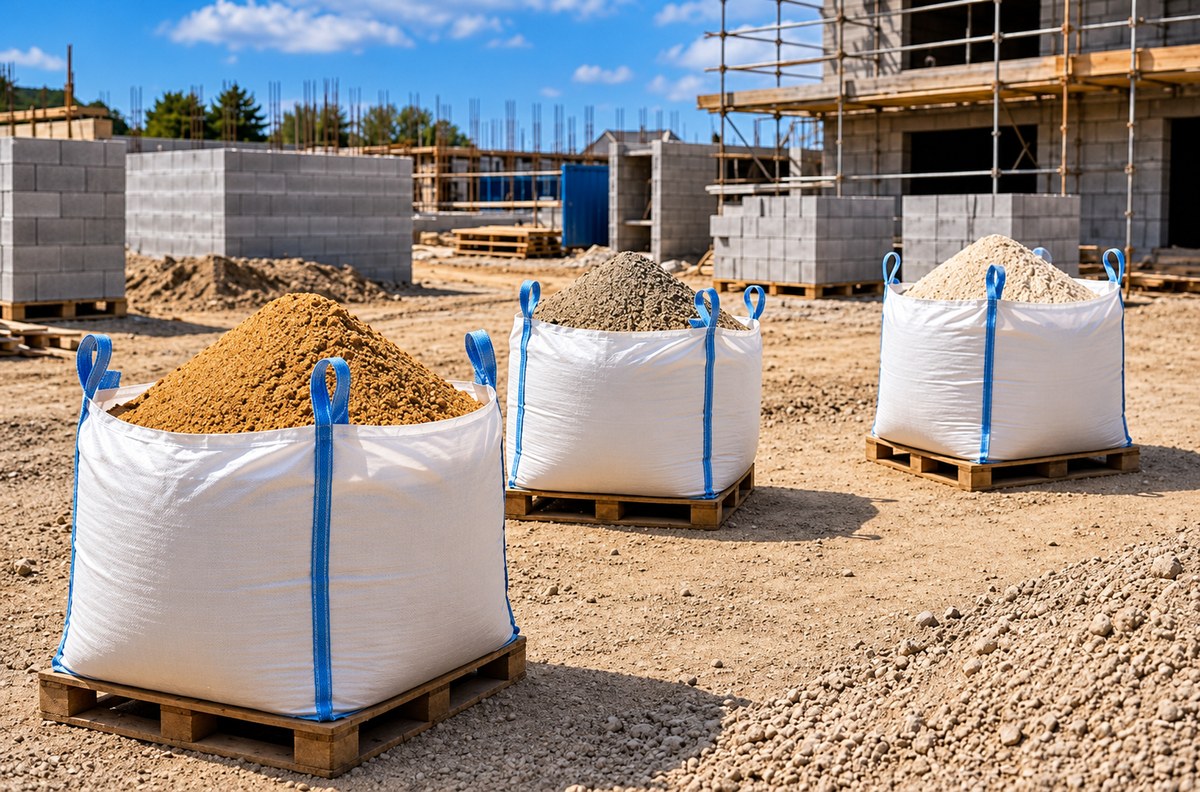
Mainland Aggregates lists 850 kg bulk bags and an approximate density of 1.8 tonnes per cubic metre. Using those figures, one bag represents about 0.47 m³, or roughly 9.4 m² at 50 mm depth.
These figures provide an estimate before project allowances. Moisture, compaction and product variation affect actual yield. Therefore, confirm coverage with your supplier instead of treating every bulk bag as a fixed volume.
Buying Sharp Sand for Your Project
Check the grading, intended use, bag weight and delivery arrangements before buying. In addition, confirm whether the supplier’s quantity calculator includes any allowance for compaction or wastage.
Mainland Aggregates offers bulk bags and loose deliveries by the tonne. Ask the supplier to confirm product suitability and access requirements for your site.
For a wider garden project, plan the materials alongside the layout. Our guide to designing outdoor areas you’ll actually use explores practical ways to create a comfortable, functional space.
Frequently Asked Questions
Why choose sharp sand instead of building sand for paving?
Suitable coarse sand can provide the aggregate grading that a paving bed or mortar mix requires. However, the paving system determines the correct material. Check the manufacturer’s instructions before choosing between products.
Is grit sand the same as sharp sand?
Suppliers often use these names for similar coarse products. However, names do not guarantee identical grading or suitability. Check the specification, especially for permeable paving, floor screeds and horticultural work.
Can sharp sand improve garden drainage?
Suitable horticultural sand can help in specific lawn dressings and potting mixes. However, small additions rarely solve heavy clay drainage problems. Identify the cause first, then choose an appropriate soil treatment or drainage solution.

