



Door hardware affects how safely and comfortably people use a building. The right handles, pull handles and locks should suit the door, its users and its surroundings. Start with compatibility, then compare finishes, security evidence and maintenance needs.
For example, a bedroom handle serves a different purpose from a pull handle on a glazed entrance. Similarly, French doors need a locking arrangement that works across two leaves. Understanding these differences helps you avoid unsuitable purchases and unnecessary alterations.
This guide explains how to choose door hardware for internal doors, entrances and double doors. It uses examples from UAP, part of Allegion, alongside practical checks for installation and ongoing care. Always compare the exact product specification with your door before ordering.
How to choose door hardware for internal and fire doors
Choosing internal door handles involves more than finding a finish that matches the room. A handle must operate the latch smoothly and feel comfortable in everyday use. It also needs fixings that suit the door’s construction.
Bedrooms, bathrooms and living rooms have different privacy and access needs. Meanwhile, offices, schools and shared corridors may place greater demands on durability. Therefore, identify the door’s purpose and likely use before comparing styles.
Match door hardware to the door’s function
First, decide whether the door needs a simple latch, a privacy lock or another operating arrangement. A standard internal door may use a lever handle and tubular latch. A bathroom may need a privacy function with an appropriate emergency release.
Fire doors require closer attention to compatibility. Their performance depends on the complete assembly, including the door, frame, seals, hinges, latch and any required closer. Changing one component can affect how the assembly performs.
For this reason, check the fire door manufacturer’s supporting documents before choosing replacement hardware. The BWF Fire Door Alliance’s hardware guidance explains why compatible components matter. Ask a competent installer to check any uncertainty about the proposed combination.
Check door thickness and fixing compatibility
Next, measure the door thickness and identify the existing latch or lock. Check the spindle length, fixing positions and clearance around the handle. Timber, metal, composite and glazed doors can require different mounting arrangements.
A backplate may cover old fixing holes during a replacement. However, its dimensions and operating centres must still match the door. A lever on a separate rose creates a different appearance and may expose previous holes.
Also, check whether the chosen handle needs through-bolts or another fixing method. Confirm that the latch or lock case allows those fixings. Avoid buying on appearance alone when the existing preparation limits your options.
Choose materials, finishes and accessible handles
Material and finish affect both appearance and maintenance. Stainless steel offers a practical option for many interiors. However, moisture, cleaning chemicals and outdoor exposure can change the grade or coating you need.
Satin, polished, black and brass-effect finishes create different visual results. Compare the manufacturer’s cleaning advice as well as the colour. In addition, consider how easily you can obtain matching replacements later.
Accessibility deserves equal attention. Many people find lever handles easier to use than small round knobs. However, the handle shape, operating force and installation height all affect comfort. Check the applicable accessibility requirements for the building and its users.
Plan door hardware installation and maintenance
Good installation helps a suitable handle work as intended. An incorrect spindle length or misaligned latch can cause stiffness. Similarly, overtightened fixings can affect movement or damage surrounding materials.
After installation, test the handle with the door open and closed. The latch should engage without unusual force. For specialist assemblies, use an installer with relevant experience and follow the manufacturer’s instructions.
Finally, inspect the fixings and clean the finish regularly. Use the manufacturer’s recommended products and avoid abrasive cleaners. When comparing prices, include replacement parts, installation and upkeep in your door hardware budget.
How stainless steel pull handles work on entrance doors
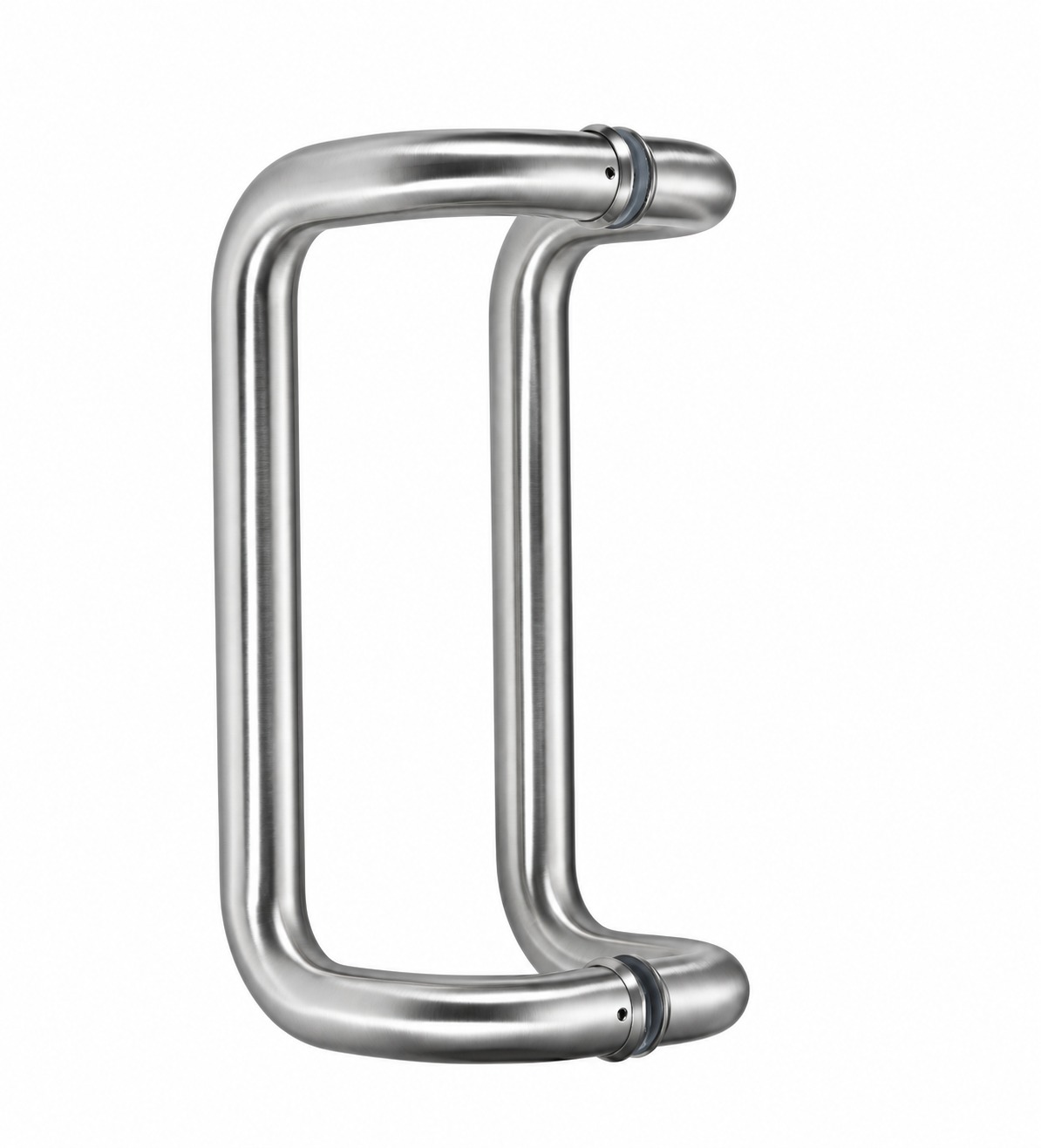
A D handle gives users a fixed grip for pulling a door open. Unlike a lever handle, it does not normally retract a latch. Therefore, plan the pull handle and the door’s locking arrangement together.
D-shaped designs can suit glazed entrances, timber doors and commercial reception areas. Their two fixing points support the gripping section. However, the door material, mounting kit and installation determine whether a particular product fits.
Choose the right stainless steel grade
UAP lists its D-shaped pull handle in grades 304 and 316. These grades offer different levels of corrosion resistance. Grade 316 contains molybdenum, which improves resistance in certain demanding environments.
For example, coastal salt exposure may justify a different specification from a sheltered interior. However, stainless steel still needs suitable cleaning and maintenance. Ask the supplier to confirm the grade for the actual site conditions.
Also, check the product code rather than assuming every size uses the same steel. UAP lists 300mm and 600mm versions in grade 316. Its published range also includes a 300mm grade 304 version.
Select a suitable pull handle size
The listed UAP handle has a 32mm diameter. Its 300mm and 600mm options provide different proportions for entrance designs. However, overall length alone does not establish suitability.
Check the fixing centres, projection and available hand clearance. In addition, consider the door’s width, opening direction and nearby walls. A longer handle may offer more gripping space, but the complete arrangement still needs practical assessment.
Before ordering, compare a dimensioned drawing with the door. This helps distinguish overall length from the distance between fixing holes. It also gives the installer a clear basis for checking compatibility.
Check door hardware fixings for glass and timber
UAP describes this handle as suitable for glass and wooden doors. The pack includes handles for both sides and the necessary fixings. Nevertheless, confirm the mounting kit suits the door’s thickness and construction.
For glass, agree the hole positions with the glass supplier before manufacture. Toughened glass does not permit routine drilling or cutting after toughening. Therefore, resolve the handle specification early rather than planning alterations on site.
Use the specified sleeves, washers and other protective parts during installation. On timber doors, mark the fixing positions accurately and check alignment. Follow the fitting instructions to avoid damaging the door or placing stress on the fixings.
Maintain the finish and review guarantee terms
The satin finish gives the handle a subdued appearance. However, fingerprints, airborne deposits and salt can still collect on its surface. Regular cleaning helps preserve the finish and makes early problems easier to spot.
Use a soft cloth and cleaning products that the manufacturer permits. Avoid steel wool and abrasive pads. In coastal locations, ask about a cleaning schedule that addresses salt deposits.
UAP includes this product in its Nanocoast range and advertises a lifetime coating guarantee. However, check the applicable conditions before purchasing. Confirm the coverage, exclusions, maintenance requirements and claim process for your chosen product.
Combine pull handles with suitable locks
A pull handle provides a grip, so it cannot secure an entrance by itself. The door may also need a latch, mechanical lock or access-control system. Choose compatible components that allow the intended users to enter and leave safely.
For example, a commercial entrance may need an access-control arrangement and suitable exit hardware. Fire and escape functions require specific assessment. Therefore, discuss the complete entrance with a competent specifier or installer before finalising the hardware.
Which door hardware suits French doors and double entrances?
A suitable double door lock must work with both leaves and their meeting edges. The active leaf normally provides everyday access. The secondary leaf also needs a secure position for the system to work correctly.
Multipoint locks engage at several positions along the door. However, different mechanisms use different hooks, bolts and keeps. Compare the exact system with the frame and door construction before treating it as a replacement.
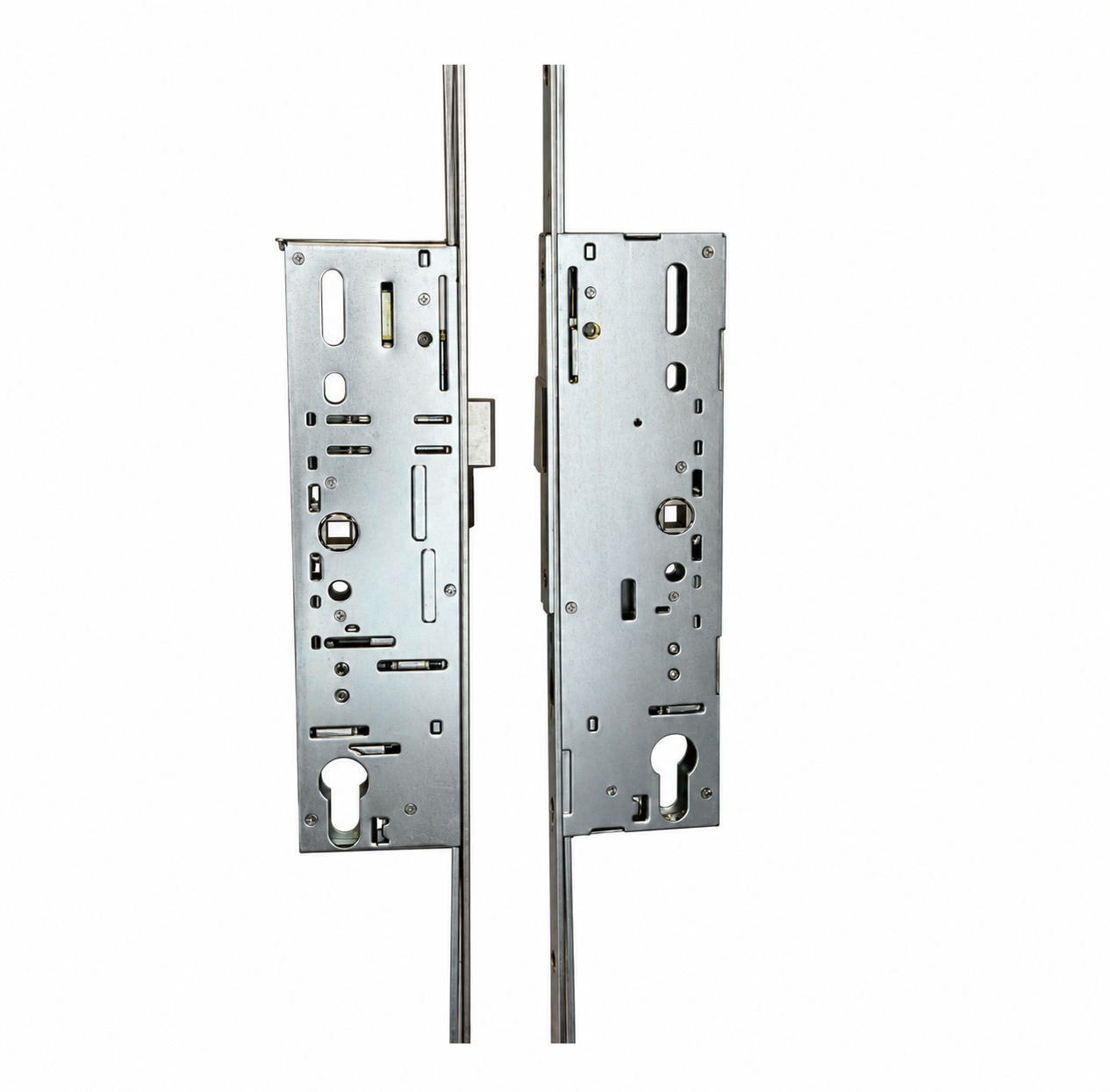
UAP’s Direct Fix Double Door Lock targets over-rebated timber and composite double doors. Its stated applications include French doors and commercial double entrances. This makes the rebate arrangement an essential compatibility check.
Check security evidence for the complete doorset
The UAP product lists two opposing steel hooks, a deadbolt, a latch and an anti-drill plate. These features describe the mechanism. However, the surrounding door, frame, cylinder and installation also affect security.
UAP also makes Secured by Design and PAS 24 claims on its product page. Ask for current supporting evidence and check its scope. Confirm which complete doorset configurations the evidence covers.
BSI’s PAS 24 guidance provides context for enhanced security requirements. PAS 24 assesses doorsets and windows rather than an isolated lock. Fitting one component does not establish compliance for the whole entrance.
Select a compatible security cylinder
UAP identifies the Kinetica three-star BSI Kitemarked TS007 euro cylinder as compatible with this lock. Check the exact cylinder model and its current certification. Also, measure the required internal and external cylinder lengths.
An incorrect length can leave the cylinder projecting beyond the protective furniture. Therefore, assess the cylinder, handle and any protective escutcheon together. Ask the installer to confirm compatibility and the intended key or thumbturn operation.
Review lock operation and door handing
This model includes a split spindle arrangement, reversible latch and hold-back latch function. UAP states that lifting the handle activates the deadbolt. However, confirm the complete locking sequence with the supplier before installation.
A split spindle can support different operation on each side, depending on the compatible handle arrangement. Meanwhile, the reversible latch helps accommodate different door handing. Check how these features work in the proposed entrance.
The lock also incorporates keeps for the secondary leaf. These receiving parts must align with the locking points. Therefore, assess both leaves together rather than concentrating only on the active door.
Confirm door hardware measurements before ordering
The published faceplate measures 2200mm long and 16mm wide, with square ends. UAP lists a 45mm backset and 92mm handle centres. It also identifies 219mm or 243mm handle backplate options.
Backset measures from the faceplate to the operating centre. Handle centres describe the spacing between the handle spindle and cylinder centre. However, matching these measurements alone does not confirm full compatibility.
Also, compare hook positions, keep locations, faceplate shape and gearbox dimensions. For replacements, identify the existing manufacturer and model wherever possible. Share photographs and measurements with the supplier before ordering.
Check installation and alignment
Use an experienced locksmith or joiner for a mechanism that needs precise preparation. The installer should check hinge condition, door movement and alignment before adjusting the lock. Otherwise, existing door problems may continue after replacement.
Test the locking points with the door open and closed. They should enter their keeps without unusual resistance. If the handle needs excessive force, investigate the alignment rather than forcing the mechanism.
Also, inspect the seals, threshold and frame when assessing draughts. A multipoint lock forms only one part of the entrance. Its presence alone does not establish the door’s weather performance.
Maintain the complete door hardware system
Inspect the handles, keeps, hinges and fixings periodically. Use only the lubricants and cleaning methods that the manufacturer recommends. Timber movement or loose hinges can affect operation, so check alignment when the door becomes stiff.
UAP advertises a ten-year guarantee for this lock. Check the applicable terms and retain the purchase and installation details. In addition, ask the supplier about replacement components and future servicing.
For broader precautions, read PAD Magazine’s guide to securing your home while travelling. It covers steps that complement dependable locks and handles.
Choosing door hardware starts with the complete door and the people who use it. Match the dimensions, function and supporting evidence before comparing finishes. Then support that choice with careful installation and regular maintenance.

