


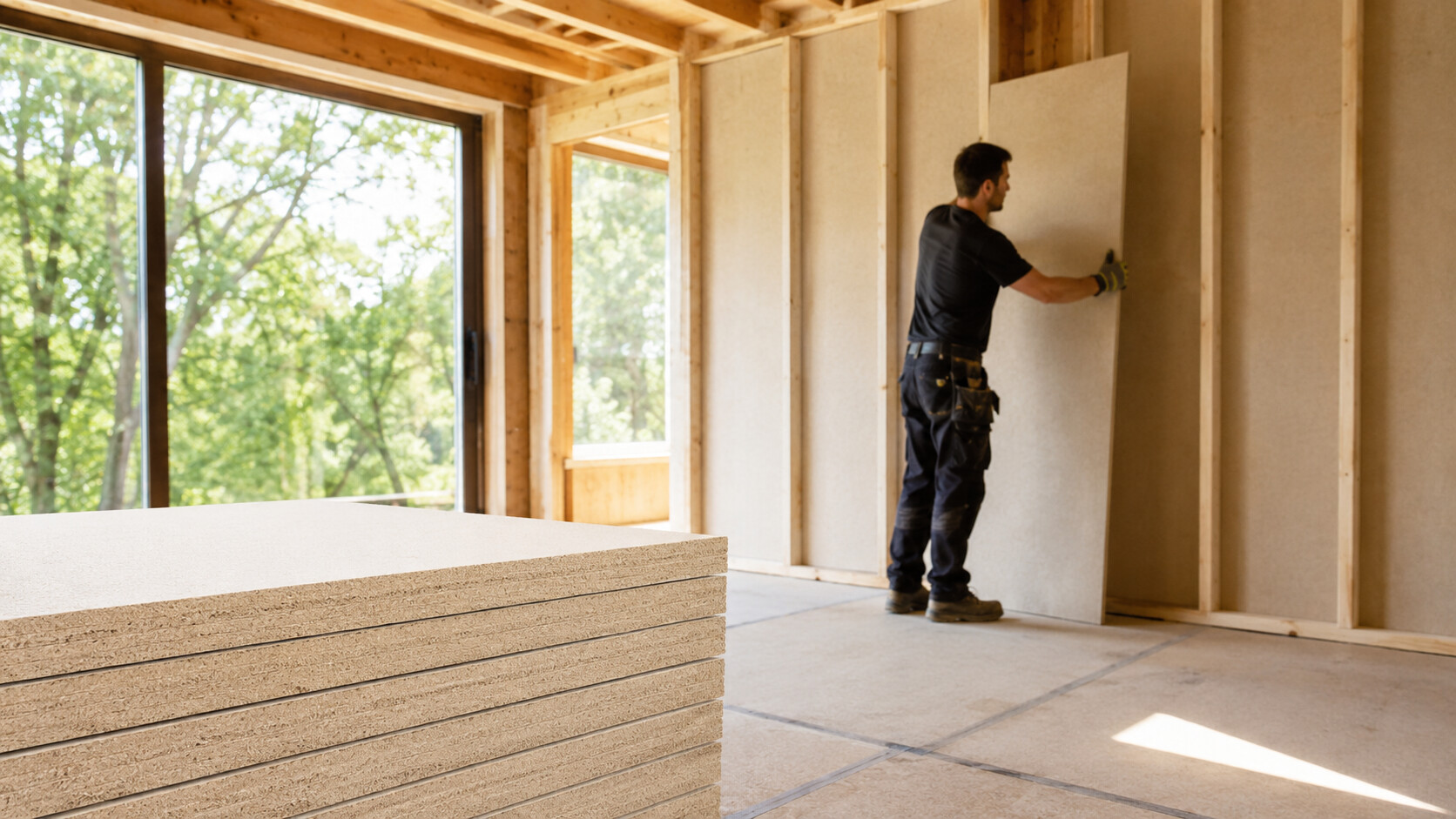
Adaptavate has announced the launch of a £1 million Innovate UK Smart grant. Its goal is to optimize the cost and scalability of its carbon-negative alternative to plasterboard. But what does this new product offer, and how will it influence the building industry?
The main source: Adaptavate and BDC to accelerate the scalability of carbon-negative plasterboard alternative with £1million Innovate UK grant
What does this plasterboard present?
The company is responding to the urgent call for decarbonization in construction by developing the necessary carbon-negative technologies and products, as well as an industrial ecosystem for their rapid implementation anywhere in the world. To achieve this goal, the company is focusing on commercializing its patented, scalable carbon capture and utilization (CCU) and carbon capture and storage (CCS) processes.
These processes enable the production of low-carbon and carbon-negative building materials. By licensing its technology, the company enables these market-alternative products to be manufactured by anyone and anywhere, resulting in significant carbon removal on a global scale.
How will new plasterboard influence the building industry in the future?
The new product will have a significant positive impact on the market, making plasterboard cheaper and more accessible.
Jeff Ives, Technical Director at Adaptavate, said: “This project will help deploy our technology worldwide, making it more cost-competitive while also improving its carbon removal potential. The implementation of our patented technology could play a significant role in decarbonizing the construction industry, given the widespread use of plasterboard worldwide, its application in interior linings, and the opportunities for innovation in non-load-bearing structures.”
Fencyx, as one of the leading wholesale plasterboard suppliers, is following this technology. We are actively studying this new experience and are happy to adopt it.

