


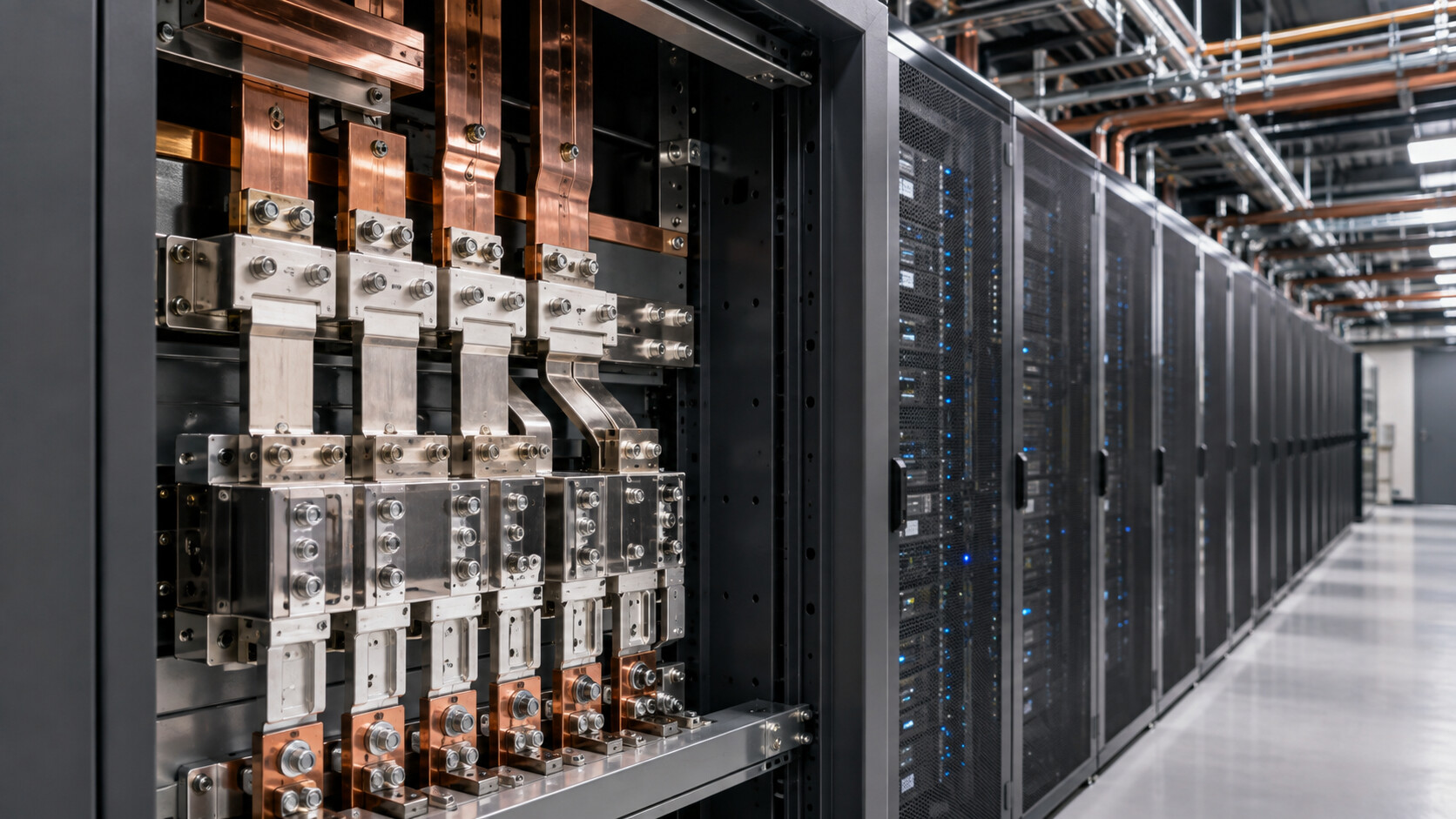
Data centres have quietly become one of the backbones of modern life. Every time we stream a film, back up our photos or ask a chatbot a question, we rely on a vast network of physical kit inside these buildings. Behind the racks of servers sits a huge amount of metal equipment. This includes electrical distribution systems, cooling gear, structural framework and control systems. Metal finishing in data centres plays an important role across this infrastructure. Surface treatments such as silver plating often support electrical applications where a dependable, conductive surface matters.
As data centres grow bigger and demand more power, people are paying closer attention to component performance. Metal finishing isn’t just about looks. Across a data centre, it can affect corrosion resistance, electrical conductivity, wear resistance and component lifespan.
The Demands of Modern Data Centres and Metal Finishing
Data centres are strange buildings, in a way. They combine enormous electrical loads with tightly controlled environments. Operators also expect them to run continuously, sometimes for decades, without so much as a hiccup.
That’s a tall order for the components involved. Electrical systems need to cope with high currents. Cooling equipment has to run round the clock, while mechanical parts must hold up under constant use.
So engineers build reliability into every level. Most facilities use backup generators, uninterruptible power supplies and multiple power routes as standard. But even with all that redundancy, smaller parts still need to do their job properly. These include connectors, terminals, busbars and fixings. The surface condition of those parts can make a genuine difference to how well they hold up over time.
Metal Finishing in Data Centre Electrical Distribution
Power distribution sits right at the heart of data centre design.
Electricity typically travels through transformers, switchgear, distribution boards, busbars and power distribution units. It then reaches the racks where the computing happens. At each stage, current has to move cleanly from one component to the next.
Copper and aluminium tend to be the materials of choice because they conduct electricity well. But the base metal only tells half the story. Surfaces oxidise. They pick up contamination. They wear down over time. All of this can increase contact resistance, especially where two conductive surfaces meet. In a high-current setting, that extra resistance generates heat. Heat is already one of the biggest headaches in data centre engineering.
This is where metal finishing in data centres earns its keep. It adjusts the surface properties of a part without compromising the structural strength or conductivity underneath.
Protecting Data Centre Components from Corrosion
Operators usually keep data centres at carefully controlled temperature and humidity levels. Even so, corrosion can still occur.
Metal parts may encounter moisture during construction or maintenance work. Fluctuations in environmental conditions can also expose them to moisture. Airborne contaminants can take their toll too. Equipment in plant rooms often faces different conditions from kit in the server halls.
Corrosion causes headaches for electrical and mechanical parts alike. On electrical contacts, it reduces conductivity. On mechanical components, it can weaken surfaces, gum up moving parts or shorten their working life.
A well-chosen surface treatment adds an extra barrier between a component and its surroundings. Different coatings offer different levels of protection. The right finish therefore depends on the material, its location and the conditions it is likely to face.
The Importance of Busbars in Data Centres
Busbars show how a fairly simple component can carry an outsized responsibility.
Manufacturers usually make busbars from copper or aluminium. They offer an efficient way to move large amounts of current through switchgear, distribution equipment and rack-level power systems.
Their performance doesn’t depend only on the conductivity of the metal itself. The joints between components matter just as much. Surface oxidation, poor contact or contamination at these points can increase resistance.
That’s why engineers think carefully about contact area, surface finish, fastening pressure and operating temperature when designing busbar systems. Data centres continue to demand more power, so these details become even more significant. High-density computing setups also place real strain on the electrical infrastructure feeding each rack.
Metal Finishing in Data Centre Cooling and Mechanical Systems
Electrical equipment isn’t the only part of a data centre that relies on well-finished metal.
Cooling systems bring their own cast of characters. These include pumps, valves, pipework, heat exchangers, fans and mechanical assemblies. Depending on the system design, these components may come into contact with water, coolants or damp air.
Corrosion resistance becomes especially important wherever moisture is involved. Surface treatments can also help parts that experience friction or repeated movement.
The right finish depends entirely on the application. A finish that works for an electrical connector might not suit a mechanical fastener or cooling-system part. Engineers should treat metal finishing as part of the wider engineering picture rather than something added at the end of manufacturing.
Designing Surface Treatments Into Data Centre Components
Ideally, designers should consider surface finishing right from the design stage.
Adding a coating changes a component’s dimensions, even if only slightly. For precision assemblies, designers may need to factor that thickness into tolerances from the outset.
Designers also need to decide which surfaces need coating and which do not. Threads, contact points, holes and mating parts often need particular care. Component geometry matters too. Complex shapes, deep recesses and sharp edges can affect how evenly electroplating covers a component.
Thinking about these details early makes life considerably easier for manufacturers. It also helps them meet the specification consistently from batch to batch.
Quality Control and Traceability in Metal Finishing
Data centre projects usually source components from a wide range of suppliers. This makes quality control a genuinely important part of the process.
Manufacturers may check finished metal parts for coating thickness, adhesion, appearance and dimensional accuracy. They may also carry out further testing where electrical performance is critical.
Consistency counts for a lot here, particularly when manufacturers produce components in bulk. If a finish varies noticeably between batches, that uncertainty can affect the performance of the finished equipment. Traceability helps manufacturers, contractors and procurement teams confirm that suppliers used the correct processes and materials.
How Metal Finishing Supports Long-Term Data Centre Performance
Data centres need to last, and even the smallest components contribute to the reliability of the whole facility.
A single connector, terminal or bracket may account for barely anything in the overall build cost. Yet an early failure can create real maintenance headaches or cause knock-on problems elsewhere.
Surface engineering gives designers and manufacturers a way to tailor a component’s outer properties to its operating environment. That may mean better conductivity, stronger corrosion resistance or improved wear resistance.
As data centres keep growing in scale and power density, metal finishing in data centres and these small engineering details will matter even more. Reliable digital infrastructure isn’t just about clever computing hardware. It also depends on the quality and durability of the physical parts that keep everything powered and running.

