


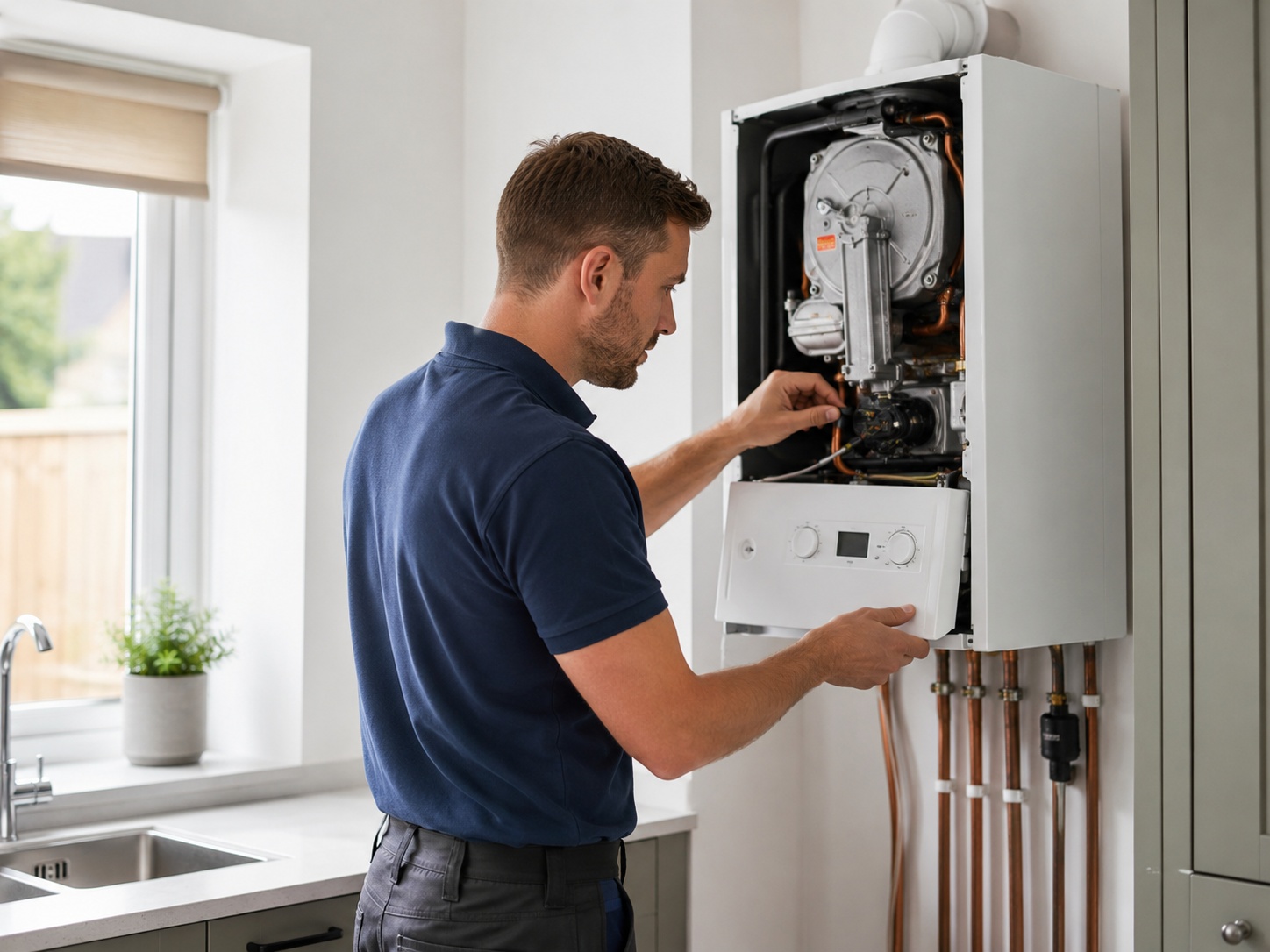
A boiler is overdue for a service if it’s been more than 12 months since the last one, regardless of whether it’s currently heating your home normally. Warning signs to watch for include a yellow or orange flame instead of blue, rising energy bills, unusual noises, a faint burning or metallic smell, and soot or staining around the casing. Any of these on their own justifies booking a service rather than waiting for a full breakdown.
A boiler can run for months past its service date and still heat your home and hot water without complaint, which is exactly what makes overdue servicing easy to ignore. The signs it’s due are usually small and easy to miss: a flame that’s gone slightly yellow instead of blue, a bill that’s crept up without explanation, or a faint burning smell that comes and goes. If you can’t remember your last service date or you’ve noticed any of these small changes, 0800 Homefix can get an engineer out to check it over properly before a small issue turns into a breakdown.
Why Working Fine Doesn’t Mean Healthy
Boilers rarely fail without warning. Most problems build up gradually over months, whether that’s limescale coating the heat exchanger, a slowly failing seal, or a burner that’s not combusting as cleanly as it should. None of these show up as an obvious fault code straight away. Instead they show up as small efficiency losses and subtle changes that most people put down to normal wear rather than an early warning sign.
This is why annual servicing exists as a separate task from waiting for something to break. A service checks the components that degrade silently, long before they cause a lockout or a breakdown that leaves you without heating in the middle of winter.
Signs Your Boiler Needs a Service
Look out for these signs even if your heating and hot water still seem to be working as expected:
- The flame in the viewing window looks yellow or orange instead of a steady blue.
- Your energy bills have gone up without a clear reason like colder weather or higher usage.
- The boiler makes banging, whistling, or gurgling noises during operation.
- You notice a faint burning or metallic smell near the boiler.
- Soot marks or staining have appeared around the casing or flue.
- It takes noticeably longer than before to heat the house or produce hot water.
- It’s been over 12 months since your last documented service.
- The pilot light keeps going out or looks weaker than it used to.
1. Yellow or Orange Flame Instead of Blue
A healthy gas flame burns a clean, steady blue. Yellow or orange tinges usually mean the burner isn’t getting the right air-to-gas mixture, which often points to a dirty burner or a ventilation issue. This matters beyond efficiency, since incomplete combustion is also how carbon monoxide gets produced, making this one sign worth acting on quickly rather than waiting.
2. Rising Energy Bills Without Explanation
As components wear, a boiler has to work harder to produce the same amount of heat, and that extra effort shows up on your bill before it shows up as an obvious fault. If your usage habits haven’t changed and the weather hasn’t shifted dramatically, but your gas bill has crept up over a few months, that’s often the boiler quietly losing efficiency.
3. Strange Noises During Operation
Banging or kettling noises usually point to limescale or sludge building up around the heat exchanger, restricting water flow and causing localised overheating. Whistling can indicate air trapped somewhere in the system. Neither noise means immediate danger, but both indicate the system needs attention before the restriction gets worse.
What Happens During a Boiler Service
A standard service follows a consistent checklist, and most engineers work through it in roughly this order:
- Visual inspection of the casing, flue, and surrounding area for damage or blockages.
- Checking the burner and heat exchanger for soot, scale, or corrosion.
- Testing gas pressure and flow to confirm it matches manufacturer specifications.
- Checking flue gas readings to confirm safe, clean combustion.
- Inspecting seals, safety devices, and controls for wear or faults.
- Testing the boiler through a full heating cycle to confirm normal operation.
Why Annual Servicing Matters Beyond Avoiding a Breakdown
Servicing isn’t only about preventing a cold house in January. A few other reasons make it worth keeping on schedule:
- Most manufacturer warranties require proof of annual servicing to stay valid.
- Landlords are legally required to have an annual gas safety check on rented properties.
- A well-maintained boiler runs more efficiently, which keeps running costs lower over time.
- Regular checks catch carbon monoxide risks that wouldn’t otherwise be obvious until a detector triggers.
Servicing vs Emergency Repair: Knowing the Difference
A routine service is a planned, preventative check, while an emergency repair is a reactive call when something has already gone wrong. If your boiler has completely stopped working, is leaking heavily, or you can smell gas, that’s a job for emergency plumbing services rather than a scheduled service slot. If it’s simply overdue and showing small warning signs like the ones above, a standard service booking is the right call and avoids paying for an emergency callout unnecessarily.
Leaks specifically deserve their own mention here. If you’ve noticed damp patches, dropping system pressure, or water pooling near the boiler, that’s a separate issue from general servicing and often needs leak detection experts to find the exact source before any repair work can start.
How to Tell If Your Boiler Has Never Been Serviced
Check your boiler’s service history, usually recorded in a logbook kept near the appliance or with your original installation paperwork. If there’s no record at all, or the last stamped date is more than a year old, treat it as overdue regardless of how the boiler is currently performing. New homeowners who inherited a boiler with no paperwork should book a service early on simply to get a baseline understanding of its condition.
Frequently Asked Questions
1. How often should a boiler be serviced?
Most manufacturers recommend servicing a boiler once every 12 months, regardless of how well it appears to be running. This keeps warranties valid and catches wear before it turns into a breakdown.
2. What happens if I skip a boiler service?
Skipping a service can invalidate your warranty, reduce efficiency over time, and allow small faults to go unnoticed until they cause a full breakdown or, in rarer cases, a safety issue like a carbon monoxide leak.
3. Can an overdue boiler still be dangerous even if it’s heating properly?
Yes. Incomplete combustion, a blocked flue, or a failing seal can all exist without affecting how warm your radiators get, which is exactly why relying on performance alone to judge boiler health isn’t reliable.
4. How long does a standard boiler service take?
A routine service typically takes between 30 and 60 minutes for a straightforward, accessible boiler, though older or harder-to-reach units can take longer.
5. Is a boiler service the same as a gas safety check?
Not exactly. A gas safety check confirms an appliance is safe to use and is a legal requirement for landlords, while a full service goes further, checking and cleaning components to maintain efficiency and prevent future faults.
6. What are the warning signs I shouldn’t ignore?/+
A yellow flame instead of blue, a burning smell, soot staining, and unusual noises are the signs most likely to indicate a genuine developing fault rather than normal wear.
7. Does servicing improve energy efficiency?
Yes. Cleaning components like the burner and heat exchanger restores the boiler closer to its original efficiency, which can noticeably reduce gas usage compared to running it in a neglected state.
8. Will my boiler warranty be affected if I miss a service?
Most manufacturers require documented annual servicing to keep a warranty valid, so missing even one year can leave you without cover if a major component fails later.
9. How do I find a reliable engineer for boiler servicing in London?
Look for a Gas Safe registered engineer with reviews specific to boiler servicing London homeowners have used before, and check their registration number on the Gas Safe Register website before booking.
10. Can a new boiler still need servicing in its first year?
Yes. New boilers still need their first service at the 12 month mark, both to maintain the warranty and to catch any installation-related issues early while they’re still straightforward to fix.
Final Thoughts
A boiler that seems to be working fine can still be quietly overdue for attention, and the signs are usually small enough to brush off until they turn into something bigger. Keeping an eye on flame colour, unusual noises, and your service history gives you a much better read on your boiler’s actual condition than performance alone. 0800 Homefix can book in a straightforward annual service or take a proper look if you’ve spotted any of the warning signs above, so small issues get caught before they turn into a cold house and an unplanned repair.

