


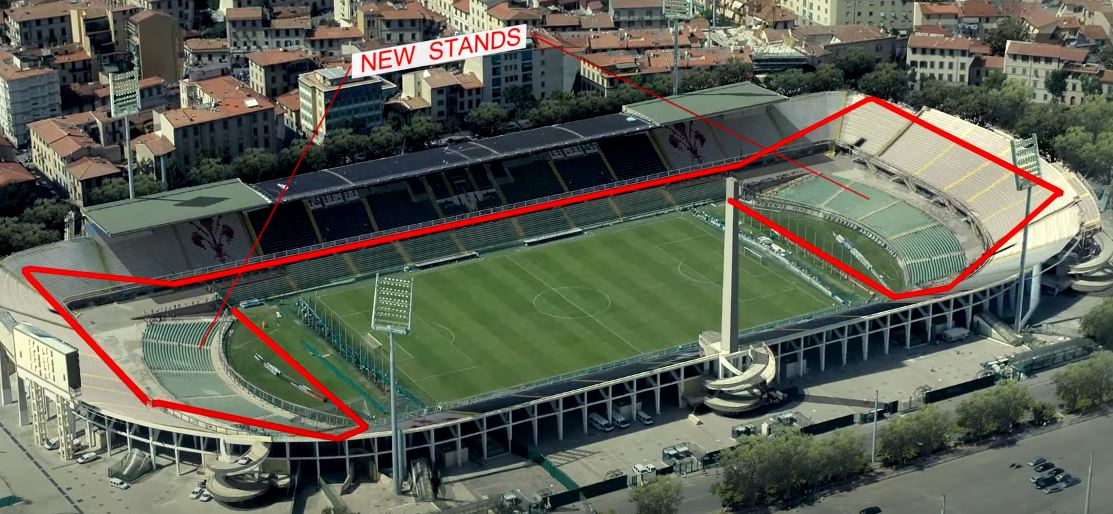
Stadio Artemio Franchi has served as a testament to Fiorentina’s football history and the steadfast devotion of its supporters for many years. Designed by renowned architect Pier Luigi Nervi, this iconic stadium has witnessed many memorable events, but its facilities now require substantial modernisation. The Artemio Franchi renovation aims to embrace the future while preserving the stadium’s architectural heritage.
Why the Artemio Franchi Renovation Is More Than an Improvement
The ambitious redevelopment aims to modernise facilities, improve the fan experience and strengthen the stadium’s commercial potential. It combines changes to seating and spectator facilities with structural improvements and the restoration of historic elements.
The Florence Municipality’s published programme sets out first-phase structural completion for February 2027, followed by finishing work and testing in April 2027. Overall completion is planned for 2029, with the renovated stadium intended to be available for the 2029/30 football season.
These are programme targets rather than confirmation that each stage has been completed. Fiorentina’s centenary in 2026 remains an important milestone for the club, but it should not be confused with completion of the first construction phase.
Key Details of the Fiorentina Stadium Renovation
| Attribute | Details |
|---|---|
| Stadium name | Stadio Artemio Franchi |
| Club | ACF Fiorentina |
| Location | Florence, Italy |
| Original architect | Pier Luigi Nervi |
| First-phase structural completion | Scheduled for February 2027 in the municipality’s published programme |
| First-phase finishing and testing | Scheduled for April 2027 |
| Overall completion | Planned for 2029, ahead of the 2029/30 season |
| Main works | New roofing, seating improvements, structural upgrades and restoration |
| Construction approach | Phased redevelopment |
| Architectural goal | Preserve historic elements while modernising infrastructure |
The Florence Municipality’s renovation programme provides the reference for these milestones.
Beyond Football: Creating a More Versatile Venue
Retail, Dining and Activity Beyond Matchdays
Modern stadium redevelopment increasingly considers how a venue can serve visitors beyond the football calendar. Retail, food and beverage services, hospitality and suitable events can broaden its use and support commercial activity.
For Artemio Franchi, the practical question is how improved facilities can support those activities without compromising circulation, safety or the stadium’s historic character.
The original article described specific shops, restaurants and entertainment uses. Their final scope and opening arrangements should be confirmed through approved project information rather than treated as guaranteed additions.
Hospitality and Event Facilities
Improved hospitality spaces can make a stadium more attractive to corporate guests, sponsors and event organisers. Such facilities may support meetings and other activities when matches are not taking place.
The municipality’s published programme includes new sky boxes within the northern roofing works. However, a separate hotel and conference centre should not be presented as confirmed components without supporting project documentation.
Any wider commercial development would also need to be considered alongside access, servicing and the surrounding neighbourhood.
Significant Improvements: What Will Change at Artemio Franchi?
Redesigned Seating and a Better Fan Experience
Seating improvements are an important part of the redevelopment. The works include the Curva Fiesole and interventions affecting the stadium’s northern sections, alongside restoration and structural strengthening.
The objective is to create a more comfortable and functional spectator environment while respecting the existing building.
Capacity during construction depends on which areas are available and authorised for use. A fixed minimum of 30,000 seats should therefore not be assumed for every construction phase. Final capacity should likewise be checked against the approved design and subsequent operating arrangements.
A New Canopy and Protection for Spectators
A contemporary roofing structure is among the project’s most significant additions. The northern canopy covers the Curva Fiesole, northern lateral tribune and northern Maratona sections within the published first-phase programme.
The works also include restoration of the historic canopy and the Torre di Maratona, bringing new construction and conservation together.
Weather protection is an important benefit of stadium roofing. Its relationship with sightlines, the historic structure and the surrounding stands also makes it a substantial architectural and engineering task.
For related coverage of design and building projects, explore PAD’s Planning & Design section.
VIP Lounges and Improved Hospitality
Hospitality improvements can contribute to the stadium’s commercial appeal while providing a different matchday experience for corporate guests.
New sky boxes are included in the municipality’s published first-phase works. The final hospitality offering will depend on the completed facilities and their operating arrangements.
Potential services associated with these spaces include:
Catering and refreshments.
Premium seating and private hospitality areas.
Facilities for corporate guests and sponsors.
Opportunities for business events where the venue permits them.
These uses can support stadium revenue, but their financial contribution should be assessed through actual operation rather than assumed in advance.
How Is the Artemio Franchi Renovation Being Funded?
Funding remains an important part of delivering a large, phased stadium project. Different construction packages, public funding arrangements and any proposed private contribution need to be distinguished from the overall cost.
The previously stated €95 million should not be treated as a verified total for the entire redevelopment without a dated source explaining what it covers.
The same applies to sponsorship and club investment. Proposed contributions and completed funding agreements are different, and the article should reflect that distinction.
Clear information about funding, procurement and the remaining works is essential to understanding how the project progresses.
Can Fiorentina Play at Artemio Franchi During Renovation?
Maintaining football operations alongside construction is one of the project’s main practical challenges.
A phased approach allows work to be organised around different stadium sections, but the availability of stands, access routes and spectator facilities can change as construction progresses.
Match arrangements should therefore be checked against current club and municipal announcements. A possible move to Empoli’s Stadio Carlo Castellani should not be described as the current plan without confirmation.
Construction sequencing also needs to account for safety, emergency access and the separation of supporters from active work areas.
What the Renovation Means for Fiorentina’s Future
Stadio Artemio Franchi’s redevelopment brings together modernisation and historic preservation. Improved seating, roofing and hospitality facilities can support a better experience while retaining the identity of one of Italy’s best-known football grounds.
The project’s success will depend on delivering those improvements, managing construction disruption and maintaining clear information about its programme.
With overall completion planned for 2029 in the municipality’s published schedule, the Artemio Franchi renovation remains a significant long-term investment in the stadium’s future.