


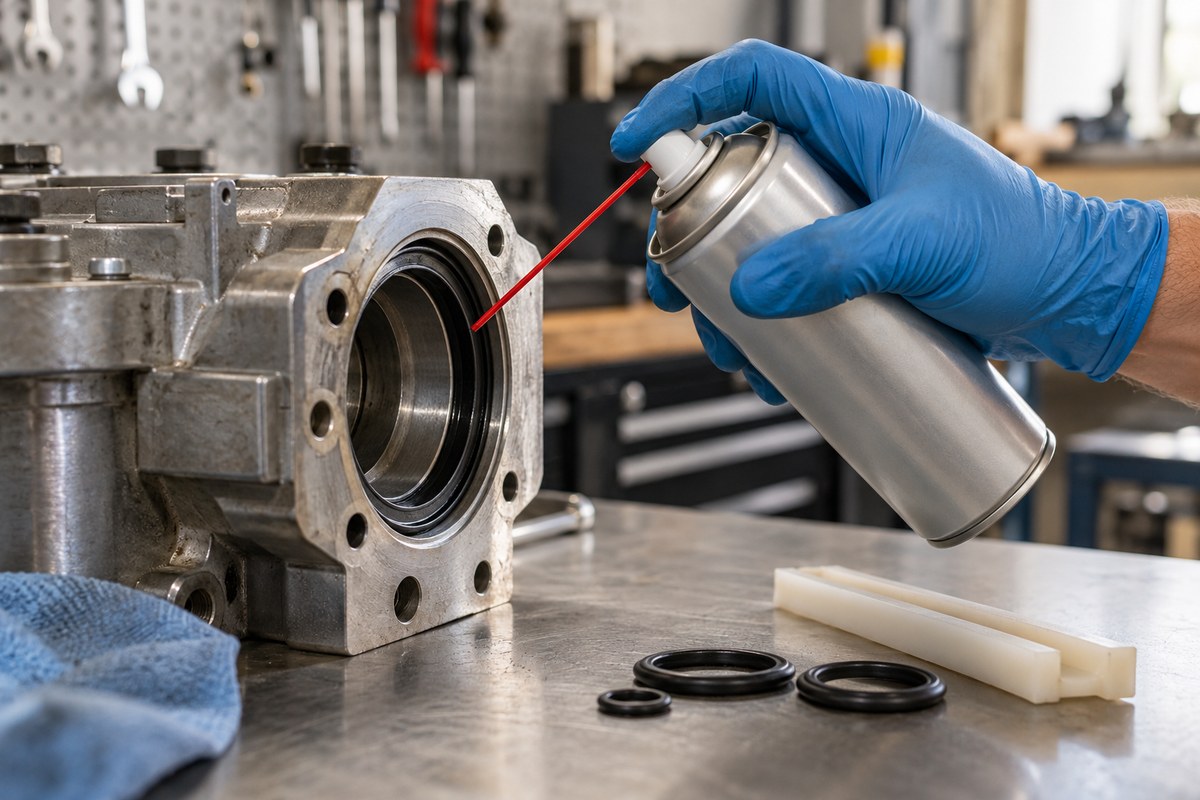
Silicone-based lubricants can be an excellent addition to a maintenance team’s toolkit, particularly when working with rubber, plastic, or other non-metallic components. A well-chosen silicone lubricant spray can help reduce friction, prevent sticking, and provide a degree of resistance to moisture.
Focus keyphrase mein yehi rakho: Silicone-based lubricants
When the right silicone-based lubricants are used well, they can greatly help reduce friction, prevent sticking, and provide a degree of resistance to moisture. All this helps make these products suitable for a broad range of maintenance applications.
However, it is also important not to treat silicone lubricants as simply a general-purpose substitute for every type of oil or grease.
The properties of these lubricants lend themselves particularly strongly to certain applications. It will be necessary, then, to select the right formulation for the materials, operating conditions, and equipment involved.
A Brief Introduction to Silicone-Based Lubricants
Silicone-based lubricants are distinguished by their use of silicone compounds as the principal lubricating component. They can be purchased not only in spray form, but also as greases and other specialist formulations.
One of the key reasons why maintenance personnel might turn to silicone-based lubricants is their suitability for many applications involving such materials as rubber and plastics. Silicone lubricants can create a lubricating film that helps minimise friction, at the same time as providing some resistance to moisture.
It is crucial to acknowledge, however, that the precise properties of silicone lubricants will vary between products. Maintenance professionals, then, should always look at a manufacturer’s technical information before applying a lubricant to a given component.
6 Purposes for Which Silicone Lubricants May Be Used
Lubricating Rubber Seals and Gaskets
Silicone-based lubricants see widespread use for the maintenance of rubber seals, gaskets, and similar components.
Seals are present throughout industrial machinery, vehicles, plumbing systems, and other equipment. However, if friction occurs between a seal and the surface that it moves against, this can make assembly or operation more difficult.
The use of the right silicone lubricant, then, can help components move more freely while helping to protect the rubber.
Plastic-to-Plastic and Plastic-to-Metal Applications
Where plastic components move against one another or against metal, silicone lubricants can again come to the rescue.
Potential examples of this encompass the likes of guides, runners, linkages, mechanisms, and other moving parts where the minimisation of friction could help prevent sticking or binding.
However, maintenance professionals looking to use silicone lubricants for such purposes should make sure their chosen product is designed for metal-to-non-metal or plastic-to-plastic applications.
The mere fact of a lubricant being silicone-based won’t automatically make it suitable for every plastic, elastomer, or composite material.
Hinges, Locks, and Moving Mechanisms
It has also long been known for silicone-based lubricants to be used across various hinges, locks, and mechanical linkages.
A suitable spray can allow for a thin film to be easily applied to moving parts. This can help lower friction and the tendency for mechanisms to stick.
For property owners, checking door mechanisms, window seals, and external fittings can also form part of a wider seasonal maintenance routine. PAD Magazine’s guide on how to prepare your home for winter provides a practical checklist for planning these checks alongside other property maintenance tasks.
Cables, Pulleys, and Guide Rails
Where components need to move smoothly and a relatively clean lubricating film is desirable, some silicone lubricants can be useful.
Cables, pulleys, and guide rails are all examples of applications where the reduction of friction can facilitate smoother movement.
Providing Moisture-Resistant Lubrication
Resistance to water is another useful characteristic of many silicone-based lubricants.
Such products may therefore be chosen for applications where there is a likelihood of components being exposed to moisture, or where a lubricant also needs to provide a degree of water-repellent protection.
It should be borne in mind, though, that silicone lubricants don’t always deliver meaningful protection against corrosion.
Maintenance staff, then, will need to scrutinise the particular formulation of a given lubricant product to determine its effectiveness for this purpose.
Electrical and Sealing Applications
Silicone compounds can have applications, too, around electrical components. This can be particularly the case where sealing and insulation are required.
Silicone dielectric greases, for instance, can be invaluable for electrical sealing, lubrication, and protection.
It is not true, however, that any silicone lubricant spray will be suitable for use on live electrical equipment.
So, there will still be a need to carefully check product specifications, in addition to carrying out electrical work in accordance with appropriate safety procedures.
Final Thoughts: The Right Silicone Lubricant Can Bring Major Benefits
Silicone lubricants enjoy a well-deserved reputation as versatile maintenance essentials that can be trusted to deliver strong performance with minimal mess.
These products can be useful across a wide range of industrial, workshop, and facilities-maintenance applications, provided the formulation is appropriate for the task.
Equally important to remember, though, is that choosing a lubricant should always begin with the application rather than the lubricant type.
When maintenance professionals take the time and care to check material compatibility, temperature limits, and environmental conditions, they will be putting themselves in a good position to always select the right lubricant for the job.

