


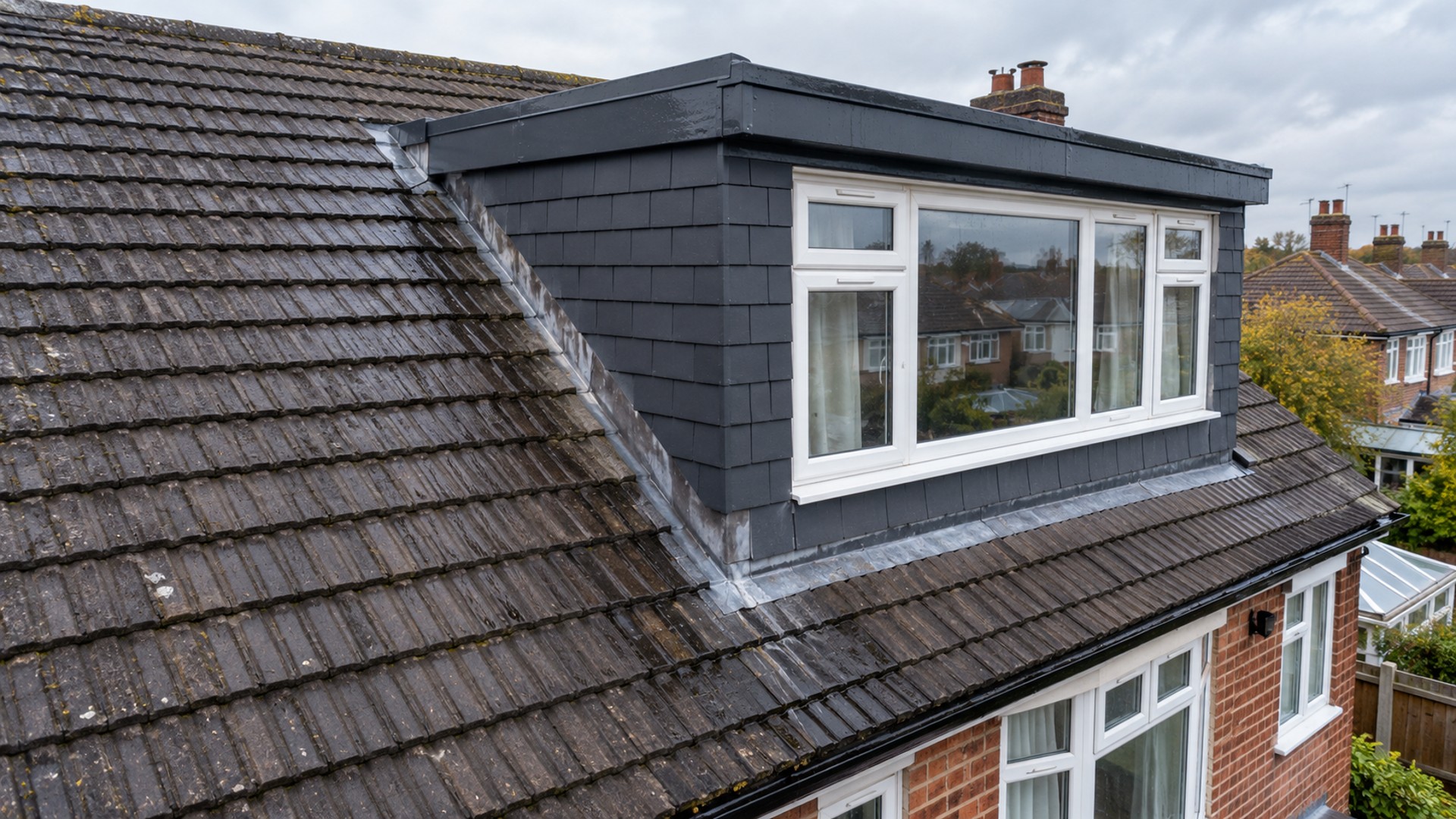
Dormer roof repairs in Hounslow start with finding where the water enters. A stain above the bed may come from failed flashing, damaged roof covering or a roof-window detail. However, condensation can create similar signs, so a proper inspection matters.
A loft conversion should provide a comfortable, usable room. When damp appears, the priority is to identify its cause before arranging repairs or redecorating. This guide explains common faults, repair options, indicative budgets and the questions to ask a contractor.
Dormer Roof Repairs: Key Points
- Check the junctions: Flashings, roof edges and window connections can leak even when the main tiles look sound.
- Consider condensation: Indoor moisture can resemble a rainwater leak, and both problems can occur together.
- Assess the whole assembly: The covering, deck, insulation and timbers all influence the appropriate repair.
- Compare complete quotes: Access, waste removal, VAT and concealed damage can affect the final bill.
- Inspect safely: Record visible signs from indoors or ground level and leave roof access to competent professionals.
Why Dormer Roofs Develop Leaks
A dormer brings several roof surfaces together. Its top covering meets side walls, windows, trims and the original roof slope. Each connection needs a suitable weatherproof detail.
Water can enter through one junction and travel before it reaches the room below. As a result, the visible stain may sit away from the actual defect. Replacing tiles directly above that stain may leave the underlying problem untouched.
Effective dormer roof repairs address the failed detail and any resulting damage. They also consider how water drains away from the surrounding roof.
Common Causes of Leaking Dormers
Flat Roof Coverings and Drainage
Box dormers often have felt, EPDM rubber or GRP fibreglass coverings. A roofer should inspect seams, edges, outlets and connections as well as the main surface.
Persistent standing water, split coverings or loose trims deserve investigation. However, standing water alone does not establish the cause of a leak. The inspection should consider drainage, roof falls and the condition of the supporting deck.
Dormer Cheeks and Flashings
The cheeks are the dormer’s side walls. Their junctions with the pitched roof need details that suit the tiles, cladding and construction.
Some systems use soakers beneath the tiles with a cover flashing above. Other arrangements use different compatible components. Therefore, ask the roofer to explain the correct detail rather than assuming every dormer needs identical leadwork.
Back Edges and Upstands
The rear connection between the dormer roof and the original slope can be difficult to inspect from below. In addition, water from the upper roof passes through this area.
A failed upstand, poor overlap or damaged connection can allow water into the structure. The repair should restore the complete junction, including any concealed layers that affect weather protection.
Roof Windows and Flashing Kits
A leak around a roof window may involve the flashing, seals, surrounding covering or installation details. Therefore, avoid assuming the glass or flashing always causes the problem.
The roofer should check the window model, roof pitch and compatible flashing kit. Meanwhile, droplets on the inside of the glass may indicate condensation rather than water entering from outside.
Is It a Roof Leak or Condensation?
Rainwater leaks often worsen during or after rainfall. However, water may take time to travel through the roof, so the timing is not always immediate.
Condensation develops when moist air meets a sufficiently cold surface. Showers, drying laundry and inadequate ventilation can increase indoor moisture. The VELUX guide to window condensation explains this process.
Useful observations include:
- Whether the patch grows after rain or mainly during cold weather.
- Whether droplets form on the inside of the glazing.
- Whether damp affects one location or several cold corners.
- Whether the problem changes after showers or other moisture-producing activities.
These observations help an inspection, but they do not prove the cause. Rainwater ingress and condensation can occur together. Persistent damp therefore needs assessment rather than repeated painting or surface sealing.
Planning Dormer Roof Repairs in Hounslow
Choose the scope of work after the inspection. Roof age offers useful context. However, condition and construction matter more than a fixed age threshold.
Local repair: One failed flashing or connection may need a targeted repair when the surrounding materials remain sound.
New covering: Widespread deterioration may justify replacing the waterproof layer. The contractor should also check the deck, drainage and edge details.
Deck or timber repairs: Soft decking or decayed timber may require opening the structure and replacing damaged components. Significant structural defects may also need specialist design advice.
Ask for photographs and an explanation of why the proposed work matches the findings. In addition, agree how the contractor will price concealed defects before work begins.
How Much Do Dormer Roof Repairs in Hounslow Cost?
The following figures are illustrative budgeting allowances. They are not verified local market averages or quotations. Actual dormer roof repairs in Hounslow depend on access, materials, dimensions and the damage found during inspection.
| Type of work | Illustrative allowance |
|---|---|
| Roof-window flashing repair or replacement | £250–£600 |
| Soakers and cover flashing on one dormer cheek | £500–£1,100 |
| Replacement upstand or rear junction detail | £400–£900 |
| New EPDM or GRP covering over approximately 10–15 m² | £1,200–£2,500 |
| Roof covering replacement with a new deck | £2,000–£3,800 |
| Re-tiling or re-cladding one dormer cheek | £800–£2,000 per side |
| Scaffolding for rear dormer access | £700–£1,500 |
Do not add every row together: some packages overlap or include access. Instead, compare written scopes and confirm whether prices include scaffolding, disposal, VAT and internal repairs.
If safe access already forms part of the job, ask the contractor to inspect the remaining dormer details. Coordinating related work may reduce the need to arrange access again.
Local Access and Planning Checks
Properties across Hounslow, Heston, Isleworth and Feltham present different access conditions. For example, a rear dormer on a terrace may require a different arrangement from one on a semi-detached house.
Ask how the contractor will reach the roof, move materials and protect the property. Access arrangements should follow the job’s risks. The HSE’s roof-work guidance explains why even short roof tasks require proper precautions.
Planning and building regulations involve separate checks. Planning Portal guidance says roof work that does not materially alter external appearance usually needs no planning permission.
However, listed buildings, Article 4 directions and other restrictions can change the position. Check Hounslow Council’s conservation guidance before changing protected features.
Substantial roof refurbishment may also involve building regulations and insulation requirements. Confirm the scope with building control or an appropriately registered contractor before work starts.
Choosing a Contractor for Dormer Roof Repairs in Hounslow
Look for relevant experience in flat roofing, roof junctions and the cladding or tiles on your dormer. Ask for comparable project photographs and current insurance details.
Verify any claimed NFRC membership or TrustMark registration through the organisation’s own directory. Also ask what the proposed guarantee covers and whether separate insurance-backed protection applies.
A useful written quotation should identify:
- The suspected defect and the exact area of work.
- The materials and installation system.
- Access, protection and waste-removal arrangements.
- Any exclusions, provisional costs and VAT treatment.
- The completion checks and guarantee terms.
Agree payment stages and changes to the scope in writing. For additional guidance, consult the NFRC’s advice for homeowners.
Preventing Further Dormer Roof Leaks
Follow the roofing system’s maintenance guidance and arrange professional inspections when defects appear. Keep gutters and outlets clear through safe, appropriate maintenance.
Inside the loft room, maintain effective ventilation and investigate recurring damp. Avoid adding insulation or covering stains before understanding the moisture problem.
For broader seasonal checks, read PAD Magazine’s UK winter home maintenance checklist.
Arrange an Inspection for Dormer Roof Repairs
For dormer roof repairs in Hounslow, arrange an inspection before choosing a repair package. Share dated photographs, rainfall observations and any previous repair records.
You can contact Watertight Roof Repairs Hounslow to discuss an assessment. Ask for written findings and a quotation that separates the repair, access costs and any optional work.
For more renovation and maintenance coverage, explore PAD Magazine’s property and development news.
Dormer Roof Repairs: Frequently Asked Questions
Can dormer roof repairs fix a leak without replacing the whole roof?
Yes, a local repair may resolve an isolated defect when the surrounding materials remain sound. However, widespread deterioration or damaged decking can require more extensive work. The inspection should establish which approach suits the roof.
Why does my loft conversion leak when the main tiles look fine?
The problem may involve a junction, window connection, concealed layer or dormer covering. Visible tiles can look intact while another component allows water through. The roofer should trace the source rather than rely only on the stain’s position.
How long should a dormer roof last?
Service life varies with the covering, installation, exposure and maintenance. Check the manufacturer’s information and the roof’s actual condition. However, a stated guarantee period does not, by itself, establish how long the complete roof will last.
Do dormer roof repairs need planning permission?
Repairs that do not materially change the external appearance often need no planning permission. However, protected buildings and local restrictions require additional checks. Building regulations may apply separately, particularly during substantial refurbishment.
Will fixing the roof stop condensation?
A weatherproofing repair addresses rainwater entry. Condensation may also require changes to ventilation, moisture control or the roof’s insulation arrangement. Ask the assessor to consider both causes if damp persists.

