


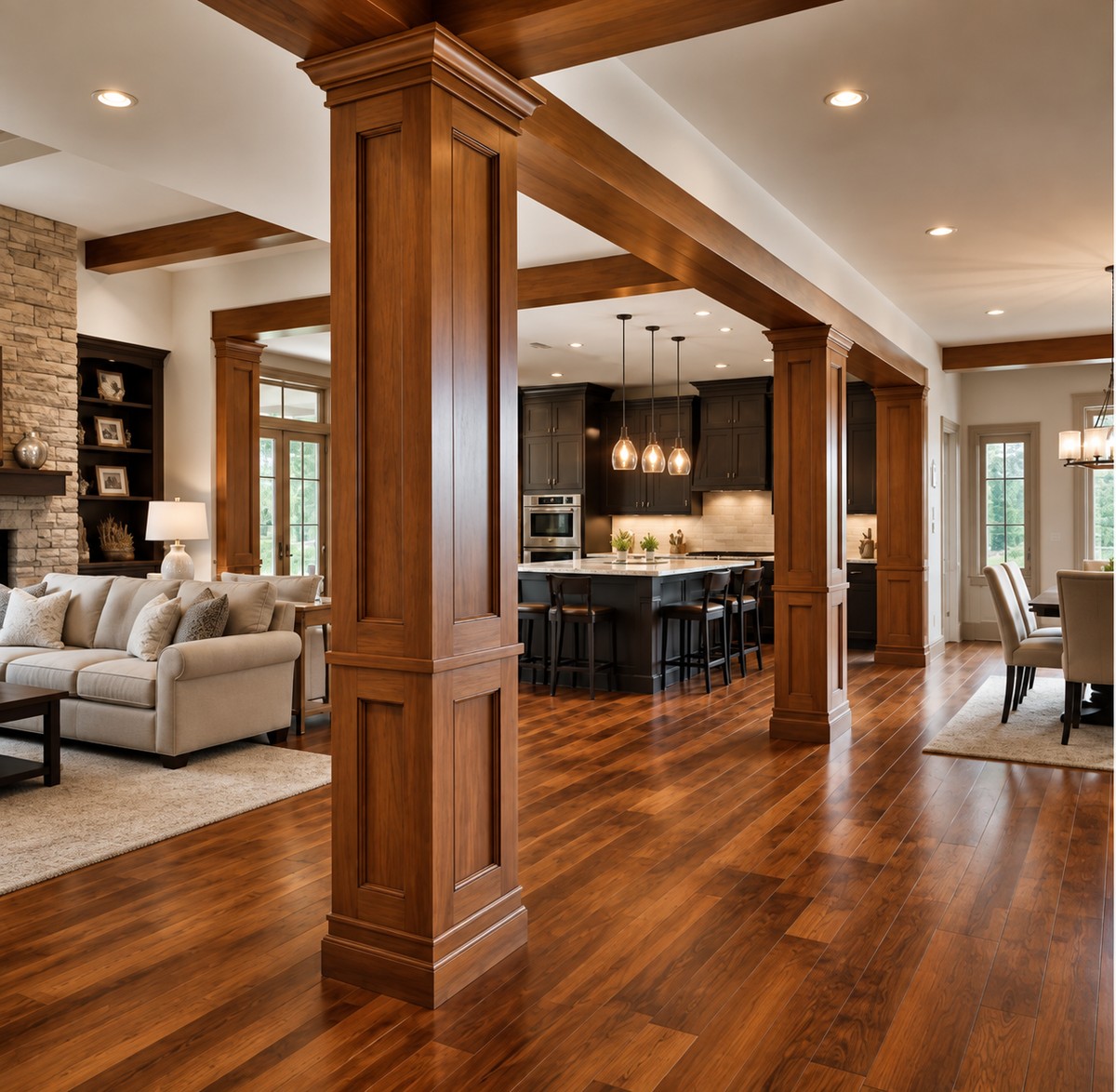
Interior design is rarely about a single statement piece. It is the careful layering of textures, materials, and architectural details that creates a space with genuine character. Among the most underappreciated of these details are structural columns — those vertical elements that define a room’s bones but are so often left bare, painted over, or wrapped in generic materials that do nothing to enhance the overall aesthetic. When treated thoughtfully, however, columns become one of the most powerful design tools available to homeowners and designers alike. Timber finishes, in particular, offer a warmth and authenticity that few other materials can replicate, making them an ideal choice for spaces that already feature or plan to feature natural wood elements throughout.
The Architectural Role of Columns in Modern Interiors
Columns have been central to architectural design for thousands of years, from the grand colonnades of ancient Greece to the load-bearing posts of contemporary open-plan homes. In modern residential and commercial interiors, columns often appear as structural necessities — steel beams wrapped in drywall, or concrete pillars left exposed in industrial-style lofts. While these approaches can work within specific design languages, they frequently miss an opportunity to add warmth, texture, and visual continuity to a space.
The challenge with exposed columns is that they can interrupt the visual flow of a room. When a column is finished in a material that conflicts with the surrounding design — a cold concrete pillar in a warm, wood-toned living room, for example — it creates a jarring disconnect. The solution is not always to hide the column, but rather to dress it in a material that harmonizes with the broader interior palette. This is precisely where timber finishes come into their own.
Why Timber Remains the Gold Standard for Column Finishing
Wood has an almost universal appeal in interior design. It reads as natural, grounded, and timeless — qualities that transcend trends and work across a wide range of design styles, from rustic farmhouse to sleek Scandinavian minimalism. When applied to columns, timber finishes create a sense of intentionality, suggesting that every element of the space has been considered and curated. The grain patterns, tonal variations, and tactile quality of real or realistic timber surfaces add a layer of depth that painted or plastered columns simply cannot achieve.
Matching Timber Column Finishes to Hardwood Floors
One of the most important considerations when introducing timber column finishes into a space is how they will interact with existing or planned flooring. Hardwood floors are a significant investment, and their tone, grain, and finish set the visual foundation for everything above them. Getting the relationship between floor and column right is essential to achieving a cohesive, professionally designed look.
The key principle is not necessarily to match exactly, but to coordinate thoughtfully. A perfect match between floor and column can sometimes feel flat or overly uniform, while a deliberate contrast — say, a lighter column wrap against a rich, dark walnut floor — can create a dynamic layering effect that adds visual interest without creating conflict. Understanding how to match hardwood floors with your interior design style is a foundational step before selecting any timber finish for walls, columns, or architectural millwork.
Undertones and Grain Patterns: The Details That Matter
When coordinating timber finishes across different surfaces, pay close attention to undertones. Woods with warm, reddish undertones — like cherry or red oak — pair naturally with other warm-toned materials, including amber-hued stone, terracotta tiles, and earthy textiles. Cooler-toned woods, such as ash or certain maple varieties, complement grey-toned interiors, cool-white walls, and contemporary metal fixtures. Grain pattern is equally important: a heavily figured wood grain on a column can become a focal point in a minimalist room, while a more subtle, straight-grained finish will recede gracefully into the background, allowing other design elements to take center stage.
Sustainability and Responsible Sourcing in Timber Products
As awareness of environmental responsibility grows among homeowners and designers, the sourcing of timber products has become an increasingly important consideration. Choosing wood products that are certified by recognized bodies — such as the Forest Stewardship Council — ensures that the materials used in your home come from responsibly managed forests. This matters not only for environmental reasons but also for the long-term quality and stability of the product itself. Responsibly sourced timber tends to be more consistently processed and finished, resulting in better performance over time. For anyone researching timber products for interior use, understanding what FSC-certified wood means and why it matters is a worthwhile starting point before making any purchasing decisions.
Durability and Low Maintenance: Practical Advantages of Quality Wraps
Beyond aesthetics and sustainability, the practical performance of column wraps is a critical factor. Columns in high-traffic areas — entryways, open-plan living spaces, commercial lobbies — are subject to regular contact, moisture exposure, and general wear. A quality timber wrap product must be engineered to withstand these conditions without warping, fading, or deteriorating. Modern column wrap systems are designed with this in mind, combining the visual appeal of natural wood with the structural resilience of engineered materials. The result is a product that looks authentic and ages gracefully, requiring minimal maintenance compared to painted or plastered alternatives.
Tarriver: A Trusted Source for Premium Timber Column Wraps
For homeowners and designers seeking a reliable source for high-quality column finishing solutions, Tarriver has established itself as a go-to destination. Their collection is designed to meet the demands of both residential and commercial projects, offering a range of finishes and profiles that suit diverse architectural styles. Whether the goal is to complement a traditional hardwood floor with a matching warm-toned wrap or to introduce a contrasting timber element into a contemporary space, their product range provides the flexibility and quality needed to achieve a polished result. The brand’s commitment to craftsmanship and material integrity is evident across their offerings, making them a dependable partner for any interior project that takes architectural detail seriously.
Integrating Timber Column Wraps Into Your Design Plan
Choosing timber column wraps is a decision that benefits from early integration into the broader design plan rather than being treated as an afterthought. When column finishes are selected in tandem with flooring, wall treatments, and furniture choices, the result is a space that feels intentional and cohesive rather than assembled from disconnected parts. Work with samples whenever possible, viewing them in the actual lighting conditions of the space — natural light, artificial light, and the combination of both — before committing to a final selection.
Professional Installation and Long-Term Value
Even the finest timber wrap product will underperform if installed incorrectly. Proper installation ensures clean seams, secure adhesion, and a finished appearance that reads as intentional rather than improvised. For complex column shapes or large-scale commercial installations, engaging a professional installer is strongly recommended. The upfront investment in quality materials and skilled installation pays dividends over time, both in terms of the space’s visual impact and the durability of the finish itself.
Conclusion: The Case for Thoughtful Column Design
Columns are structural necessities that deserve to be treated as design opportunities. When finished with quality timber wraps that are carefully coordinated with the surrounding interior — particularly the hardwood floors that anchor so many residential and commercial spaces — they become architectural features that genuinely elevate the character of a room. From material selection and sustainability considerations to installation and long-term maintenance, every decision in the process contributes to an outcome that is both beautiful and enduring. In a world where interior design is increasingly defined by the quality of its details, timber column wraps represent one of the most impactful investments a designer or homeowner can make.

