


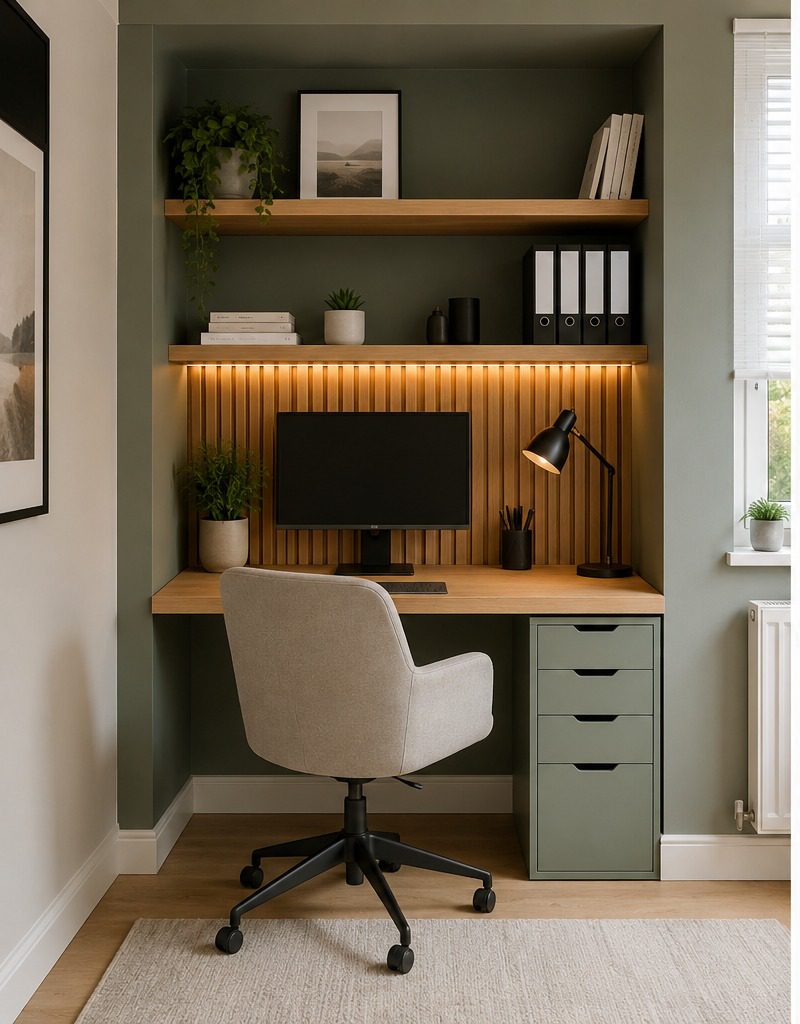
Small home office ideas UK homeowners can use include turning an alcove, box room, bedroom corner, under-stairs area or unused wall into a practical workspace. A slim desk, supportive chair, good lighting and smart storage can make even a compact area feel organised and productive.
You do not need a large spare room to work comfortably from home. The best small home office ideas are about using space properly, choosing furniture that fits and avoiding clutter that makes a room feel smaller.
15 Small Home Office Ideas UK Homeowners Can Try
- Use an alcove for a built-in desk
- Turn a box room into a compact office
- Create an under-stairs workspace
- Add a narrow desk to a bedroom wall
- Use a floating desk instead of a full desk unit
- Choose wall-mounted storage
- Add a fold-down desk for flexible space
- Use a room divider in an open-plan room
- Place your desk near natural light
- Add a proper task lamp
- Turn a garden room into a home office
- Use vertical shelving instead of large cabinets
- Hide cables with simple desk organisers
- Use light colours to make the room feel bigger
- Choose a supportive chair that fits under the desk
1. Use an Alcove for a Home Office
An alcove is one of the easiest places to create a small home office. Many UK homes have alcoves beside fireplaces, in bedrooms or within living rooms that are often left unused.
A fitted desk or floating shelf can turn the space into a neat workstation without taking over the room. Add one or two shelves above the desk for books, files or small storage boxes.
Choose a desk that is deep enough for a laptop or monitor but not so deep that it makes the room feel cramped. A wall-mounted desk can be especially useful in a narrow alcove because it keeps the floor area clear.
2. Turn a Box Room Into a Compact Office
A box room can be one of the best places for a small home office because it gives you a separate area away from the main living spaces.
Keep the room simple. Start with a slim desk against one wall, then add vertical shelving above it. A tall shelf unit or wall-mounted storage can provide enough room for files and equipment without taking up too much floor space.
Light colours work especially well in box rooms. White, soft grey, warm beige or pale green can make the room feel calmer and brighter. A mirror can also help reflect light if the room has a small window.
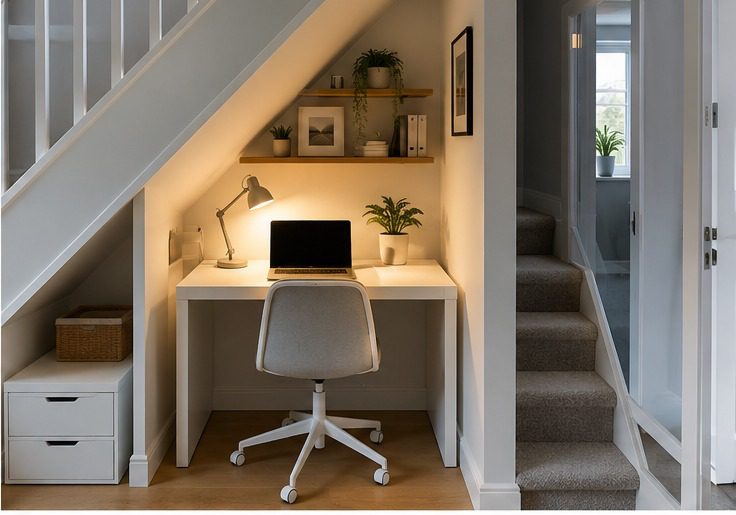
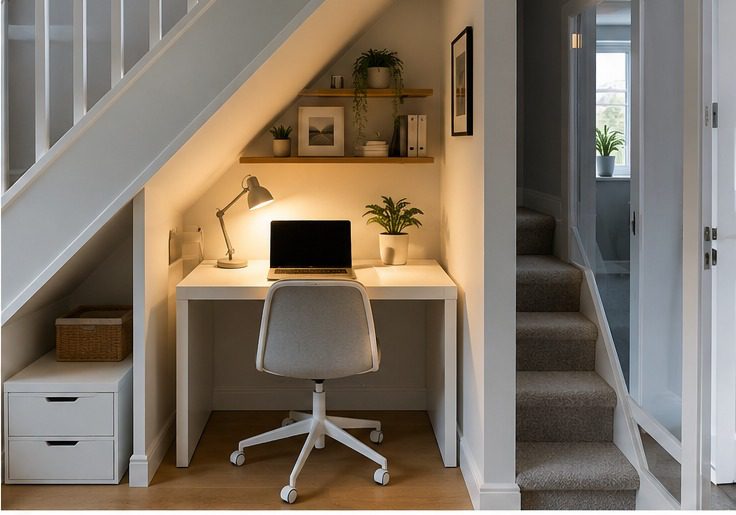
3. Create an Under-Stairs Workspace
Under-stairs space is often used for storage, but it can also become a useful office area. This works particularly well in terraced homes, flats and smaller properties where a separate office room is not available.
Before buying furniture, measure the height and depth of the space. In many cases, a narrow desk, floating shelf or made-to-measure worktop will fit better than a standard desk.
Use drawers, baskets or a small filing cabinet to keep paperwork organised. If the area feels dark, add a wall light or adjustable desk lamp so the workspace does not feel closed in.
4. Add a Desk to a Bedroom Corner
A bedroom home office can work well when there is no spare room available, but it needs clear boundaries. Choose one corner or one wall rather than allowing work items to spread across the room.
A slim desk with drawers is usually the best option. Avoid placing the desk directly beside the bed where possible, as this can make it harder to separate work from rest.
A small screen, curtain or open shelving unit can create a visual divide between your desk and sleeping area. At the end of the day, clear away your laptop, notebooks and chargers so the room can feel like a bedroom again.
5. Choose a Floating or Fold-Down Desk
A floating desk is a useful option when floor space is limited. It can be fixed to a wall at the right height and styled with a shelf above for simple storage.
Fold-down desks are even more flexible. They can be closed when work is finished, making them a good choice for studio flats, spare corners and multi-purpose rooms.
This type of setup works best for laptop users or anyone who does not need a large monitor, printer or lots of paperwork every day.
6. Use Wall-Mounted Storage
In small rooms, floor space is valuable. Wall-mounted storage keeps files, books and accessories off the desk without making the room feel crowded.
Open shelves are useful for items you use often, while closed cabinets or storage boxes can hide paperwork and cables. Pegboards can also work well for stationery, headphones, chargers and small office tools.
Try not to overfill every shelf. A few neatly arranged books, folders and useful objects will look better than a wall packed with random items.
7. Use a Room Divider in an Open-Plan Home
Open-plan living can make it difficult to switch off from work. A room divider can help give a small office area its own identity without needing a separate room.
You could use open shelving, a folding screen, a curtain rail or even a large plant to create a visual break between work and relaxation space.
The aim is not to hide the office completely. It is to make the area feel more organised and less like your work has taken over the living room.
8. Place Your Desk Near Natural Light
Natural light can make a small home office feel brighter and more comfortable. Place your desk near a window where possible, but avoid putting your screen directly in front of strong daylight because glare can make it harder to work.
If your desk needs to face a wall, position it sideways to the window so you still benefit from daylight without screen reflections.
A bright workspace often feels larger and more welcoming than a dark corner with only overhead lighting.
9. Add Proper Lighting for Darker Corners
A desk lamp is important for darker days, evening work, and rooms with limited daylight. Choose one that can be adjusted so you can direct light onto paperwork without it reflecting onto your screen.
Use a mix of natural light, ceiling light and task lighting where possible. Warm lighting can make the office feel more comfortable, but it should still be bright enough for reading and computer work.
The HSE recommends considering posture, glare and the arrangement of screens, desks and chairs when setting up a workstation at home.
10. Pick a Desk and Chair That Fit the Space
The desk does not need to be large, but it should be large enough for the way you work. A laptop-only setup may only need a narrow desk, while a monitor, keyboard and paperwork will require more depth.
A desk with drawers can reduce the need for extra storage furniture. An armchair can also be practical because it tucks under the desk more easily and makes the room feel less crowded.
Your chair matters just as much as your desk. A dining chair may look good, but it is not always comfortable for long working days. Choose a chair with proper back support where possible.
11. Turn a Garden Room Into a Home Office
A garden room can be a useful office option when working from inside the house is difficult. It gives you more separation between home and work, especially when the main rooms are busy.
A garden office does not need to be large. A desk, chair, shelving, heating and good lighting may be enough for a practical setup.
Before making structural changes, check what permissions, building regulations or local requirements may apply. For more ideas, link this section to your Garden Room Interior Ideas article.
12. Hide Cables and Keep the Desk Clear
Cables can quickly make a small office feel messy. A cable tray, under-desk cable box or simple clips can help keep chargers, extension leads and monitor cables organised.
Keep only the items you use every day on the desk. Store everything else in drawers, shelves or storage boxes.
A clear desk makes it easier to focus and helps a compact room feel more organised.
13. Use Light Colours to Make the Room Feel Bigger
Small rooms can feel more open when the layout is simple, and the colours are light. White walls are not the only option, but pale shades usually reflect more light and make compact spaces feel less enclosed.
Soft beige, pale grey, muted green and warm off-white can all work well in a small office. Try to keep your desk, storage and accessories within a simple colour palette rather than mixing too many finishes.
Mirrors and one large piece of artwork can also make a small room feel more considered without adding clutter.
14. Create a Small Home Office in a Rented Property
Renters can create a useful workspace without making permanent changes. Use freestanding desks, removable wall hooks, plug-in lights, and storage boxes that can move with you later.
A rolling drawer unit can add storage without drilling into walls. A pegboard on a stand can also work well if you do not want to fix anything permanently.
Removable wallpaper or wall decals can give a work corner more personality, but keep the setup simple enough that it can be packed away easily if you move.
15. Do You Need Planning Permission for a Home Office in the UK?
For ordinary desk-based work from home, planning permission may not be needed. It depends on whether the use of the property changes in a significant way.
Working quietly from a desk is different from running a business that brings regular visitors, deliveries, noise, staff or heavy equipment to the property. In those situations, planning permission, business rates, insurance or other approvals may become relevant.
Always check the details before making structural changes, creating a garden office or running a customer-facing business from home. The Planning Portal’s working-from-home guidance is a useful place to start.
Final Thoughts
Small home office ideas UK homeowners can use do not need to be expensive or complicated. A clear purpose, well-sized desk, proper lighting and smart storage can turn an unused area into a workspace that feels practical and comfortable.
Whether you use an alcove, box room, bedroom corner, under-stairs area or garden room, the best office setup is one that works with your daily routine. Keep the layout simple, make comfort a priority and avoid adding more furniture than the space can handle.
For more practical Interior ideas, small-space inspiration and home improvement features, visit PAD Magazine.
FAQs
What is the best desk for a small home office?
The best desk for a small home office is usually a slim desk with drawers, a wall-mounted desk or a floating worktop. Choose one that gives you enough room for your laptop or monitor without taking up too much floor space.
How can I create a home office in a small UK house?
You can create a home office in a small UK house by using an alcove, box room, bedroom corner, under-stairs area or unused wall. Add a compact desk, good lighting and wall-mounted storage to keep the space organised.
How do I make a small office look bigger?
Use light colours, wall-mounted storage, slim furniture and clear floor space. Natural light, mirrors and a simple colour palette can also help a compact office feel more open.
Can I put a home office in my bedroom?
Yes, a bedroom can work as a home office when space is limited. Try to keep the desk in one defined area and use storage or a screen to create a visual separation between work and rest.
Do I need planning permission for a home office in the UK?
Not always. A normal desk-based home office may not need planning permission, but you should check if the work creates extra visitors, deliveries, noise, signage or a material change in how the property is used.
What should I include in a small home office?
Include a suitable desk, supportive chair, task lighting, storage and a way to manage cables. Add personal touches only after the practical setup is working well.