


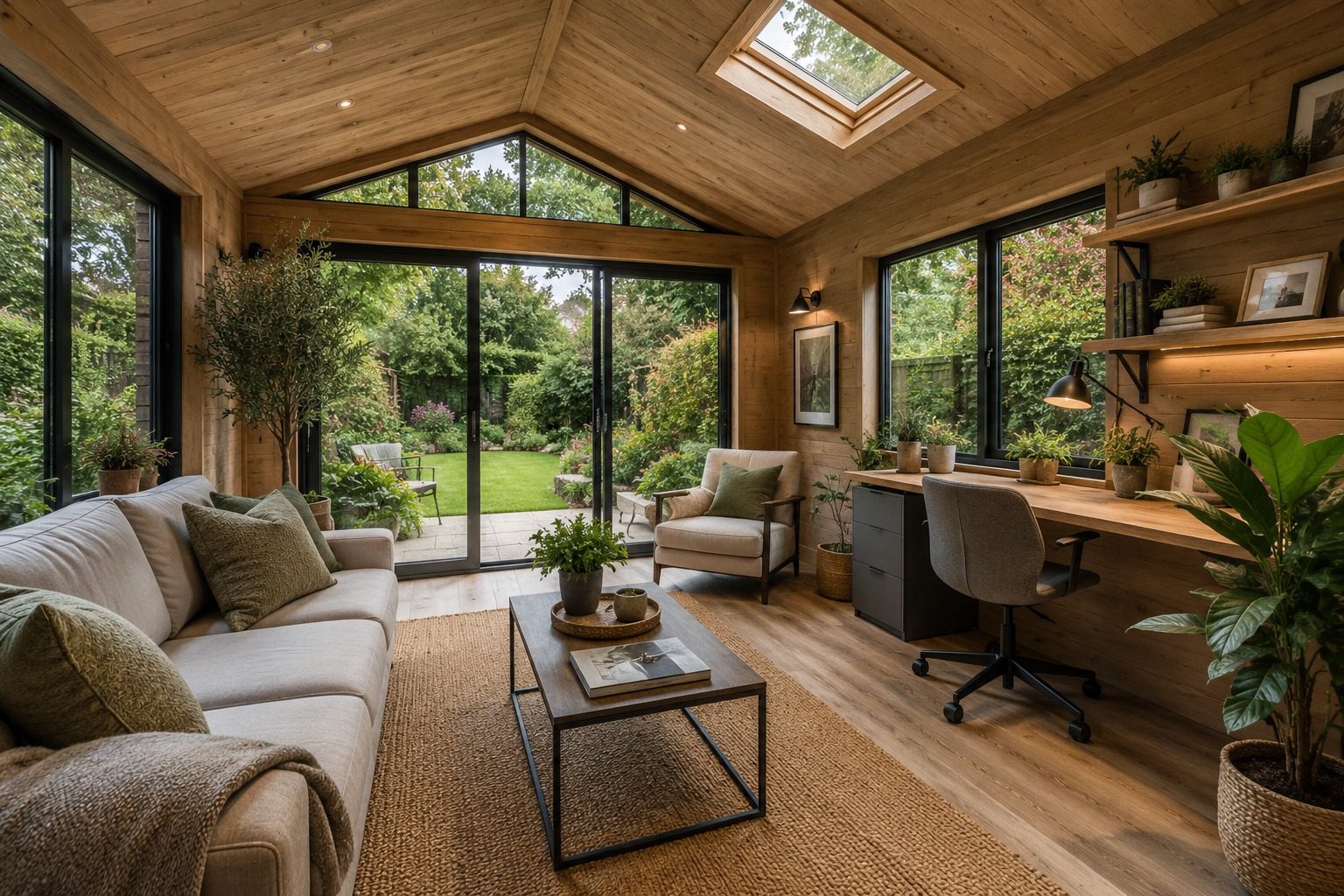
Garden room interior ideas have certainly come a long way – gone are the days of simply slapping a desk in an outbuilding and calling it a day. For many UK homeowners, investing in garden rooms has become an integral part of the home: somewhere to work, unwind, get some exercise, or simply have a quiet moment to yourself.
The appeal of a garden room is pretty obvious. Not only do they offer a fantastic way to gain extra space without the hassle and expense of a full extension, but they also give you the flexibility to use the space however you like. However, if the interior isn’t thought through, your new garden room could end up feeling like nothing more than an expensive storage shed.
A well-designed garden room, on the other hand, is a game-changer. One that makes the most of natural light, stunning garden views, practical furniture, and comfortable finishes. Whether your vision is a garden office, a snuggly reading nook, a small studio, or even a casual outdoor lounge, the right interior design choices can make the space a true haven, and not just a space filler.
Best Garden Room Interior Ideas
The best garden room interior ideas start with a clear purpose for the space. Decide whether the room will be used as a home office, reading corner, creative studio, gym or quiet place to relax.
Once the purpose is clear, choose compact furniture, layered lighting, natural materials and smart storage. Soft colours, garden views and comfortable finishes can help the room feel more connected to the home rather than like a separate outbuilding.
For year-round use, also think about heating, insulation, ventilation and suitable flooring. These details make a garden room more practical in winter, summer and everyday use.
Decide How You Want to Use the Room
Before you get to the nitty-gritty of choosing paint colours and furniture, take a moment to think seriously about how you plan on using the room. A garden office, for instance, needs a proper desk, a comfy chair, decent lighting, sockets and storage, whereas a reading room or snug needs soft seating, warm lighting, and a relaxed layout. A creative studio may require open workspace, shelving and easy-to-clean flooring, whereas a home gym needs ventilation, durable surfaces, and enough space to move around safely.
You might find that your garden room has one main purpose and a secondary use that’s slightly less demanding. For example, an office could incorporate a compact armchair for reading. A hobby room could have a foldaway sofa bed for the occasional guest. A relaxation space could also function as a quiet spot for phone calls or paperwork.
Don’t Overcomplicate the Layout
The biggest mistake people make when designing their garden room is trying to cram too much into a tiny space. The result is often a room that feels cramped even before anyone has sat down. Instead, focus on the main purpose of the room and build the interior design around that. What do you really need the space for?
Choose Furniture That Fits
Garden rooms are often smaller than a regular living room, so it’s crucial to get the furniture right. Don’t opt for a big sofa, but instead consider a compact loveseat, a slim armchair, a storage bench or a built-in seat. For a garden office, a simple desk with drawers or wall-mounted shelving will help keep the floor clear. If you need a space that can shift and change, foldaway tables, nesting stools and furniture on legs are all great options.
A good layout gives you plenty of space to move around, and it’s not cluttered with leftover furniture from the house. Good furniture scale can even make a modest garden room feel calm and considered. And don’t forget about low-profile furniture if your ceiling height is limited – it can really help a small space feel more spacious.
Bring in Natural Materials for Warmth
Because a garden room is situated between the house and the great outdoors, using natural materials can make the interior feel cozier. Think wood, rattan, linen, wool, jute, stone-effect finishes, and textured ceramics. They add warmth without making the room too formal or stuffy. A wooden desk, woven basket, linen blind, or natural rug can soften a modern garden room and stop it looking plain.
Plants can also help bring the outdoors in, but be careful not to overdo it. A few healthy plants can make the space feel fresh and connected to the garden, but too many can make a small room feel busy. Choose varieties that suit the light levels and temperature changes in the space.
Get Your Lighting Right
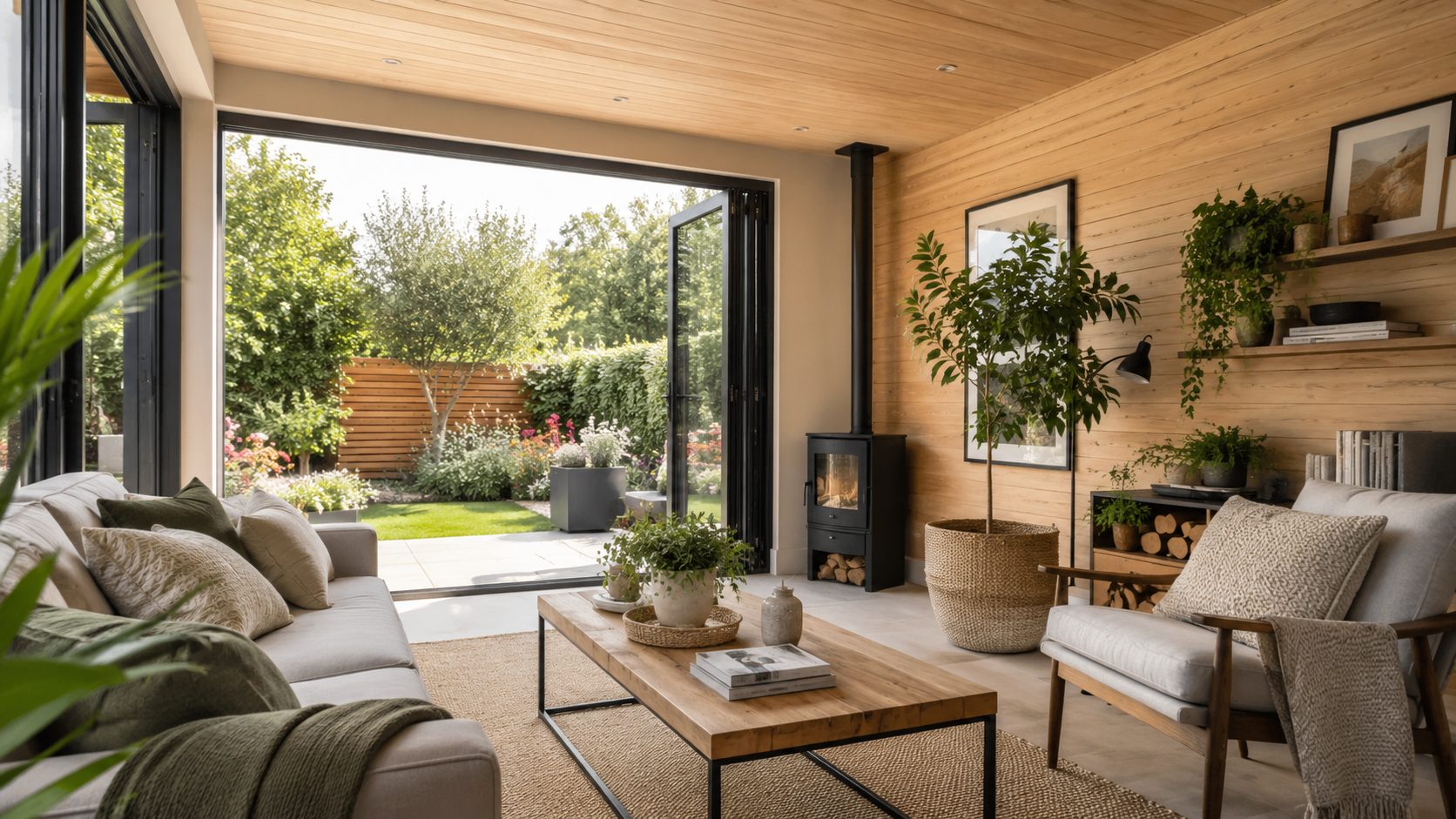
Lighting is one of the most important garden room interior ideas, especially in the UK where the weather and daylight can change so quickly. During the day, windows and glazed doors can make the room feel bright and airy, but in the evening, you’ll need softer light to make the space feel warm and inviting. A single ceiling light just won’t cut it.
Layer in different lighting sources to create a space that works all year round. Use ceiling lights for general brightness, a desk lamp for focused work, and a table or floor lamp for a cozier mood. Wall lights are also a great option in a small room because they don’t take up floor space. Warm white bulbs will generally feel better in a room that’s for relaxing – especially in a room that’s used for unwinding. If, on the other hand, it’s an office, take some care positioning the lighting so you don’t get screen glare.
Pick a Calm Colour Scheme
A garden room is meant to feel inviting, even if it’s used for more practical tasks like working.
Soft neutrals and warm whites, muted greens and gentle blues, natural browns and wood tones – all these colours look great with garden views and help the room feel connected to the great outdoors. This is especially good for a garden room that’s open to the outside.
Darker shades can work in a small room – especially if it’s designed as a snug or a reading space. Deep green, navy or charcoal can create a really cosy feel, but use them carefully, because too much dark colour can make the space feel smaller than it is.
If you want to add a bit of personality to the room, just add some colour with cushions, artwork, rugs or a painted cabinet. That gives the room some character without making it too difficult to change up the look.
If you’re looking for more home design inspiration, check out PAD Magazine’s Interiors section for loads of practical ideas across modern living spaces.
Create a Garden Office That Feels Like a Proper Room
A garden office should be practical, but it shouldn’t feel cold or corporate – at least not if it’s going to be used often.
Position the desk so natural light is useful, but not distracting. It can be nice to face the garden, but sunlight on a laptop screen can be really frustrating after a while. Side light often works better for daily work.
You don’t have to skimp on the quality of the chair – a proper office chair is worth investing in if you’re going to be spending long hours sitting at a desk. You can still make the space look stylish with a rug, some framed prints, a small lamp and tidy storage. The aim is to make the office feel productive, but also really comfortable to be in.
And don’t forget about cable management – visible wires can make even a smart office look unfinished. Use cable trays, baskets or desk organisers to keep the space tidy.
For more home inspiration and design-led property features, take a look at PAD Magazine.
Add Storage Before Clutter Builds Up
Storage is often the first thing people forget about when designing a new room, but it’s really crucial.
Closed storage is probably best for a garden room that gets used every day – things like cabinets, low cupboards and storage benches can keep all sorts of things hidden away – office supplies, gym equipment, art materials, tools or spare blankets.
Open shelving can look really good, but its also really easy for it to look messy if you’re not careful. A few books, a few plants or a few ceramics can add some personality to the space, but too much open storage can quickly start to look chaotic.
If the room is small, you might want to think about built-in storage – a bench with drawers underneath or some shallow cupboards along one wall can keep the interior tidy without taking up too much space.
Choose Flooring That Matches the Use
The right flooring will depend on how you plan to use the room.
For a garden office, lounge or studio, engineered wood, laminate or luxury vinyl can be a great choice – they’re practical and stylish, and easy to clean, which is a must if people are going to be walking in from the garden.
A rug can make the space feel softer and more finished, and can also help to define different zones – like a seating area or a reading corner.
If the room is going to be used as a gym, you might want to think about something a bit more durable – rubber flooring or exercise mats might be a better choice if the room has to handle weights, movement and regular cleaning.
Connect the Interior to the Garden
The best garden rooms are the ones that feel really connected to their setting.
Place a seating area where you can enjoy the view, and keep the window treatments really simple so natural light can come flooding in. Use some colours, plants and textures that echo the garden rather than fighting against it.
Having a small seating area outside the doors can also make the room feel bigger. In the warmer months, the interior of the room can flow right into the garden, creating a really easy indoor-outdoor feel.
If you’ve got a problem with privacy, light-filtering blinds, shutters or some planting outside the windows can help. Heavy curtains can block too much light and make the room feel smaller.
Plan for Year-Round Comfort
A garden room needs to work just as well in winter as it does in summer.
Insulation, heating, ventilation and window coverings can all make a big difference to how often the space is used – a room that’s too cold in winter or too hot in summer may look great, but it’s probably going to be unused for most of the year.
Think about it early on – a small electric heater, underfloor heating, opening windows, proper insulation and good blinds can all make the room more practical. If it’s going to be used daily, these details are just as important as the furniture.
And don’t forget about the planning rules – depending on the size, height, location and use of the structure, you may need to check things with the council before building or changing the use of a garden room. The Planning Portal explains that outbuildings can often be built without needing permission, but some conditions apply, so it’s worth checking first.
Small Garden Room Interior Ideas
A small garden room can still be really stylish if you design it carefully.
Choose your furniture so it earns its place – a storage bench, a foldaway desk, shelves or a compact sofa bed can all help the room work harder. And try to avoid oversized furniture or cluttering the floor – it will make the room feel bigger.
Mirrors can help bounce light around the space, especially if they reflect a garden view. Just be careful not to place them so they create glare. A simple colour palette normally works best. Too many patterns, finishes or furniture styles can send a compact room – and your head – spinning, making it feel cluttered. A calm base with just a couple of thoughtful details is often more impressive than a room that’s overloaded with decorations.
Garden Room Ideas for Relaxing Moments
If the room is mainly for unwinding, then comfort should be your top priority when it comes to designing the space.
Think about what you need to be comfortable – and not too much else. Soft cushions, warm lighting, a few well-placed throws, and some soothing colours can turn that space into a peaceful retreat. Maybe a tiny table for sipping a drink or a book is all you need.
Plonking a nice reading chair near the window can make the room feel extra special without getting too complicated. Some of the most beautiful garden room interiors are simple – and that’s a good thing, because the view and atmosphere are doing most of the work after all.
Add a bit of texture, and this room starts to feel inviting – even on chilly days. A plush rug, linen cushions, a wool throw and some warm, natural wood tones can make the space feel welcoming.
Garden Room Ideas for Creative Time
A garden room can be a fantastic spot for getting creative.
Writers, artists, designers, crafters and musicians can all benefit from having a quiet space to get away from the household noise for a while. The interior should be supportive of focus – but still feel inspiring.
Practical storage is a must for any materials or tools you’ll be using. Lighting is also essential – especially near where you’ll be working. A big work surface might be more useful than decorative furniture.
Adding personal touches can really make a room feel alive. Pinboards, books, samples, art and objects can all add character – as long as they don’t get out of hand and make the room unusable.
Common Mistakes to Watch Out For
A lot of people make the mistake of treating their garden room like an afterthought. If it’s just filled with old furniture from the house, it’ll never really feel like its own space.
Another common error is ignoring storage altogether. A small room can get messy in no time if you don’t have somewhere to put everyday things.
Poor lighting is another trap. A single overhead light is not going to cut it for reading, office tasks, or just relaxing in the evening.
Lastly, don’t overdo it with the furniture and decorations. A garden room should feel calm, practical and comfortable – not cramped and chaotic.
Final Thoughts
When it comes to garden room interior ideas, you have to start with real life. Think about what you want to use the space for, when you’ll be in it, and what will make it comfortable all year round.
A successful garden room doesn’t have to be huge or expensive. It just needs a clear purpose, some decent lighting, practical furniture, useful storage and a style that feels connected to the garden.
Whether it turns into an office, studio, reading room, gym or quiet retreat, a well-designed garden room can be a valuable extra space in your home. With the right interior choices, it can feel like one of the best rooms on the property – not just some tacked-on outbuilding.
To get more garden design and outdoor living inspiration, check out PAD Magazine’s Garden & Landscaping section.
FAQs
What makes the best garden room interior ideas?
The best interior ideas include compact furniture, layered lighting, natural materials, clever storage, soft colours and a layout that’s all about how the room will be used.
How do you make a garden room feel all snuggly and warm?
Warm lighting, a plush rug, cushions and a throw or two, plus some warm wood tones – that’s a good starting point. A calm colour palette and natural textures can also make the space feel really comfortable.
Can a garden room be used as a home office?
Absolutely – a lot of garden rooms make great home offices. A good desk, a comfy chair, decent lighting, sockets, storage and a bit of heating can make it a pretty practical space for daily work.
What sort of furniture works best in a small garden room?
Slim desks, compact sofas that aren’t too bulky, storage benches, fold-down tables, wall shelves and furniture with legs – those types of things keep the room feeling light and airy.
Do garden rooms need planning permission?
Some garden rooms might be classed under permitted development, but there are conditions to consider. Size, height, position and use can all affect whether you need permission, so it’s worth checking before you start building.
How can I make my garden room usable all year round?
Insulation, heating, ventilation, suitable flooring, good blinds and layered lighting can all help make it more comfortable.