


Patio Design and Materials in Newcastle: What to Choose for a Northern Climate
Newcastle doesn’t go easy on an outdoor space. The north-east takes its full share of rain, frost, and wind, and a patio material that sits happily in a sheltered garden down south can turn out to be a completely different animal once a proper Newcastle winter gets hold of it. So picking a surface up here isn’t really a looks decision. It’s about knowing how a given material copes with freeze-thaw, weeks of wet, and the temperature swings that come as standard this far north.
A back-garden corner – timber fence, concrete pad, a stray white plank on the grass
The Freeze-Thaw Problem
Frost is the one thing that really sets northern patio design apart from the rest of the country. Water soaks into the surface of anything porous, expands as it freezes, and over a few winters starts cracking, spalling, and generally breaking the material down. That alone knocks certain popular choices out of the running, or at least limits them.
Take natural sandstone. It’s all over garden design, but the quality is all over the place too. The cheaper, more porous stuff hates repeated freeze-thaw – it can look lovely on day one and be flaking and pitting inside five to ten years in a north-east garden. The denser grades, often from particular Indian quarries or Yorkshire stone, hold up far better, though you pay for the privilege. The lesson: if you want natural stone in Newcastle, the grade matters a great deal more than it would somewhere milder.
What Actually Lasts
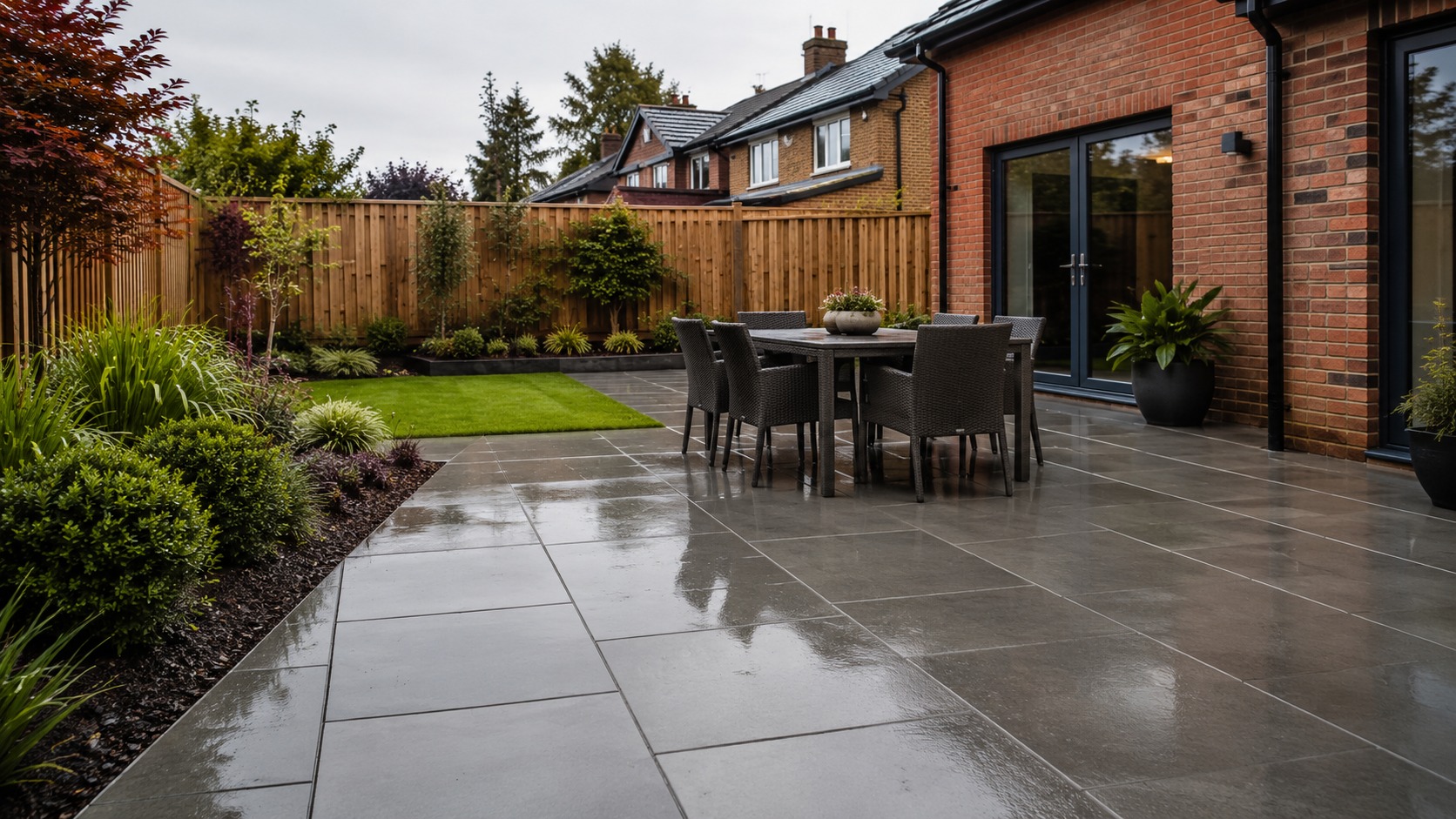
Blocktech Landscapes Ltd puts porcelain paving into a lot of Newcastle gardens, and there’s a solid reason for that. Porcelain barely absorbs water – usually under 0.5% – so there’s almost nothing there for frost to get into. It doesn’t stain easily, it fends off algae well in the wet, and it keeps its finish for years without needing sealing. The catches: it’s harder to cut cleanly (you need a diamond blade), it costs more than budget natural stone, and the wrong finish can get slippery in the rain. Go matt or textured and the slip problem sorts itself out.
Concrete flags deserve more attention than they get, too. Modern concrete pavers have come a long way – the textures and colours can be genuinely convincing now. They’re dense, consistent, and frost-resistant when they’re made to a decent standard, and they usually come in cheaper than porcelain.
What’s Underneath Matters as Much as What’s On Top
We’ve written separately about planning garden lighting for Newcastle spaces, but here the thing to get right is the base and the drainage. A patio that drains pool water badly against the material and speeds up freeze-thaw damage no matter what you laid on top. Proper falls – around a 1:60 gradient running away from the house – and a properly built sub-base aren’t optional in Newcastle conditions. A surface that would happily last thirty years on a good base can be lifting and cracking inside five years on a bad one.
Sun, Shade, and Which Way It Faces
Newcastle sits further north than a lot of people think, and it shows in the sun’s angle from October through March. A patio facing north or north-east gets very little direct winter sun and can stay damp for long stretches, which is an open invitation to algae and moss. Orientation won’t necessarily change what you lay, but it does change what you’re signing up for on maintenance – a north-facing porcelain patio will want the pressure washer out more often than the same surface catching the southern sun.
Getting the Size Right
The classic patio mistake is going too small. Three metres by three sounds perfectly reasonable until you set a table and four chairs on it and realise you can’t pull a chair out without stepping onto the lawn. For family-sized outdoor dining in a Newcastle back garden, four by four is a more honest minimum – and most people who’ve had one built end up wishing they’d stretched it a bit further.
Thinking about a new patio in Newcastle? Click here to get in touch.
FAQ
Q: Which patio material copes best with Newcastle’s climate?
A: Porcelain is usually the most frost-resistant, thanks to how little water it takes on. Good natural stone – the denser grades of Indian sandstone or Yorkshire stone – also does well. It’s the cheaper, more porous sandstone that tends to break down faster in a north-east garden.
Q: Does a north-facing patio need a different material in Newcastle?
A: Not a different material as such, but expect more algae and moss and plan on cleaning it more often. A textured, matt-finish porcelain with good drainage works nicely in shaded spots.
Q: How much does the sub-base under a Newcastle patio matter?
A: A lot. A properly built sub-base with the right drainage falls counts every bit as much as the surface you choose. Poor drainage speeds up freeze-thaw damage and leads to movement and lifting over time.
Q: What’s a sensible minimum patio size for dining?
A: For a family table and four chairs with room to actually move, four metres by four is a realistic minimum. Three by three usually feels too tight once the furniture’s in.