


Choosing the right flooring tends to get left until the end of a renovation. The kitchen’s in, the walls are painted, the budget’s looking thin, and suddenly you’ve got a week to pick something that’ll be underfoot for the next fifteen years. That’s usually when people make the choices they regret.
So it’s worth thinking about it earlier than feels natural. Not because the options are complicated, but because the right answer depends on things you can only control while the room is still a building site: the subfloor, the heating, the door heights, and how the rooms flow into each other.
Start with how the room actually gets used
Forget the showroom for a minute and think about a normal Tuesday. Who walks through this room, in what shoes, and what gets spilt on it? A back hallway that sees muddy boots, a dog and a pushchair needs something very different from a guest bedroom that’s used four nights a year.
Bedrooms are still where carpet makes the most sense. It’s warm, it’s quiet, and nobody enjoys stepping onto cold boards at six on a January morning. Kitchens and bathrooms are the opposite. Water is the enemy there, so vinyl, and especially luxury vinyl tile (LVT), is the safest bet. Living rooms are the genuine toss-up, and honestly, a decent hard floor with a big rug is the answer for a lot of families.
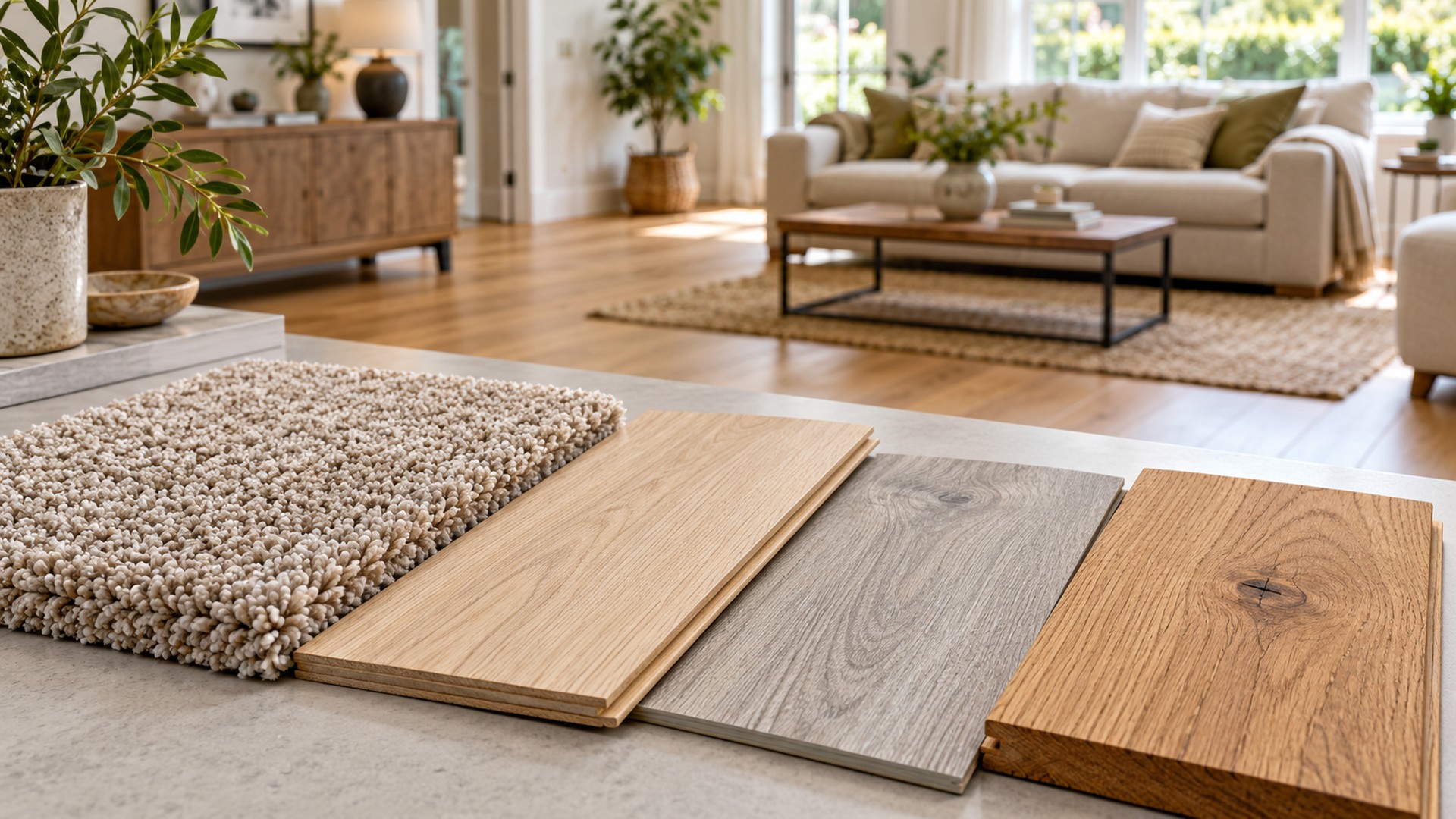
Choosing the right flooring: carpet, laminate, vinyl and wood
Carpet varies more than people expect. A wool-rich twist will bounce back for years, while a cheap deep saxony can flatten into tracks along the walkways within a couple of winters. If you’ve got pets, steer clear of loop piles. Claws catch, loops pull, and once that starts it doesn’t stop.
Laminate is a printed image on a fibreboard core with a tough clear layer on top. Good ones look convincing and stand up to chairs and kids brilliantly. The catch is water. Standard laminate doesn’t like puddles sitting on its joints, so if you want it in a kitchen, pay for a properly water-resistant range and wipe spills up quickly.
Vinyl is the workhorse. Sheet vinyl is cheap and goes down in one piece, which is handy in a small bathroom. LVT is thicker, warmer underfoot and far more realistic, and it’s what most people mean now when they say they want a wood-look kitchen floor.
Real wood, solid or engineered, is the one you buy with your heart. It ages beautifully and can be sanded back years later. It also moves with humidity, so engineered boards are usually the smarter pick over underfloor heating or in a newly plastered extension that’s still drying out.
The bits that cost money nobody mentions
The price per square metre on the sample board is rarely what you’ll pay. Before you compare quotes, check each one covers the same things:
- underlay, trims and door bars
- levelling or ply over uneven boards
- lifting and taking away the old floor
- trimming doors to clear the new height
That last one catches people out all the time. New floor plus underlay can add a centimetre or more, and suddenly the internal doors scrape. It’s a small job, but it should be in the quote, not a surprise on fitting day.
Subfloor prep deserves a mention of its own. LVT in particular will telegraph every bump, nail head and old tile edge underneath it. Fitters will tell you that most “faulty” vinyl floors they’re called back to are really bad prep. Skimp on the levelling compound and an expensive floor ends up looking cheap.
If you’re in the North West and want a ballpark before getting quotes, it’s worth looking at a local supplier that lists its prices openly. Floor Express, for example, shows per-square-metre prices for its laminate flooring in Manchester alongside carpet, vinyl and wood, which makes it easier to set a realistic figure for each room before you start booking measures.
Underfloor heating and flats
If you’re putting in underfloor heating, decide on the floor first, not afterwards. Thick carpet and heavy underlay act like a duvet over the pipes. Most LVT and engineered wood work well, but each manufacturer sets its own maximum surface temperature, so check the fitting guide before anything’s ordered.
Flats are a different story again. A lot of leases, particularly in older Manchester conversions, say hard floors need acoustic underlay or aren’t allowed at all upstairs. Read your lease before you fall in love with oak planks. The neighbours below will thank you, and so will your management company.
Living with it afterwards
Laminate and vinyl need very little: a sweep and a barely damp mop. Go easy on steam mops, as plenty of laminate makers don’t approve of them and it can void the guarantee. Wood wants felt pads on chair legs and a fresh coat of oil every few years. Carpet just needs regular hoovering and quick action when someone drops a glass of red.
It’s also fine, and normal, to mix floors. Carpet upstairs, LVT in the kitchen and bathroom, laminate or wood through the lounge is probably the most common setup in UK homes. Keep the finished heights close so the thresholds don’t become trip hazards, and keep tones related in open-plan spaces so it doesn’t look like three different houses.
A last bit of advice
Take samples home. Look at them in the morning and again under your own lights in the evening, because a grey oak that looks perfect in a bright showroom can turn oddly green in a north-facing lounge. Stand on them in socks. Drop a key on them. It sounds daft, but ten minutes of that will tell you more than any brochure.
Choosing the right flooring is easier when you compare samples at home and check the full fitting costs before ordering.
For more home renovation ideas and property insights, explore PAD Magazine.

