


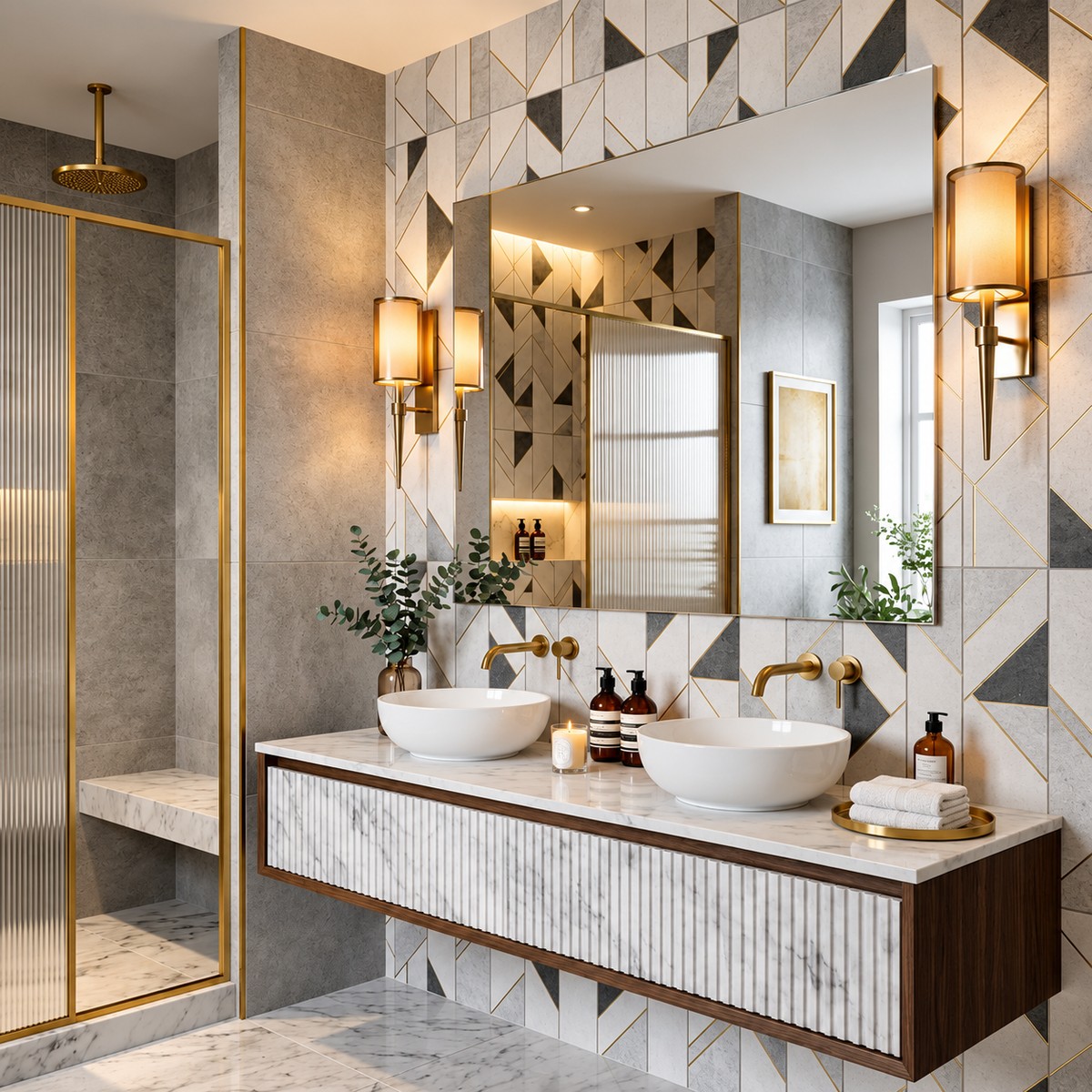
Bathroom wall lights rarely get the attention they deserve. Homeowners focus on tile patterns, tap finishes and vanity styles, yet lighting often becomes an afterthought. The right fixtures can improve visibility and transform the atmosphere of the room
A dim, poorly placed light can make even the most beautifully tiled bathroom feel flat and uninviting. On the other hand, a well-chosen fixture can turn a functional space into something that feels closer to a boutique hotel suite. The difference often comes down to a single decision: choosing wall-mounted lighting that’s been designed with both form and function in mind.
Beautifully crafted designer bathroom wall lights can turn everyday grooming routines into a small daily luxury, softening shadows around the mirror and adding warmth to spaces that often rely on harsh overhead lighting alone. This shift matters more than it might seem. The right glow doesn’t just help you see clearly when shaving or applying makeup; it changes the entire atmosphere of the room.
Why Wall-Mounted Fixtures Outperform Overhead Lighting in Bathrooms
Ceiling-mounted lights are the default in most bathrooms, largely because they’re simple to install and provide broad, even coverage. But broad coverage isn’t always what a bathroom needs.
When light comes only from above, it casts shadows downward across the face, under the eyes and along the jawline. This is precisely the opposite of what’s needed at a mirror, where even, flattering light matters most.
Wall lights mounted at eye level, on either side of a mirror, help solve this problem directly. They cast light across the face rather than down onto it, reducing harsh shadows and providing the kind of balanced illumination that makeup artists and barbers have relied on for decades.
The Practical Benefits Beyond Aesthetics
There’s more to this than good looks, although the aesthetic upgrade is significant on its own. Wall-mounted fixtures also:
- Free up ceiling space, which is particularly useful in bathrooms with lower ceilings or existing recessed lighting.
- Help reduce glare when appropriately positioned and fitted with suitable shades or diffusers.
- Allow for layered lighting schemes, where wall lights handle task lighting while ceiling fixtures manage ambient light.
- Offer flexibility in placement, since they can be positioned where they’re needed most, subject to electrical safety requirements.
Choosing a Style That Complements Your Bathroom’s Character
Bathroom design has moved well beyond the sterile, all-white aesthetic that dominated for years. Today’s spaces draw from a wide range of influences, from Art Deco glamour to minimalist Scandinavian simplicity, and the lighting should reflect that.
Classic and Traditional Fixtures
For bathrooms with period features, roll-top baths, or vintage-inspired tiling, fixtures with brass or antique bronze finishes tend to work beautifully. These pieces often feature classic silhouettes, glass shades, and detailing that echoes early 20th-century design.
Sleek Contemporary Options
Modern bathrooms benefit from cleaner lines and understated finishes. Matte black, brushed nickel, and polished chrome fixtures with minimal ornamentation suit these spaces well, providing illumination without competing for visual attention.
Statement Pieces for Bold Interiors
Some bathrooms are designed to make a statement, and the lighting should rise to meet that ambition. Sculptural fixtures with unusual forms or unexpected materials can act almost like art pieces, adding personality to a room that might otherwise rely solely on tile and stone for visual interest.
Practical Considerations Before You Buy
Style matters, but so does practicality, especially in a room as damp and humid as a bathroom.
IP Ratings Matter More Than You Might Think
A light fixture’s Ingress Protection (IP) rating indicates its resistance to solid particles and water. The appropriate rating depends on where the fixture will be installed and its exposure to water.
Fixtures near a shower or bath may need a higher level of protection than those farther away. Before purchasing, confirm that the fitting is suitable for its intended bathroom location and ask a qualified electrician to assess the installation requirements.
Placement and Positioning
Getting the height and spacing right makes a meaningful difference. Fixtures positioned too close together can create uneven pooling of light, while those placed too far apart may leave gaps of shadow.
As a general guide, wall lights flanking a mirror should sit at roughly eye level, spaced to align with the width of the mirror itself. The final position should account for the fixture’s design, the users’ heights and the room’s electrical safety requirements.
Bulb Temperature and Brightness
Warm white light, typically in the 2700K to 3000K range, tends to feel flattering and relaxing in a bathroom setting. That said, task-focused areas like a shaving mirror may benefit from brighter, more neutral light to ensure accuracy.
Choosing a suitable diffuser and checking bulb compatibility can also help create comfortable illumination without excessive glare.
Bringing It All Together: Curated Collections Make the Decision Easier
Selecting the right fixture from the vast range of styles, finishes, and technical specifications available can feel overwhelming, particularly when trying to balance aesthetics with practical requirements like IP ratings and bulb compatibility.
This is where a curated selection can simplify the process. Well-designed wall lights, chosen with attention to craftsmanship and the requirements of the intended space, can help homeowners develop a coherent lighting scheme.
Holloways of Ludlow offers a range of styles suited to different interiors, from restored period homes to contemporary spaces. However, a general wall-light collection may include fittings that are unsuitable for bathrooms, so check each product’s specifications and bathroom suitability before ordering.
Rather than piecing together a lighting scheme through trial and error, working with a specialist can help narrow down the options and identify fixtures that suit both your style and the installation location.
Final Thoughts: Small Changes, Significant Impact
Bathroom renovations often focus heavily on the big-ticket items: the bathtub, the tiling and the vanity unit. Lighting deserves a seat at that same table. It’s one of the few elements capable of transforming how a space feels without necessarily requiring structural changes or a significant portion of the renovation budget.
Taking the time to choose fixtures that suit both the room’s function and its character pays off every single day, in the quality of light you see yourself in each morning and the ambience you create for evening routines. It’s a detail worth getting right.
For more ideas on creating the right atmosphere, PAD Magazine’s guide to how lighting shapes mood in every room explores how different lighting choices influence your home.
Frequently Asked Questions
What’s the Best Height to Install Bathroom Wall Lights Beside a Mirror?
A common design starting point is approximately eye level, roughly 65 to 70 inches from the floor, with spacing that matches the width of the mirror for balanced illumination. Adjust the position to suit the users, fixture design and electrical installation requirements.
Do All Bathroom Lights Need a Specific IP Rating?
The required protection depends on the fixture’s location and exposure to water. Fittings near showers or baths have different requirements from those in areas farther away. Check the product specifications and have a qualified electrician confirm suitability for the intended position.
Can Wall Lights Fully Replace Ceiling Lighting in a Bathroom?
They can, particularly in smaller bathrooms, provided they deliver sufficient illumination throughout the space. Many homeowners prefer a layered approach that combines wall-mounted task lighting with ambient ceiling fixtures for greater flexibility.

