


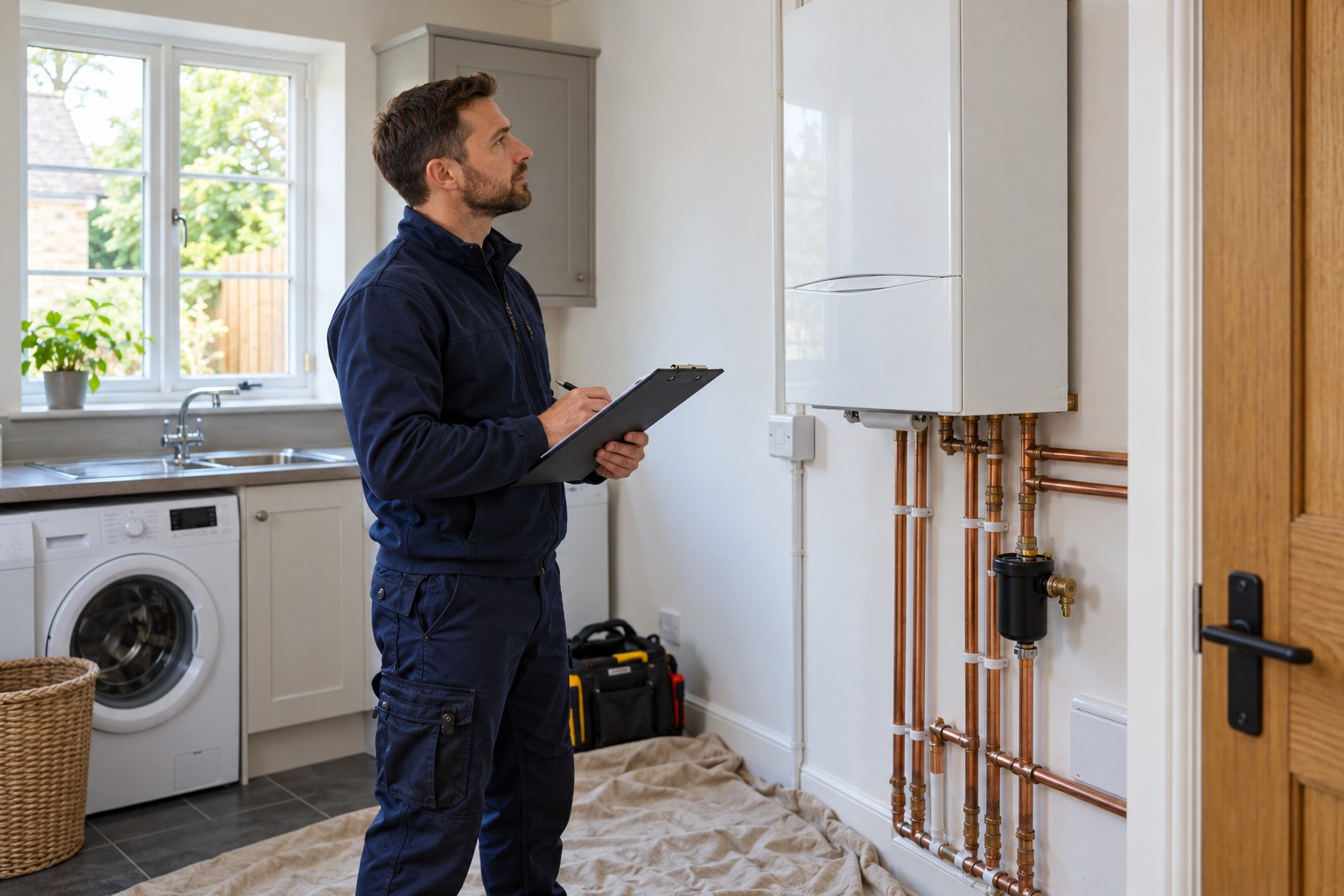
A professional boiler installer prepares a home for a new heating system by surveying the property, sizing the boiler to its real heat demand, checking the gas supply and flue, cleaning the existing pipework, and confirming the work will be certified, all before the new unit is switched on. Most of this preparation is invisible to the homeowner, yet it decides whether the system runs efficiently for a decade or struggles through its first winter. Here is what actually happens behind the scenes, step by step, and why each stage matters.
Why the Preparation Stage Matters More Than the Boiler Itself
Homeowners tend to judge an installation on the day the new boiler fires up. In reality, the system’s performance over the next ten years is decided in the hours of survey, safety checks, and system cleaning that come first.
A quality boiler fitted onto a dirty, badly sized or noncompliant system will still run poorly. A moderately priced boiler prepared properly will quietly outperform it. That is why experienced engineers treat preparation as the heart of the job, not an afterthought.
Step 1: A Full Home Survey and Heat Loss Assessment
No two homes heat the same way, so the process begins with a proper survey rather than a quick guess over the phone. The installer looks at the property’s size and layout, the number of radiators, the condition of the pipework, and how the household actually uses hot water.
A family running two bathrooms at 7 am has very different demands from a single occupant in a small flat. That survey answers two questions that shape everything else:
- Which boiler type fits: combi, system or conventional, based on hot water demand and available space.
- What output is needed: the correct size in kilowatts, calculated from the home’s heat loss rather than copied from the old unit.
Getting the size right is not a detail. Oversizing a boiler wastes fuel and makes it switch on and off too often; undersizing leaves the home cold on the worst mornings. This single calculation separates a comfortable house from a constant source of frustration.
Step 2: Checking the Gas Supply, Flue Route and Ventilation
Once the boiler type is chosen, the focus shifts to safe operation. The installer confirms that the existing gas meter and supply pipe can deliver enough gas to the new appliance, upgrading the pipe run where the demand requires it.
The installer plans the flue route carefully to meet current regulations on clearances from windows, doors, and boundaries. Condensate drainage is mapped out too, because modern condensing boilers produce acidic condensate that must drain safely.
Best practice is to route the condensate pipe internally wherever possible. Where an external run is unavoidable, it should be at least 32mm in diameter and insulated to prevent freezing, which causes many boiler breakdowns in winter. Sorting these routes in advance avoids messy compromises on the day.
Step 3: Protecting the Property Before Any Work Begins
Preparation is not only technical. A conscientious installer protects the home before lifting a spanner: dust sheets go down, flooring and furniture near the work area are covered, and access routes are cleared so heavy equipment moves through without damage.
Draining down the existing system is done methodically to avoid leaks and spillage. This is also when a reputable company handling a new boiler installation in Essex will confirm parking, the water shut-off point, and a realistic timescale with the homeowner.
Clear communication here prevents surprises and keeps the household running as normally as possible during the changeover. Good installers routinely turn a job around cleanly in a day or two precisely because they set these expectations first.
Step 4: Flushing and Cleaning the Existing System
One of the most important and most skipped preparation steps is cleaning the existing heating system. Over the years, radiators and pipes accumulate sludge, rust and debris. Left in place, that black iron oxide quickly clogs and damages a brand new boiler, undermining its efficiency and shortening its life.
The British Standard for treating water in domestic heating systems, BS 7593:2019, sets out clearly what good practice looks like:
- Clean the system: a power flush or thorough chemical clean to clear existing debris.
- Add a corrosion inhibitor: to protect the new boiler and radiators against future corrosion.
- Fit a magnetic filter: to capture debris before it reaches sensitive components, and check it at each annual service.
This groundwork is largely invisible to the homeowner but has an outsized impact on long-term reliability. It is often the difference between a boiler that lasts twelve years and one that fails inside three.
Step 5: Planning Controls and Confirming Compliance
Before fitting, the installer plans how the system will be controlled, and this is now a legal matter rather than a nicety. Under the Boiler Plus standards, in force across England since 6 April 2018, every new gas boiler must have a minimum seasonal efficiency of 92% ErP and be installed with time and temperature controls.
Replacement combi boilers must also include one of the following additional efficiency measures, fitted at the same time:
- Flue gas heat recovery
- Weather compensation
- Load compensation
- Smart controls with automation and optimisation
A professional plans for these at the preparation stage rather than treating them as an afterthought. Crucially, all gas work in the UK must be carried out by an engineer on the Gas Safe Register, the only official register for gas engineers, which legally replaced CORGI in 2009. The installer must also notify the work under Building Regulations, producing a compliance certificate that protects the homeowner’s warranty and matters if the property is ever sold.
What Homeowners Should Ask Before Hiring an Installer
Here is the practical takeaway: the questions an installer asks you before quoting often reveal more about the quality of the finished job than the price at the bottom of the page.
Before you commit, ask any prospective installer to walk you through their preparation process:
- Will you carry out a heat loss survey, or size the boiler from the old one?
- Is a system clean and inhibitor included, and will you fit a magnetic filter?
- How will you make the installation Boiler Plus compliant, and will I receive a Building Regulations certificate?
An installer who answers these confidently is telling you they prepare properly. An installer who brushes them aside is telling you something too.
Why Thorough Preparation Pays Off
The smooth running of a heating system for the next decade is decided long before the boiler is switched on, in the survey, the safety checks, the system clean and the careful protection of the home. A thorough installer invests that time upfront precisely because it prevents callbacks, cuts running costs and delivers reliable warmth season after season.
For homeowners, the lesson is simple: choose an installer who talks you through their preparation in detail. Preparation is where good installations are won, and everything you see on fitting day is just the visible tip of it.
Once the new system is installed, ongoing maintenance remains important. PAD Magazine’s guide to signs your boiler is overdue for a service explains what homeowners should look out for.
Frequently Asked Questions
How Long Does It Take to Prepare a Home for a New Boiler?
Most straightforward boiler replacements are surveyed within days and installed within one to two working days. Preparation, including the survey, gas and flue checks, system draining and cleaning, usually happens on the morning of the install, though complex jobs or pipework upgrades can extend the timescale.
Do I Really Need a Power Flush Before a New Boiler?
In most cases, yes. British Standard BS 7593:2019 recommends cleaning the system, adding a corrosion inhibitor and fitting a filter whenever a new boiler is installed. Skipping this lets old sludge damage the new unit, and many manufacturers can refuse warranty claims if the system was not cleaned.
Can Any Plumber Install a Gas Boiler?
No. By law, only an engineer on the Gas Safe Register may work on gas appliances in the UK. A general plumber without Gas Safe registration cannot legally fit your boiler. Always ask to see the engineer’s Gas Safe ID card and check the licence number before work starts.
What Is Boiler Plus and Does It Affect My Installation?
Boiler Plus is a set of energy efficiency standards in force in England since April 2018. It requires new gas boilers to be at least 92% ErP efficient with time and temperature controls, and replacement combi boilers to include one extra efficiency measure, such as weather compensation or smart controls.
Where Should the Boiler’s Condensate Pipe Go?
Wherever possible, the condensate pipe should drain internally to an appropriate waste point. If it must run outside, it should be at least 32mm wide and insulated to stop it freezing in cold weather. A frozen condensate pipe is one of the most common winter boiler faults.
How Do I Know My New Boiler Was Installed Legally?
A compliant installation gives you a Building Regulations compliance certificate, registration of the work through the Gas Safe Register, and a manufacturer’s warranty in your name. Keep these documents safe, because you will need them for warranty claims and when selling your home.

