


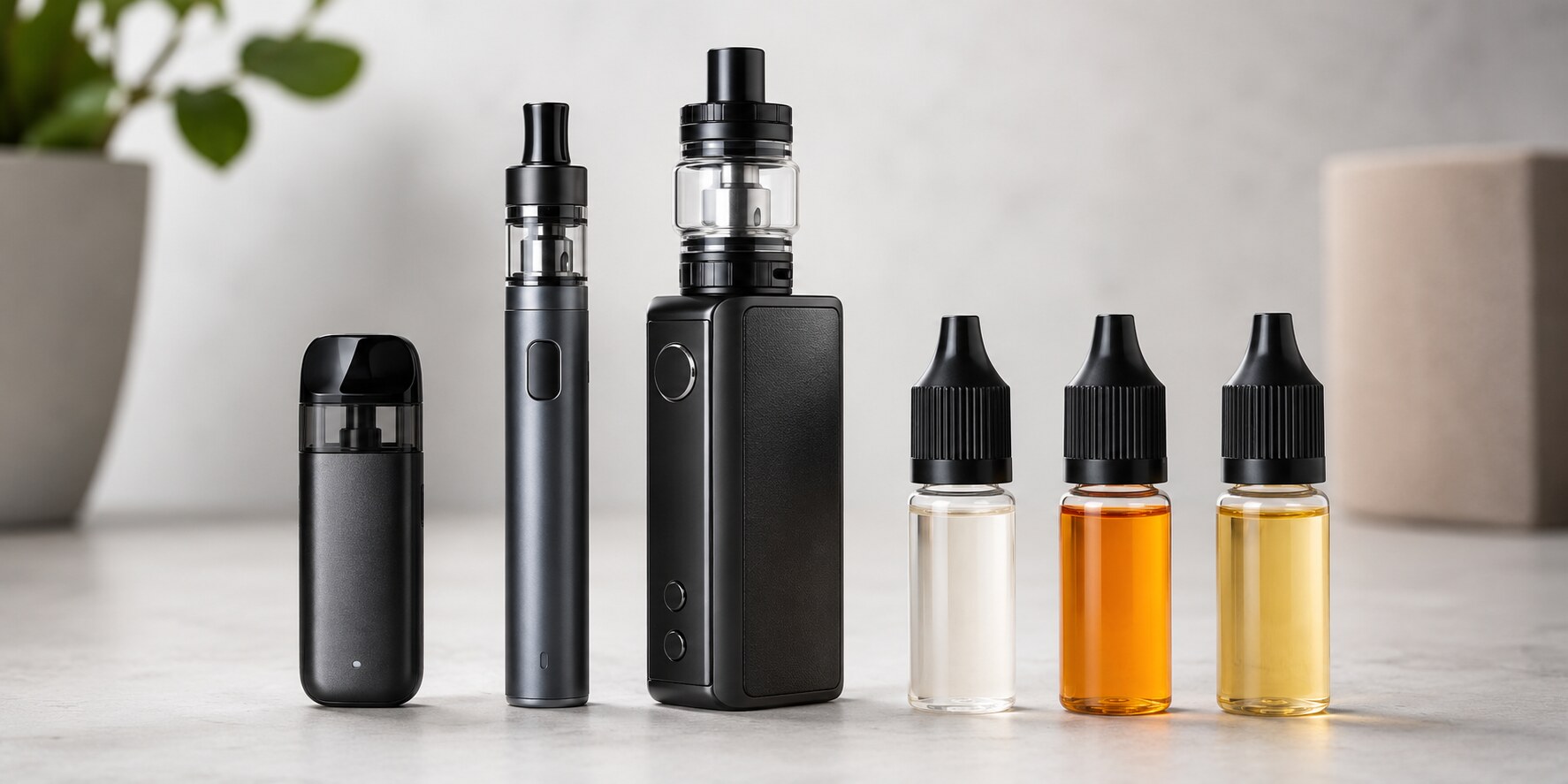
Vaping has grown into a market with dozens of device styles, and each one reacts differently to the liquid inside. A pod filled with liquid meant for a sub-ohm tank often floods, and the reverse pairing can leave a tank running hot and burning unevenly.
Most vapers pick a flavour first and think about device compatibility second, when both deserve equal weight. Matching liquid composition to hardware design lets a device perform as intended.
What Determines the Right Vape Juice for a Device
Every e-liquid is built around a handful of variables that interact directly with a device’s coil, airflow and power output. Getting one wrong can mean weak flavour or liquid that will not vaporise properly, so it’s worth checking each factor before buying a bottle.
VG/PG Ratio
Liquids with a higher vegetable glycerine (VG) content are thicker and produce denser clouds, which suits sub-ohm tanks and mesh coils built for direct-lung vaping. Liquids with more propylene glycol (PG) are thinner, carry flavour more sharply, and work well in pod systems and mouth-to-lung devices with narrower wicking channels.
Nicotine Strength and Type
Higher-powered devices usually pair with lower nicotine strengths, since they produce more vapour per puff and deliver nicotine faster. Lower-powered pod devices usually call for higher strengths, so you need fewer puffs to reach a comparable amount.
Bottle Style and Fill Method
Some devices are designed for pre-mixed liquid poured straight into a tank, while others use refillable pods that hold smaller volumes. The bottle style a device accepts often narrows your choices before flavour or strength even comes into play.
Flavour Concentration
Devices with larger tanks and stronger coils can mute flavour slightly at higher wattages, so liquids with a bolder flavour concentration often suit them best. Smaller pod devices preserve flavour well even at lower concentrations, since they vaporise less liquid per draw.
Nic Salts and How They Change the Choice
Nic salts are formulated with benzoic acid, which helps nicotine absorb more smoothly at higher strengths without the sharp throat hit freebase nicotine can produce. This makes them a common pairing for low-wattage pod devices, where a small amount of vapour still needs to carry a satisfying nicotine level.
Because nic salts are usually sold in higher strengths, they suit high-powered sub-ohm setups poorly, since the extra vapour would carry far more nicotine than intended. Matching salt-based liquid to a lower-power device keeps the experience balanced instead of overwhelming.
Shortfills and When They Make Sense
A shortfill e-liquid is sold in a larger bottle filled only partway, leaving room for a nicotine shot to be added separately. This style suits sub-ohm tanks and higher-VG setups, where liquid is used faster, and a bigger bottle is more practical.
Shortfills also let vapers set their own nicotine strength by adjusting how many shots are added, which suits those who vape at higher power and want flexibility. For pod devices with smaller tanks, pre-mixed nic salt bottles usually remain more convenient.
Where Established Brands Fit In
Once the technical factors are settled, the brand behind a liquid still affects consistency and quality. Established UK vape brands, such as Fantasi, sit within a wider field of manufacturers producing liquids across different ratios, strengths and styles, with the current range set out on the Fantasi website.
Brands with a broad catalogue, including premium shortfill e-liquids, give vapers more room to find a liquid that matches their hardware without switching suppliers each time their setup changes. Matching a brand’s range to a device’s requirements, rather than buying on flavour alone, produces a more reliable result.
Staying Within UK Regulations
E-liquids sold in the UK are governed by the Tobacco and Related Products Regulations, which set limits on nicotine strength, bottle size and labelling. Guidance for retailers and producers sets out how vape products must be notified before sale and how compliance is checked.
These rules cap nicotine strength at 20mg/ml and restrict nicotine-containing refill bottles to 10ml, which is why shortfills exist as a separate, lower-nicotine category. Checking that a liquid meets these standards, alongside matching it to a device, keeps the vaping experience compliant.
Matching Liquid to Hardware Keeps a Device Performing Well
A device paired with the wrong liquid struggles to reach its full potential, no matter how well-built the hardware is. Coils wear faster, flavour falls flat, and clouds either overwhelm a small pod or barely register in a larger tank.
Treating liquid choice as part of the setup, alongside coil resistance and airflow settings, produces a smoother result than treating it as an afterthought. Vapers who take the time to match VG/PG ratio, nicotine type and bottle style to their specific device usually notice the difference in every single puff.

