


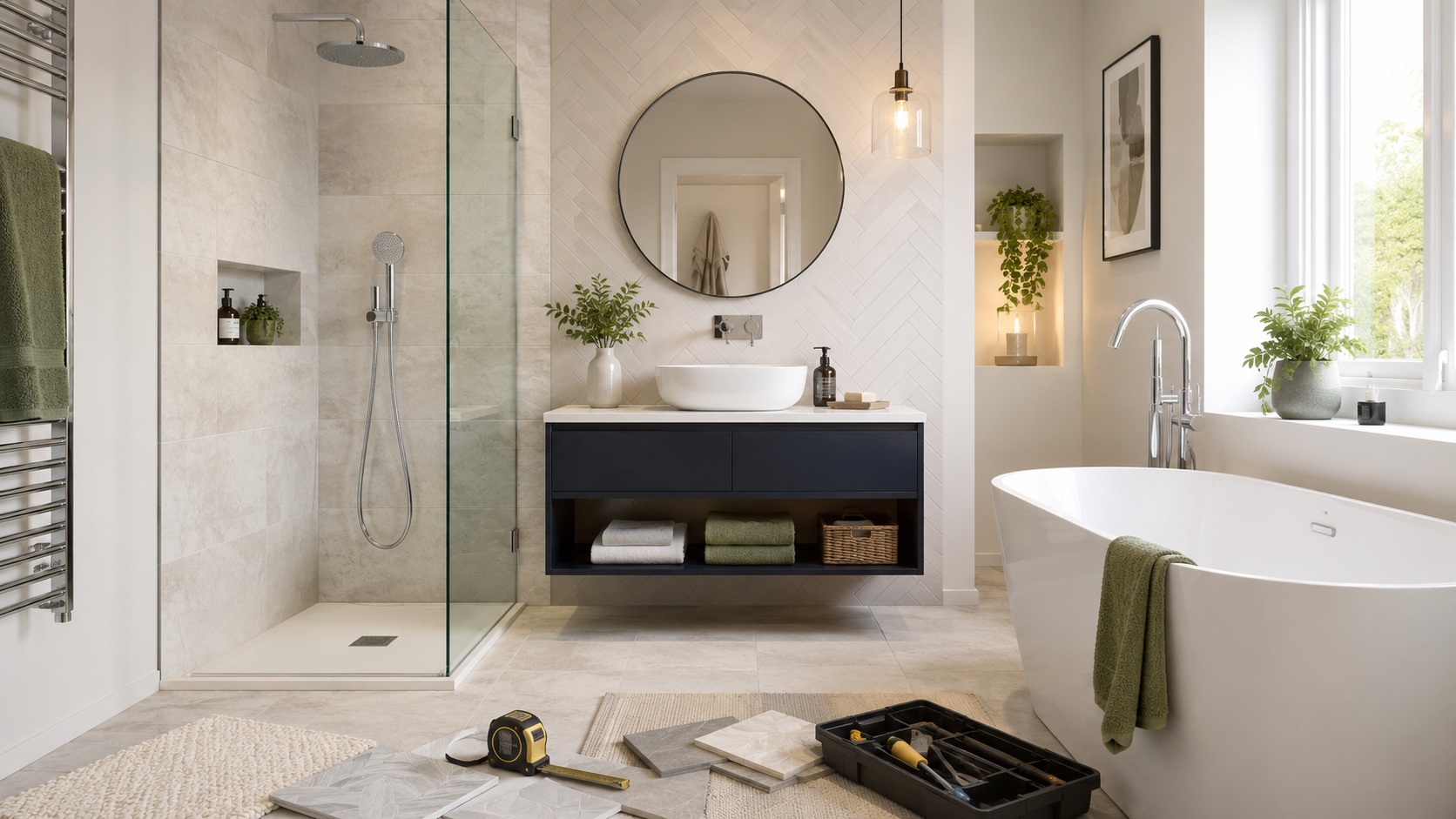
The average bathroom renovation cost in the UK is around £5,500 to £8,000 in 2026 for a standard professionally fitted room. A basic same-layout refurbishment may cost roughly £4,000 to £6,000, while a high-end project with premium finishes, bespoke furniture or major plumbing changes can exceed £14,000. The final quote depends on room size, labour rates, the condition of the existing bathroom and whether fixtures stay in their current positions.
| Quick answer For most UK homeowners, a sensible working budget is £6,000–£10,000, including a 10–15% contingency. Keeping the same layout and choosing mid-range fittings gives the best balance between cost, durability and resale appeal. |
This guide explains the likely 2026 price of a full bathroom refurbishment, the cost of individual trades and fittings, and the choices that make the biggest difference to your final bill. It also links to PAD Magazine’s wider Home Improvement, Interiors and Property Renovation & Refurbishment coverage for readers planning a broader home project.
Bathroom renovation cost UK: key figures at a glance
| Project level | Typical 2026 cost | What it normally includes |
| Cosmetic refresh | £1,500–£3,500 | Paint, taps, lighting, accessories and limited replacements |
| Budget full renovation | £4,000–£6,000 | Entry-level suite, same layout and simple tiling |
| Standard mid-range renovation | £5,500–£8,500 | Professional fitting, good-quality fixtures and new surfaces |
| Premium bathroom | £9,000–£14,000 | Higher-end suite, fitted storage, upgraded shower and lighting |
| Luxury or major layout change | £14,000–£20,000+ | Bespoke finishes, structural work, relocated plumbing or wet-room design |
These are planning ranges rather than fixed quotations. A small room can still be expensive if it needs extensive preparation, while a larger bathroom may remain affordable if the layout, pipework and electrical points stay unchanged.
How these 2026 bathroom cost estimates were prepared
To strengthen accuracy and transparency, this guide uses an editorial cost-comparison method rather than relying on one headline number. We reviewed current UK trade-price ranges for complete bathrooms, bathroom fitting, tiling, plumbing, electrical work and waste removal, then rounded the figures into realistic homeowner budget bands. The main external benchmark is the Checkatrade new bathroom cost guide, which places a typical new bathroom installation at approximately £5,500–£8,000 and high-end projects at £14,000 or more.
Prices were checked in July 2026. Actual quotations can vary by postcode, access, specification, contractor availability and the condition discovered after strip-out. Homeowners should obtain at least three itemised quotes and confirm exactly what is included, particularly waste removal, waterproofing, electrics, tiling preparation and final decoration.
Complete bathroom renovation cost breakdown
| Cost item | Typical range | What affects the price |
| Removal and disposal | £600–£1,000 | Strip-out of the old suite, tiles and fittings |
| Bathroom fitting labour | £1,500–£3,000 | Core installation work for a typical bathroom |
| Plumbing work | £600–£2,000 | Like-for-like connections and moderate pipework changes |
| Major plumbing relocation | £2,000–£4,000+ | Moving a toilet, shower, bath or soil pipe |
| Electrical work | £400–£900 | Lighting, extractor fan, sockets or heated mirror connections |
| Wall and floor tiling | £800–£1,200 | Standard bathroom tiling, materials and labour |
| Bathroom suite and taps | £700–£3,000+ | Toilet, basin, bath or shower and brassware |
| Furniture and storage | £300–£2,000 | Vanity, cabinets, worktops and fitted storage |
| Flooring | £250–£900 | Vinyl, ceramic, porcelain or other bathroom-safe flooring |
| Plastering and decorating | £300–£1,000 | Making good, moisture-resistant paint and finishing |
| Skip or waste collection | £125–£320 | Typical small renovation waste allowance |
Not every project needs every line item. A straightforward replacement may combine plumbing and fitting into one quote, while a more complex job may require separate trades. Ask contractors to split labour, materials, provisional sums and VAT so that competing quotations can be compared fairly.
What do you get at each bathroom renovation budget?
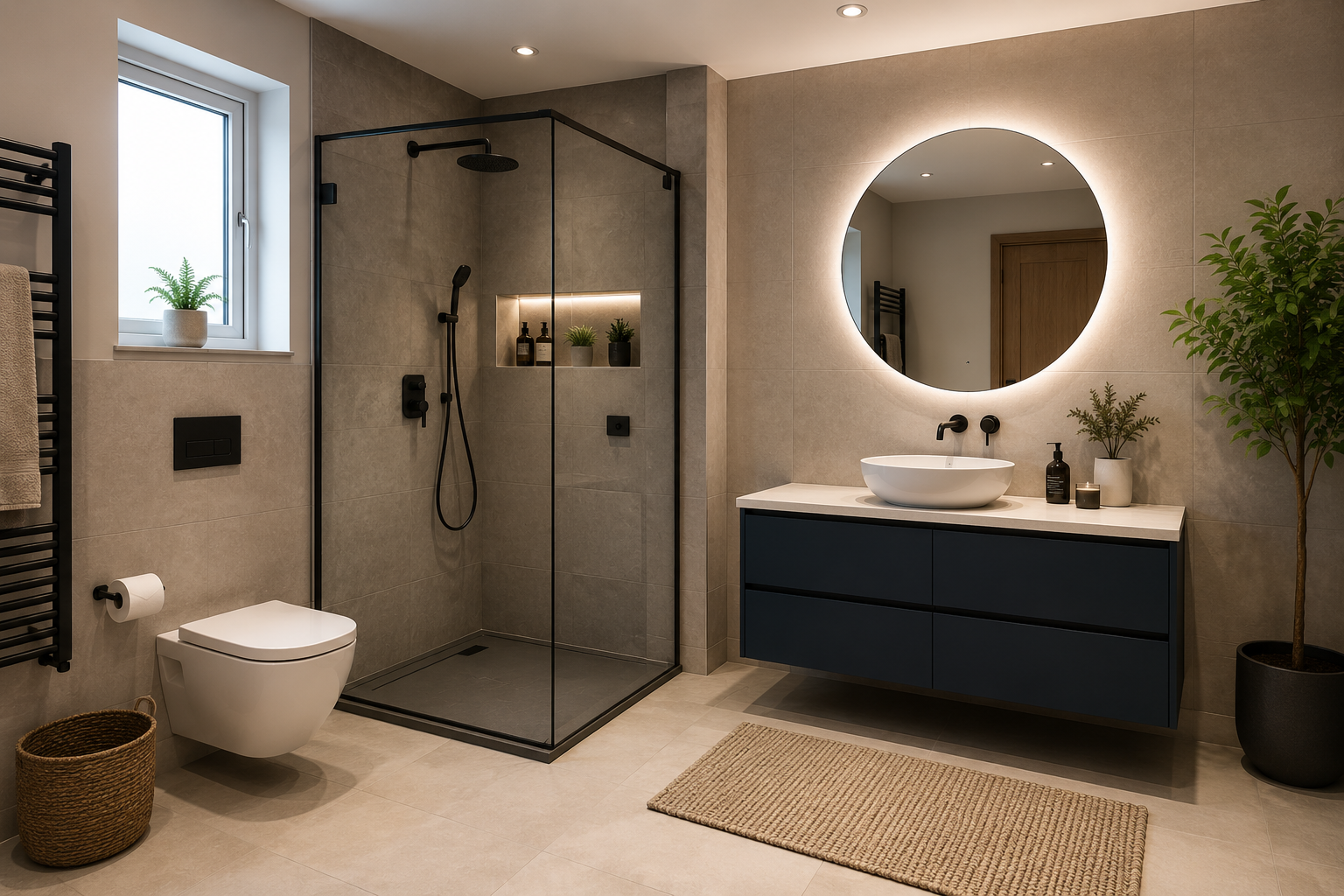
Around £4,000–£6,000: a practical budget renovation
This budget works best for a small or average bathroom where the toilet, basin, bath or shower remain in the same positions. Expect an entry-level suite, standard taps, a simple shower screen, limited fitted storage and ceramic or basic porcelain tiles. Full-height tiling may be restricted to wet areas, with moisture-resistant paint elsewhere.
The design can still feel fresh and considered. PAD Magazine’s guide to cheap bathroom makeover ideas shows how lighting, mirrors, hardware and a restrained material palette can create a more premium result without changing the entire room.
Around £6,000–£10,000: the most realistic mid-range budget
This is the strongest all-round budget for most UK homeowners. It usually allows for a better-quality suite, professional installation, reliable brassware, improved storage, new lighting, an extractor fan and a balanced mix of wall and floor finishes. There may also be enough flexibility for a larger shower tray, concealed pipework or a wall-hung vanity, provided the layout remains broadly similar.
If the bathroom is part of a wider upgrade, compare the project with other home renovation ideas that add value to UK homes. A bathroom should suit the property’s price point: overspending on luxury finishes in a modest home may not produce the same return as improving functionality, ventilation and storage.
£10,000–£14,000: a premium bathroom
A premium budget can cover large-format tiles, higher-spec taps, a walk-in shower, a freestanding or stone-resin bath, fitted furniture, layered lighting and more detailed joinery. It may also include underfloor heating, a niche shelf, upgraded waterproofing and carefully coordinated finishes.
At this level, design decisions should be made as a complete scheme rather than as individual purchases. Browse PAD Magazine’s Interior Design coverage for colour, layout and material ideas that can help a premium bathroom feel coherent rather than over-specified.
£14,000–£20,000+: luxury, wet-room or layout-change project
Costs rise sharply when walls move, drainage is altered, a soil pipe needs repositioning or a level-access wet room is created. Bespoke stone, custom cabinetry, specialist lighting, smart controls and designer sanitaryware can also take the total beyond £20,000. The important distinction is that money is being spent not only on visible finishes but also on preparation, waterproofing, structural work and technical detailing.
For inspiration on technical design choices, see PAD Magazine’s guide to wet-room design trends for new builds and renovations. A wet room can look simple, but correct falls, drainage and tanking are essential to long-term performance.
How bathroom size affects renovation cost
Room size influences material quantities, but it is not the only driver. A compact bathroom still needs a toilet, basin, shower or bath, plumbing, electrics and skilled labour. Because these fixed costs are spread over fewer square metres, small bathrooms can be surprisingly expensive per square metre.
| Room type | Typical 2026 range | Common scope |
| Cloakroom or WC | £2,500–£5,000 | Toilet, compact basin, flooring, lighting and decoration |
| Small bathroom, 3–4 m² | £4,000–£7,000 | Space-saving suite, shower or short bath, limited tiling |
| Average family bathroom, 5–7 m² | £5,500–£10,000 | Full suite, storage, new lighting and wall/floor finishes |
| Large bathroom, 8 m²+ | £8,000–£15,000+ | More tiling, larger fixtures, separate bath and shower, more joinery |
For layout ideas, PAD Magazine’s tiny bathroom remodel guide covers wall-mounted furniture, mirrors, vertical storage and other ways to make a compact room feel more usable.
Bathroom renovation cost in London and other UK regions
London and parts of the South East commonly attract higher labour, parking, congestion and waste-removal costs. A standard project that costs £7,000 elsewhere could reach roughly £8,000–£10,000 in a high-cost London postcode, particularly where access is difficult. Major cities such as Bristol, Oxford, Cambridge, Edinburgh and Manchester may also sit above the national average when experienced trades are in strong demand.
Regional pricing should not be judged only by day rates. A contractor with a clear schedule, reliable subcontractors and accurate ordering may deliver better value than a cheaper quote that creates delays or repeated call-outs.
What are the most expensive parts of a bathroom renovation?
Labour and project coordination
Labour is often the largest single portion of the budget. A bathroom fitter may handle several tasks, but specialist plumbing, electrical, plastering and tiling work can still be required. Quotes increase when the room has poor access, uneven walls, damaged floors or old pipework that needs replacing.
Moving plumbing and drainage
Keeping the toilet, basin and shower close to their existing positions is one of the most effective ways to control costs. Moving a toilet can require new soil-pipe work, while relocating a shower may involve lifting floors, altering waste runs and rebuilding walls. These changes can add thousands of pounds before any premium finishes are purchased.
Tiling and surface preparation
The tile price is only part of the cost. Old tiles must be removed, walls may need straightening and floors may need levelling or strengthening. Large-format tiles can reduce grout lines but require very flat backgrounds and careful handling. Feature patterns, mosaics and natural stone normally increase both material waste and labour time.
Baths, showers and brassware
A simple acrylic bath and thermostatic shower can be cost-effective, while freestanding baths, concealed valves, premium shower systems and specialist finishes quickly increase the budget. It is usually better to buy reliable mid-range brassware than to spend heavily on decorative items while compromising on valves, wastes or waterproofing.
Storage, lighting and ventilation
These elements are easy to underestimate but have a major effect on daily use. A well-sized vanity, mirrored cabinet, layered lighting and an effective extractor can make a modest bathroom feel better designed. They also help keep surfaces clear and reduce moisture build-up.
Hidden bathroom renovation costs to include
- Repairing water-damaged floors, joists, plasterboard or walls discovered after strip-out.
- Upgrading old pipework, isolation valves or drainage that cannot safely be reused.
- Levelling walls and floors before large-format tiles or fitted furniture are installed.
- Waterproofing shower areas, sealing penetrations and allowing suitable drying time.
- Waste removal, skip permits, parking, delivery charges and carrying materials through the property.
- Temporary bathroom arrangements or alternative accommodation during a longer project.
- Final decoration, silicone, snagging and replacement of small accessories not included in the original quote.
Budget rule: keep 10–15% of the planned project value as a contingency. Older homes, previous leaks and major layout changes justify a larger reserve.
Simple bathroom renovation cost calculator
Use the following formula to create a realistic first budget before requesting quotes:
| Estimated total Fixtures and furniture + fitting labour + plumbing and electrics + wall/floor finishes + removal and waste + 10–15% contingency |
| Example | Fixtures | Labour | Services & finishes | Waste | Contingency | Illustrative total |
| Small same-layout bathroom | £1,400 | £2,400 | £1,300 | £500 | £840 | About £6,440 |
| Standard family bathroom | £2,300 | £3,000 | £1,900 | £650 | £1,180 | About £9,030 |
| Premium layout-change project | £5,000 | £4,000 | £3,400 | £900 | £2,000 | About £15,300 |
These examples are not quotations. They show how a project that appears affordable from the suite price alone can rise once labour, preparation and contingency are included.
How to reduce bathroom renovation costs without cutting quality
- Keep the existing layout. Reusing the current plumbing positions is usually the single biggest saving.
- Choose a complete mid-range suite, then invest selectively in the shower valve, taps, storage and lighting.
- Tile only the areas that genuinely need it. Painted upper walls can reduce cost and make future updates easier.
- Order early and check every item before work begins. Missing parts and damaged deliveries create expensive delays.
- Ask for itemised quotes with a clear scope, start date, estimated duration and payment schedule.
- Complete safe, low-risk preparation or decorating tasks yourself only when they will not disrupt the contractor’s programme.
- Avoid changing specifications after installation begins. Late decisions often create waste, rework and additional labour.
For broader style-led savings, browse PAD Magazine’s Home Decor section. The most effective budget bathrooms use a limited number of finishes well rather than combining too many competing materials.
How long does a bathroom renovation take?
| Project type | Typical duration | Why it takes this long |
| Cosmetic refresh | 2–5 days | Painting, taps, accessories, mirror and limited fixture changes |
| Straightforward same-layout renovation | 1–2 weeks | Strip-out, new suite, basic tiling and decoration |
| Standard full renovation | 2–3 weeks | Several trades, full surfaces, lighting, storage and snagging |
| Complex layout change or wet room | 3–6 weeks+ | Drainage changes, structural preparation, tanking and bespoke work |
The sequence matters as much as the total number of working days. Drying times, product lead times and trade coordination can extend the calendar even when the bathroom is not being worked on every day. PAD Magazine’s detailed guide to how long a bathroom renovation takes explains the stages behind the finished room.
Is a bathroom renovation worth the cost?
A well-planned bathroom renovation can improve comfort, storage, ventilation and the overall impression of a home. Buyers tend to respond positively to a clean, functional bathroom that does not appear to need immediate work. However, value depends on proportion: the specification should match the property, neighbourhood and likely buyer expectations.
For homeowners staying long term, the return is not only financial. Better lighting, easier cleaning, safer access and more efficient storage can improve daily life. Prioritising durable installation and sensible layout decisions usually creates more lasting value than choosing the most fashionable finish.
What to ask a bathroom fitter before accepting a quote
- Is the quotation fixed, estimated or subject to provisional sums?
- Does the price include removal, waste disposal, waterproofing, tiling preparation and final silicone?
- Who will complete plumbing, electrical, plastering and tiling work?
- Are materials, VAT, parking and delivery charges included?
- What happens if hidden damage or unsuitable pipework is discovered?
- What is the expected start date, working sequence and completion date?
- How are variations approved and priced?
- What guarantee applies to labour and supplied products?
Bathroom renovation cost UK 2026: final answer
Most standard UK bathroom renovations cost £5,500–£8,500 in 2026, while a safer all-in planning budget is £6,000–£10,000 once contingency is included. A small same-layout bathroom may be completed for £4,000–£6,000, but premium finishes, wet-room construction or relocated plumbing can push the cost above £14,000. The most reliable way to control spending is to keep the existing layout, obtain itemised quotes and reserve 10–15% for hidden work.
Frequently asked questions
What is a realistic budget for a bathroom renovation in the UK?
A realistic 2026 budget is £6,000–£10,000 for a standard bathroom, including a contingency. A simple same-layout refurbishment may cost less, while a premium or complex project can exceed £14,000.
Can you renovate a bathroom for £5,000?
Yes, particularly in a small room with the existing layout retained. The budget will normally require an entry-level or mid-range suite, limited plumbing changes, straightforward tiling and careful control of extras.
What is the most expensive part of a bathroom renovation?
Labour, plumbing changes and surface preparation are often the largest costs. Moving a toilet, altering drainage, repairing damaged floors or preparing walls for large-format tiles can add more than visible fittings.
How much does bathroom fitting labour cost?
Bathroom fitting labour commonly falls between £1,500 and £3,000 for a typical project, although separate plumbing, electrical, plastering and tiling charges may apply.
Does a new bathroom add value to a UK home?
A modern, functional bathroom can improve buyer appeal and reduce objections during a sale. The strongest value usually comes from solving poor layout, ventilation, storage or condition rather than selecting unusually expensive finishes.
How long should a full bathroom renovation take?
A straightforward full renovation commonly takes two to three weeks. A cosmetic update may take a few days, while layout changes, wet rooms and bespoke work can require three to six weeks or more.
Should I tile the whole bathroom?
Full tiling is durable and easy to clean but costs more. A cost-effective alternative is to tile shower and bath areas fully, then use bathroom-suitable paint on remaining walls.
How many quotes should I get for a bathroom renovation?
Aim for at least three detailed, like-for-like quotations. Compare the scope, materials, exclusions, programme, payment terms and contingency approach rather than selecting on the lowest total alone.