


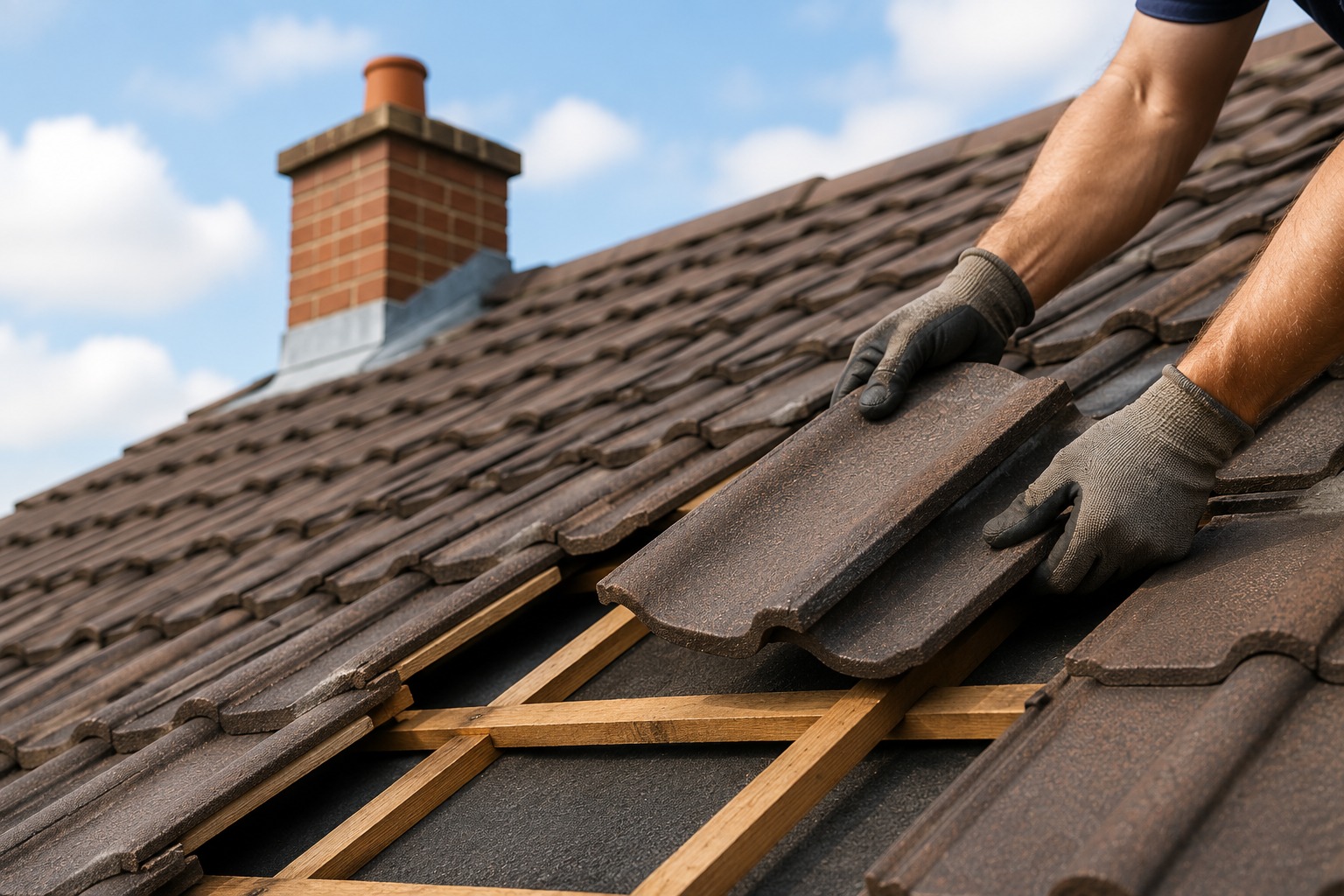
A roof problem rarely arrives at a convenient time. One loose tile can become a ceiling stain after heavy rain, while failed flashing or a damaged valley can allow water to travel well beyond the point where it first entered. Understanding the roof repair cost UK homeowners may face in 2026 makes it easier to budget, compare quotations and decide whether a local repair is still sensible.
For most homes, a minor repair starts at around £150 to £300. Repairs involving several tiles, a persistent leak, ridge work or flashing often fall between £300 and £1,000. More extensive chimney, valley, flat-roof or structural work can reach £1,000 to £3,000 or more, especially when scaffolding is required. If defects are widespread rather than local, compare the repair quote with PAD Magazine’s new roof cost UK guide for 2026 before committing to repeated patching.
| Quick Answer: How Much Does Roof Repair Cost in the UK? In 2026, most straightforward roof repairs cost approximately £150 to £1,000. Replacing a few tiles may cost £170 to £500, while flashing, ridge, valley, chimney or flat-roof repairs commonly cost £300 to £1,500. Structural damage, extensive water ingress, difficult access or emergency work can push the bill above £2,500. Always check whether VAT, scaffolding, waste removal and making good are included. |
Average Roof Repair Costs in the UK in 2026
The figures below are realistic budgeting ranges rather than fixed quotations. A roofer will normally need to inspect the roof because the visible symptom inside the house does not always reveal the true source of the problem.
| Repair type | Typical 2026 cost | Main price factors |
| Replace one to five slipped or broken tiles | £170-£500 | Tile type, matching availability, roof height and access |
| Small roof leak investigation and repair | £150-£500 | How quickly the source can be found and whether underlay is damaged |
| Lead flashing repair or local replacement | £250-£1,000 | Length, chimney or wall junction, tile disturbance and scaffolding |
| Ridge tile repointing or replacement | £280-£700 | Number of ridge tiles, mortar condition and dry-ridge system |
| Roof valley repair | £350-£1,200 | Valley length, lining material, surrounding tiles and water damage |
| Chimney leak, repointing or flashing work | £300-£1,500+ | Stack condition, leadwork, access and whether rebuilding is required |
| Small flat-roof patch repair | £300-£900 | Felt, EPDM or GRP system and condition of the deck below |
| Larger flat-roof repair with wet decking | £800-£2,500+ | Area affected, insulation, timber deck and drainage details |
| Sagging or structural roof repair | £1,000-£3,000+ | Rafters, purlins, wall plates, engineer input and access |
| Emergency storm call-out and temporary work | £300-£1,200+ | Time of day, weather, temporary covering and permanent follow-up |
Roof Repair Cost by Damage Type
Replacing Missing or Broken Roof Tiles
A handful of slipped, cracked or storm-damaged tiles is usually one of the least expensive roof repairs. The roofer must still allow for travel, safe access and a minimum call-out, so replacing one tile is not necessarily dramatically cheaper than replacing four or five. Expect roughly £170 to £500 for a small visit, with the higher end applying to slate, hard-to-match clay tiles or roofs requiring special access.
Missing tiles should be dealt with promptly because exposed underlay can deteriorate quickly. PAD Magazine’s guide to the most common roofing problems in UK homes explains how apparently minor defects can lead to moisture damage when they are ignored.
Repairing a Leaking Roof
A leak repair is difficult to price from the damp patch alone. Water can enter at a chimney, valley, cracked tile or rooflight and travel along rafters before appearing indoors. A small, easy-to-find defect may cost £150 to £400. A recurring leak that requires lifting several courses of tiles, replacing underlay or repairing timber may cost £500 to £1,500 or more.
A good quotation should separate investigation, access and permanent repair. Be cautious of a quote that only promises to apply sealant without identifying why the roof failed. Sealant may have a place in temporary weatherproofing, but it is rarely a substitute for sound flashing, intact coverings and correct drainage.
Lead Flashing Repair Cost
Flashing protects vulnerable junctions around chimneys, walls, dormers and roof penetrations. Local repairs may cost £250 to £500, while removing and replacing a longer or stepped section can move towards £800 to £1,000 or more. Tiles around the area may need to be lifted and some can break during the work, so ask whether replacement tiles are included.
Ridge Tile Repair Cost
Loose ridge tiles can allow water into the roof and may become dangerous in strong wind. Repointing or replacing a local section commonly costs around £280 to £700. A longer ridge, failed mortar along several metres or conversion to a mechanically fixed dry-ridge system will cost more. The roofer should also check nearby tiles and the ridge line for movement rather than treating one visibly loose section in isolation.
Roof Valley Repair Cost
Valleys carry a concentrated flow of rainwater, so even a small split, blockage or failed joint can cause significant leaks. A local repair may start around £350, while replacing a longer valley lining and reinstating surrounding tiles can cost £700 to £1,200 or more. Complex roof shapes, dormers and restricted access increase labour.
Chimney and Roof Junction Repairs
Chimney-related leaks may come from the flashing, cracked mortar, damaged pots, a failing cap or porous brickwork. Minor repairs can start near £300, but repointing and renewed leadwork commonly take the total towards £750 to £1,500. A leaning, badly weathered or structurally unstable stack may require partial rebuilding and a separate quotation.
Flat Roof Repair Cost
A small patch to felt, EPDM rubber or GRP fibreglass commonly costs £300 to £900. The price increases when moisture has reached the timber deck or insulation below, because the roofer must cut back to sound material rather than cover the visible split. Larger repairs involving wet decking, edge trims, drainage outlets, or insulation may cost £800 to £2,500 or more.
Repeated patching is not always economical on an old flat roof. Ask the contractor to state the likely remaining service life after repair and compare that with the cost of renewing the whole section.
Labour, Scaffolding and Other Costs
Roofer Labour Rates
Many contractors price standard repairs as a complete job rather than by the hour. As a guide, a roofer may charge around £35 to £45 per hour or £280 to £360 per day. Two-person work can therefore produce labour charges of roughly £560 to £720 per day before materials, access equipment and VAT. London and parts of the South East are often 20% to 30% more expensive than many northern regions, although specialist availability can make rural work costly too.
Scaffolding and Safe Access
Easy ladder access may be enough for a brief, low-risk repair, but many two-storey jobs require a scaffold tower or full scaffold. A straightforward scaffold may add roughly £600 to £1,500, while awkward elevations, conservatories, pavements and complex rooflines can cost more. This is why two similar tile repairs can produce very different quotations.
Do not assume access charges are unnecessary simply because the visible repair looks small. Roof work is dangerous, and reputable contractors will price the equipment required to carry it out safely.
Materials, Waste and VAT
For many small repairs, labour and access cost more than the replacement material itself. The quote may also include disposal of broken tiles or felt, parking permits, protective sheeting and making good. Confirm whether VAT is included because a headline price excluding VAT will rise by 20% when the final invoice is issued by a VAT-registered contractor.
What Affects the Final Roof Repair Quote?
- The extent of hidden damage: Wet battens, rotten decking and damaged rafters may only become visible after tiles or membranes are lifted.
- Roof material: Natural slate, handmade clay tiles and specialist flat-roof systems generally cost more to match and install.
- Height and access: A bungalow with clear access is usually cheaper than a tall terrace above a conservatory or public pavement.
- Roof complexity: Valleys, hips, dormers, chimneys and rooflights create more junctions and labour.
- Urgency: Out-of-hours attendance, storm conditions and temporary protection increase the price.
- Location: Local labour rates, parking, permits and the availability of specialist roofers all matter.
- Matching materials: Older or discontinued tiles may need to be reclaimed, which can increase sourcing time and cost.
Regular inspection can reduce the chance of a small defect becoming a major project. PAD Magazine’s article on why roof health has become a growing priority for UK homeowners looks at the value of preventive maintenance in more detail.
Emergency Roof Repair Costs
Emergency work is priced differently because the first visit may only make the property safe and watertight. An out-of-hours call-out, temporary sheet or urgent storm repair can cost £300 to £1,200 or more, followed by a separate permanent repair once the weather improves and the damage can be inspected properly.
Move belongings away from the affected area, use containers to catch drips, switch off electricity if water is near wiring and contact your insurer where storm damage may be covered. Do not climb onto a wet or wind-damaged roof. PAD Magazine’s guide to emergency roof repairs and typical costs covers the immediate steps in more detail.
When Is Roof Replacement Better Than Repair?
A repair is normally the better-value option when the defect is local, the surrounding roof remains sound and the covering still has a useful service life. Replacement may make more financial sense when several areas are failing, the underlay has deteriorated widely, the roof is sagging, matching materials are difficult to source or earlier repairs keep failing.
As a practical rule, ask for both a repair price and a condition-based view of the remaining roof. A £2,500 repair may be reasonable on a generally healthy roof, but less attractive if another £2,000 of work is likely within a year. Use the full roof replacement cost guide to compare the long-term options rather than choosing only the lowest immediate bill.
Do Roof Repairs Need Planning Permission or Building Regulations?
Minor, like-for-like repairs do not normally need planning permission. Building Regulations approval is also not usually required for a small local repair, but the position changes where a substantial part of the roof is affected, structural alterations are made, the new covering changes fire performance or the replacement material significantly increases roof loading.
The official Planning Portal guidance for work to an existing roof states that approval can be required when more than 50% of the roof is affected, where structural work is involved or where the new covering materially changes performance or loading. Listed buildings and homes in conservation areas may also have additional restrictions, so confirm the position before major work begins.
How to Get an Accurate Roof Repair Quote
- Ask at least three insured roofing contractors to inspect the property.
- Give each roofer the same information, including where damp appears and when it started.
- Request photographs of the defect before and after repair.
- Check whether scaffolding, materials, waste, VAT and making good are included.
- Ask how hidden timber or decking damage will be priced if uncovered.
- Confirm whether the proposed work is a permanent repair or temporary weatherproofing.
- Request the product specification and guarantee in writing where a membrane or larger system is installed.
- Avoid paying the full amount before the work is complete and inspected.
A very low quotation may exclude access, VAT or the work needed to reinstate tiles around the repair. Compare the scope line by line rather than selecting the cheapest total. For more practical maintenance and building guides, browse PAD Magazine’s Roofing & Home Maintenance section, Construction coverage and Property section.
How Long Do Roof Repairs Take?
Replacing a few accessible tiles may take two to four hours. Flashing and ridge work often takes half a day to one day, while valley, chimney or flat-roof repairs may take one to three days. Structural work can take longer because timbers, drying time and specialist assessment may be involved.
Weather is the biggest source of delay. Roofing contractors cannot safely work during high winds, heavy rain, frost or icy conditions, and some materials need dry conditions to bond or cure correctly. A sensible programme should include temporary protection and explain how the property will remain watertight overnight.
Can You Reduce Roof Repair Costs?
- Arrange repairs before a leak damages insulation, ceilings and timber.
- Keep gutters and valleys clear so rainwater can drain correctly.
- Combine nearby repairs while scaffolding is already in place.
- Keep spare matching tiles after an extension or previous re-roofing project.
- Book non-emergency work before winter storm demand peaks.
- Use written, like-for-like quotations and avoid vague cash prices.
- Budget a small contingency for hidden damage rather than choosing a temporary patch by default.
FAQs
What is the average roof repair cost in the UK in 2026?
Most straightforward repairs cost between £150 and £1,000. Several tiles, flashing, ridge or leak work often falls in the middle of that range, while chimney, valley, flat-roof and structural repairs can cost £1,000 to £3,000 or more.
How much does it cost to replace a few roof tiles?
Replacing one to five accessible tiles commonly costs around £170 to £500. Slate, unusual clay tiles, difficult access and scaffolding can increase the total.
How much does it cost to fix a leaking roof?
A small, easily identified leak may cost £150 to £500. A recurring leak involving flashing, underlay, valleys or wet timber may cost £500 to £1,500 or more.
Does a roof repair quote include scaffolding?
Not always. Some contractors include access equipment in the total, while others list it separately. Ask for a written breakdown covering scaffolding, materials, labour, waste, VAT and making good.
Will home insurance pay for roof repairs?
Insurance may cover sudden damage caused by an insured event such as a storm, but it usually does not cover ordinary wear, poor maintenance or gradual deterioration. Check the policy wording and contact the insurer before permanent work where a claim may be possible.
Is it cheaper to repair or replace a roof?
A local repair is cheaper when the surrounding roof is sound. Replacement can offer better long-term value when defects are widespread, the underlay has failed or repeated repairs are becoming frequent.
How urgent is a missing roof tile?
It should be inspected promptly. The roof may remain dry for a short period, but exposed underlay and wind-driven rain can allow moisture into battens, insulation and ceilings.
Should I repair a roof myself?
Roof work carries a serious fall risk and damage is easy to worsen without the right access and experience. Small maintenance tasks at ground level may be manageable, but roof repairs should normally be carried out by a competent, insured professional.
Editorial note: All prices are approximate 2026 UK budgeting ranges. Actual quotations vary by location, roof condition, access, materials, VAT and the scope confirmed after inspection.