


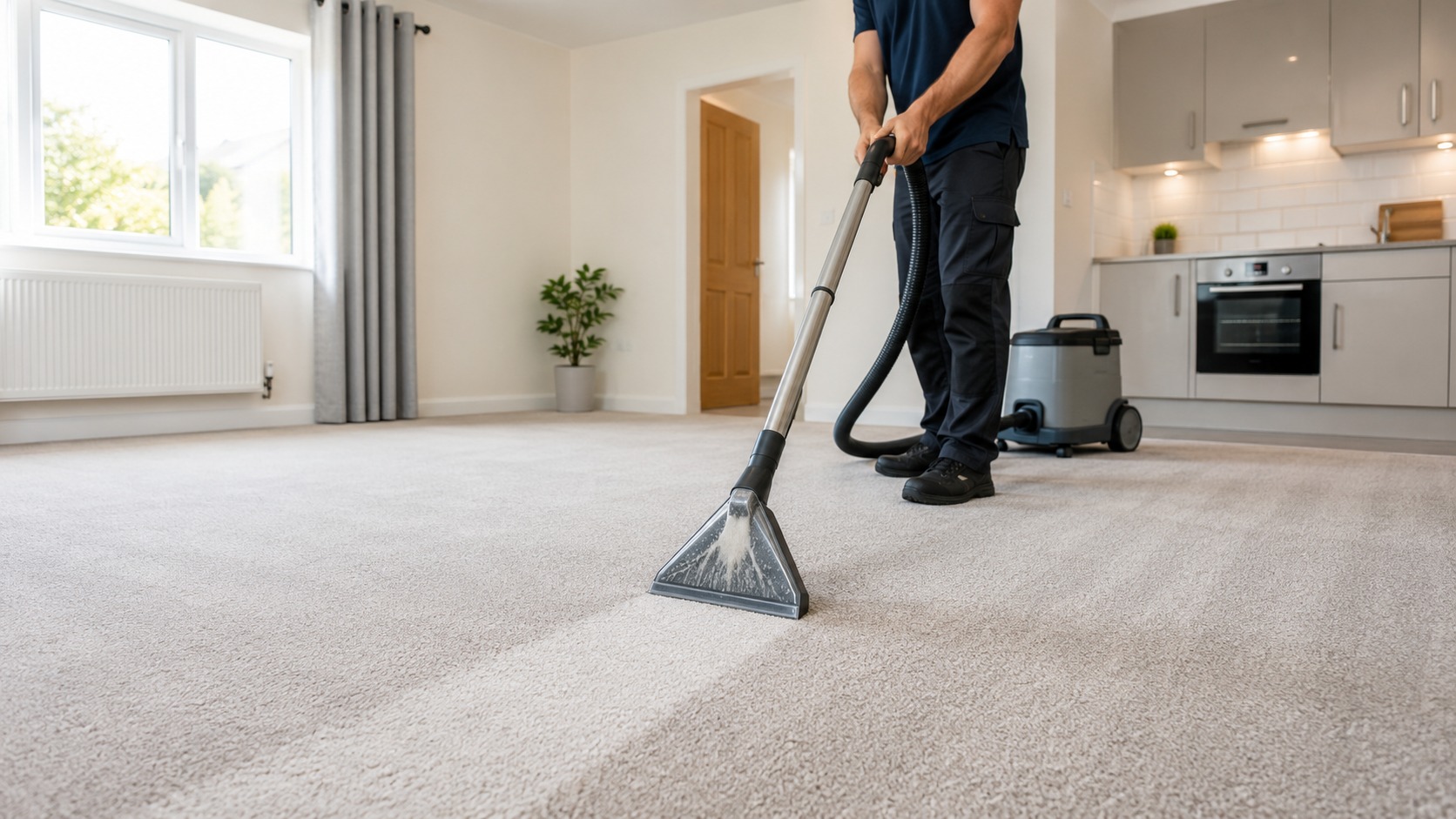
Moving out of a rented home usually comes down to one nerve-wracking moment — the final inspection. And more deposits are quietly lost over tired, marked carpets than almost anything else in a property. The reassuring news is that a proper, professional-standard carpet clean is well within reach for most renters. The trick is knowing when a bottle of supermarket carpet shampoo will do the job, and when you genuinely need to bring in a machine.
Here’s an honest, no-nonsense guide to getting your carpets clean before you hand back the keys.
Why do carpets so often decide your deposit?
Letting agents look at the carpets first. They show every traffic lane, every spilled glass of wine, and every muddy footprint from moving day. A carpet that looks flat, grey or patchy reads as “neglected” — even when the rest of the flat is spotless. Getting the carpets right is one of the highest-impact things you can do before an inspection, and it’s usually cheaper than you fear.
Vacuum, shampoo, or hot-water extraction?
It helps to understand the three levels of carpet cleaning:
- Vacuuming lifts dry soil — and most carpet dirt is dry, gritty stuff sitting deep in the pile. Always start here.
- Spray-and-blot shampoos tackle surface marks and small stains. Fine for a freshen-up, limited on ground-in dirt.
- Hot-water extraction sprays a heated cleaning solution into the pile and immediately vacuums it back out, lifting dirt that the other two methods leave behind. This is what professional cleaners use.
For a light refresh, a home spray cleaner is often enough. For a whole flat before an inspection, hot-water extraction is the method that actually shifts a season’s worth of grime.
The supermarket machine vs a professional extractor
You’ll find small carpet-washers in most big supermarkets, and they’re perfectly good for a one-room touch-up. Where they struggle is with heat and suction. A professional-grade machine heats the water well beyond tap temperature and pulls far more of it back out — which means two things: it cleans more deeply, and it leaves the carpet noticeably less wet.
That second point matters more than people expect. If you’re cleaning an entire property to a deadline, hiring a hot-water extraction carpet cleaner for the day is usually the difference between passing the inspection first time and being asked to do it again.
How to do it properly (without soaking the carpet)
The single biggest mistake is over-wetting. A soaked carpet can take days to dry, smell musty, and even pull old stains back up to the surface as it dries. Do this instead:
- Vacuum thoroughly first. Extraction over dry grit just makes mud.
- One wet pass, then dry passes. Squeeze the trigger on one slow pass, release it, then go back over the same strip two or three times with no spray — letting the machine keep sucking water out.
- Overlap each strip by a few centimetres and work backwards towards the door.
- Stop when barely any water lifts. That’s clean, and about as dry as you’ll get it.
Drying: the step people skip
Even a good clean is only half the job until the carpet is dry. Open the windows, keep the air moving, and don’t re-lay furniture until the pile is dry to the touch. In a cool or humid room — or in winter, when everything dries slowly — it’s well worth running an air mover to speed up drying so the carpet is ready before your inspection rather than the day after.
When to stop and call a professional
Hiring a machine is the right call for most standard carpets. It isn’t the right call for everything:
- Wool, silk or specialist rugs without a clear “wet clean” or colourfast label — water and warm solution can affect the dye and pile.
- Heavily set-in stains — oil, paint, ink, pet marks or anything unknown. Extraction may reduce them, but won’t always remove them.
- Always check the manufacturer’s care label before you start, and test on a small, hidden patch first.
The bottom line
For an end-of-tenancy clean, plan your dates so there’s time for both cleaning and drying before the final inspection. Vacuum first, resist the urge to over-wet, and dry the carpet properly. For a single room, a supermarket machine may be all you need. For a whole property against the clock, hiring a proper hot-water extraction machine for the day is the surest way to protect your deposit — and the cheapest insurance you’ll buy all move.