



Loft conversion cost UK searches are rising as more homeowners look for extra space without moving. With moving costs, stamp duty, mortgage pressure and limited space all affecting household decisions, converting an unused attic can feel like a practical way to gain another bedroom, office or family room.
The price, however, can vary widely. A simple rooflight conversion may cost far less than a dormer, hip-to-gable, or mansard loft conversion. The final budget depends on the roof structure, property type, location, materials, staircase design, insulation, plumbing, electrics, and the level of finish.
A London project will usually cost more than a similar conversion in many other parts of the UK. Older homes can also bring extra surprises, especially where the roof structure, electrics, or fire safety requirements need more work than expected.
For homeowners planning carefully, the key is not just asking how much a loft conversion costs, but understanding what is included in the quote and what may appear later as an extra.
For wider property, renovation and home improvement coverage, readers can explore Property & Development Magazine for practical residential sector updates and design ideas.
Quick Answer: How Much Does a Loft Conversion Cost in the UK?
A loft conversion in the UK typically costs between £25,000 and £80,000+, depending on the type of conversion, size of the space and complexity of the work.
A basic rooflight or Velux loft conversion is usually the cheapest option, often starting from around £22,000 to £30,000. A dormer loft conversion is more common for family homes and can often sit between £40,000 and £60,000. Larger projects, such as hip-to-gable or mansard conversions, may cost between £50,000 and £80,000 or more, especially in London or where major structural work is needed.
These figures are a guide, not a fixed quote. The true cost should always be confirmed through detailed estimates from qualified builders, architects, or loft conversion specialists.
Average Loft Conversion Cost by Type
| Loft Conversion Type | Typical UK Cost Guide | Best For |
| Rooflight / Velux | £22,000 to £30,000+ | Homes with enough existing head height |
| Dormer | £40,000 to £60,000+ | Extra headroom and usable floor space |
| Hip-to-gable | £50,000 to £70,000+ | Semi-detached or end-of-terrace homes |
| Mansard | £50,000 to £80,000+ | Maximising space in urban or terraced homes |
| Bungalow loft conversion | £50,000 to £75,000+ | Creating a full upper floor or larger bedroom space |
Costs can rise above these ranges where the project includes a bathroom, complex structural work, premium materials, difficult access, or a high-end finish.
Why Loft Conversions Remain Popular in UK Homes
A loft conversion is one of the most useful home improvement projects because it adds space without taking away garden area. For many terraced, semi-detached, and detached homes, the attic is already there but underused.
Instead of building outwards, a loft conversion uses the existing roof space to create a new room. This can be especially useful for families needing an extra bedroom, homeowners working from home, or buyers who want to improve long-term property value.
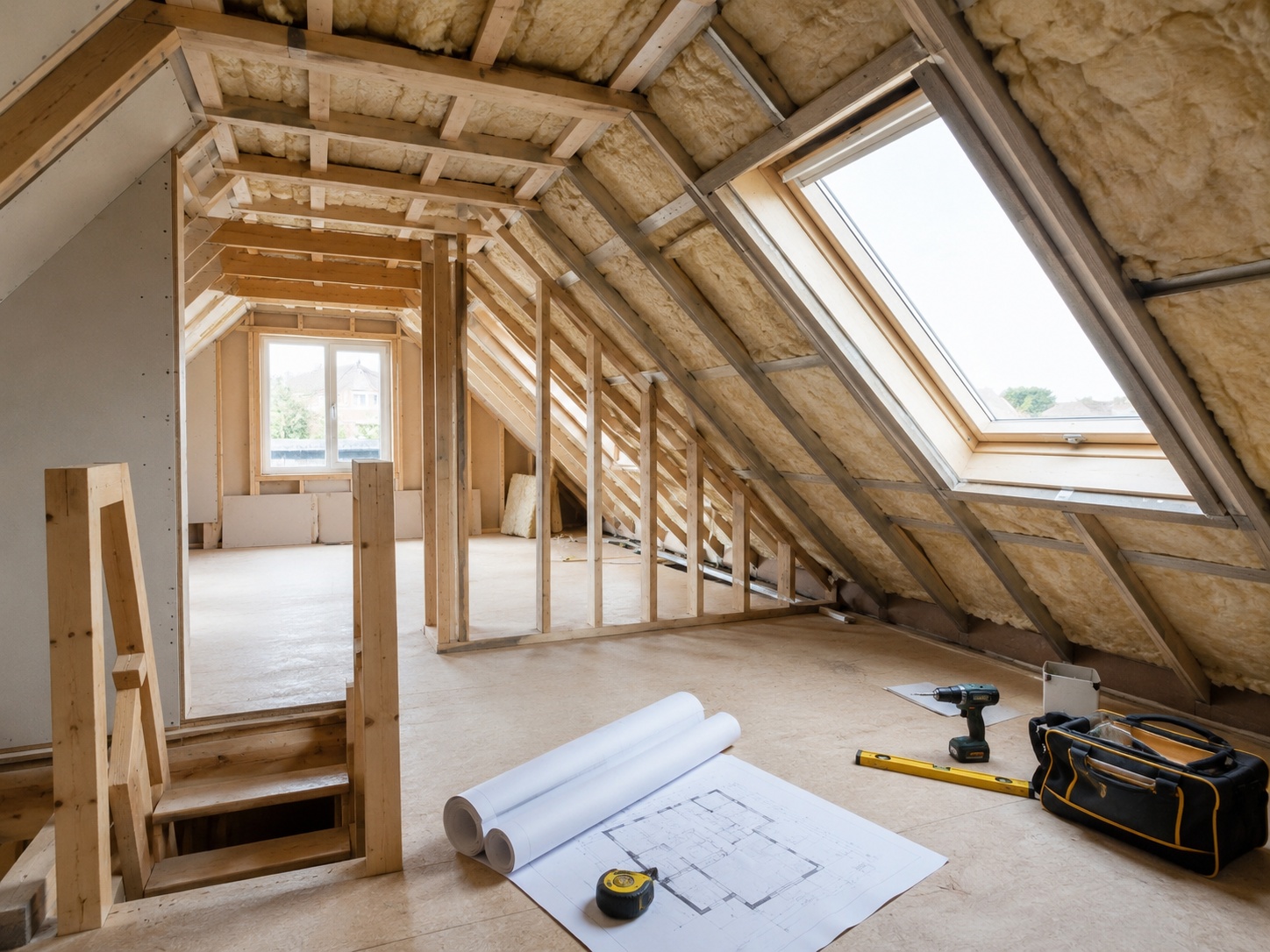
It can also be less disruptive than a full rear extension, although it is still a major building project. There will be structural work, scaffolding, insulation, new stairs, electrical work, plastering and Building Control checks to manage.
Homeowners considering other ways to add space can also read PAD Magazine’s guide to home extension ideas for related options around rear extensions, side returns, garage conversions and garden rooms.
Main Types of Loft Conversion and Typical Costs
Rooflight or Velux Loft Conversion
A rooflight loft conversion is usually the most affordable option. It keeps the existing roof shape and adds roof windows to bring in natural light.
This type of conversion can work well when the loft already has enough head height and does not need major structural changes. It is often used for a home office, guest room, hobby room or simple bedroom.
Typical cost guide: £22,000 to £30,000+.
The main benefit is that it is less complex than other options. The downside is that it may not add as much usable floor space because the roof shape remains the same.
Dormer Loft Conversion
A dormer loft conversion is one of the most common choices in the UK. It extends vertically from the existing roof slope, creating more headroom and usable floor area.
This makes it practical for bedrooms, en-suites and family spaces. Rear dormers are especially common on terraced and semi-detached homes.
Typical cost guide: £40,000 to £60,000+.
A dormer usually costs more than a rooflight conversion because it changes the roof structure, but it can make the room much more comfortable and usable.
Hip-to-Gable Loft Conversion
A hip-to-gable loft conversion is often used on semi-detached or end-of-terrace homes with a sloping side roof. The sloped hip is extended into a vertical gable wall, creating more internal space.
This option can be ideal when the existing loft feels too narrow or restricted. It is more complex than a standard dormer and usually needs more structural work.
Typical cost guide: £50,000 to £70,000+.
Mansard Loft Conversion
A mansard loft conversion is usually the most expensive traditional option. It changes the shape of the roof more significantly and creates a steep rear slope with a flatter top section.
This can provide excellent living space, but it often needs planning permission and more detailed design work. Mansard conversions are commonly seen in cities, especially where homeowners want to maximise space in terraced properties.
Typical cost guide: £50,000 to £80,000+.
What Affects Loft Conversion Cost in the UK?
Property Location
Location is one of the biggest cost factors. Labour, materials, parking, access and scaffolding can all be more expensive in London and the South East. Homes in busy streets may also need extra planning around deliveries, skips and working hours.
Roof Structure and Head Height
Older cut-roof properties can sometimes be easier to convert than homes with modern trussed roofs. Trussed roofs may require more structural support, which can increase the cost.
Head height also matters. If there is not enough height, the project may need a dormer, roof lift, or a more complex structural solution.
Staircase Design
A proper staircase is required for a liveable loft room. This can affect the layout of the floor below as well as the loft itself.
If the staircase is difficult to position, the design may need more work. Losing too much space from an existing bedroom or landing can also reduce the overall benefit of the conversion.
Bathroom or En-Suite
Adding a bathroom or en-suite will increase the cost because it requires plumbing, drainage, ventilation, waterproofing, tiling, and fixtures.
It can also make the new loft room more valuable and practical, especially if it is being used as a main bedroom.
Finish and Specification
A basic finish will cost less than a high-end specification. Flooring, built-in wardrobes, lighting, bathroom fittings, glazing, heating, and decoration can all change the final price.
Homeowners should ask whether decorating, flooring, bathroom fittings and VAT are included in the quote. These items can make a large difference to the final bill.
For more design-led inspiration around layout, finishes and room styling, readers can browse PAD Magazine’s Interiors section.
Hidden Costs Homeowners Should Plan For
The headline build cost is only part of the budget. A realistic loft conversion cost UK plan should also include professional fees and possible extras.
- Architect or designer fees
- Structural engineer calculations
- Building Control fees
- Party Wall Agreement costs
- Planning application fees if required
- Scaffolding
- Skip hire and waste removal
- Upgraded electrics
- Fire doors and smoke alarms
- Bathroom fittings
- Flooring and decoration
- Contingency budget
A contingency of around 10% to 15% is sensible because older homes can reveal problems once work begins.
Do You Need Planning Permission for a Loft Conversion?
Many loft conversions in the UK can fall under permitted development, meaning a full planning application may not be needed. However, this only applies if the project stays within specific limits and conditions.
Planning permission may be required if the conversion changes the roof shape too much, exceeds permitted volume limits, affects a flat or maisonette, involves a listed building, or sits within a conservation area.
Even when planning permission is not required, homeowners should still consider applying for a Lawful Development Certificate. This can provide useful proof that the work was lawful, especially when selling the property later.
For official guidance, homeowners can check the Planning Portal loft conversion guidance before starting any design or building work.
Building Regulations Still Apply
Planning permission and Building Regulations are not the same thing.
Even if a loft conversion is allowed under permitted development, Building Regulations approval is still required when turning the loft into a liveable space. This is because the room must be safe, structurally sound, insulated, and suitable for everyday use.
Building Regulations usually cover structural strength, floor joists, fire safety, escape routes, stairs, insulation, ventilation, electrical safety, sound resistance, and smoke alarms.
For many two-storey homes becoming three-storey homes, fire safety upgrades may be needed. This can include fire doors, protected stairways, and mains-powered smoke alarms.
Is a Loft Conversion Worth the Cost?
A loft conversion can be worth the cost when the home needs more space, and the project is designed properly. It can add a bedroom, improve the layout, and make the property more attractive to future buyers.
However, value depends on the local market. In some areas, adding another bedroom can make a clear difference. In others, the ceiling price of the street may limit how much value is added.
Before starting, homeowners should compare the expected build cost with local property values. It may also help to speak with local estate agents to understand whether another bedroom, bathroom or home office would be most valuable in that area.
Readers planning a wider renovation can also explore PAD Magazine’s Property Renovation & Refurbishment coverage for more related home improvement ideas.
How to Keep Loft Conversion Costs Under Control
The best way to manage costs is to plan the project carefully before work starts. Changing the design halfway through can be expensive.
Homeowners should get at least three detailed quotes and make sure each one covers the same scope. A cheap quote may not include everything, so it is important to check what is excluded.
Keeping the design simple can also help. A rooflight conversion will usually cost less than a dormer, and a dormer will usually be less complex than a mansard. That does not mean the cheapest option is always best, but the design should match the real need rather than adding unnecessary complexity.
It is also worth deciding early whether the space needs a bathroom, built-in storage, premium glazing or custom joinery. These upgrades can be useful, but they should be included in the budget from the beginning.
Questions to Ask Before Accepting a Loft Conversion Quote
- Does the quote include VAT?
- Are Building Control fees included?
- Is scaffolding included?
- Are structural engineer calculations included?
- Does the price include plumbing and electrics?
- Are bathroom fittings included?
- Does the quote include plastering, flooring and decoration?
- What happens if extra structural work is discovered?
- How long is the work expected to take?
- Who is responsible for planning permission or permitted development checks?
A clear quote should reduce confusion and make it easier to compare one contractor with another. It should also help homeowners avoid the common problem of choosing the cheapest headline price, only to face extras later.
Final Thoughts
Loft conversion cost UK figures can only ever be a guide because every home is different. A straightforward rooflight conversion may be relatively affordable, while a large dormer, hip-to-gable or mansard project can become a major investment.
For many homeowners, the appeal is clear. A loft conversion can create a useful extra room, improve the way a home functions, and potentially support long-term property value. The best results usually come from realistic budgeting, careful design, and a clear understanding of planning, Building Regulations, and hidden costs before work begins.
Rather than starting with the cheapest quote, homeowners should focus on value, safety, design quality, and whether the finished space will genuinely improve daily life.
FAQs
How much does a loft conversion cost in the UK?
A loft conversion in the UK usually costs between £25,000 and £80,000+, depending on the type of conversion, location, size, and finish. Rooflight conversions are usually cheaper, while mansard and complex structural projects cost more.
What is the cheapest type of loft conversion?
A rooflight or Velux loft conversion is usually the cheapest option because it keeps the existing roof shape and needs fewer structural changes. It still needs enough head height to work properly as a liveable room.
Does a loft conversion add value to a house?
A well-designed loft conversion can add value by creating extra usable living space. The amount of value depends on the local property market, the quality of the work, and whether the new room solves a real need, such as adding a bedroom or bathroom.
Do I need planning permission for a loft conversion?
Many house loft conversions can be allowed under permitted development, but this depends on the size, design, property type, and location. Flats, listed buildings and homes in conservation areas may need extra checks or planning permission.
Do loft conversions need Building Regulations approval?
Yes. If the loft is being converted into a liveable space, Building Regulations approval is required. This covers safety, structure, insulation, fire protection, stairs, ventilation, and other essential standards.
How long does a loft conversion take?
A simple loft conversion may take around six to eight weeks, while larger dormer, hip-to-gable or mansard projects may take longer. Timescales depend on design complexity, weather, access, and approvals.