


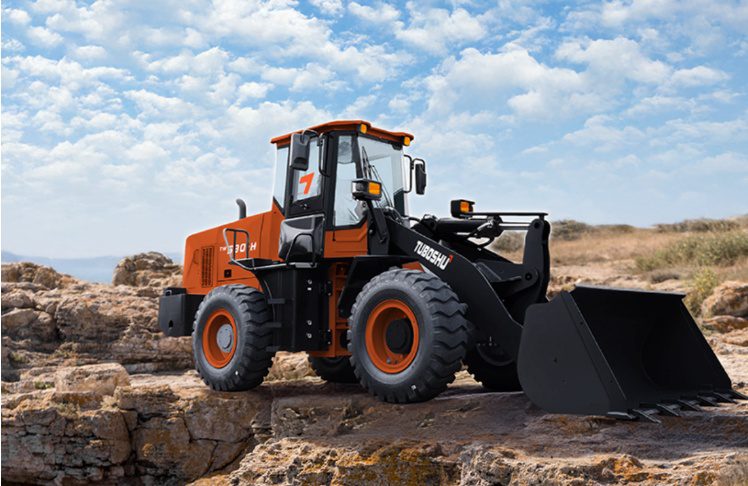
For investors and developers watching Africa’s fast-growing property markets, the headlines tend to focus on the visible side of the story: new residential districts, commercial towers, industrial parks, and the transport links that connect them. Yet behind every completed development sits a less glamorous factor that often decides whether a project finishes on time and on budget — the supply of heavy machinery and the support network around it.
It is a theme UK developers will recognise from closer to home. Access to plant, scaffolding, and reliable contractors shapes any build. In Africa’s emerging markets, where demand is rising faster than local supply chains have matured, that relationship between equipment and outcome becomes even more pronounced. Understanding it is increasingly relevant for anyone considering exposure to the continent’s development sector.
Why Equipment Supply Deserves a Closer Look
Property development is, at its core, a sequence of dependencies. Site clearance has to happen before foundations, foundations before structure, and so on. A delay at any stage cascades through the schedule. In mature markets, developers rarely think hard about whether an excavator or loader will be available when needed, because the rental and supply infrastructure is deep and reliable.
In many African markets, that infrastructure is still being built. The result is that equipment availability, maintenance support, and spare parts access can have an outsized effect on project timelines and returns. For investors assessing development opportunities, the strength of a local equipment supply chain is a genuine due diligence factor, not an operational afterthought.
Key considerations include:
- Whether suitable machines can be sourced near the project, or must be imported
- How quickly spare parts and servicing can be arranged
- Whether the supplier offers trained technical support locally
- How equipment costs affect the overall capital plan
The Scale of the Opportunity
Africa’s urban population is expanding rapidly, and with it the demand for housing, commercial space, and infrastructure. Governments and private developers across the continent are pursuing road networks, residential schemes, industrial zones, and energy projects, often simultaneously. Each of these depends on a steady flow of construction and earthmoving equipment.
This demand creates a clear commercial logic for regional equipment suppliers who can offer not just machines but the full support system around them. Suppliers that combine a broad equipment range with regional warehousing, service points, and parts availability are well placed to support the pace of development that investors are betting on.
One example of this model in West Africa is HMD, which distributes a range of heavy equipment across the region alongside service and parts support — the kind of integrated offering that helps development projects keep moving rather than stalling between phases.
What Distinguishes a Reliable Supply Chain
From a developer’s perspective, the value of an equipment partner is measured less by the specification sheet of any single machine and more by the dependability of the whole system. A well-functioning supply chain tends to share several characteristics.
Equipment Matched to Real Conditions
Machines that suit local terrain, climate, and working patterns perform better and last longer than over-specified imports chosen on paper. In hot, dust-heavy environments with long working hours, practical, robust design matters more than feature count.
Access to Parts and Service
Downtime is the enemy of any build. A supply chain that keeps genuine parts in the region and provides trained technicians nearby keeps machines working and schedules intact. This is frequently the difference between a project that runs smoothly and one that drifts.
Regional Presence
Warehousing and support located close to project sites shorten response times and improve planning confidence. For developers coordinating multiple contractors, that predictability has real financial value.
Implications for Investors and Developers
For those evaluating African development exposure — whether as direct developers, joint-venture partners, or investors in development-focused vehicles — the equipment dimension is worth building into the assessment.
A few practical questions can sharpen that view:
- Does the project’s location have established equipment and service support nearby?
- Are contractors working with suppliers who can guarantee parts and maintenance?
- How resilient is the schedule to equipment-related delays?
- Has the capital plan accounted realistically for equipment costs and contingencies?
Projects backed by strong, regionally supported supply chains tend to carry less execution risk. That is a meaningful consideration when comparing opportunities, and one that is easy to overlook from a distance.
The Bigger Picture
Africa’s property and infrastructure growth is one of the more compelling long-term development stories available to international investors. But the gap between an attractive market thesis and a successfully delivered project often comes down to execution — and execution depends heavily on the unglamorous machinery of construction.
The developers and suppliers who understand this, and who treat equipment supply as a strategic factor rather than a logistical detail, are the ones most likely to deliver projects on time and protect returns. For investors looking at the continent, learning to read the strength of that supply chain is becoming a valuable skill.
Conclusion
Behind every development success in Africa’s growing markets is a quieter story about machines, parts, and the people who keep them running. As the continent’s property and infrastructure sectors continue to expand, the reliability of heavy-equipment supply will remain one of the most important — and most underrated — factors in whether projects succeed.
For UK developers and investors weighing opportunities further afield, it is a reminder of a universal truth in property: ambition is set by the plans, but delivery is decided on the ground.