


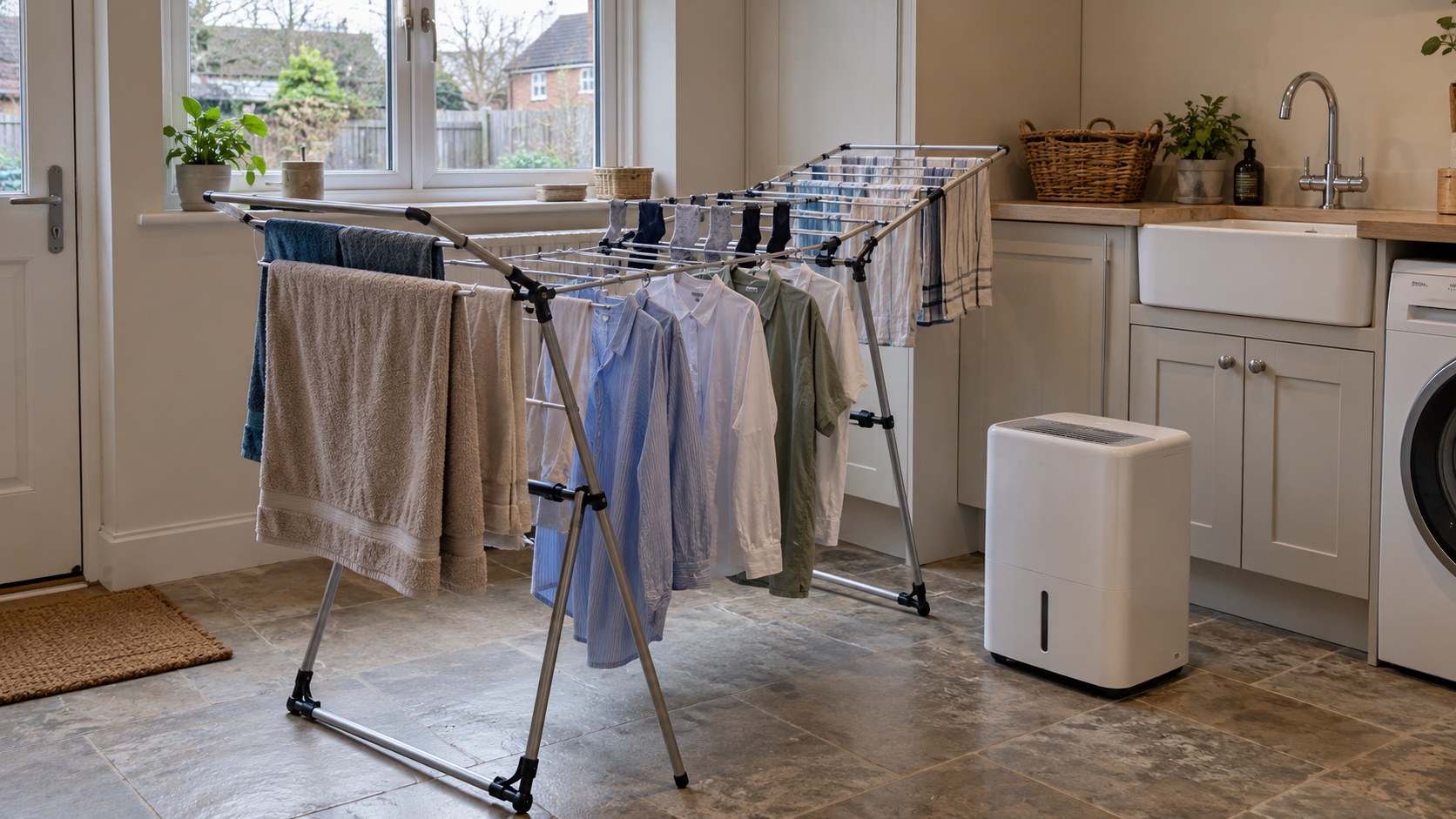
Knowing how to dry clothes indoors in winter can save you from days of damp towels, crowded airers and wet bedroom windows. The aim is to remove water from the washing, give each garment enough space and stop the released moisture building up inside your home.
Turning up the heating alone does not solve everything. Warmth helps water evaporate from fabric, but that moisture still needs to leave the room through ventilation or be collected by a dehumidifier.
A few changes to your drying routine can help, especially when outdoor space is limited and the next wash is already waiting.
How to Dry Clothes Indoors in Winter Without Damp
Start by checking the washing labels and choosing a suitable spin setting. Spread the clothes across an airer without overlapping them, then decide how you will remove moisture from the room.
For ordinary air drying, ventilation helps damp air escape. If you use a portable dehumidifier, follow its instructions for placement and operation. Avoid packing wet washing into a closed room without any way to manage the moisture.
Check the clothes as they dry. Waistbands, pockets and thick seams often need longer than the rest of a garment.
Remove More Water Before Hanging Clothes
An extra spin can help remove water before the washing reaches the airer, provided the fabric allows it. Delicate garments may need a lower spin speed, so check their care labels first.
Shake out each item before hanging it. Unfold sleeves, straighten trouser legs and avoid leaving towels doubled over in thick layers.
It is tempting to squeeze an entire wash onto one rack. However, clothes pressed against each other leave less exposed fabric for drying. Use a second airer or wash smaller loads if space regularly becomes a problem.
Choose a Suitable Drying Room
Put the airer somewhere with enough space around it. Keep it clear of walls, curtains and upholstered furniture, and avoid blocking doorways or ventilation openings.
A spare bedroom may seem convenient, but shutting the door on wet washing without managing the moisture can leave the room damp. Where a bedroom is your only option, pay attention to ventilation and check the windows and nearby surfaces.
The Energy Saving Trust’s ventilation guidance identifies indoor clothes drying as one of the situations where homes may need extra ventilation.
When opening windows, consider outdoor conditions and home security. Keep existing trickle vents and required ventilation openings clear.
Give Clothes Enough Space to Dry
Arrange heavier items where they have room to hang freely. Leave gaps between garments rather than layering them across the same rails.
Turn or reposition thicker clothes during drying, particularly where fabric folds over a rail. A towel can feel dry along its exposed edge while remaining damp underneath.
Keep washing off radiators. Covering a radiator interferes with heat reaching the room, while the evaporating water adds moisture to the air. Always follow clearance instructions around heaters, especially portable models.
Before putting clothes away, check cuffs, pockets and seams by hand. Folding slightly damp washing into a drawer can leave it smelling musty.
Using a Dehumidifier to Dry Clothes Indoors
A dehumidifier removes moisture from the air and collects it in a tank or drains it through a suitable connection. This can be useful when you regularly dry washing indoors.
In a laundry test by Which?, using a dehumidifier almost halved drying time. That result relates to its particular test; your drying time will depend on the machine, room and washing load.
Place the appliance near the airer while leaving the clearance specified in its manual. Keep the intake and outlet unobstructed, and make sure clothes cannot drip onto the appliance.
Check the water tank and clean the filter as instructed. A full tank may stop the machine before the washing is dry.
Portable dehumidifiers generally work more efficiently with external windows and doors closed while operating. However, do not block permanent vents or disable ventilation your home needs.
For a closer comparison, read PAD’s guide to using a dehumidifier or opening windows in winter.
Does a Heated Airer Prevent Condensation
A heated airer helps water evaporate from clothes, but it does not collect the moisture. You still need ventilation or another suitable way to remove that water from the room.
Follow the manufacturer’s instructions, including guidance about covers, loading and electrical safety. Keep wet washing away from plugs and sockets.
Check whether clothes are drying evenly rather than assuming every part will be ready at the same time. Thick fabrics and folded sections may need repositioning.
Compare the Cost of Drying a Complete Load
When deciding how to dry clothes indoors in winter, compare the electricity needed to finish the whole load.
An appliance with a low hourly running cost may need several hours to dry heavy washing. A more powerful appliance might finish sooner. Neither the power rating nor the hourly cost tells the whole story.
For an appliance drawing steady power, use this calculation:
Power in kilowatts × running time in hours × electricity price per kWh
For example, a hypothetical 200-watt appliance running continuously for five hours would use 1 kWh. At an illustrative electricity rate of 25p per kWh, that would cost 25p.
This is a calculation example, not a current tariff or a typical laundry cost. Appliances that cycle on and off may use a different amount, so check their energy information or measure consumption with a suitable monitor.
When Condensation Needs Further Investigation
If windows remain wet even when no washing is drying, look beyond the laundry routine. Cooking, bathroom moisture, inadequate extraction and leaks may also contribute.
PAD’s guide to reducing window condensation overnight explains the checks worth making when wet glass becomes a daily problem.
Recurring mould, persistent damp patches or water damage need appropriate investigation. A dehumidifier cannot repair a leaking pipe or roof.
You can also use PAD’s winter home maintenance checklist to plan wider checks around the property.
Frequently Asked Questions
What is the best way to dry clothes indoors in winter?
Remove as much water as the fabric safely allows during the spin cycle, space clothes across an airer and manage the room’s moisture through ventilation or a suitable dehumidifier. The best arrangement depends on your home and equipment.
Should I open a window when drying washing indoors?
For ordinary air drying, ventilation helps moisture escape. When running a portable dehumidifier, external windows are generally kept closed for efficiency. Follow the appliance instructions and maintain required background ventilation.
Can I dry clothes in my bedroom?
If a bedroom is the only available space, keep washing away from bedding, walls and furniture. Manage the moisture and check for condensation rather than leaving a wet load in a closed, unventilated room.
Is a dehumidifier cheaper than a tumble dryer?
Not always. Compare the energy needed to dry a complete load. Appliance efficiency, drying time, room conditions and the type of washing all affect the result.
Why are my clothes still damp the next day?
Common reasons include an overloaded airer, overlapping fabric and poor moisture removal. Spread the clothes out, check thicker sections and improve the drying arrangement before adding another wet load.

