


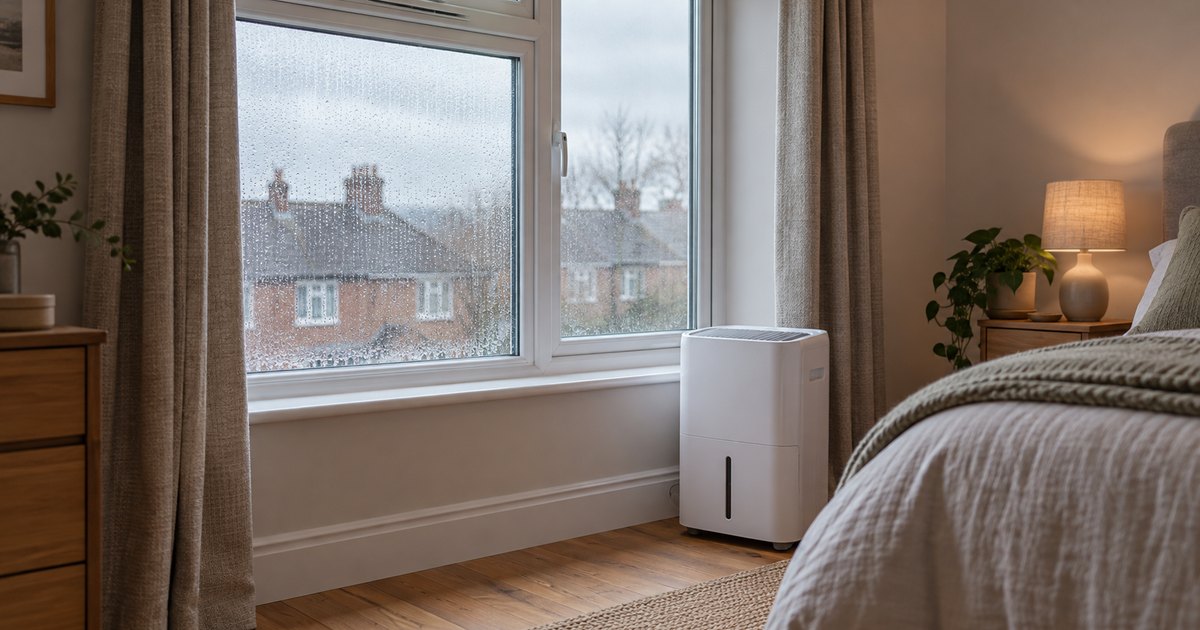
Should you use a dehumidifier or open windows in winter when condensation keeps returning? Opening windows helps replace stale, moist indoor air, while a dehumidifier removes water from the air already inside. The right approach depends on where the moisture comes from and how well your home is ventilated.
For most households, the starting point is working extraction, clear ventilation openings and less moisture spreading through the property. A dehumidifier can help when washing must dry indoors or humidity remains difficult to manage, but it cannot repair a leak or supply fresh air.
Dehumidifier or Open Windows in Winter — Which Should You Choose?
Start by looking at when and where the problem appears. A bathroom that stays steamy after a shower needs a ventilation check. A spare room filled with drying washing may benefit from additional moisture removal. A wall patch that darkens after rain needs investigating for possible water entry.
| Situation | First step | Where a dehumidifier helps |
|---|---|---|
| Steam lingers after showers | Check bathroom extraction and its outlet | Additional moisture control once ventilation has been reviewed |
| Bedroom windows are wet each morning | Review ventilation and monitor humidity | Extra help if humidity remains high |
| Washing dries slowly indoors | Reduce retained water and choose a suitable drying space | Focused moisture removal during drying |
| A damp patch worsens after rainfall | Investigate possible water entry | Cannot repair the source |
| Mould returns to the same corner | Assess airflow, cold surfaces and building condition | May help manage humidity while the cause is addressed |
These are starting points rather than diagnoses. Several problems can exist together, particularly in older properties.
Why Condensation Appears on Windows
Condensation forms when moist air meets a surface cold enough for water vapour to turn into droplets. Windows often show it first because their internal surfaces can be colder than the surrounding room.
Cooking, showering, drying clothes and breathing all add moisture indoors. Overnight, bedroom windows cool while occupants continue releasing moisture. That is why glass may be wet first thing in the morning and clear later in the day.
Repeated condensation does not automatically mean the windows need replacing. Before spending money on new glazing, review how moisture leaves the room.
PAD’s guide to reducing window condensation overnight covers the checks worth making when this becomes a daily problem.
When Opening Windows Helps
Opening windows allows an exchange of air, helping remove moisture and indoor pollutants. It is particularly useful alongside extraction after activities that produce steam.
The Energy Saving Trust’s ventilation guidance recommends keeping trickle vents open throughout the year and opening windows at least two or three times daily for at least five minutes.
Adapt this to safe access, security and the ventilation system installed in your home. If you have a designed mechanical ventilation system, follow its operating instructions.
Brief airing periods can be easier to manage than leaving a window slightly open for hours. Some heated air escapes, but warmth is also stored in the building’s structure, allowing incoming air to warm after the windows close.
In kitchens and bathrooms, deal with moisture close to its source. Check whether the cooker hood extracts outdoors: a recirculating hood does not provide the same route for water vapour to leave.
When a Dehumidifier Is Worth Considering
A dehumidifier can provide useful support where moisture remains difficult to control. A flat without outdoor drying space is one example, especially when washing frequently dries inside.
Before buying one, use a humidity meter to understand conditions in the affected room. Take readings at similar times and note what happens after showers, cooking or laundry.
The Centre for Sustainable Energy’s condensation guidance recommends indoor relative humidity between 40% and 60%. It also explains that dehumidifiers work more efficiently with doors and windows closed in the room being treated.
Keep required background ventilation operating, however. Closing a window for a drying session does not mean blocking trickle vents, air bricks or ventilation needed by appliances.
Humidity readings are useful clues, but they do not explain every damp problem. Cold corners can still develop condensation even when a meter elsewhere in the room gives a reassuring reading.
Should Windows Be Open While a Dehumidifier Runs?
For a focused drying session, keeping windows closed generally helps the appliance work efficiently. Continually exchanging the room’s air can make it harder to maintain controlled conditions.
You still need fresh air. Where practical, air the room separately, then close the windows while the dehumidifier runs. Follow the appliance manual and the instructions for your home’s ventilation system.
Placement matters too. Use a stable surface and leave the clearances specified by the manufacturer. Avoid pushing the unit against furniture or allowing curtains to obstruct its airflow.
Managing Washing Indoors
When outdoor drying is available, use it when conditions allow. Otherwise, choose a suitable indoor drying space and prevent moisture spreading unnecessarily through the home.
The Centre for Sustainable Energy suggests an additional washing-machine spin to reduce retained water, where suitable for the fabric. Make sure clothes are completely dry before putting them into wardrobes or drawers.
Space garments apart on the airer. If using a dehumidifier, follow its laundry-mode and placement instructions rather than putting the machine directly underneath wet clothing.
A hallway appliance may have little effect on washing behind a closed door in another room. Think about the actual airflow between the laundry and the unit.
How Much Does a Dehumidifier Cost to Run?
Running costs depend on the appliance’s electricity use, its settings, operating time and your tariff.
Calculate an estimate using:
Power in kilowatts × operating hours × electricity unit rate.
For example, suppose a machine draws 250 watts continuously for four hours, with electricity priced at 25p per kilowatt-hour:
0.25 × 4 × 25p = 25p.
This is an illustrative example, not a current tariff quotation or a typical cost for every model. Actual consumption changes if the appliance cycles off or draws different amounts of power during operation.
A suitable plug-in energy monitor can help measure its consumption.
Opening windows has no direct appliance electricity cost, but it can increase heating demand. Comparing the two financially requires information about the weather, building, heating system and ventilation rate.
When Damp Needs Further Investigation
A dehumidifier should not become a permanent way of hiding unexplained damp.
Look for patches that change after rainfall, damaged plaster, persistent musty smells or moisture returning to the same location. The Energy Saving Trust’s damp guidance identifies roofing defects, gutter problems and plumbing leaks among possible sources.
Photograph the affected area and record when it changes. If you rent, report recurring damp or mould to your landlord or managing agent. Owners should arrange an appropriate inspection when the cause is unclear.
For moisture above a ceiling, PAD’s guide to telling loft condensation from a roof leak explains why a visible stain cannot establish the cause by itself.
A Practical Routine for Your Home
Start with the room causing the most trouble. Check extraction, keep existing vents clear and note humidity readings alongside daily activities.
If you already own a dehumidifier, record whether conditions improve when it is used correctly. This can help you describe the problem more clearly, but do not delay reporting mould or repairing a suspected leak while collecting readings.
For wider seasonal checks, PAD’s UK winter home maintenance checklist covers other parts of the property worth reviewing.
Frequently Asked Questions
Is it better to use a dehumidifier or open windows in winter?
Maintain appropriate ventilation first. A dehumidifier provides additional moisture control when needed, particularly for indoor laundry or persistent high humidity. The two approaches serve different purposes and can form part of the same routine.
Can a dehumidifier stop every damp problem?
No. It removes moisture from the air but cannot repair leaking pipes, damaged roofing or defective gutters. Persistent damp needs its source established.
Should a dehumidifier run all day?
There is no universal schedule. Follow the appliance instructions and use its humidity controls where available. Monitor conditions rather than assuming more operating hours always produce a better result.
Will opening windows make the room colder?
Some warm air will escape. Brief airing periods can help refresh indoor air while limiting prolonged cooling. How quickly the room warms again depends on the building, outdoor conditions and heatin

