


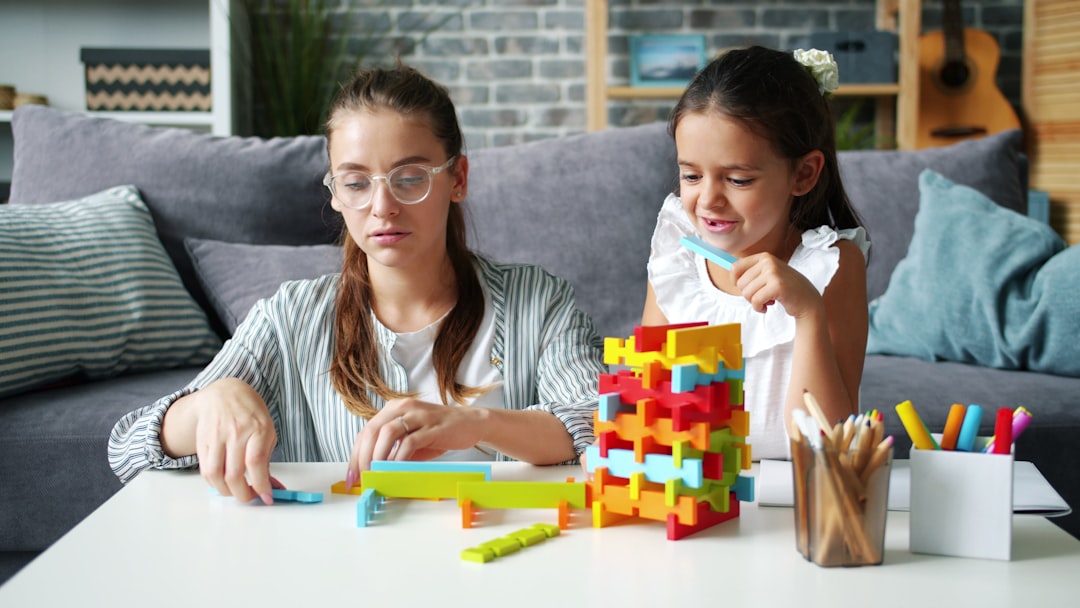
There is a type of child who will spend forty-five minutes rearranging the figures on a shelf until the grouping feels right. Not because anyone asked them to, but because something about the previous arrangement was bothering them. Another child fills pages with drawings of imaginary vehicles shown from every angle. Another builds elaborate structures from whatever is available, takes them apart, and builds differently.
Adults observing this tend to call it play and leave it at that. Which is accurate. But these habits also describe something that professional designers do — paying close attention to how things look, how they fit together, and why one arrangement feels more right than another.
The Thinking Inside Making
Something happens when children work with physical materials. Blocks, clay, fabric scraps, cardboard, craft supplies — these materials have properties that resist and respond. A tower falls and has to be reconsidered. A colour does not work and has to be replaced. The structure that seemed right in the imagination turns out not to hold together in reality.
Education researchers who study creative learning have noted that this kind of iterative making — try, observe, adjust, try again — is one of the most reliable ways children develop flexible problem-solving abilities. The child is not following instructions. They are generating a problem, attempting a solution, noticing what happened, and deciding what to do next.
This is a skill. And like most skills, it gets stronger with practice.
Surface and Material
One of the things that distinguishes creative children is how much they notice about objects. Why something looks shiny or matte. Why two blue things do not look the same blue. Why a wooden toy feels different from a plastic one even when their shapes are identical.
In professional product design, the same attention to shape, colour, and surface detail is developed much further through workflows such as 3d modeling and texturing services, where materials need to look believable before a product is presented to customers. Recreating how fabric weaves, how wood grain catches light, how metal reflects its surroundings — this is skilled observational work. Designers who are good at it tend to be people who were noticing these things long before they had the technical vocabulary for them.
A child obsessing over why one drawing looks more real than another is not wasting time. They are developing exactly that kind of attentiveness.
Hands First, Then Digital
The relationship between physical making and digital tools is not straightforward. A child who spends years drawing by hand, building with materials, mixing colours, and handling objects of different kinds develops an eye and a spatial sense that carries forward into digital work. The screen alone does not build these things.
What drawing tablets and simple design applications offer is a different kind of workspace — one with different constraints and different possibilities. For a child who already draws, experimenting with a drawing app is a natural extension. For one who likes building, a basic 3D tool can give their imagined structures a form they can rotate and inspect.
Schools increasingly include some creative technology in their programmes. For children who are already interested in making and designing, these introductions tend to feel familiar rather than alien. The underlying thinking is the same.
When Students Start Asking Technical Questions
At some point, some children want to know how things are actually made. Not in the abstract — specifically. How do animators make a character look like it has real fabric? What does a game artist do all day? How are the textures on a rendered product created?
For older students who become curious about the technical side of digital art, exploring the best 3d texturing software can help them understand how artists create realistic materials for objects, games, animations, and product visuals. Knowing that this is a specific learnable craft — with tools, techniques, and professionals who do it for work — gives the curiosity somewhere to land.
The goal is not to send every interested teenager into a software tutorial. Some will read about it and move on. Others will stay interested, and the reference will matter more for them later than it seems to at the time.
The Range of Careers
Creative and technical skills from this kind of background can connect to more different careers than most people realise.
Toy design and character design for games are the obvious ones for children who draw and imagine. Less obvious: product visualisation for furniture, consumer electronics, and packaging. Interior rendering and spatial design. Advertising and motion graphics. Industrial design. Architecture. Each of these fields involves people who are comfortable with visual thinking, with understanding how objects work in three dimensions, and with translating ideas between concept and reality.
The overlap between creative and technical is getting larger, not smaller. The skills that feed into these fields often begin in childhood in ways that do not look like career preparation.
What Helps
Keeping varied materials available matters more than structured creative activities. Blank paper and a range of drawing materials. Building kits of different kinds. Craft supplies that allow experimentation rather than following a template. The freedom to make something that does not turn out as intended, without that being treated as failure.
Asking children to explain what they are making — without evaluating the explanation — helps them practise articulating creative thinking. “Why did you put that there?” is a more useful question than “what is it supposed to be?”
Visiting places where creative work is visible — maker fairs, design exhibitions, workshops where things are made — gives children a sense that these activities exist in the world as real work done by real people. This matters more than it might seem.
Practice Over Polish
An unfinished drawing is not a failure. Ten experiments that each get abandoned before completion represent ten opportunities for the kind of thinking that matters. A child encouraged only to finish things that will turn out well has had a narrower experience than one allowed to follow their curiosity into dead ends.
The habits worth building — close observation, willingness to try and revise, tolerance for things not working on the first attempt — are the same ones that support creative work at a professional level. The child does not need to produce anything impressive. They need to keep looking carefully and keep making things.
Where that eventually leads is genuinely open. Some children who draw obsessively and arrange things carefully grow up to work in design. Others find their interests carry them somewhere entirely different. Either outcome is fine. The eye and the hand they developed along the way are not wasted in either case.