


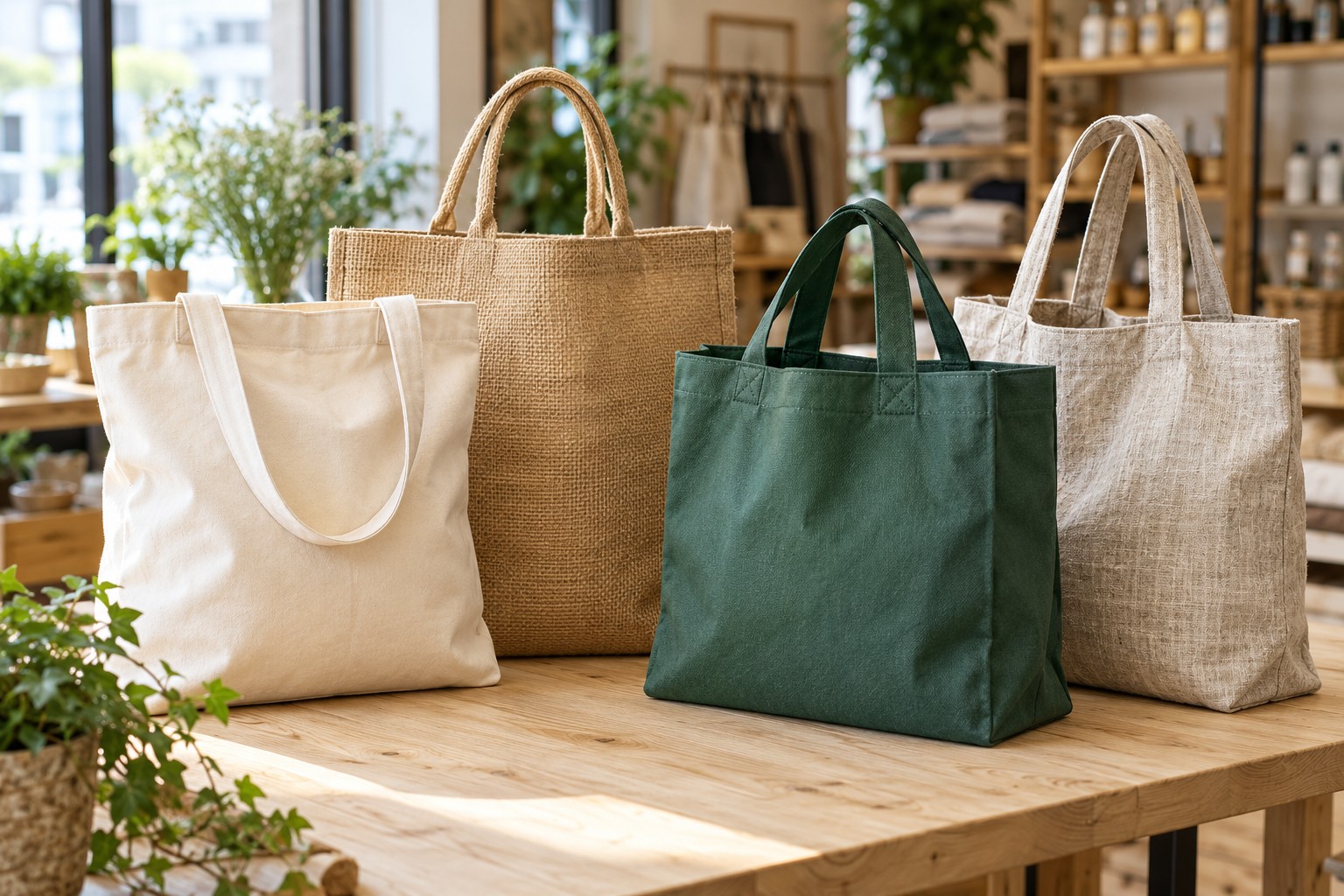
Eco-friendly bag materials offer UK businesses a practical way to create reusable promotional bags for retail shops, supermarkets, trade shows and corporate events. Choosing the right material and bag design can help increase brand visibility and communicate a wider commitment to sustainability.
Factors such as durability, appearance, production costs, reusability, and environmental impact can influence the effectiveness of a promotional campaign.
Top 4 Best Material Options for Creating Eco-Friendly Bags for Your UK Business Promotion
Here are a few examples of the best eco-friendly bag materials UK businesses can consider for their next marketing initiative.
1. Organic Cotton
Organic cotton materials are produced without synthetic pesticides and fertilisers prohibited under organic farming standards, so they appeal to customers who value environmentally conscious products. Although organic cotton can require significant water and land resources, its environmental benefits depend on responsible production and repeated use. Businesses should encourage customers to reuse these bags regularly to maximise their value.
2. Jute
Jute’s rustic finish makes it an excellent option for businesses seeking a distinctive alternative to conventional plastic carriers. Eco jute bags are especially suitable for grocery stores, farm shops, food brands, garden centres, and gift retailers. They can accommodate larger printed logos and often provide enough space for promotional messages to remain visible during everyday use. While jute is biodegradable under appropriate conditions, some bags contain synthetic laminations, linings, or handles. Businesses should check the complete product composition rather than assuming every jute bag is fully biodegradable.
3. Non-Woven Polypropylene
Non-woven polypropylene is a lightweight synthetic material made from bonded plastic fibres. It’s often considered for reusable promotional bags when durability and affordability are priorities. These bags are widely suited to exhibitions, conferences, retail promotions, and large-scale marketing campaigns where businesses need to distribute substantial quantities of branded merchandise.
UK businesses can also discuss material options ranging from organic cotton to jute and nylon, custom printing, product durability, and delivery requirements with RocketBags. Requesting samples can also help businesses evaluate the quality and appearance of their promotional merchandise before launching a campaign.
4. Hemp
Hemp is a plant-based fibre that offers strength, durability, and a distinctive natural appearance. Hemp cultivation can require fewer pesticides than some conventional fibre crops, although its overall environmental footprint depends on farming practices, processing, and manufacturing. Hemp bags are a strong option for ethical fashion labels, premium retailers, wellness businesses, and brands positioning themselves around responsible consumption. Their robust construction can make them suitable for repeated shopping trips and everyday use. However, hemp bags may cost more than basic alternatives, so businesses should assess their marketing budget, target audience, and desired product quality before ordering.
For further reading on environmental initiatives across food, retail and lifestyle, explore FEAST Magazine’s sustainability coverage.
Eco-friendly promotional bags can help UK businesses combine practical merchandise with memorable brand marketing. Organic cotton, recycled cotton, jute, recycled PET, non-woven polypropylene, and hemp each offer different advantages depending on the campaign’s objectives. The best choice should reflect the full product lifecycle, verified material claims, durability, and the likelihood that customers will reuse the bag. Choosing appropriate materials and working with an experienced promotional bag supplier, such as Rocket Bags, is crucial for creating useful branded products that strengthen customer recognition and support more responsible marketing practices.

