


When planning building and landscaping projects, the final surface finishes usually take centre stage. However, little thought is often given to the underlying structural materials and choosing the correct ones to ensure a long-lasting, professional job. Construction and landscaping sands are a prime example of this. With so many varieties available, knowing which type of sand to use for garden and landscaping projects can mean the difference between a long-lasting installation and early surface failure.
Key Summary
- Coarse & Angular Strength – Unlike smooth building sand, sharp sand features larger, angular particles that interlock to form a stable, high-strength foundation.
- Superior Natural Drainage – The coarse texture creates minor air voids that allow water to filter through easily, making it ideal for preventing standing water under paving and improving heavy soils.
- Versatile Construction Uses – Essential for mixing concrete, floor screeding, lay-bedding for block paving, and creating strong mortar mixes for natural stone patios. It is also a key ingredient in traditional lime mortars, offering both strength and flexibility.
- Horticultural Benefits – Excellent for breaking up heavy clay garden soil, top-dressing lawns, and improving root aeration for potted plants.
Understanding the Fundamentals
If the wrong basic materials are used for construction or landscaping projects, serious structural problems will inevitably occur. Sometimes these issues become evident immediately, halting the progress of a project right away. In many ways, these are the lucky scenarios.
Even worse is the use of incorrect underlying materials that goes undetected during installation, only to manifest months after completion when faults start showing on the surface. Sand choice falls squarely into this category. It is therefore essential that the right decisions are made at a project’s inception. Not all sands are created equal; while soft sands have their place in brickwork, the heavy-duty demands of structural building and landscaping work rely firmly on sharp sand.
What Makes Sharp Sand Different?
The key differences between sharp sand and soft building sand lie in their grain shape, size, and composition.
Grain Shape & Texture: Sharp sand contains washed, angular quartz and silica particles (typically 0–4mm in size). By contrast, soft building sand consists of fine, rounded grains with a much higher clay content.
Workability vs Strength: Building sand produces a smooth, pliable mortar that is ideal for bricklaying and pointing. However, when used on its own or under heavy loads, soft sand lacks strength and offers poor drainage. Sharp sand creates a rigid, load-bearing bond when mixed with cement, making it essential for heavy-duty base layers, screeds, and bedding courses that must resist movement.
Practical Building Uses
Sharp sand has varied uses within construction, all driven by its high compressive strength, compactability, and free-draining properties:
- Block Paving & Driveways: Forms a dry-compacted laying course that interlocks securely to prevent driveways and paths from sinking, rutting, or shifting under weight.
- Patio Base Laying: Functions as a robust wet mortar bed (typically mixed at a 5:1 ratio with Portland cement) beneath natural sandstone, limestone, or porcelain paving slabs.
- Floor Screeding & Concrete: Mixed with aggregates and cement to create smooth, durable internal floor screeds or mixed into sturdy concrete footings and bases.
Horticultural & Garden Applications
In addition to its building credentials, sharp sand holds an essential place in augmenting the physical properties of garden soil and planting media:
- Breaking Up Heavy Clay – Mixing sharp sand into sticky, dense clay soil opens up its structure, boosting aeration and preventing root-rot caused by waterlogging.
- Lawn Top-Dressing & Seeding – Spread across turf as part of a top-dressing mix—often combined with sandy loam as recommended by the Royal Horticultural Society—to level out small hollows, relieve surface compaction, and boost natural drainage.
- Potting Mixes – Blended with multi-purpose compost to create free-draining potting media tailored for succulents, alpine plants, and delicate cuttings.
Calculating Your Sand
Accurately calculating your aggregate requirements prevents unnecessary site delays, excess waste, or overspending.
Measuring and Calculating Volume
For standard block paving courses or patio mortar beds, sharp sand is typically laid to a thickness of 35mm to 50mm (0.035m to 0.05m).
To calculate the volume required:
- Multiply the length of your area by the width in metres to find the area in square metres (m²).
- Multiply the surface area by your target depth in metres.
Example: For a 20m² patio bed at a 50mm (0.05m) depth: 20m² × 0.05m = 1.0 cubic metre (m³).
Coverage Benchmarks
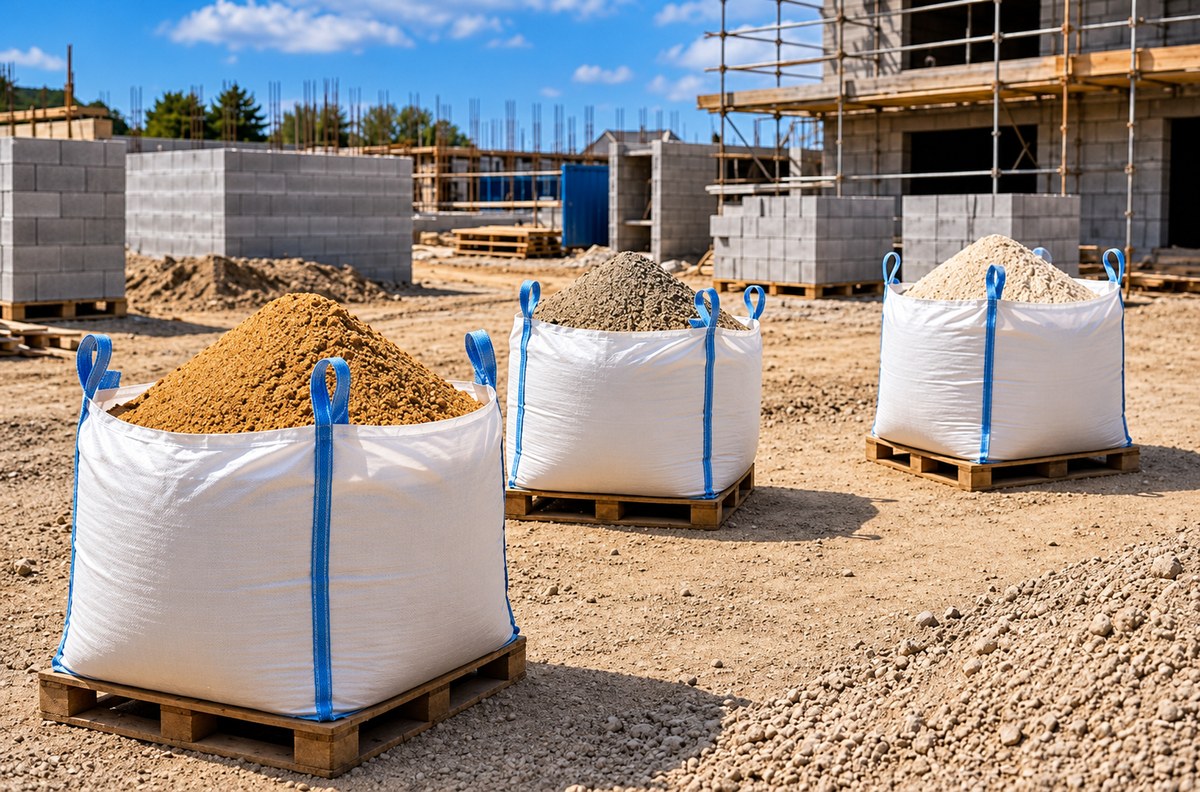
As a general rule of thumb, one standard 850kg bulk bag of sharp sand yields approximately 0.6m³ of material and covers roughly 10m² at a 50mm depth. When placing your order, it is always recommended to add roughly 10% extra to account for site compaction and sub-base variations.
For trade-grade building aggregates, sourcing quality sharp sand supplied by Mainland Aggregates provides flexible supply options. Whether you need manageable 850kg bulk bags delivered to a residential site or loose-tipped tonne deliveries for large-scale landscaping projects, selecting a trusted supplier ensures your foundation is built to last.
For homeowners planning a wider garden transformation, material selection should also support the way the space will be used. Our guide to designing outdoor areas you’ll actually use explores practical considerations for creating a comfortable, functional outdoor space.
Frequently Asked Questions (FAQs)
Why should I use sharp sand instead of building sand for laying paving slabs?
Sharp sand has larger, angular grains (0–4mm) that lock together when compacted, creating a firm, load-bearing bedding layer that resists movement under weight. Fine building sand, on the other hand, has smooth, rounded grains and a higher clay content; if used as a bedding course under paving, it can wash away or compress unevenly over time, causing slabs to become unstable, tilt, or sink.
Is sharp sand the same material as grit sand?
Yes, in the UK construction and landscaping industry, the terms ‘sharp sand’, ‘grit sand’, ‘coarse sand’, and ‘washed concreting sand’ are often used interchangeably. They all refer to coarse aggregate sand with a grain size typically ranging from 0mm up to 4mm.
Can sharp sand help improve lawn and garden soil drainage?
Yes. Sharp sand is fantastic for improving heavy clay soils because its coarse, irregular grains break up dense clay clumps and create microscopic channels for excess water to drain away. It is also widely used as part of a top-dressing mixture for lawns to promote deep root growth, improve aeration, and reduce surface waterlogging.

