


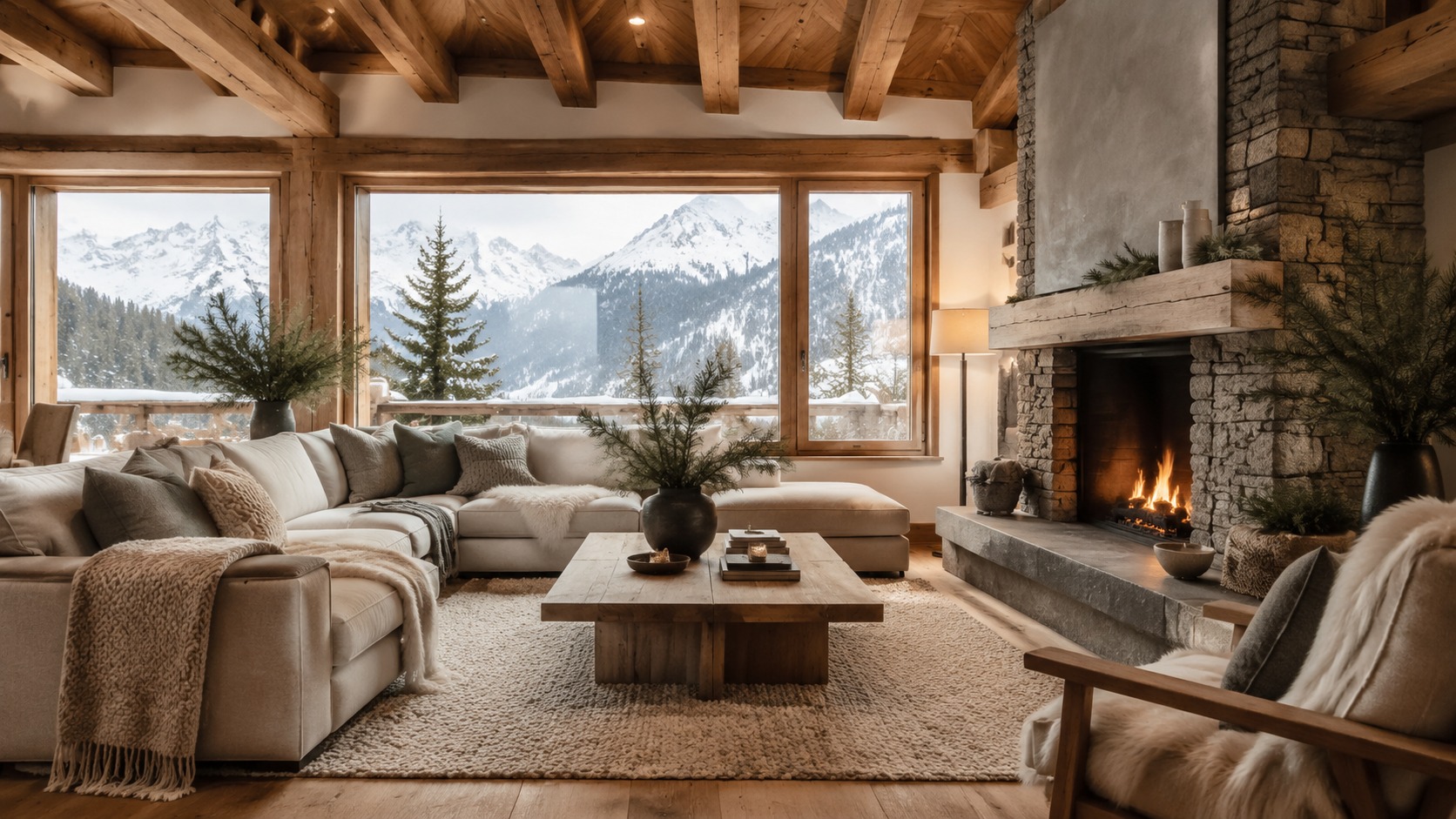
There’s more to a ski trip than the thrill of the slopes. Ask anyone who’s been and they’ll probably talk just as much about the mountain chalet waiting for them afterwards, the warmth, the natural materials, the sense of having properly left everyday life behind for a while.
That feeling has quietly worked its way into architecture and interior design far beyond the mountains. From timber-framed lodges tucked into snowy hillsides to city apartments borrowing the same ideas, alpine style has left its mark. It’s a look built on practicality, comfort and a closeness to nature, and it’s one that keeps finding new fans.
Plenty of homeowners these days are after spaces that feel calmer and more personal, and that’s part of why the “winter escape” aesthetic has stuck around, it leans on textures, colours and materials that naturally slow a room down.
This isn’t just about interiors, either. People are increasingly looking for fresh ways to enjoy the colder months, and for couples wanting something a bit different, there are some great date ideas Manchester has to offer that mix adventure with proper quality time.
Why Alpine Interiors Have Staying Power
Alpine design doesn’t really chase trends, which is probably why it hasn’t gone out of fashion. It’s built around comfort, natural materials, honest details, rooms designed to be lived in rather than admired.
Traditional chalets were shaped by their surroundings. Wood was the obvious choice, since it insulates well and lasts, while stone gives structures the strength to cope with harsh mountain weather.
Those same materials still turn up in modern homes for exactly the same reasons, they bring warmth and a bit of character that’s hard to fake. Wooden floors, exposed beams, a stone feature and some textured fabric can transform a plain room almost instantly.
None of this means copying a chalet wholesale, though. Designers tend to borrow the spirit of it rather than the letter, even a minimalist flat can nod to the mountains through the right furniture, lighting and accessories, ending up sophisticated rather than themed.
Why Natural Materials Matter So Much
Natural materials are really the backbone of this style. They tie a room back to the outdoors and give it a kind of quiet balance.
Wood does most of the heavy lifting, on floors, in furniture, along beams and skirting, and it sits comfortably alongside almost any other style going.
Stone earns its place too. A fireplace or feature wall in natural stone adds a sense of solidity that’s hard to get any other way.
Then there’s the softer side: wool throws, knitted cushions, sheepskin-style rugs, linen. These are what actually make a room feel lived-in rather than just decorated, and they matter more than ever once the weather turns.
Getting That Cosy Winter Feeling At Home
Half the joy of a ski trip is coming in from the cold to somewhere genuinely warm, soft lighting, comfortable seating, nowhere you’d rather be.
You don’t need snow outside to get close to that. Lighting alone makes a huge difference; swap harsh overhead bulbs for lamps or candles and a room instantly feels calmer.
Layering helps too. Mixing textures, a few different fabrics, a couple of throws, a decent rug, gives a space depth without much effort.
Colour plays its part as well. Warm whites, soft greys, earthy browns, muted greens, these all echo the natural landscape and give a room a settled, calm backdrop rather than anything too stark.
Letting The Outdoors In
Nature sits at the heart of alpine design. Mountain homes tend to make the most of their setting, big windows, natural finishes, layouts that point you towards the view rather than away from it.
That idea has caught on well beyond the mountains, as more people look for homes that actually support how they want to feel day to day.
Plants, natural textures, a few organic materials, even small things like a wooden bowl or some seasonal greenery, help blur the line between inside and out, and the result feels a lot less artificial for it.
How Ski Culture Shapes The Way We Live
Skiing’s influence hasn’t stopped at interiors. It’s shaped fashion, travel, whole lifestyles, really, always that same mix of adventure, comfort, and understated style.
Plenty of clothing built for the slopes has quietly become everyday wear. Puffer jackets, chunky knitwear, boots, technical outerwear- practical, but stylish enough that nobody thinks twice about it.
Interiors follow the same logic. The best spaces work as well as they look, and mountain retreats have always been designed around enjoying time with people you like, which is exactly the kind of thing that translates well into an ordinary home.
Making Your Own Winter-Inspired Space
You don’t need a full renovation to bring some of this in. Small changes go a long way, a few more natural textures, furniture made from something sustainable, or just a proper cosy corner to sit in.
What matters most is the feeling you’re after. Alpine style was never really about how a room looks in a photo; it’s about how it feels to actually be in it.
That same appreciation for winter can spill out beyond the house too, trying something new, getting out for a seasonal walk, making the most of the colder months rather than waiting them out.
Final Thoughts
Ski culture and interior design end up connected because both are really about the same thing: comfort, nature, and moments worth remembering.
Natural materials, cosy textures, a bit of winter-inspired thinking, the ideas behind chalet design keep finding their way into ordinary homes, and it’s easy to see why they’re not going anywhere soon.

