


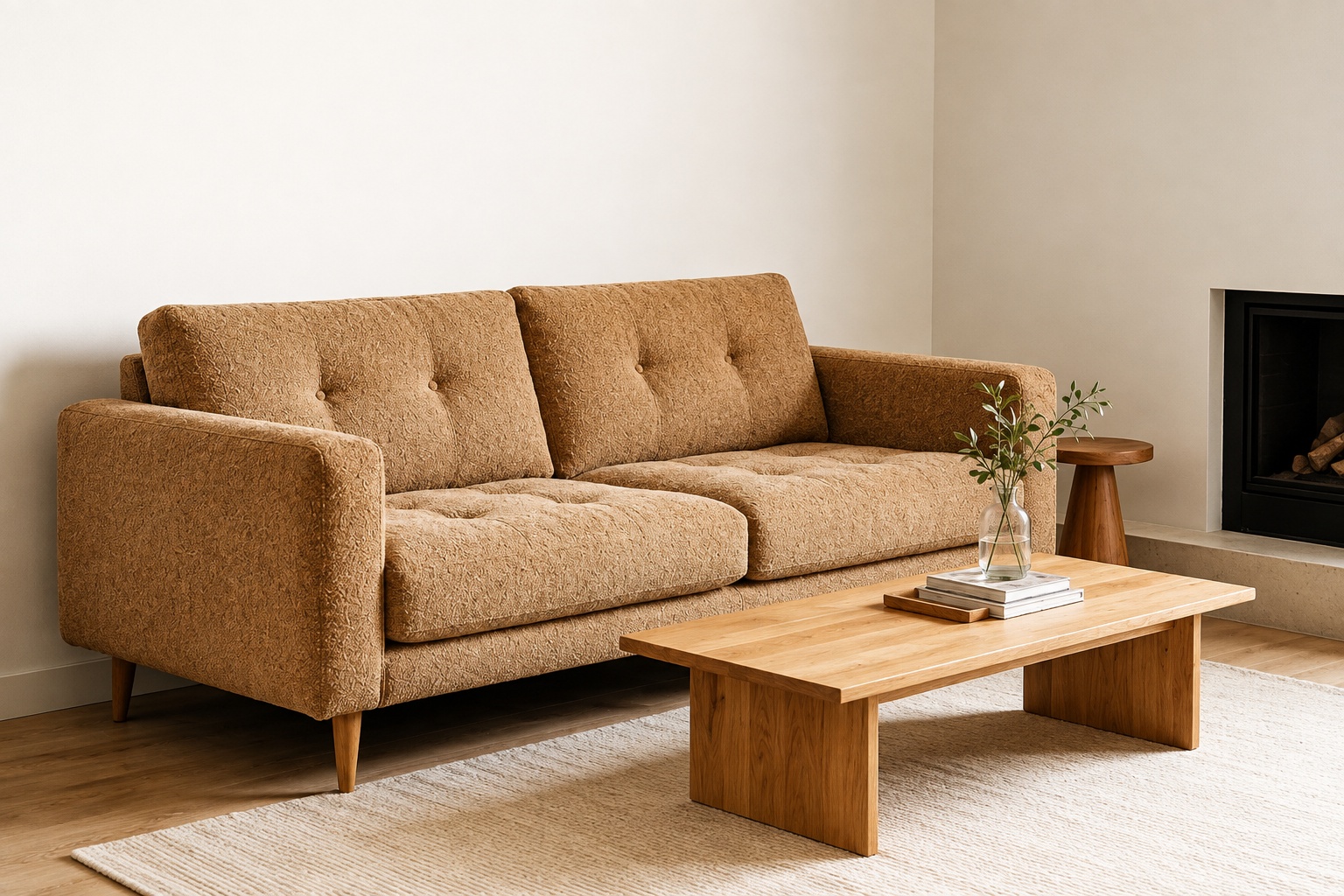
You have probably sunk into a chenille sofa at a friend’s house and noticed how soft it feels, then assumed it is too delicate for daily life. That assumption is dated. Modern chenille is tougher than its fluffy look suggests, and chenille fabric sofas deserve a serious look for busy homes.
I owned a cotton chenille chair that flattened in a year, then switched to a performance chenille sofa that still looks new after three. The gap between old and new chenille is the story of this article.
We will explain what chenille actually is, compare it with other fabrics, share care facts, and give a buyer checklist. You will learn when chenille is the right call and when to pass.
What chenille fabric really is
Chenille is not a single fiber. It is a yarn built by wrapping short fibers around a core thread so they stand out at right angles, like a tiny caterpillar fur. The name comes from the French word for caterpillar, a nod to that fuzzy pile.
The pile is what makes chenille soft and light-catching. Run your hand across it and the surface shifts tone as the light moves. That subtle sheen is the signature you cannot get from a flat weave.
Traditional chenille used cotton or rayon and soaked up spills. Performance chenille swaps in polypropylene, a fiber that sheds water-based stains and survives bleach cleaning. Same soft hand, far tougher core, and a longer life in a real home.
The pile also traps a little air, which is why chenille feels warm in winter yet breathes in summer. That balance is rare among sofa fabrics and part of why people love it once they try it.
Chenille versus the other sofa fabrics
Shoppers ask me which fabric wins, and the honest answer depends on the home. The table below scores the common choices so you can match fabric to life.
| Fabric | Softness | Durability | Warmth | Stain fight | Best for |
|---|---|---|---|---|---|
| Chenille | Very high | Good to very good | High | Moderate | Comfort led rooms |
| Velvet | Exceptional | Medium | Medium | Moderate | Color and luxury |
| Microfiber | Very good | Excellent | Medium | High | Pets, low effort |
| Linen | Good | Very good | Low | Moderate | Warm climates |
Chenille sits in the warm, soft middle. It beats microfiber on feel and velvet on ease. If you want cozy without fuss, it is the balanced pick for a living room you actually use.
Chenille versus velvet, up close
Velvet and chenille get compared often because both feel soft. Velvet has a dense, even pile and reads formal. Chenille has a fuzzy, directional pile and reads casual and warm.
Velvet shows pressure marks; chenille hides them better. If your sofa sees daily use, chenille keeps its look with less fuss. Choose velvet when the room is for show, and chenille when the room is for living.
Price tracks the difference. Good velvet costs more and asks for gentler care. Chenille gives most of the softness for less money and less worry, which is why I point most families toward it.
Durability you can check before buying
Ask for the double rub count, the abrasion test the trade uses. For daily family use, target 25,000 double rubs or more. Heavy traffic homes should look for 30,000 to 50,000.
Check the cleaning code on the tag. W means water based cleaner, S means solvent, W S means both, X means vacuum only. Performance chenille is usually W or W S, which keeps care simple and safe.
Hold the fabric to the light. A tight weave shows little light through and lasts longer. Loose weaves drape nicely on curtains but wear out on a sofa that gets sat on thousands of times.
Ask the seller for the fiber content, not just the look. Polypropylene performance chenille will list that fiber by name. If the tag only says ‘chenille’ with no fiber, assume the softer traditional type and treat it with more care.
Care that keeps chenille looking new
Chenille is not high effort, but it has a few rules. Vacuum weekly with a soft brush on low suction, always moving with the pile direction.
Blot spills, never rub them. Rubbing pushes liquid into the pile and mats the surface. Use a clean white cloth and work from the edge inward. For performance chenille, a diluted bleach mix lifts tough stains without fading the color.
Trim snags with scissors instead of pulling them. Pulling leaves a bald spot that will not recover. New chenille sheds a little for the first weeks, which is normal and stops on its own with regular vacuuming.
Rotate the back cushions every month so the pile wears evenly. Small habits like this keep the soft sheen consistent across the whole sofa instead of thinning in one spot.
Who should choose chenille, and who should not
Chenille suits homes that prize comfort and warmth, with moderate traffic and basic care. Two adults, occasional guests, and one calm pet are the sweet spot for this fabric.
Skip chenille if you have several cats. Claws catch the pile and the fabric shows it. Homes with toddlers and big spills may prefer a tightly woven synthetic that shrugs off mess without a second thought.
For everyone between those extremes, chenille gives a softness few fabrics match. It is the underrated choice that feels like a treat every time you sit down after a long day.
Color and style notes
Chenille loves warm, rich tones. Terracotta, rust, deep teal, forest green, and warm neutral all gain depth from the pile and read as cozy.
Darker and mid tones hide soil better than cream. If you love a pale shade, book it for a low traffic sitting room rather than the family sofa where coffee happens.
A two tone chenille, where the pile reads slightly different from the base, adds depth without a second color. It is an easy way to make a plain sofa feel richer.
Common chenille myths
Myth one: chenille is only for show. False. Performance chenille is rated for tens of thousands of double rubs and built for daily sitting. Myth two: it crushes fast. Old cotton chenille did, but modern blends hold their shape.
Myth three: you cannot clean it. Most performance chenille is W or W S, so water based cleaners are safe. A quick blot beats a long panic, and the fabric recovers without a trace.
Where to place a chenille sofa
Chenille loves low traffic calm spaces but works in busy rooms too if you pick the right grade. Put a pale chenille in a sitting room and a darker performance chenille in the family area.
Keep it out of direct sun. Like most textiles, chenille can shift color under strong UV over the years. A curtain or a turned angle protects the tone and extends the life by years.
If you run hot, chenille may feel too warm in peak summer. In that case open a window or point a fan, since the fabric holds heat more than linen. For most months it is a comfort, not a problem. I keep a chenille sofa in my own living room and it is the first seat guests choose.
Give chenille a real look
Chenille is soft, warmer than most fabrics, and tougher than its look. Check the double rub count, pick a W or W S code, and choose a tone that hides daily life.
When you are ready, look for performance chenille sofas built for real homes. Pick the color your room can grow into.

