

Close Menu
PAD MagazinePAD Magazine
    Pages
    • About PAD Magazine
    • Advertise
    • Contact
    • Contribute Property and Home Improvement related content
    • Newsletter Advertising
    • Pad Team
    • Property & Development Magazine
    • Subscribe
    • UK Property and Development News
    Facebook X (Twitter) Instagram
    • Contribute
    • About PAD Magazine
    • Pad Team
    X (Twitter) RSS
    PAD MagazinePAD Magazine
    • Home
    • New Builds
      • Sales & Marketing
      • Regeneration
      • Planning & Design
      • Sustainable Construction
    • Luxury Living
      • Interior Design
      • Lifestyle
      • Property Renovation & Refurbishment
      • Garden & Lanscaping
      • Home Decor
    • News
      • Software
      • Energy & Utilities
      • Affordable Housing
      • Environment
      • Plant & Machinery
      • Products & Materials
      • Infrastructure & Energy
    • About
      • Pad Team
      • Contribute Property and Home Improvement related content
    • Contact
    Subscribe
    PAD MagazinePAD Magazine
    You are at:Home What Type of Gantry Crane Do Construction and Industrial Sites Actually Need?
    Construction

    What Type of Gantry Crane Do Construction and Industrial Sites Actually Need?

    mohammad ahmedBy mohammad ahmed29/07/2026No Comments6 Mins Read6 Views
    Facebook Twitter Pinterest Telegram LinkedIn Tumblr Email Reddit
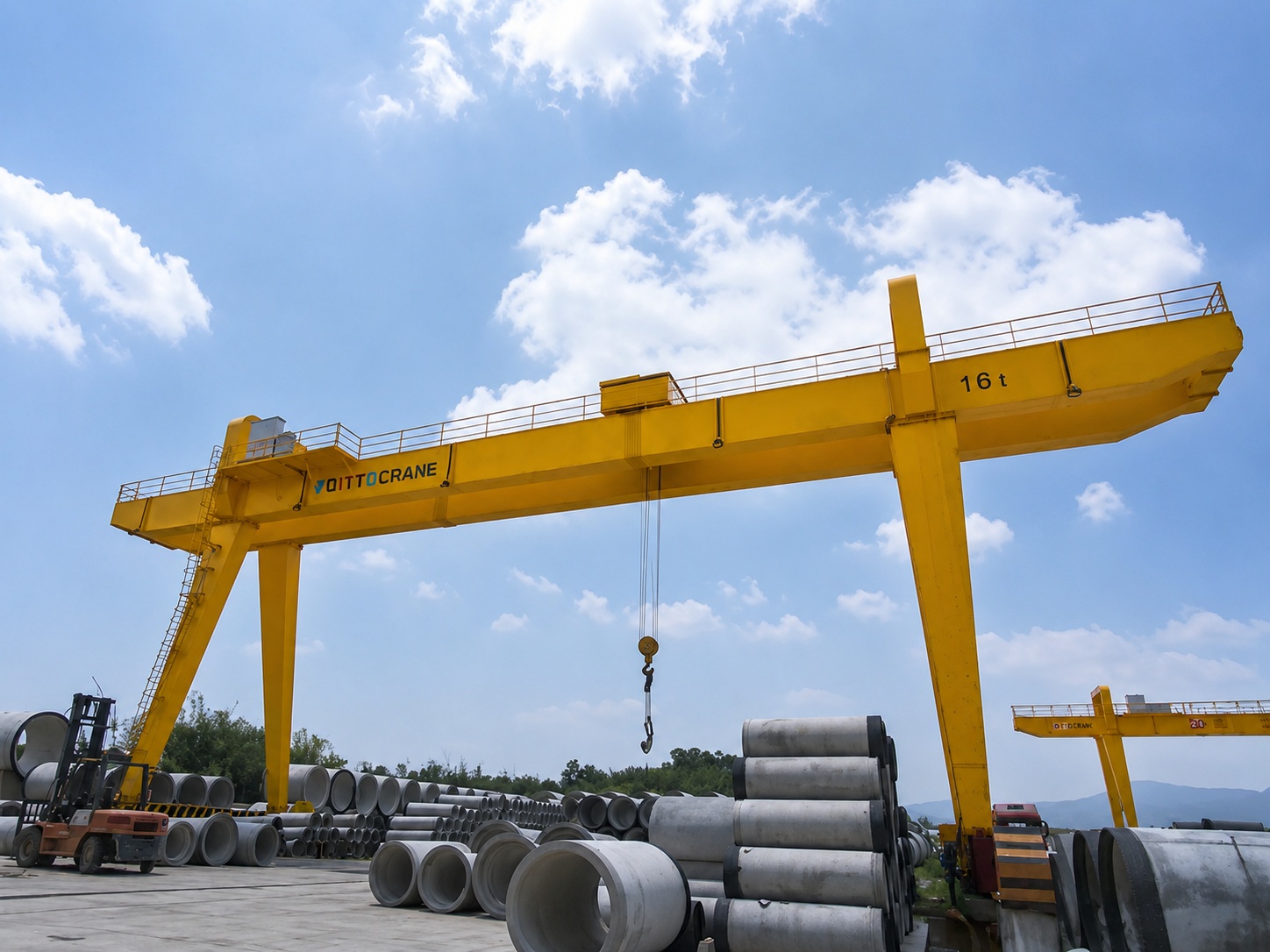
    Types of gantry cranes operating in an industrial concrete pipe storage yard
    Share
    Facebook Twitter LinkedIn Pinterest WhatsApp Email

    Gantry cranes tend to get overlooked in procurement conversations that default to overhead bridge cranes. Yet for a wide range of UK construction sites, precast concrete facilities, rail infrastructure yards, and open-air storage operations, a gantry crane is not a compromise alternative — it is often the correct first choice. The question is rarely whether to use one. It is which type, and why.

    The Core Advantage: No Fixed Runway Required

    The defining characteristic of a gantry crane is that it carries its own support structure. Rather than running along runway beams embedded in a building’s structural frame, a gantry crane travels on ground-level rails or rubber-tyred wheels, supported by legs that move with the crane. This eliminates the need for dedicated building infrastructure and makes gantry cranes the practical solution wherever a fixed overhead crane installation is impossible, impractical, or economically unjustifiable.

    For UK construction projects specifically, this matters in three common scenarios. First, on sites where the lifting requirement is temporary — a precast yard serving a specific development, for example — a gantry crane can be relocated once the project completes rather than being written off as a fixed asset. Second, in open yards where no building structure exists to provide runway support. Third, in applications where the crane needs to span a working area wider than any economical indoor runway installation could accommodate. Procurement teams evaluating gantry crane systems for industrial use will find that the range of available configurations is considerably wider than a single catalogue category suggests — span widths, leg arrangements, duty classifications, and travel systems all vary significantly depending on the application.

    Single Girder vs. Double Girder: The First Decision

    Every gantry crane specification starts with this structural choice.

    A single girder gantry crane uses one main beam supported at each end by a leg assembly. The hoist travels along the underside of this beam. Single girder designs are lighter, less expensive to manufacture and install, and appropriate for capacities typically up to 20 tonnes. For most construction site materials handling — lifting prefabricated panels, moving steel sections within a fabrication yard, or loading and unloading delivery vehicles — a single girder gantry is more than sufficient.

    See also  Building Maintenance Services: Why They Matter for Properties

    A double girder gantry crane uses two parallel main beams, with the hoist trolley running on top of or between them. This configuration allows greater lifting capacity, higher hook heights relative to the overall crane height, and better performance under heavy-duty or continuous operating cycles. Double girder gantry cranes are standard in rail sleeper yards, heavy steel fabrication facilities, and any application requiring lifts above 20 tonnes or where the hook must travel to the very top of its available height without the hoist body itself consuming headroom.

    Leg Configurations and What They Mean for Your Site

    Beyond the single or double girder choice, gantry cranes are further categorised by their leg arrangement.

    Full gantry cranes — sometimes called A-frame gantries — have two full legs on each side, with both rails at ground level. This is the most stable configuration and handles the widest span and highest capacity applications. It requires two parallel ground-level rails or a prepared running surface, which needs to be factored into civil works planning.

    Semi-gantry cranes have one full ground-level leg and one elevated leg that runs along an existing wall-mounted runway beam. This hybrid configuration is common where a building exists on one side of the working area but not the other — a practical solution for facilities expanding their outdoor storage or processing capacity alongside an existing structure.

    Portable or adjustable-height gantry cranes are lighter-duty equipment suited to maintenance environments, workshops, and occasional-use lifting rather than production or site applications. They are typically manually moved rather than motor-driven.

    See also  Amiri Construction appointed by Kingsbridge as partner for Connect 5 – a development of three sustainable business units at Bartley Way, Hook

    Rubber-Tyred vs. Rail-Mounted: Matching the Ground Conditions

    Rail-mounted gantry cranes run on fixed steel rails set into a prepared foundation. They offer precise positioning, lower rolling resistance, and a longer service life for the travel mechanism, but they require civil engineering preparation and commit the crane to a fixed travel path.

    Rubber-tyred gantry cranes — more commonly associated with port and logistics applications — offer greater flexibility of movement across a wider area but require a higher-quality running surface and involve more maintenance on the travel system. For most construction and industrial applications in the UK, rail-mounted configurations are the standard choice.

    Span and Hook Height: Getting the Numbers Right

    Two dimensions define the working envelope of any gantry crane: the span between the rails and the maximum hook height.

    Span selection is driven by what the crane needs to straddle. In a precast concrete yard, the span must accommodate the width of the casting beds plus sufficient clearance for materials handling on either side. In a steel fabrication yard, it must straddle the processing area and any vehicle access lane. Getting this dimension wrong — either too narrow to work efficiently or unnecessarily wide, which adds significant weight and cost — is one of the most common specification errors.

    Hook height determines what the crane can lift and where. For a crane loading lorries, the hook height must exceed the loaded lorry height with sufficient clearance to allow a load to be positioned and released. For a precast yard lifting large concrete elements, the hook height must account for the element’s length when lifted vertically, not just its weight.

    See also  The Hidden Engine Behind Africa's Property Boom: Why Equipment Supply Shapes Development Outcomes

    Both dimensions interact with the crane’s structural design — wider spans and greater hook heights increase the structural demands on the main beam and legs, which feeds directly into material weight, cost, and foundation requirements.

    Duty Classification: The Specification Element Most Often Underspecified

    Gantry cranes are classified by duty according to how frequently they will operate at or near their rated capacity. The relevant standards in the UK and European markets are ISO 4301 and FEM classifications, ranging from light intermittent use (M3) through to severe continuous duty (M7 and M8).

    A crane specified at too low a duty class for its actual operating pattern will experience accelerated fatigue in its structural and mechanical components, leading to earlier-than-expected maintenance intervention and shortened service life. A crane over-specified for a light-duty application costs more than necessary without delivering any practical benefit.

    The duty class should be established based on an honest assessment of the number of lift cycles per day and the proportion of those cycles conducted at maximum load — not on the maximum load alone.

    A Practical Specification Checklist

    Before approaching any gantry crane supplier for a quotation, have the following defined:

    • Maximum lifting capacity required (tonnes)
    • Required span between rails (metres)
    • Required maximum hook height (metres)
    • Estimated lift cycles per day and typical load as a proportion of maximum
    • Whether the application is indoor, outdoor, or a combination
    • Rail-mounted or rubber-tyred travel requirement
    • Control system preference — pendant, radio remote, or cabin

    These inputs allow any competent manufacturer to produce a specification-matched quotation rather than a generic catalogue proposal, and they give you a consistent basis on which to compare responses from multiple suppliers.

    Author

    • mohammad ahmed
      mohammad ahmed
    construction equipment Double Girder Crane Gantry Cranes Industrial Cranes Lifting Equipment Material Handling Rail-Mounted Gantry Crane Single Girder Crane
    Share. Facebook Twitter Pinterest LinkedIn Reddit WhatsApp Telegram Email
    Previous ArticleWhy Good Extension Drawings Decide Whether Your Build Goes Smoothly
    Next Article Why Good Extension Drawings Decide Whether Your Build Goes Smoothly
    Avatar
    mohammad ahmed

      Related Posts

      Will Britain’s New Steel Policy Make Reinforcement More Expensive?

      28/07/2026

      Britain Is Building with Fewer Bricks. But Are We Actually Building Less?

      28/07/2026

      Are Construction Sites Underestimating the Risk Beyond the Fence Line?

      28/07/2026
      Leave A Reply Cancel Reply

      Search
      Categories
      • Adult
      • Affordable Housing
      • AI
      • Animals & Pets
      • Architecture
      • Art & Entertainment
      • Automotive
      • Awards
      • Beauty
      • Book Publishing
      • Builds & Development
      • Business
      • Business, Legal & Financial
      • Casino
      • Celebrities
      • CFD Manual
      • CFD User Guide
      • Charity
      • Commercial Property
      • Construction
      • Coronavirus
      • Corporate Social Responsibility
      • Crypto
      • Dental Health
      • Education
      • Energy
      • Energy & Utilities
      • Environment
      • Events
      • Facilities Management
      • Fashion
      • Finance
      • Fishing
      • Food & Drink
      • Gambling
      • Gaming
      • Garden & Landscaping
      • Garden & Lanscaping
      • Garden & Outdoor Living
      • Health
      • Health and safety
      • Home
      • Home & Garden
      • Home & Interiors
      • Home Decor
      • Home Improvement
      • Home Maintenance
      • Homes and Interiors
      • Housing
      • Infrastructure & Energy
      • Interior Design
      • Interiors
      • International
      • Jobs & Training
      • Law
      • Leisure & Hospitality
      • Lifestyle
      • Luxury Living
      • Management & Estate Services
      • Manufacturing
      • Marketing
      • Medical
      • Net Worth
      • News
      • Op-Ed
      • Planning & Design
      • Plant & Machinery
      • Plumbing
      • Politics
      • Press Releases
      • Product Materials
      • Products & Materials
      • Property
      • Property & Construction
      • Property Finance
      • Property Investment
      • Property Maintenance
      • Property News
      • Property Renovation & Refurbishment
      • Real Estate
      • Regeneration
      • Roofing & Home Maintenance
      • Sales & Marketing
      • Social Media
      • Software
      • Sport
      • Sports
      • Student Living
      • Sustainable Construction
      • Technologies
      • technology
      • Tips
      • Tips
      • Travel
      • Travel & Tourism
      Search
      Categories
      • Adult
      • Affordable Housing
      • AI
      • Animals & Pets
      • Architecture
      • Art & Entertainment
      • Automotive
      • Awards
      • Beauty
      • Book Publishing
      • Builds & Development
      • Business
      • Business, Legal & Financial
      • Casino
      • Celebrities
      • CFD Manual
      • CFD User Guide
      • Charity
      • Commercial Property
      • Construction
      • Coronavirus
      • Corporate Social Responsibility
      • Crypto
      • Dental Health
      • Education
      • Energy
      • Energy & Utilities
      • Environment
      • Events
      • Facilities Management
      • Fashion
      • Finance
      • Fishing
      • Food & Drink
      • Gambling
      • Gaming
      • Garden & Landscaping
      • Garden & Lanscaping
      • Garden & Outdoor Living
      • Health
      • Health and safety
      • Home
      • Home & Garden
      • Home & Interiors
      • Home Decor
      • Home Improvement
      • Home Maintenance
      • Homes and Interiors
      • Housing
      • Infrastructure & Energy
      • Interior Design
      • Interiors
      • International
      • Jobs & Training
      • Law
      • Leisure & Hospitality
      • Lifestyle
      • Luxury Living
      • Management & Estate Services
      • Manufacturing
      • Marketing
      • Medical
      • Net Worth
      • News
      • Op-Ed
      • Planning & Design
      • Plant & Machinery
      • Plumbing
      • Politics
      • Press Releases
      • Product Materials
      • Products & Materials
      • Property
      • Property & Construction
      • Property Finance
      • Property Investment
      • Property Maintenance
      • Property News
      • Property Renovation & Refurbishment
      • Real Estate
      • Regeneration
      • Roofing & Home Maintenance
      • Sales & Marketing
      • Social Media
      • Software
      • Sport
      • Sports
      • Student Living
      • Sustainable Construction
      • Technologies
      • technology
      • Tips
      • Tips
      • Travel
      • Travel & Tourism

      Subscribe to Updates

      Get the latest creative news from FooBar about art, design and business.

      Why Good Extension Drawings Decide Whether Your Build Goes Smoothly

      What Type of Gantry Crane Do Construction and Industrial Sites Actually Need?

      Why Good Extension Drawings Decide Whether Your Build Goes Smoothly

      Why Good Extension Drawings Decide Whether Your Build Goes Smoothly

      Why Good Extension Drawings Decide Whether Your Build Goes Smoothly

      What Type of Gantry Crane Do Construction and Industrial Sites Actually Need?

      Why Good Extension Drawings Decide Whether Your Build Goes Smoothly

      Why Good Extension Drawings Decide Whether Your Build Goes Smoothly

      © 2026 PAD Magazine. All rights reserved. UK Property & Development Magazine.

      Type above and press Enter to search. Press Esc to cancel.

      Manage Cookie Consent
      To provide the best experiences, we use technologies like cookies to store and/or access device information. Consenting to these technologies will allow us to process data such as browsing behaviour or unique IDs on this site. Not consenting or withdrawing consent, may adversely affect certain features and functions.
      Functional Always active
      The technical storage or access is strictly necessary for the legitimate purpose of enabling the use of a specific service explicitly requested by the subscriber or user, or for the sole purpose of carrying out the transmission of a communication over an electronic communications network.
      Preferences
      The technical storage or access is necessary for the legitimate purpose of storing preferences that are not requested by the subscriber or user.
      Statistics
      The technical storage or access that is used exclusively for statistical purposes. The technical storage or access that is used exclusively for anonymous statistical purposes. Without a subpoena, voluntary compliance on the part of your Internet Service Provider, or additional records from a third party, information stored or retrieved for this purpose alone cannot usually be used to identify you.
      Marketing
      The technical storage or access is required to create user profiles to send advertising, or to track the user on a website or across several websites for similar marketing purposes.
      • Manage options
      • Manage services
      • Manage {vendor_count} vendors
      • Read more about these purposes
      View preferences
      • {title}
      • {title}
      • {title}