


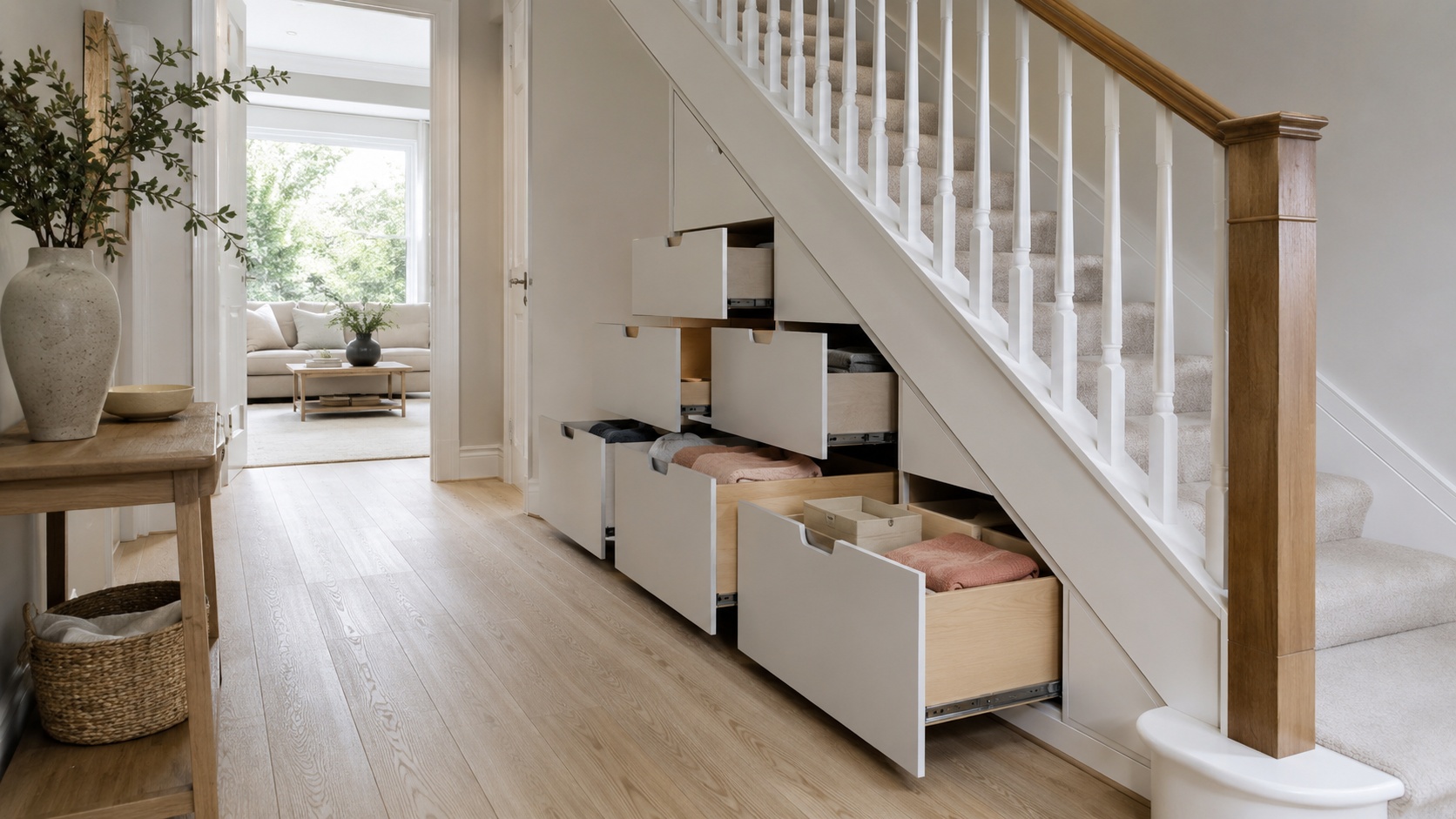
The space beneath a staircase is one of those areas many homes have, but few use well. In some houses, it becomes a dark cupboard where shoes, coats, bags, and cleaning products are pushed out of sight. In others, it is left almost empty because the angle of the stairs makes it awkward to furnish. Under-stairs drawers offer a neater and more practical way to use that hidden space.
Instead of opening one deep cupboard and searching through everything inside, drawers allow each part of the area to work harder. A fitted drawer can slide out fully, making items easier to see, reach and organise. For UK homes where hallways are often narrow and storage is limited, this can make a noticeable difference to daily life.
| Quick Answer: Under-stairs drawers are a smart way to turn unused space beneath a staircase into practical storage. They work well for shoes, coats, cleaning products, tools, children’s items and everyday household essentials, especially in smaller UK homes where built-in storage is limited. |
Why Under-Stairs Drawers Work So Well
The main benefit of under-stairs drawers is access. A standard under-stairs cupboard can look useful from the outside, but it often becomes difficult to manage once larger items are stored at the back. Drawers solve that problem by bringing the contents out to you. That makes the space easier to use, especially in busy homes where people need quick access to shoes, school bags, pet supplies, or household tools.
They also help keep the hallway calmer. The entrance area of a home is usually the first place to collect clutter. Trainers get left by the door, coats end up on banisters, and bags sit on the floor because there is nowhere obvious to put them. A row of fitted drawers gives each item a place, which can make the whole home feel more organised before any major decorating work is done.
Another advantage is that the design can follow the shape of the stairs. Rather than forcing standard furniture into an awkward gap, a fitted drawer system can be built around the slope, depth, and width available. This is why under-stairs drawers suit everything from period terraces to new-build townhouses and compact family homes.
Best Uses for Under-Stairs Drawers
Shoe Storage Without Hallway Clutter
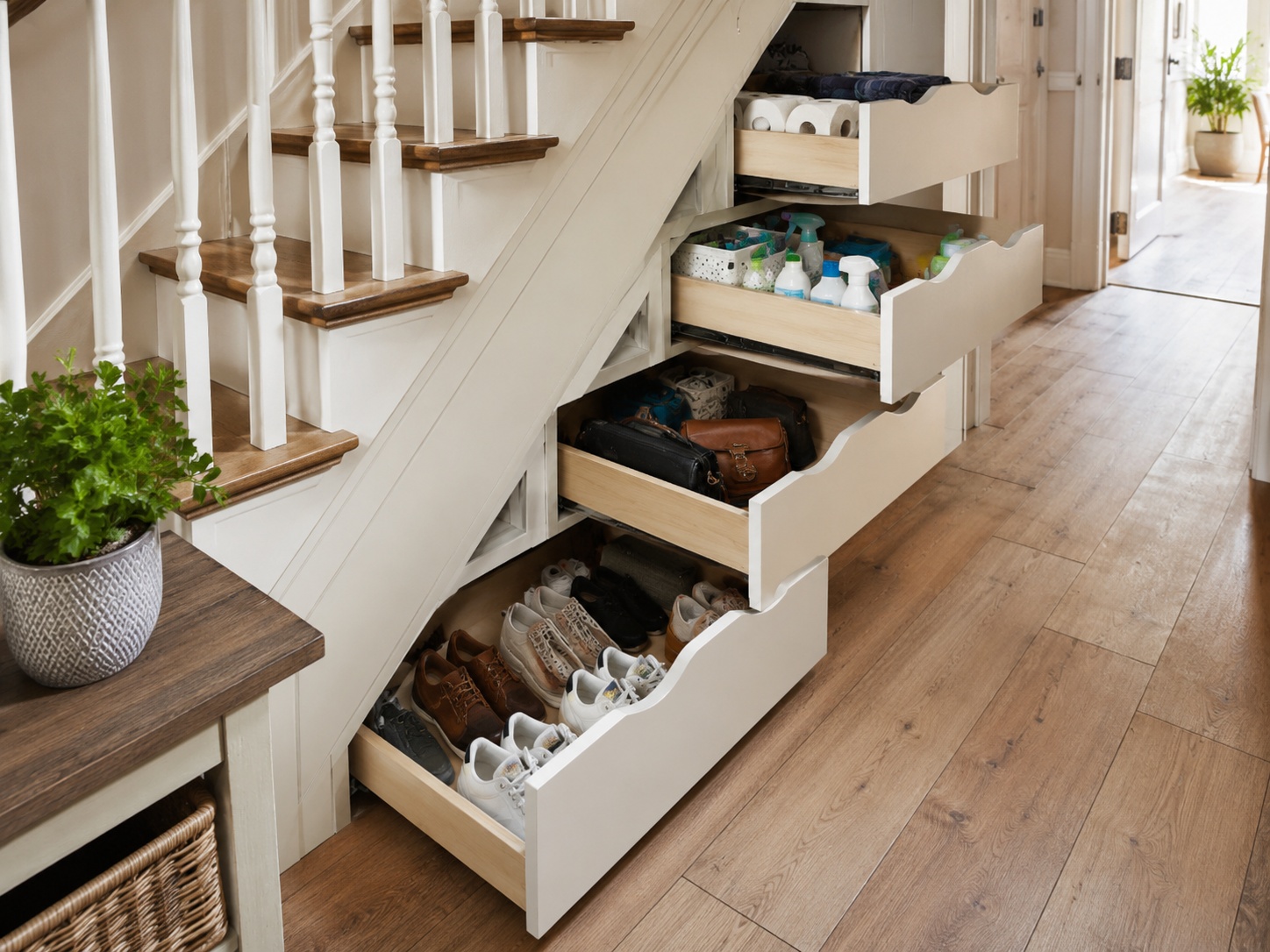
Shoes are one of the most practical uses for under-stairs drawers. A shallow drawer can hold everyday pairs, while deeper sections can be used for boots, sports shoes, or seasonal footwear. This keeps the hallway clear without needing a separate shoe rack that takes up floor space.
Coats, Bags, and Everyday Items
Larger drawers can work well for coats, scarves, school bags and shopping bags. If the space is near the front door, this can become a simple grab-and-go storage area. Families may find it useful to give each person one drawer so that everyday items do not get mixed together.
Cleaning Products and Household Supplies
Under-stairs drawers can also be used for cleaning supplies, spare clothes, batteries, light bulbs, and small household tools. The key is to keep heavier items in lower drawers and avoid overloading runners. If any products need ventilation or should be kept away from children, that should be considered before choosing this area for storage.
Children’s Items, Toys and School Kit
For family homes, the space under the stairs can quickly become a useful storage zone for toys, scooters, lunch bags and sports equipment. Drawers make it easier for children to put things away because they do not have to reach into a deep cupboard or lift heavy boxes.
Seasonal and Occasional Items
Some households use under-stairs drawers for items that are needed only occasionally, such as Christmas decorations, picnic blankets, spare umbrellas or travel bags. This works best when the drawers are labelled or clearly organised, so the space does not turn into another hidden dumping ground.
Design Ideas for Under-Stairs Drawers
The best under-stairs drawers look like they belong to the house rather than being added as an afterthought. In a modern home, flat-fronted drawers with push-to-open fittings can create a clean and simple finish. In a more traditional hallway, shaker-style fronts or painted timber can feel softer and more in keeping with the property.
Handle choice also matters. Long handles can be practical, but they may catch on coats or bags in a narrow hallway. Handleless fronts give a smoother look, while small knobs can suit older properties. The right choice depends on how much space there is around the staircase and how often the drawers will be used.
A mixed layout is often more useful than making every drawer the same size. Small drawers can hold shoes and accessories, while one or two deeper sections can be used for bulky items. Some designs also combine drawers with open shelves, a bench seat, or a small display area above. This can stop the storage from feeling too heavy in a narrow entrance space.
Colour can help the drawers blend in or stand out. Painting the fronts the same colour as the wall creates a discreet finish, while a warmer wood tone can add texture to a plain hallway. For busy family homes, a durable painted finish is usually more practical than a surface that marks easily.
What to Check Before Installing Under-Stairs Drawers
Measure the Space Properly
Before ordering or building anything, measure the height, width, depth, and angle of the under-stairs area. The deepest part is not always the most useful part. In many homes, the lower end of the staircase may be too shallow for a drawer, while the taller end can take a much deeper storage section.
Think About Weight and Drawer Runners
Drawers are only useful if they open smoothly and safely. Heavy items need strong runners, solid framing and proper fitting. Cheap runners may work at first, but they can become frustrating if the drawer starts to stick or drop under weight. For larger under-stairs drawers, it is worth choosing a system designed for regular use rather than occasional access.
Check for Pipes, Cables, and Existing Services
Some under-stairs spaces contain electrical cables, meters, pipework, or other services. These should not be blocked or boxed in without thought. If access is needed for maintenance, the drawer design should allow for it. This is one reason why a professional joiner or installer can be helpful for anything more than a basic storage project.
Keep Safety and Building Work in Mind
Simple storage changes are usually straightforward, but care is needed if the work affects the staircase structure, fire safety, electrical services, or access. For wider building work, homeowners should check relevant guidance before starting. A useful external reference is GOV.UK’s Approved Documents guidance, which explains how official guidance is used to meet building regulations in England.
Match the Finish to the Rest of the Home
A good storage solution should solve a practical problem without making the hallway feel cramped. Drawer fronts, handles, colour and trim should sit naturally with the staircase, skirting boards and flooring. When the finish is considered carefully, under-stairs drawers can look like part of the original design rather than a later storage fix.
Are Under-Stairs Drawers Worth It?
For many homes, under-stairs drawers are worth considering because they improve a space that already exists. They do not require a room extension, they do not take up extra floor area, and they can reduce clutter in one of the busiest parts of the home. That makes them especially useful in smaller properties, terraced houses, and homes without large utility rooms or built-in hallway cupboards.
They can also add appeal when a home is viewed by buyers. Storage is not always the first thing people mention, but it is something they notice when it is missing. A tidy, well-designed hallway can make a home feel more practical and better cared for. While under-stairs drawers alone may not transform a property’s value, they can improve how the space works and how the home presents itself.
The most successful designs are the ones planned around real habits. If shoes are the main problem, shallow drawers may be enough. If the home needs space for school bags, cleaning supplies or tools, a deeper and stronger system will be more useful. The point is not to fill the space with as many drawers as possible, but to create storage that is easy to use every day.
FAQs About Under-Stairs Drawers
Are under-stairs drawers a good idea?
Yes, under-stairs drawers are a good idea for homes that need extra storage without using more floor space. They make awkward staircase areas easier to access and can help keep hallways tidy.
What can you store in under-stairs drawers?
Common items include shoes, coats, bags, cleaning products, tools, toys, pet supplies, school kit and seasonal items. Heavier items should be stored in drawers with strong runners and proper support.
Can under-stairs drawers be fitted in any home?
They can be fitted in many homes, but the design depends on the staircase shape, available depth, existing services and structure. Some spaces may need a bespoke solution rather than a standard unit.
Are under-stairs drawers better than cupboards?
Drawers are often easier to use than deep cupboards because the contents slide out towards you. Cupboards can still work well for tall items, so the best layout may combine both.
Do under-stairs drawers add value to a home?
They may not add major value on their own, but they can improve storage, presentation, and day-to-day usability. For buyers, smart built-in storage can make a home feel more organised and practical.
How much do under-stairs drawers cost?
The cost depends on the size, materials, number of drawers, hardware, and whether the design is bespoke. A simple fitted solution will usually cost less than a fully custom joinery project with premium finishes.