


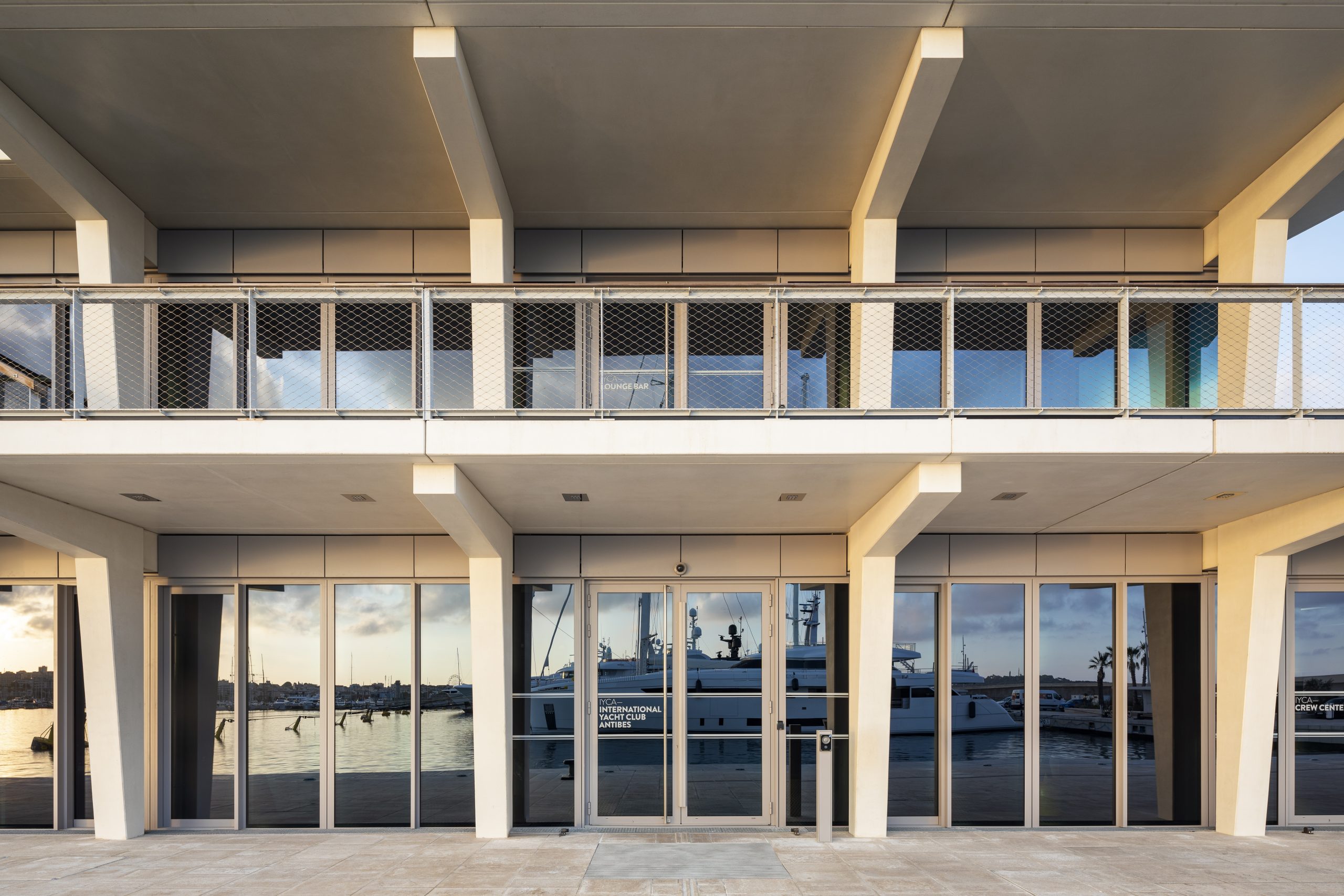
Port Vauban in Antibes, located between Cannes and Nice on the French Riviera, has strengthened its position as one of the Mediterranean’s leading yachting destinations following the extensive transformation of the Quai des Milliardaires, or “Billionaires’ Quay”.
A landmark destination for yachting and superyacht enthusiasts, Port Vauban is widely recognised as Europe’s largest yachting harbour. It offers more than 1,500 berths, including 18 dedicated superyacht berths capable of accommodating vessels measuring up to 160 metres.
Antibes remains an important stop on the Mediterranean cruising circuit, appearing alongside Monaco, Sardinia, Ibiza and Porto Montenegro in guides to the best superyacht marinas in the Mediterranean.
A 21st-Century Upgrade for Port Vauban
Beginning in May 2023, both the quay and the International Yacht Club d’Antibes (IYCA) building underwent extensive renovation. The IYCA building includes a yacht club, lounge bar, meeting facilities and a dedicated crew centre.
The work renewed the appearance and infrastructure of the quay, creating a modern port environment equipped with high-quality amenities, technical services, concierge support and spaces for sporting and social events.
An equally important part of the project was preserving the refined appearance of the harbour and ensuring that the new structures complemented the architectural character of Antibes.
The terraces of the Quai des Milliardaires face the Mediterranean on one side, while the historic old town and Fort Carré form the backdrop on the other.
Architecture Combining Heritage and Technology
The transformed complex features a distinctive architectural approach developed by Atelier d’Architecture Philippe Prost.
The design combines traditional heritage techniques with modern construction technologies and materials. Concrete, stainless steel, marble, intelligent glass and ceramics have been brought together to create a contemporary yet carefully balanced waterfront façade.
Kebony Clear wood was selected for the quay’s decking, stairs, pontoons, benches and handrails. Its knot-free appearance and naturally developing silver-grey patina allow it to blend into the prestigious coastal setting.
The material’s durability and minimal maintenance requirements are also particularly valuable in an exposed marine environment. Kebony states that the wood is covered by a 30-year warranty, helping it withstand intensive use and changing coastal weather conditions.
Sustainable Wood Designed for Marine Environments
Developed in Norway, Kebony technology transforms sustainably sourced softwoods, including pine, into modified wood with aesthetic and mechanical qualities comparable to those of tropical hardwoods.
By offering an alternative to tropical hardwood, the material can help reduce pressure on rainforest resources and support efforts to limit deforestation-related carbon emissions.
During the modification process, the wood is infused with a bio-based liquid. This produces a reaction within the wood’s cell walls, making them approximately 50% thicker and improving the material’s dimensional stability, durability and hardness.
The resulting wood has reduced sensitivity to water and is resistant to splintering. Alongside its lower environmental impact and refined finish, these qualities made Kebony suitable for the heavy use and weather exposure experienced at the Quai des Milliardaires.
Architects Draw Inspiration From Yacht Decks
Commenting on the choice of material, the lead architects from Atelier d’Architecture Philippe Prost said:
“The desire to use strips of wood for large outdoor terraces came early on, by analogy with boat decks. Kebony wood was chosen for its aesthetic qualities, its durability—particularly in a highly exposed marine environment—and for its natural character.”
Nina Landbø, International Sales Manager for Kebony, added:
“The regeneration of Quai des Milliardaires represents the versatility of Kebony, providing a simultaneously sustainable, beautiful and high-performing modified wood product that will last for many years to come.”
A New Standard for Sustainable Marina Design
The restoration demonstrates how modern marina infrastructure can combine luxury, durability and environmental consideration without losing its connection to local heritage.
By integrating contemporary facilities, resilient materials and architecture inspired by its Mediterranean surroundings, the Quai des Milliardaires has become a prominent example of sustainable waterfront regeneration.