


For many studios, designers, and small production teams, there comes a point where the question shifts from “Can we engrave this?” to “Can we do it consistently enough to grow?”
That’s usually when the conversation about upgrading equipment begins.
At first, it seems like a straightforward decision. More advanced tools should produce better results. But in practice, the choice is rarely that simple. The real question isn’t whether professional systems work—it’s whether they solve the problems that actually limit your output.
This is especially true in areas like laser engraving glass, where precision and surface control matter far more than raw power.
The Decision Most Studios Face Sooner Than Expected
In the early stages, basic setups are often enough.
They allow for experimentation, small projects, and learning the fundamentals. But as work becomes more detailed or client expectations increase, limitations start to show.
Designers begin to notice:
- subtle inconsistencies between pieces
- difficulty maintaining clean edges on delicate materials
- increased time spent correcting or reworking results
At this stage, the issue is no longer capability—it’s reliability.
Where Entry-Level Equipment Starts Holding Work Back
Most users don’t immediately recognize the shift.
They continue adjusting settings, trying to get better results from the same setup. Sometimes it works. Often, it doesn’t hold across multiple runs.
In materials like glass, the margin for error is small. Slight variations in energy can lead to uneven finishes, visible marks, or loss of detail.
This is where many studios begin to realize that the problem isn’t just technique—it’s the level of control available in the system itself.
What “Professional” Really Means in Practice
There’s a tendency to associate professional equipment with higher power or faster speed.
But for many users, the real difference shows up somewhere else.
It shows up in how predictable the process becomes.
With more advanced laser engraving equipment, operators often notice that:
- results stay consistent across different materials
- adjustments become less frequent
- output aligns more closely with the original design
This isn’t about doing more work—it’s about doing the same work with fewer variables.
The Cost Question: Expense vs. Output Stability
The biggest hesitation is usually cost.
Upgrading equipment requires investment, and for many small studios, that decision has to be justified.
What makes this decision difficult is that the benefits are not always immediate in terms of speed. Instead, they appear over time through:
- reduced rework
- fewer rejected pieces
- more predictable production timelines
For teams producing high-value items, these factors often matter more than initial output volume.
Why Glass Applications Change the Equation
When working with materials like glass, the limitations of basic systems become more obvious.
Glass doesn’t respond well to uncontrolled energy. It requires precision, stability, and a process that minimizes unwanted effects.
This is where systems designed for fine surface interaction begin to stand out.
Rather than forcing the material to react, they allow operators to work within a narrower, more controlled range—resulting in cleaner and more consistent outcomes.
Where Systems Like the Xlaserlab E3 Fit In
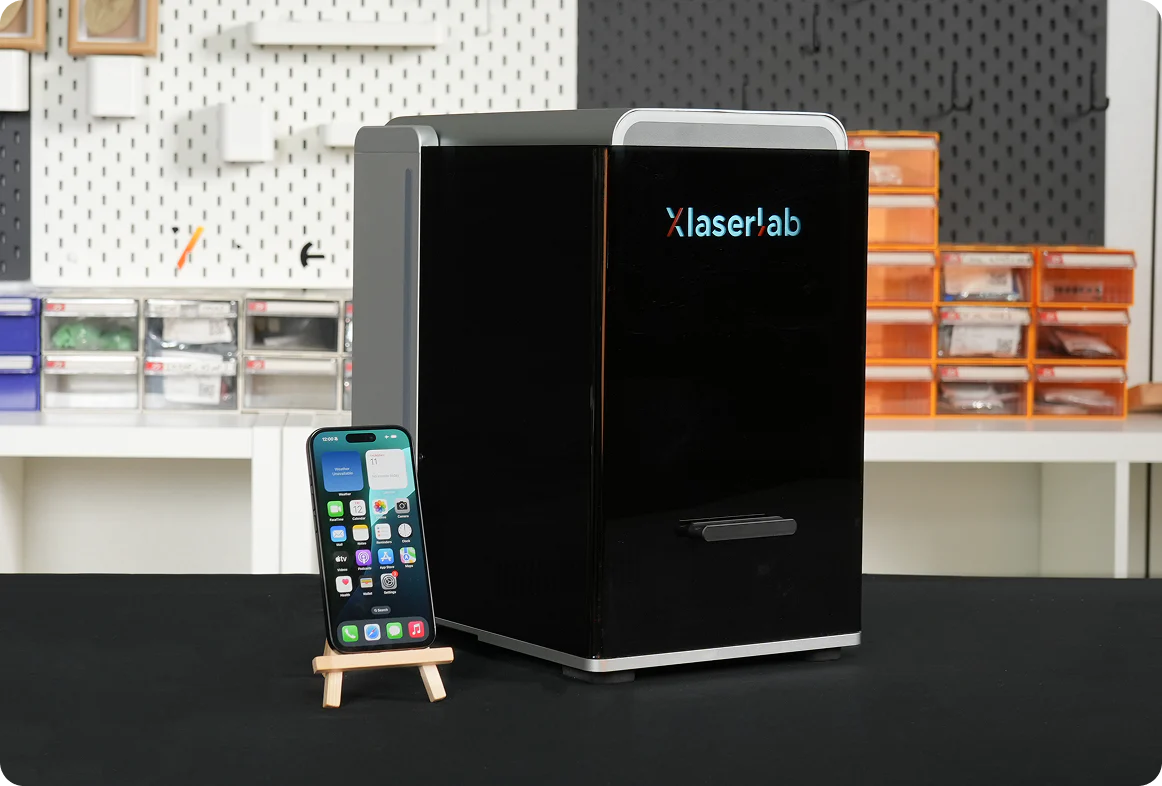
For studios that reach this stage, systems like the Xlaserlab E3 become relevant not because they are “better” in a general sense, but because they align with the needs of more demanding work.
They are often introduced when:
- consistency becomes more important than experimentation
- output quality needs to match client expectations
- workflows require repeatable results across multiple pieces
In this context, the system becomes part of the process rather than just a tool used at the end.
What Changes After the Upgrade
The shift is usually gradual but noticeable.
Workflows become smoother because fewer adjustments are needed. Output becomes more predictable, reducing the mental load on operators.
Most importantly, the gap between design and final result becomes smaller.
For many studios, this is where they begin to operate differently—not just producing work, but managing a process.
Looking Beyond the Machine Itself
One of the most overlooked aspects of this decision is how it affects the broader workflow.
Better equipment doesn’t just improve results. It changes how projects are planned, how time is allocated, and how consistent output can be maintained across different jobs.
This is particularly important for studios looking to scale or take on more complex work.
Conclusion
Investing in professional engraving systems is not simply about upgrading tools. It’s about reducing uncertainty in the production process.
For materials like glass, where precision defines quality, this shift becomes even more significant.
By moving toward systems that offer greater control and consistency, studios can create work that is not only visually stronger but also more reliable to produce.
In that sense, the value of professional equipment is not measured only in capability, but in how effectively it supports long-term growth.