


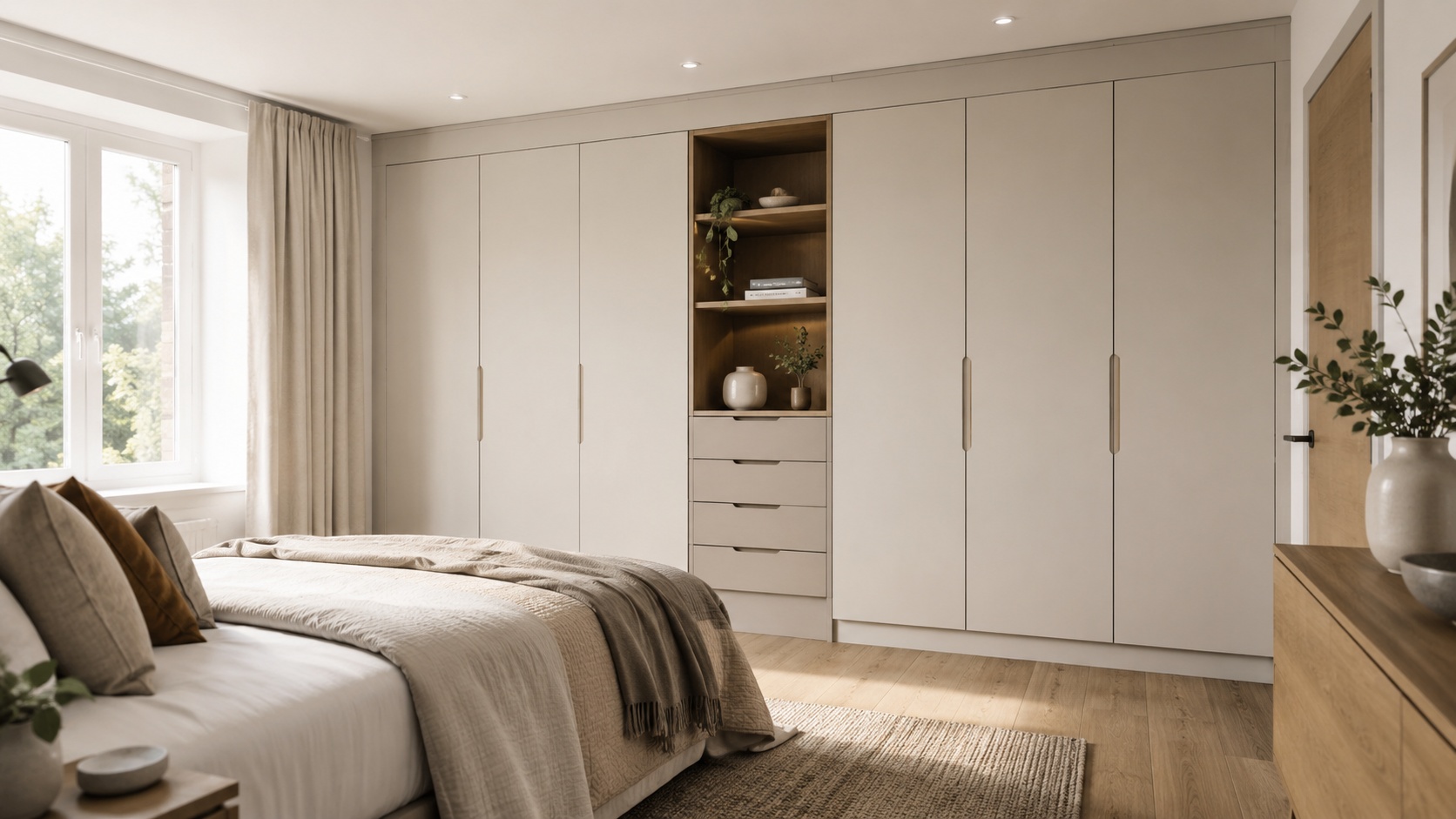
The most successful bedroom storage schemes make a room feel calmer, not more crowded. That outcome has less to do with simply adding more cupboards and more to do with planning: understanding what needs to be stored, protecting clear circulation space and choosing a front elevation that belongs to the architecture of the room. When these decisions are made early, storage becomes part of the design rather than a bulky object introduced at the end.
Start by looking at the everyday evidence. Is clothing split between several rooms? Are seasonal items taking over under-bed space? Does the bedroom feel dark because a tall unit blocks the best light? A short inventory of hanging clothes, folded items, shoes, bags and bedding is more useful than guessing from the size of the wall alone. It also reveals where a few well-considered internal changes could reduce visual clutter.
Once the internal layout and available wall space are clear, the focus can move to the visible face of the installation. Carefully selected Wardrobe Doors can refresh an existing carcass or help a new run of storage sit more comfortably with the room’s proportions. The key is to check the opening style, finish and clearance alongside the storage plan, rather than treating them as a final cosmetic choice.
“Good bedroom storage should make the morning easier and the room quieter at night.”
Begin with the contents, not the cabinetry
A wardrobe works best when its proportions match the things it will hold. Long dresses, coats and shirts need hanging height; knitwear and T-shirts are often better in drawers or shallow shelves; luggage and spare bedding can occupy higher, less accessible space. This sounds obvious, yet many installations devote most of their volume to one generic hanging rail and leave the user to solve the rest with boxes.
Divide the list into daily, weekly and occasional items. Daily pieces should be reachable without moving other things. Seasonal items can go higher up, while a small drawer or shelf near the entrance to the room can prevent jewellery, belts or charging cables from collecting on a bedside table. A storage plan that reflects real habits is more likely to stay tidy without constant effort.
Allow the doors to work in the room
Opening clearance is one of the most important checks in a bedroom. Hinged fronts need space to swing without colliding with a bed, chest of drawers or radiator; sliding fronts need a clear track and only expose part of the interior at a time. Neither option is universally better. The right choice depends on the room’s width, the position of furniture and how many people will use the storage at once.
Independent buying advice from Which? highlights practical points including measuring the room carefully, considering door clearance and asking what fitting, guarantees and aftercare cover before committing to fitted furniture. Its fitted-wardrobe planning guide is a useful checklist before designs are finalised. Marking the door swing on the floor with tape is a simple way to test a proposed layout in the real room.
Use proportion to make storage feel deliberate
Tall storage has a strong visual presence, particularly in a modest bedroom. A run that spans a whole wall can look beautifully integrated when its lines are calm and its height relates to cornices, alcoves or the ceiling. In another room, stopping short of a window, leaving a breathing space at the side, or breaking a long run into balanced sections may be more convincing. The aim is not always to maximise every millimetre; it is to make the room feel composed.
Handles, panel divisions and finish all contribute to that impression. Narrow vertical divisions can emphasise height, while broader panels may suit a more contemporary room. A painted finish can connect the storage to wall colour; a timber effect can introduce warmth; subtle handles may provide a useful rhythm without becoming the focal point. Samples should be viewed in the bedroom’s own daylight and evening lighting, not only under showroom lights.
Do not ignore ventilation and the wall behind
Wardrobes placed against external walls deserve particular attention. Clothes, textiles and a large cabinet can reduce airflow near a colder surface, which may make condensation harder to notice. There should be a sensible gap where appropriate, and any existing signs of damp, staining or mould should be investigated before new furniture conceals the area.
This is not just an aesthetic concern. Peterborough City Council’s condensation and mould guidance specifically advises keeping air circulating around wardrobes and other furniture, particularly when they sit against outside walls. Regular ventilation, steady background heating and prompt attention to leaks all support a healthier bedroom environment. If there is persistent mould or a suspected building defect, seek advice from a qualified professional rather than masking it with storage.
Plan the inside as carefully as the outside
Internal fittings often determine whether an attractive installation stays useful. Mix full-height hanging with double hanging where suitable, and include drawers for smaller clothes that would otherwise disappear into deep shelves. Adjustable shelves are helpful when needs change, while a dedicated shelf for bags or a pull-out rail for trousers can remove minor daily frustrations. Keep the most frequently used pieces between waist and eye level where possible.
- Measure hanging garments, including the longest coats or dresses.
- Reserve upper shelves for luggage, spare bedding and seasonal storage.
- Include drawers or baskets for folded clothing and smaller accessories.
- Check where mirrors, bedside tables, sockets and radiators will sit.
- Ask an installer to confirm the final measurements before ordering.
Set a realistic scope and budget
Replacing fronts can be an efficient way to update a sound wardrobe interior, while a full fitted scheme may be worthwhile when the existing layout wastes usable space. Compare quotations on the same basis: materials, number of internal fittings, removal of old units, delivery, fitting, making good and any electrical work should be clearly stated. A low initial figure can be misleading if essential parts of the work are left outside the quote.
It is also worth discussing lead times, access to the room and the protection of flooring before work begins. Bedrooms are personal spaces, and a tidy installation process matters. Clear communication about the order of work helps the project run more smoothly and avoids rushing decisions once furniture has already been removed.
A storage decision that lasts
The best bedroom storage is quietly dependable. It holds what it needs to hold, opens without compromise, supports a healthy room environment and feels connected to the rest of the interior. By measuring carefully, planning around real belongings and resolving the practical details before choosing finishes, homeowners can create a scheme that remains useful long after the initial refresh has lost its novelty.